

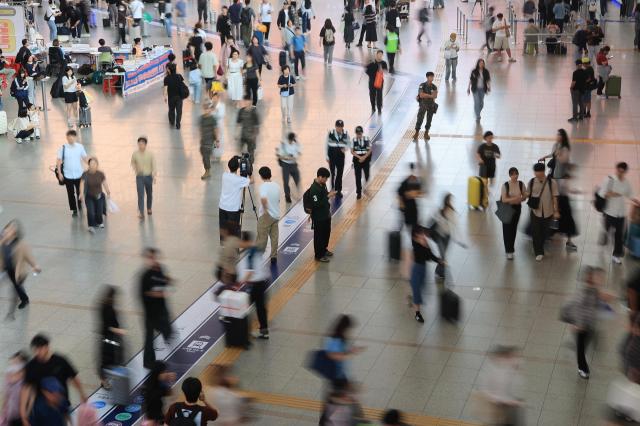
SEOUL, Sept. 24 (AJP) — South Korea is booming, with nominal gross domestic product growing at a pace unseen in decades, the stock market up nearly 70 percent and the Korean won about 6 percent stronger than at the end of 2025.
But little of that buoyancy can be felt this Chuseok, with youth unemployment hovering near 7 percent as of July and inflation running at around 3 percent.
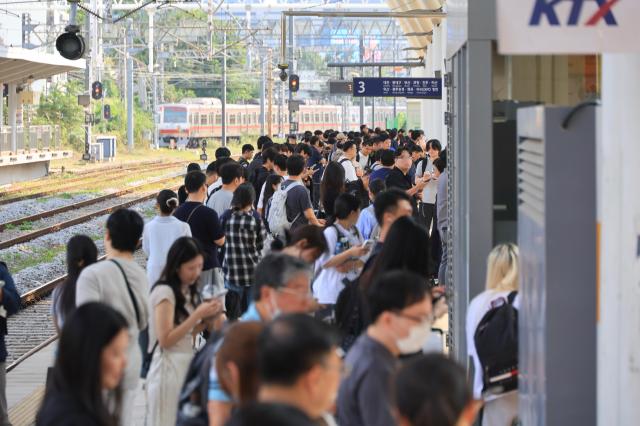
Fewer Koreans are making the traditional journey home. More young adults are staying in Seoul to study for job tests, take short-term jobs or simply avoid the expense and questions that can come with a family gathering.
A Korea Research survey found 63 percent of respondents planned to meet family members living separately this Chuseok, down from 68 percent last year. Among people in their 20s and 30s, only 52 percent said they planned to do so.
Another nationwide survey of 1,000 adults aged 20 to 69 found 59.6 percent planned to spend at least part of the holiday resting at home, up from 56 percent last year. Only 40 percent cited visiting their hometown or parents’ home, while domestic travel fell to 18.9 percent from 24.2 percent.
“I’m gonna stay at home to catch up on movies and deliveries, spend the time recharging,” said Park Jae-wook, a 29-year-old employee at a pharmaceutical company in Seoul. “It’s a hassle to get out to the movies during the holiday.”
The OECD, in its latest revised economic outlook, put South Korea’s growth this year at 3.7 percent, which would be its strongest performance since the 4.7 percent post-pandemic rebound in 2021.
Exports are on course to reach the $1 trillion milestone this year as chip shipments extend a record-breaking streak, translating into an income windfall for employees and shareholders in the semiconductor industry.
That prosperity is much harder to see among young Koreans trying to enter the labor market.
The average number of employed people in their 20s fell by 193,000, or 5.6 percent, from a year earlier to 3.279 million during the first eight months of this year, according to government data.
The decline was steeper than the 3.5 percent drop in the population of people in their 20s over the same period.
Their employment rate fell 1.3 percentage points to 59.1 percent, slipping below 60 percent for the first time for the January-August period since 2021.
For some, that is changing the meaning of the holiday itself.
A 25-year-old job seeker surnamed Choi had spent the summer preparing for a corporate aptitude test, only to learn just before the holiday that he had failed the document screening. He plans to keep studying through Chuseok while waiting for results from other applications.
“I don’t feel relaxed enough to go home and rest,” Choi said. “It is stressful having to study for aptitude tests over the holiday when there is no guarantee I will even pass the document stage.”
Recruitment calendars have made the timing particularly unforgiving.
Applications for several large Korean employers close immediately after the holiday, including Hana Bank on Sept. 28, Kia on Sept. 29 and CJ Group and Hanwha Ocean on Sept. 30. Job seekers interviewed in Sinchon and Noryangjin said they would spend much of the break working on applications, portfolios or exam preparation.
The national Chuseok migration is shrinking as well, although the roads may not look that way.
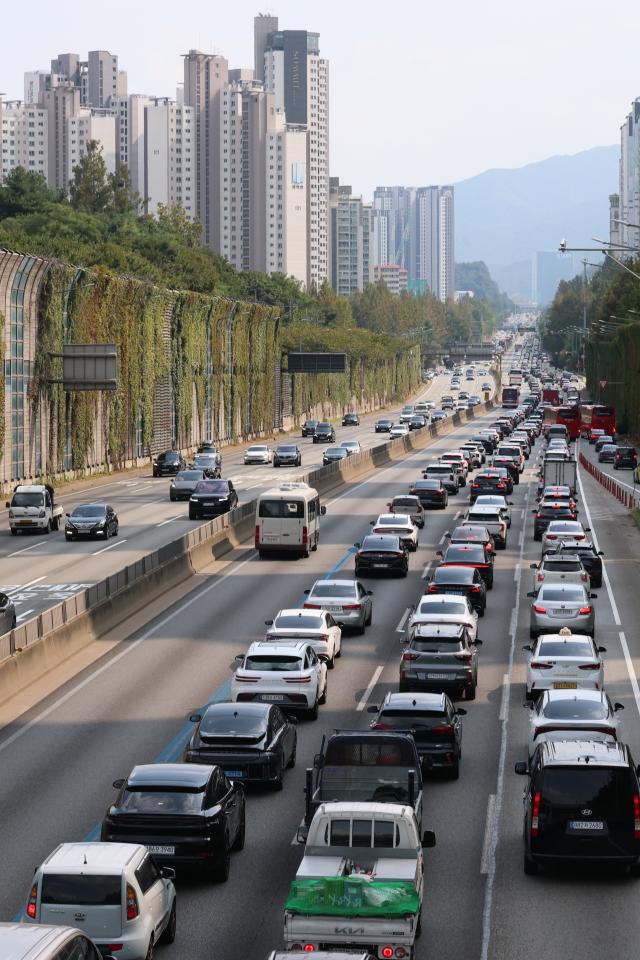
The Ministry of Land, Infrastructure and Transport expects 30.93 million people to travel during this year’s five-day special transportation period, 3.5 percent fewer than the 32.04 million recorded during last year’s much longer period.
But the shorter holiday compresses those journeys. Average daily highway traffic is projected to rise 11.8 percent to 6.05 million vehicles from 5.41 million last year, while 6.84 million vehicles are expected on Chuseok itself, up 6.7 percent.
In other words, fewer people are expected to travel overall, but those who do will be squeezed onto the roads over fewer days. The actual Chuseok break lasts four days, from Sept. 24 through 27, compared with last year’s unusually long holiday.
The numbers point to a shift that goes beyond the calendar.
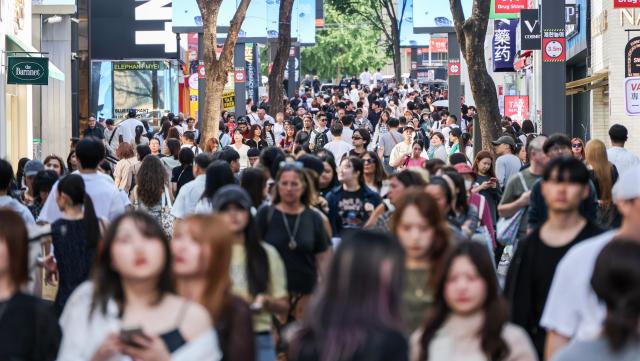
The break from tradition is not always driven by hardship. Younger Koreans are also much more likely than older generations to use the holiday for travel, hobbies or meeting friends.
Among respondents in their 20s, 38.1 percent planned domestic or overseas travel, while 21.4 percent cited hobbies and 17.9 percent gatherings with friends and acquaintances.
Others are using the holiday to make money.
Short-term job postings on neighborhood platform Danggeun rose 31 percent in the first two weeks of September from the preceding two weeks. Listings specifically mentioning Chuseok or the holiday jumped 4.2-fold, while applications for those jobs increased 4.5-fold.
Even among families who still gather, the rituals themselves are becoming more economical.
Korea Price Information estimated that preparing a traditional ancestral table this year would cost 302,500 won ($224) using traditional-market prices and 397,700 won at large supermarkets, up 1.2 percent and 1.6 percent, respectively, from last year. The traditional-market bill has hovered around 300,000 won for several years.
Yoo Mi-hyeong, a 42-year-old homemaker in southern Seoul, said her family increasingly prefers staying in the capital during Chuseok, when much of the city traditionally empties.
“We love staying in Seoul during Chuseok because of the lighter traffic and all the space,” she said.
Rather than spending heavily on preparing ritual food, Yoo said her family would rather use the money for a meal together.
“It’s better to put the money to better use, such as one good meal out,” she said.
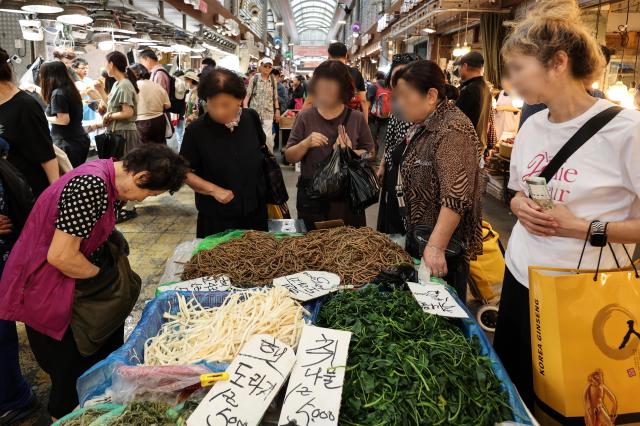
For decades, Chuseok offered one of the clearest images of South Korea moving as one: packed highways, crowded train stations and extended families gathering around the same table.
The chip boom may be pushing the country’s export numbers to records, but this Chuseok suggests households are moving to a different rhythm. Some are driving home, some are ordering dinner in Seoul, and some are spending the holiday in front of a laptop polishing another job application.
For a generation still waiting to enter the boom, four days off can feel less like a holiday than four more days to catch up.
AJP Takeaways
- Prosperity is uneven: South Korea enters Chuseok with strong growth, record chip exports and a soaring stock market, but the gains are concentrated in sectors such as semiconductors and have yet to translate into broad household confidence.
- Young Koreans feel the squeeze: Employment among people in their 20s fell 5.6 percent in the first eight months, outpacing the decline in their population, while many job seekers are spending the holiday preparing for recruitment tests instead of going home.
-The Chuseok migration is shrinking: The government expects 30.93 million people to travel during the holiday transportation period, down 3.5 percent from last year, even as shorter holidays push daily highway traffic higher.
Copyright ⓒ Aju Press All rights reserved.
