The Bank of Korea (BOK) said the daily average value of payment-card transactions reached 3.8 trillion won ($2.8 billion), up from 3.5 trillion won a year earlier.
The growth pace from 3.7 percent in the first half of 2025 to 7.6 percent in the first six months of this year.
Credit-card transactions, which accounted for 79.7 percent of total card use, rose 7.3 percent to a daily average of 3.0 trillion won.
Debit-type payments, including check cards, increased 7.5 percent to 751 billion won per day.
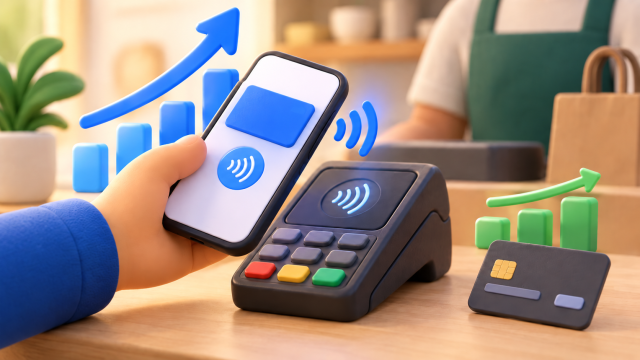
A separate breakdown of credit and check cards used at domestic merchants showed a faster increase in transactions made without presenting a physical card.
Such payments rose 10.6 percent from a year earlier to a daily average of 1.8 trillion won, compared with a 2.5 percent increase to 1.4 trillion won for transactions using physical cards.
The category covers payments using card information stored on mobile devices or entered manually and is separate from whether a transaction is made face to face or remotely.
Face-to-face card payments rose 5.6 percent to 1.8 trillion won per day, while non-face-to-face transactions increased 8.6 percent to 1.4 trillion won.
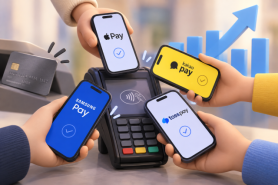
Simple payment services, in which card information is stored on devices and transactions are authenticated through methods such as fingerprint recognition, accounted for 52.6 percent of payments made without presenting physical cards.
Fintech providers accounted for 72.0 percent of those card-based simple payment services.
Account transfers through Korea's retail payment networks showed a sharper increase, rising 26.8 percent from a year earlier to a daily average of 127.9 trillion won.
The electronic financial network, which accounted for 92.5 percent of such transfers, handled 118.4 trillion won per day, up 28.8 percent.
The increase was driven mainly by internet banking and firm banking, which rose 22.9 percent and 30.4 percent, respectively.
Firm banking refers to financial systems used by companies for transactions such as payroll payments and settlement of business payments.
The daily value of bills and checks also rose 14.9 percent to 19.3 trillion won, led by increases in current-account checks, promissory notes and electronic bills.
A separate BOK tally showed the daily value of domestic banks' internet banking transactions, including mobile banking, increased 23.9 percent to 106.4 trillion won.
Mobile banking transactions rose 12.1 percent to 20.1 trillion won per day.
Mobile banking accounted for 90.7 percent of all internet banking transactions by number but just 18.9 percent by value.
Internet-based non-face-to-face loan applications moved in the opposite direction, with the number of applications falling 10.5 percent from a year earlier and their value declining 26.0 percent.
AJP Takeaways
- South Korea's daily card payments rose 7.6 percent from a year earlier to 3.8 trillion won in the first half of 2026.
- Payments made without presenting physical cards increased 10.6 percent, compared with a 2.5 percent increase in transactions using physical cards.
- Retail payment network transfers jumped 26.8 percent to 127.9 trillion won per day, led by growth in internet and firm banking.

Copyright ⓒ Aju Press All rights reserved.