

A trail left by South Korea's homegrown space rocket Nuri is seen in the sky near the Naro Space Center in Goheung, South Jeolla Province, on Oct. 7, 2026, following its fifth launch.
Han Jun-gu
Photojournalist, AJU PRESS (AJP)
Covering Asia's defining stories — from pressing issues and politics to culture and society — through a distinctly Asian lens.
Copyright ⓒ Aju Press All rights reserved.
Related News
-
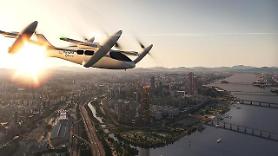 Hanhwa Group reveals aggressive strategy to preempt air mobility technologies
SEOUL -- South Korea's Hanhwa Group revealed an aggressive strategy to preoccupy a future air mobility market by forging a series of partnerships with foreign companies with superior technologies in the manufacturing of various flying vehicles that could be used for air taxis and personal air vehicles. The Farnborough International Airshow, a trade exhibition in England, provided a crucial opportunity for Hanwha Group units to forge partnerships with foreign companies such as Britain's electric aviation company Vertical Aerospace, U.S. aerospace and defense company Honeywell, and Safran of France. Hanwha Systems signed a memorandum of understanding with Honeywell on the joint development of an electric vertical takeoff and landing (eVTOL) vehicle and an advanced air vehicle (AAV) for autonomous and long flights. Their cooperation covers a hybrid electric propulsion system, the discovery of new services and creating demand in domestic and foreign markets. In a separate deal, Hanwha Systems and Hanwha Aerospace signed a tripartite agreement with Safran to strengthen all-round business cooperation in military and civilian sectors, space and mobility industries. The French company develops and manufactures aircraft engines, rocket engines as well as various aerospace and defense-related equipment or their components. The three companies would actively cooperate in areas such as low-orbit satellite communication services for urban air mobility (UAM), a propulsion system with economic efficiency, and satellite launch services. "We want to find new convergence business opportunities in the UAM market by utilizing each company's strengths with major players in the global aerospace industry," Hanwha Systems' UAM business head Yoo dong-wan said in a statement on July 21. UAM leads the way for advanced air mobility, focusing on sustainable air mobility technologies for urban environments. Hanwha Systems is a key member of UAM Team Korea, a public-private consultative body that will commercialize drone taxis in 2025. Hanwha Systems and Hanwha Aerospace have jointly invested in Overair, an American eVTOL maker. Along with Overair, Hanwha Systems would release an unmanned life-size prototype in the first half of 2023. They aim to produce an air taxi called "Butterfly" that can fly at a maxim speed of 320 km per hour. The air taxi will be applied with the tiltrotor design of low noise and high efficiency. Tiltrotor design combines the vertical lift capability of a helicopter with the speed and range of a conventional fixed-wing aircraft. At the Farnborough International Airshow, Hanwha Aerospace, an aircraft parts maker affiliated with South Korea's Hanwha Group, tied up with Vertical Aerospace, a British electric aviation company, to develop a high-performance electro-mechanical actuator optimized for an eVTOL vehicle. An electromechanical actuator that converts electricity to mechanical force is a core component for personal air vehicles. Vertical's eVTOL model, VX4, is claimed to be capable of traveling over 320 kilometers (200 miles) per hour, with a range of over 161 km with a pilot and four passengers aboard. "We are recognized as a strategic partner in the global UAM market that requires the highest level of technology and reliability," Hanwha Aerospace CEO Shin Hyun-woo said. "This proves the competitiveness of Hanwha Aerospace, which has been in charge of supplying actuators for various fighter jets and civil aircraft." Dozens of domestic companies have joined hands with foreign companies such as Joby Aviation, Volocopter and Skyports to provide UAM services in South Korea. Hanwha Aerospace involved in the development of a battery-based electric propulsion system that acts as an eVTOL engine would cooperate in developing a hybrid system that combines gas turbines or hydrogen fuel cells with electric batteries.
-
 A Son of Hanhwa’s Chairman Charged with Hit-and-Run Drive
The second son of Hanhwa conglomerate’s chairman, Kim Seung-youn, was charged with a hit-and-run drive in last month. Seoul Kangnam Police said to Korean media he allegedly ran into another car at 4 o’clock, Feb.27 and ran away. He escaped from the scene right after the accident and turned himself in to police after two days. Police interrogated him about the accident and released him, police said. Now, the case is on prosecutor’s office, reminding of the 2007 charge against his father, Chairman Kim, who lynched a man with his aides in revenge for his second son’s being hit at liquor restaurant. (아주경제 송지영 기자)
-
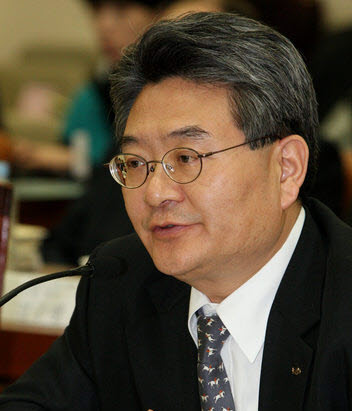 Korean Development Bank Gave Ultimatum to Hanhwa
The president of Korean Development Bank, Min Yoo Sung Korean Development Bank(KDB) issued Hanhwa the ultimatum on the Daewoo Shipbuilding & Marine Engineering(DSME) sale, saying that KDB will consider Hanhwa has no willing to buy DSME and exercise the seller right as a main creditor when Hanhwa does not accept conditions over the deal. The KDB president, Min Yoo Sung said on Thursday, "In order to help Hanwha in preparing the funds for taking over, we came up with the idea of making private equity fund(PEF) with the investors and are now waiting for Hanwha's reply on the conditions over the acquisition." And, he added, "Now is the Hanwha's call whether to buy DSME or not." What suggested to the buyer is that PEF invested by KDB will be used to purchase the assets of Hanwha's inter-subsidiaries on the condition that Hanwha is paying for the deal by the funds from the sales over the subsidiaries. The president Min said that the possibility of managing the company poorly would be lowered only when the deal could be made by the payment with at least 60 percent self-finance out of total acquisition price in order to relieve the pressure on loan interest. And he explained that both seller and buyer could take the benefit from the win-win strategy by taking our suggestion because the buyer would not only maintain the health of finance but also prepare the payment for the aquisition by selling off the self-assets. However, he highlighted that KDB does not have any willingness to change the conditions in the memorandum of understanding(MOU) due to the controversy over the special treatment or fairness. He said, "If Hanwha does not accept the condition, we will consider it as 'no-interest-in-buying' and take Hanwha off from the list of possible preferred bidders and ask Hanwha to pay the cancellation fee for being unfulfilled with the amount of 300 billion won. By Kirim Shin 신기림 기자 kirimi99@ajnews.co.kr < '아주경제' (ajnews.co.kr) 무단전재 배포금지>