
Kim Yeon-jae
Kim Yeon-jae is a journalist at AJU Press (AJP's English platform),
covering macroeconomics, international finance, and geopolitics.
He closely tracks central bank monetary policies, global energy supply chains,
and the Korean defense industry.
Copyright ⓒ Aju Press All rights reserved.
Related News
-
 Fewer "idle" youths in Korea but job barriers persist
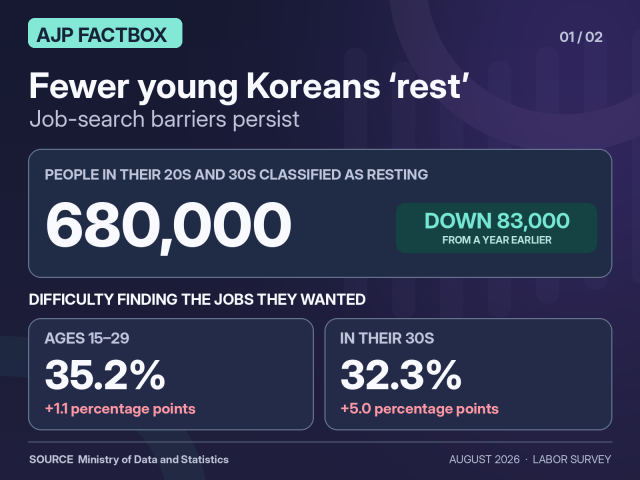
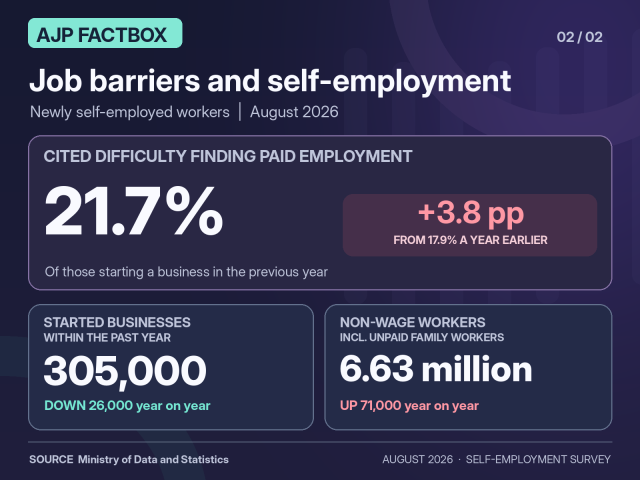
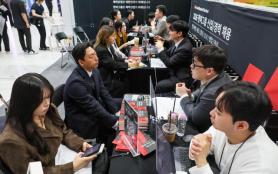
Job seekers speak with recruiters at the 2026 Korea Mutual Growth Job Fair at the aT Center in Seoul on April 28, 2026. AJP Yoo Na-hyun SEOUL, November 4 (AJP) —Fewer young South Koreans were classified as “idle” in August, but whether the decline meant they had entered the workforce remained unclear, government data showed Wednesday. About 680,000 people in their 20s and 30s fell into the resting category, down 83,000 from a year earlier, according to supplementary labor surveys released by the Ministry of Data and Statistics. The group comprised 377,000 people in their 20s and 303,000 in their 30s. Those classified as resting are neither employed nor actively seeking work and are therefore excluded from the official unemployment count. The decline, however, did not necessarily signal an improvement in job prospects. Among resting people aged 15 to 29, 35.2 percent cited difficulty finding the jobs they wanted, up 1.1 percentage points from a year earlier. The share among those in their 30s rose 5.0 percentage points to 32.3 percent. It was the most frequently cited reason for resting in both age groups, while older respondents were more likely to cite health problems. Across all ages, the resting population fell by 89,000 to 2.55 million. The broader economically inactive population, which also includes students, retirees and people engaged in household care, increased by 77,000 to 16.30 million. Of those outside the labor force, 19.9 percent, or 3.24 million, said they wanted to find work or start a business within the next year, down 0.5 percentage point from a year earlier. A separate survey pointed to another sign of difficulty entering the labor market. Among self-employed people who had started their businesses within the previous year, 21.7 percent cited difficulty finding work as an employee, up from 17.9 percent a year earlier. The number of such newly self-employed workers, however, fell to 305,000 from 331,000, suggesting that a greater share cited employment difficulties even as fewer people reported starting businesses. Overall, non-wage workers, including the self-employed and unpaid family workers, increased by 71,000 to 6.63 million. The changes varied by industry. Non-wage employment increased by 75,000 in wholesale and retail trade but fell by 47,000 in accommodation and food services and by 38,000 in manufacturing.
-
 Qatar LNG Production Set to Resume Rapidly
Qatar Qatar's liquefied natural gas (LNG) production is expected to resume quickly ahead of the reopening of the Strait of Hormuz. Reuters reported on June 16, citing sources familiar with the matter, that QatarEnergy, the state-owned energy company, is prepared to swiftly restart operations at the Ras Laffan LNG facility. It is anticipated that facilities unaffected by Iranian airstrikes could reach maximum production levels within a month. Previously, two of Qatar's 14 LNG production lines and one of two gas-to-liquids (GTL) facilities were damaged in Iranian airstrikes, impacting 17% of Qatar's LNG export capacity. Recovery of these facilities is expected to take several years. In contrast, sources indicated that the remaining facilities, which had been idled due to the effective closure of the Strait of Hormuz during the conflict, could be restarted relatively quickly. The Strait of Hormuz is a critical maritime passage for oil and LNG exports from the Gulf region. However, experts caution that the resumption of production may not immediately lead to normalized exports. One source noted, "The issue is how quickly ships can be brought in and how fast loading can occur after the strait reopens. This is more about shipping and logistics than production issues." While the U.S. and Iran have reached a preliminary agreement on conditions for ending the war and reopening the Strait of Hormuz, it may take time for shipping operations to normalize. According to Reuters, only slightly more than 12 LNG carriers have exited the Strait since the conflict began in late February. The shipping industry is currently focused on ensuring safety and the removal of mines before resuming transit through the strait. As a result, it may take several weeks before normal shipping traffic is restored, Reuters reported.* This article has been translated by AI.
-
 South Korea, Philippines agree to expand cooperation in emerging sectors
South Korean President Lee Jae Myung (left) shakes hands with Philippine President Ferdinand R. Marcos Jr. ahead of their summit in Manila, Philippines on March 3, 2026. Yonhap SEOUL, March 4 (AJP) - South Korea has agreed to expand bilateral cooperation with the Philippines in emerging sectors for future growth, such as artificial intelligence (AI), shipbuilding, and nuclear energy, as part of the two countries' strategic partnership. During a summit between South Korean President Lee Jae Myung and Philippine President Ferdinand Romualdez Marcos Jr. in Manila on Tuesday, the two countries signed about a dozen memorandums of understanding (MOUs) to strengthen cooperation. In a joint statement after the summit, Lee stressed that the partnership would build on existing cooperation in trade, defense, and infrastructure, while expanding into new growth sectors. "We agreed to further strengthen cooperation based on the strategic partnership between the two countries," Lee said. Defense was a key area of cooperation, with South Korea's Defense Acquisition Program Administration signing a revised agreement with the Philippines on defense-related procurement. The agreement covers a broader range of areas, expanding the number of South Korean firms eligible for contracts to modernize the Philippines' military and strengthening financial support. The two leaders also discussed cooperation in nuclear energy, with Lee pointing out that South Korea is reviewing whether the Philippines' decades-long idled power plant in Bataan can be restarted. Lee also emphasized cooperation in shipbuilding, as South Korea and the Philippines rank second and fourth globally in terms of shipbuilding capacity, saying it "holds immense potential." Marcos welcomed Lee's initiative for bilateral cooperation, saying that the two nations continue to strengthen their partnership based on mutual trust, as the Philippines was South Korea's first Southeast Asian country to establish diplomatic relations, marking the 77th anniversary of bilateral ties this year. The two leaders also discussed regional security issues and expressed hope for swift stability in the Middle East after last Saturday's U.S.-led airstrikes on Iran. On Wednesday, Lee is scheduled to visit a Korean War memorial cemetery in Manila, where he will pay tribute to Filipino veterans, before attending other events with South Korean nationals residing there. He then returns home later in the day.