
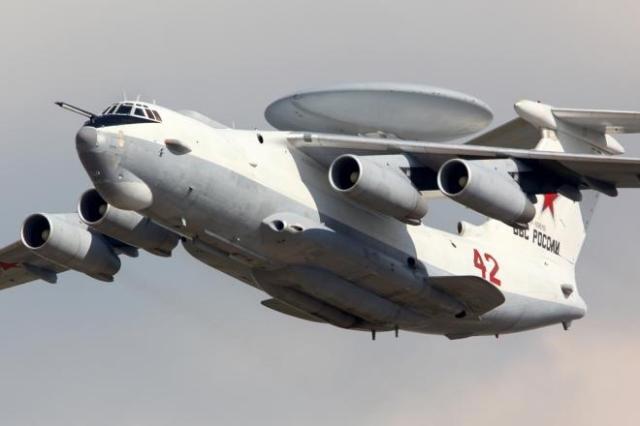
"The Defense Ministry plans to summon the Russian defense attaché this afternoon to lodge a strong protest," a ministry spokesperson said during a regular briefing.
The spokesperson declined to disclose details of communications between the two militaries during the incident, saying it would be inappropriate to make such operational exchanges public.
The Joint Chiefs of Staff (JCS) said several Russian military aircraft entered the Korea Air Defense Identification Zone (KADIZ) over the East Sea early Tuesday and flew dangerously close to South Korean airspace near Ulleung Island.
The military detected the aircraft before they entered KADIZ and scrambled Air Force fighter jets to respond to potential incidents.
The Russian aircraft departed eastward during South Korea's military response without violating its sovereign airspace, according to the JCS.
South Korean airspace extends roughly 22 kilometers (12 nautical miles) from Ulleung Island's territorial sea baseline, although the military did not disclose how close the Russian aircraft came to that boundary.
The official explained that the military had taken preventive measures because the aircraft were flying close to South Korean airspace and could cross the boundary within a short period.
"We took preventive measures to issue a warning to protect the public and ensure their safety," the official said.
The Ministry of the Interior and Safety issued an emergency warning for Ulleung Island at around 7:52 a.m., instructing residents to seek shelter in underground facilities or buildings.
The warning was lifted within minutes after the Russian aircraft departed the area.
The incident caused confusion after the Interior Ministry mistakenly reported an airspace violation, while North Gyeongsang Province referred to suspected North Korean aircraft in a separate emergency message.g.
The JCS later clarified that the aircraft were Russian military planes and that no airspace violation had occurred.
A Defense Ministry spokesperson said the North Gyeongsang Province had reportedly sent an incorrect reference to North Korean aircraft due to an error involving a message template used for emergency drills.
The military acknowledged that it had coordinated with relevant authorities to issue the warning but said it was still examining how the conflicting information had been communicated.
An air defense identification zone extends beyond a country's sovereign airspace and is designed to identify approaching aircraft before they enter its airspace. Foreign military aircraft are expected to provide advance notice before entering the zone to prevent potential conflicts.
Russia does not recognize South Korea's authority over KADIZ, arguing that the zone lacks a basis in international law.

Kim Hee-su
Kim Hee-su is a bilingual reporter at AJU Press, covering defense and foreign affairs. Before joining AJP in 2025, she worked at The Korea Times, where she wrote interview stories, including a profile of North Korean defector Kim Gum-hyok, and produced digital content. She also previously worked as a researcher for KBS News 9’s International News Department, supporting correspondents in 10 countries around the world. She graduated from the University of Toronto in Canada with a double major in Book and Media Studies and East Asian Studies.
Copyright ⓒ Aju Press All rights reserved.
Related News
-
 Russian Military Aircraft Breach Japanese Airspace After Entering KADIZ
Russian military aircraft that entered the Korean Air Defense Identification Zone (KADIZ) conducted a series of military provocations by directly breaching Japanese airspace. Following the response from South Korean forces, Japan's Air Self-Defense Force scrambled fighter jets, raising military tensions in Northeast Asia to a peak. According to Japan's Ministry of Defense, between 4:07 a.m. and 4:12 a.m. on November 17, two military aircraft, believed to be Russian, violated Japanese airspace northwest of Okino Island in Fukuoka Prefecture for approximately three minutes. The Air Self-Defense Force urgently dispatched fighter jets from the Western Air Defense Force to issue radio communications and warnings for their departure. Japan's Defense Minister Shinjiro Koizumi held an emergency press conference, stating, "This is a serious infringement of our nation's sovereignty and a threat to our safety, which we cannot tolerate," and expressed strong protests to Russia through diplomatic channels. This marks the first official announcement by the Japanese government regarding a breach of its airspace by Russian military aircraft since the incident off the coast of Rebun Island in Hokkaido in September 2024. These military aircraft were identified as the same group that had previously entered the KADIZ in the early morning, prompting a response scramble from South Korean forces. The Joint Chiefs of Staff stated earlier, "Several Russian military aircraft entered the KADIZ in the early morning and then exited, while our military deployed fighter jets to take tactical measures in preparation for any contingencies." Although they did not breach South Korean airspace, these aircraft proceeded southward, crossing the Korea Strait (Tsushima Strait) and breaching Japanese airspace in the process. After breaching the airspace over Okino Island, the military aircraft passed between Yonaguni Island in Okinawa and Taiwan before exiting toward the Pacific Ocean. Unlike entering an Air Defense Identification Zone (ADIZ), breaching airspace is considered a violation of sovereignty under international law and can lead to warning shots for interception. Some analysts suggest that Russia's strong military show is aimed at simultaneously targeting the trilateral cooperation among South Korea, the United States, and Japan, as well as the Taiwan Strait, ahead of the Asia-Pacific Economic Cooperation (APEC) summit in Shenzhen and the Quad summit in Manila.* This article has been translated by AI.
-
South Korea scrambles jets as Russian aircraft enter KADIZ
SEOUL, November 17 (AJP) - Several Russian military aircraft entered South Korea's Air Defense Identification Zone (KADIZ) over the East Sea early Tuesday morning, prompting the South Korean military to scramble Air Force fighter jets. The Joint Chiefs of Staff said the aircraft were detected before entering the zone and later departed. South Korea deployed fighter jets and took precautionary measures to prepare for any potential incidents. An air defense identification zone is used to identify and monitor aircraft approaching a country's airspace and is separate from its sovereign airspace. Although international practice calls for military aircraft to submit flight plans before entering another country's air defense zone, Russia does not recognize such zones, arguing that they have no basis in international law. Tags: South Korea, Russia, KADIZ, East Sea, fighter Jets, air defense
-
Russian Military Aircraft Enters KADIZ, Departing After Brief Incursion
Russian military aircraft entered South Korea's Air Defense Identification Zone (KADIZ) on the afternoon of August 25 and subsequently departed. This marks the first entry of Russian military aircraft into KADIZ since June 27, approximately two months ago.The Joint Chiefs of Staff (JCS) reported on August 26 that "several Russian military aircraft entered and then exited the eastern KADIZ," adding that there was no violation of South Korean airspace.The JCS further stated, "Our military detected the Russian aircraft before they entered KADIZ and deployed Air Force fighter jets to conduct tactical measures in preparation for any contingencies."An Air Defense Identification Zone is a designated area established to identify and respond to military aircraft approaching a nation's airspace. It is distinct from a country's sovereign airspace. International norms dictate that military aircraft entering another country's air defense identification zone should submit flight plans in advance and notify the country of their position upon entry. However, Russia does not recognize South Korea's KADIZ as having a legal basis under international law and disputes South Korea's authority over it.On June 27, a joint air exercise involving Chinese and Russian military aircraft saw over ten planes enter the eastern and southern KADIZ, prompting South Korean fighter jets to scramble in response.* This article has been translated by AI.