


Candice Kim
Candice Kim is a dedicated business and technology reporter specializing in the intersection of high-tech innovation and fast-paced consumer trends. Her core beats span the semiconductor, IT, cosmetics, and retail sectors, where she provides in-depth coverage of industry titans including Samsung Electronics, SK hynix, and LG Electronics, alongside leading consumer brands like Olive Young and Musinsa. Whether analyzing complex silicon supply chains or tracking the latest shifts in beauty and fashion retail, Candice is committed to delivering sharp, accurate reporting that keeps readers informed on the forces shaping today's most dynamic markets.
Copyright ⓒ Aju Press All rights reserved.
Related News
-
 Nvidia's Market Value Surges to 1,300 Trillion Won Following Jensen Huang's Return
Jensen Huang's return to Nvidia as CEO has had a significant impact. Following the surprise announcement, global stock markets surged. Nvidia's market capitalization increased by nearly 1,300 trillion won (KRW) in just one day. The domestic stock market, which is closely linked to Nvidia's stock performance, also saw a substantial rise. Samsung Electronics and SK Hynix's market capitalizations increased by over 90 trillion won (KRW), while the combined market capitalization of the KOSPI and KOSDAQ surged by approximately 262 trillion won (KRW). The Impact of Huang's Comeback is 1,300 Trillion Won According to foreign media reports on the 24th, Nvidia's stock price rose by $39.52 (31.48%) to close at $165.05 on the regular trading day following Huang's unexpected return on the 23rd (local time). This represents a 32% increase, the largest daily gain since May 9, 2003. Consequently, Nvidia's market capitalization jumped by $952 billion (approximately 1,281 trillion won (KRW)) to $4 trillion (approximately 5,354 trillion won (KRW)). Huang's return has acted as a powerful catalyst for the South Korean stock market. On that day, the KOSPI closed at 5,006.03, up 6.32% from the previous trading day. The KOSDAQ also rose by 4.79% to close at 665.88. The expectation that Huang's return would alleviate management uncertainties at Nvidia and restart AI investment has led to a widespread increase in AI semiconductor stocks. Samsung Electronics rose by 6.70%, and SK Hynix increased by 6.73%. Stocks related to HBM, such as Samsung Electro-Mechanics (10.28%), Hanmi Semiconductor (8.42%), Simtek (6.76%), Isu Petasys (3.37%), Korea Circuit (7.81%), and Rino Industrial (7.72%), also saw significant gains. Hyundai AutoEver (29.93%), Hyundai Motor (11.11%), Doosan (14.42%), Hyundai Mobis (14.67%), Kia (10.76%), LG Energy Solution (7.55%), and SK Square (5.29%)—previously struggling large-cap stocks—also closed sharply higher. Samsung and SK Hynix Market Capitalizations Jump by 92 Trillion Won Due to the rapid rebound in stock prices, the market capitalizations of Samsung Electronics and SK Hynix increased by 91.73 trillion won (KRW) in just one day. As of the closing price, Samsung Electronics' market capitalization reached 1,107.29 trillion won (KRW), up 4.87% (51.45 trillion won (KRW)), while SK Hynix's market capitalization rose by 5.18% (40.29 trillion won (KRW)) to 818.47 trillion won (KRW). With the surge of these two leading stocks, the total market capitalization of the KOSPI increased from 3,860.35 trillion won (KRW) the previous day to 4,104.82 trillion won (KRW), an increase of 244.47 trillion won (KRW). The KOSDAQ's market capitalization also grew from 363.71 trillion won (KRW) to 381.38 trillion won (KRW), an increase of 17.67 trillion won (KRW). This resulted in an overall market capitalization increase of approximately 262 trillion won (KRW) in just one day. Lee Kyung-min, a researcher at Daishin Investment Corporation, stated, "The easing of investment and supply contract uncertainties in the AI ecosystem due to Jensen Huang's absence has led to a strong rebound in investor sentiment." Seo Sang-young, an executive at Mirae Asset Securities, noted, "The recent decline was caused more by uncertainties and supply-demand pressures than by a slowdown in semiconductor demand. If foreign investors switch to buying, the sustainability of the rebound will increase." Concerns Over Strengthening 'Nvidia Coupling' Some have expressed concerns that the South Korean stock market is becoming too closely correlated with Nvidia's stock price movements. The high dependence on large semiconductor stocks like Samsung Electronics and SK Hynix is increasing the volatility of the stock market, closely linking it to global AI investment sentiment. In fact, from September 29 to October 23, during which Nvidia's scandal spread and global AI investment sentiment weakened, Nvidia's stock price fell by 41.2%. During this period, SK Hynix and Samsung Electronics also dropped by 28.9% and 23.49%, respectively. The KOSPI fell by 20.7%. In contrast, Taiwan's TAIEX index fell only 20.6%, and Japan's Nikkei 225 index dropped by 12.7%, indicating a smaller decline than the KOSPI. The ongoing uncertainties surrounding Nvidia are expected to contribute to increased volatility in the KOSPI. The U.S. Congress is pressuring investigations into potential illegal activities related to Huang's return and national security risks. Concerns remain regarding U.S. export control supervision, regulations on data center construction, and the profitability and sustainability of investments by AI companies. Additionally, there are ongoing investigations by the U.S. Securities and Exchange Commission (SEC) and collective lawsuits from shareholders. Moon Jun-ho and Jeong Seung-ho, researchers at Samsung Securities, stated, "As semiconductor export controls tighten, the SEC's investigation into Nvidia's accounting practices is also emerging as a medium- to long-term risk factor. Even if everything is resolved, we must confront the common concerns of the market regarding delays in U.S. data center permits and the capital expenditure (CAPEX) trends of big tech companies in 2027." Park Jae-hwan, a researcher at Eugene Investment & Securities, pointed out that "the re-acceleration of growth for frontier model companies and uncertainties in data center construction are challenges that need to be addressed in the medium to long term."* This article has been translated by AI.
-
 Huang's return buys Korean chipmakers more time
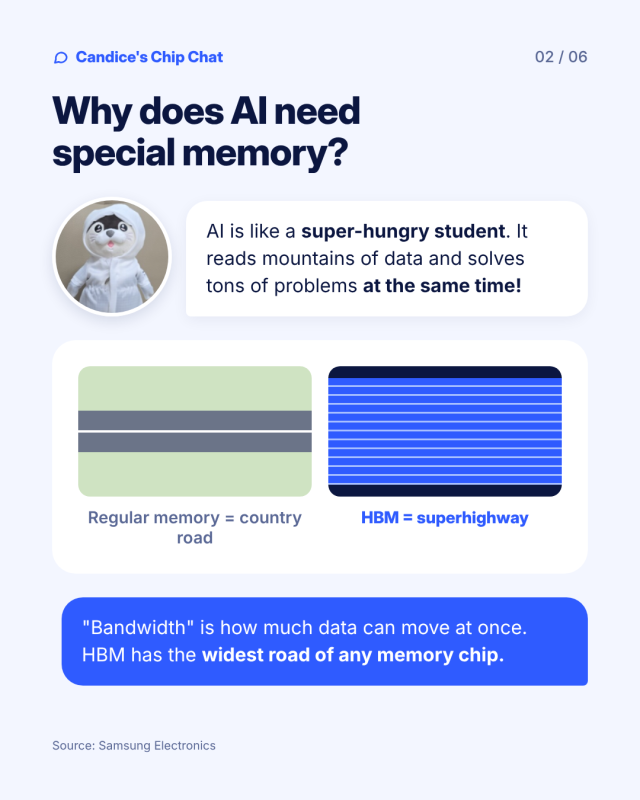
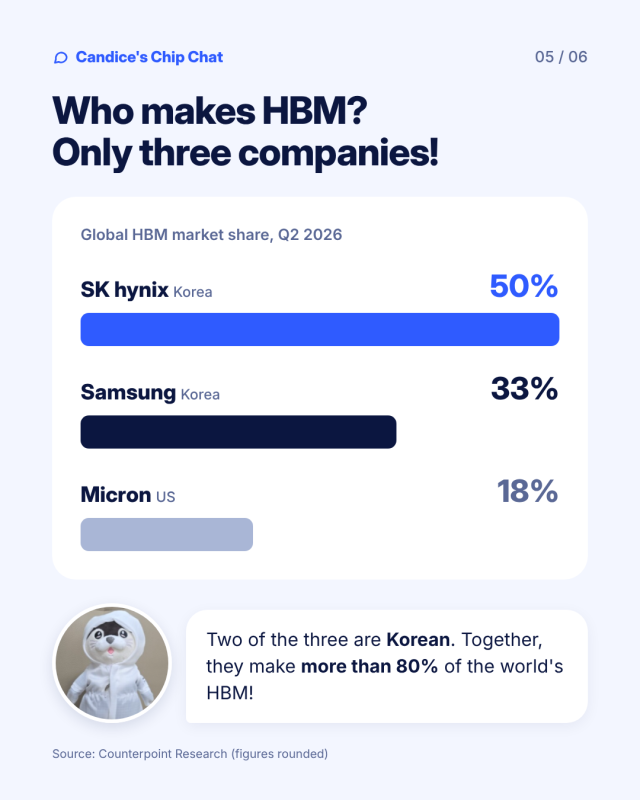
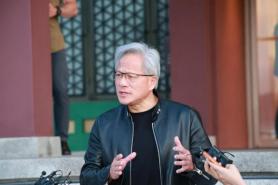
Jensen Huang speaks to reporters during a visit to South Korea in June 2026. Pool Photo SEOUL, November 24 (AJP) - Skepticism, doubts and jitters were put on hold, at least for a day, as markets hailed the comeback of the poster child of AI. Nvidia shares surged 31.48 percent to $165.05 in New York on Monday following Huang's reinstatement. The rally spilled into Seoul on Tuesday, with Samsung Electronics jumping 6.70 percent to 189,400 won and SK hynix climbing 6.73 percent to 1,158,000 won. For Samsung Electronics and SK hynix, Jensen Huang’s return to Nvidia offers more than a lift in share prices. It restores the industry’s most forceful advocate at a moment when confidence in the AI investment boom — and the capital needed to sustain it — has become increasingly fragile. The relief goes beyond Huang’s personal rapport with South Korea’s business leaders. His importance lies in his ability to turn the AI vision into product roadmaps, customer commitments and projects that keep investment flowing through the industry. His return may buy Korean chipmakers more time. It does not guarantee how long the boom will last. Despite the vote of confidence from U.S. President Donald Trump and Nvidia’s board, Huang still faces questions from lawmakers and federal authorities over his reported relationship with a woman alleged to have Chinese intelligence ties, allegations involving the diversion of advanced chips to China and the circumstances of his reinstatement. He has publicly agreed to testify before the Republican-led Senate Banking Committee on Dec. 3. For his Korean suppliers, the immediate question is whether his return can help prevent a crisis of confidence from becoming a disruption to orders. Nvidia announced Huang’s resignation on Nov. 12 following reports about his personal relationships and possible foreign intelligence connections. Chief Financial Officer Colette Kress became interim chief executive, while Harvey Jones took over as board chairman. The sudden departure raised questions about whether Nvidia could maintain its aggressive development schedule and relationships with customers, suppliers and governments without the executive most closely associated with its success. On Monday, the board unanimously voted to reinstate Huang as president, chief executive and director following discussions with him and consultations involving senior U.S. government officials. It said his return posed no national security risk. "The Board believes Jensen is the right person to lead NVIDIA, and that his reinstatement is in the best interests of our stockholders, employees, partners and customers," Jones said in the company’s announcement. The reversal restored a familiar figure at the center of an increasingly interconnected investment cycle. Nvidia’s processors underpin the AI infrastructure being built by cloud computing companies and other customers. Those processors require high-bandwidth memory, or HBM, making the pace of Nvidia’s shipments and its customers’ expansion plans critical to Korean memory suppliers. SK hynix is a major supplier of HBM for Nvidia’s AI processors. Samsung is working to strengthen its position through next-generation products and closer cooperation with AI chip designers. Lee Jong-hwan, a professor of system semiconductor engineering at Sangmyung University, said Huang's return was a positive signal for Korean chipmakers but cautioned that questions surrounding his leadership could still affect future business decisions. "His leadership has clearly been shaken," Lee told AJP. "The question is whether he can perform as effectively as before with that damage to his leadership." Lee said uncertainty surrounding Huang could also affect Nvidia's future HBM procurement decisions, including how much memory it continues to source from SK hynix. Neither company’s production capacity or order book changes simply because Huang returns. But leadership continuity can matter when customers are deciding whether to proceed with projects costing billions of dollars. The risk runs through financing as well as technology. Doubts about the returns on AI spending can make investors and lenders more reluctant to provide capital. Tighter financing can delay data centers, slow equipment purchases and eventually weaken demand for memory chips. For Korean suppliers expanding capacity to meet projected demand, a liquidity bottleneck could bring the next downturn forward, even if the longer-term case for AI remains intact. Whether today’s investment commitments will translate into tomorrow’s purchases made the core of market jitters. Long-term supply agreements offer a buffer, but their protection has limits. SK hynix Icheon headquarters/ AJP Han Jun-gu SK hynix said in its October earnings announcement that it had signed agreements with 14 major customers covering more than half its planned production capacity for 2027 and 2028. The arrangements include advance payments intended to reinforce customers’ commitments. Samsung has also been expanding multi-year supply agreements, securing deals with 10 major customers while negotiating with another 10. Those commitments improve visibility over future demand. They do not make memory suppliers immune to financial stress elsewhere in the AI industry. Customers facing funding shortages could seek to postpone deliveries, renegotiate volumes or cancel purchases where contracts permit. The terms have not been fully disclosed, making it difficult to assess how much protection the agreements would provide in a sharp downturn. Huang’s return may help sustain the confidence supporting those commitments. It cannot ensure that every customer will have the funding — or the commercial need — to take all the memory it has agreed to buy. Nor does his reinstatement necessarily improve Korean suppliers’ bargaining power. Nvidia’s central role gives it considerable influence over specifications, development schedules and purchasing decisions. A more influential Huang could reinforce that position. The episode also exposes the vulnerability of an industry whose confidence rests so heavily on one executive. His ability to rally investors and business partners is an asset. The turmoil surrounding his departure shows how quickly that dependence can become a source of uncertainty. Lee warned that further revelations about Huang could create fresh instability for Nvidia, even after his reinstatement. "If additional allegations emerge, or something else we don't yet know comes to light, the situation could become much more difficult," he said. "Nvidia would be in serious trouble." The episode could also accelerate efforts by major U.S. technology companies to reduce their reliance on Nvidia's GPUs, Lee said, pointing to the development of in-house AI chips and alternative processors. "They have already been trying to reduce their dependence on GPUs, but this could push them to accelerate those efforts," he said. For Samsung and SK hynix, the immediate response is nevertheless a sigh of relief. Huang is back to selling the AI vision and pushing the projects that turn it into chip demand. Whether it postpones a downturn will depend on customers continuing to finance, build and equip AI infrastructure long after the comeback rally fades.
-
Samsung Electronics Appoints Record Number of Women Leaders
Samsung Electronics has appointed the largest number of female executives in its history during the regular executive reshuffle for 2027. Women leaders have been significantly placed in key positions related to memory production lines, equipment investment, and procurement in semiconductor manufacturing. In the announcement made on the 24th, a total of 11 women were included in the promotion list. This record number comes despite a reduction in the overall number of promotions compared to the previous year, indicating an expansion of female leadership. The Device Solutions (DS) division, responsible for the semiconductor business, showed notable progress. A key feature was the strategic placement of female leaders in essential roles for increasing memory production. Female executives have been evenly distributed in manufacturing positions, such as fab operations, equipment investment, and procurement, where they have been relatively underrepresented. Notable promotions include Lee Sang-hee, head of the Memory FAB1 team, who led the maximization of DRAM production, along with group leaders responsible for investment and procurement strategies for AI and server lines. Practical leaders who enhanced the quality control of chemical materials for processes and developed customer-specific pre-validation systems have also joined the ranks. With fierce competition in high-bandwidth memory (HBM) production, these field-oriented female leaders have been recognized for their comprehensive understanding of the memory supply chain, from production to investment and quality. Promotions also continued in the areas of future technology and global trade risk response. Lim Mi-jung, a global public affairs executive with a background as a U.S. attorney, was acknowledged for her contributions in analyzing regulatory trends across countries to enhance the semiconductor business's external responsiveness. At the Samsung Advanced Institute of Technology (SAIT), Byeon Gyeong-eun has emerged as a master in research on next-generation 2D materials, aiming to break through the limits of silicon miniaturization. The Device Experience (DX) division, responsible for mobile and home appliances, has focused on data and AI transformation as well as sales and logistics. A representative example is Lee Yun-kyung, head of the Big Data Center, who was promoted to vice president after restructuring company-wide data into an AI-utilized system. Samsung Electronics stated, "We continue to select talented individuals with growth potential, regardless of gender, enhancing our human competitiveness based on diversity and inclusivity."* This article has been translated by AI.