
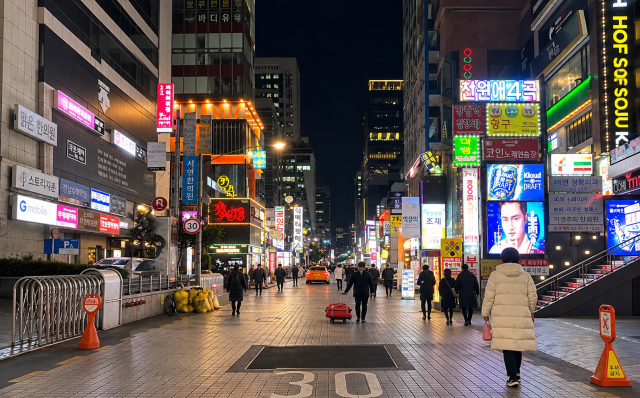
SEOUL, November 26 (AJP) - Year-end is supposed to be a season to be jolly, but that is hardly the case for Korea’s neighborhood pubs facing higher draft beer taxes loom on top of multiple whammies — a protracted consumption slump amid sticky inflation, a spike in borrowing rates and a fading appetite for drinking.
"Without delivery, I can hardly get by," said Kwon In-sun, a 55-year-old who has run a fried chicken pub for 15 years in Seorae Village in Seocho, southern Seoul.
"Thursday and Friday nights in late November and December used to be fully packed. But I only got one booking," she sighed, surveying her 99-square-meter shop with just two tables occupied on Thursday evening.
The Korea Liquor Wholesalers Association earlier this week submitted a petition signed by 11,465 pub and bar owners to the National Assembly, pleading with lawmakers to extend a 20 percent liquor tax reduction on draft beer set to expire on Dec. 31.
The appeal comes as beer shipments have fallen for three consecutive years and the number of traditional beer pubs has shrunk by more than 40 percent from pre-pandemic levels.
Domestic beer shipments dropped from 1.698 million kiloliters in 2022 to 1.519 million kiloliters in 2025, a decline of 10.5 percent, according to National Tax Service data released this year.
The contraction has accelerated, with shipments falling 0.6 percent in 2023, 3 percent in 2024 and 7.2 percent in 2025.
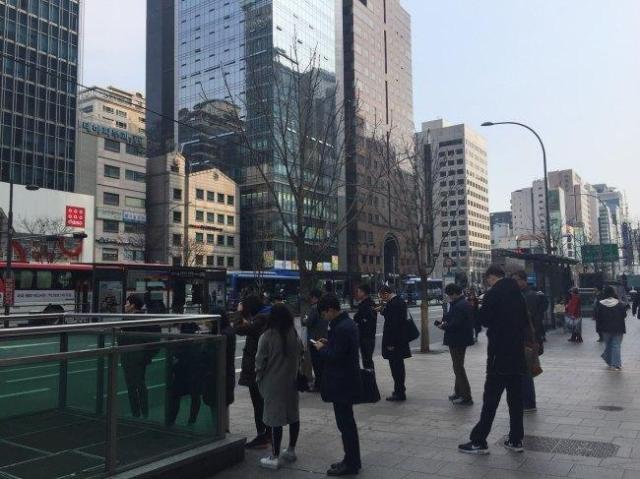
Draft beer has suffered a longer retreat. Shipments by major domestic breweries declined from approximately 223,000 kiloliters in 2019 to 185,000 in 2025, a drop of about 17 percent, according to data released by Democratic Party lawmaker Song Jae-bong.
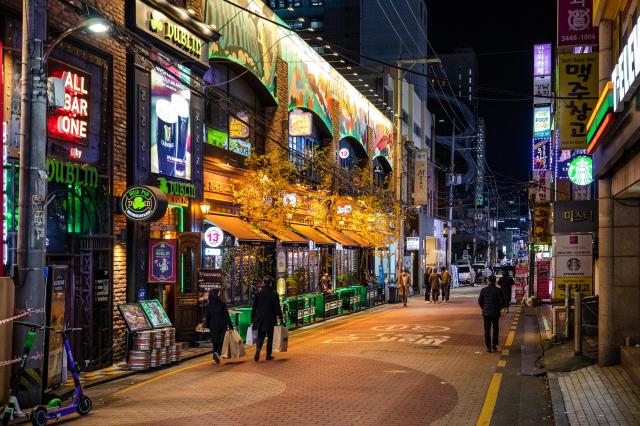
Korean beer pubs, commonly known as “hof,” have long served draft beer alongside fried chicken and other dishes meant for sharing. But both the establishments and the gatherings that sustain them are dwindling.
National Tax Service figures show the number of hof pub operators fell from 32,992 in December 2019 to 19,390 in September 2026, a decline of 41.2 percent. The number of small drinking establishments dropped from 14,413 to 7,718, down 46.5 percent.
Fewer gatherings mean fewer orders of beer and food, while bills for rent, utilities and labor keep coming.
Korea’s corporate after-work gatherings, known as “hoesik,” were once notorious for spilling into second or third rounds of drinks at pubs. The pandemic disrupted that routine.
In a 2026 study published in the International Journal of K-Culture, Kim Hyun-joo of Cheongju University examined the spread of alcohol-free lifestyles and changes in South Korea’s drinking culture.
Drawing on liquor shipment statistics, tax data and health indicators, Kim identified fewer group gatherings, rising living costs and younger generations’ emphasis on self-management as factors associated with declining alcohol consumption.
Joo Young-hoon, an analyst at NH Investment & Securities, also linked the domestic beer market’s weakness to the decline of corporate drinking gatherings in a June 12 research note.
"Beer was experiencing a more severe downturn than soju, which led us to lower the target price for HiteJinro by 8 percent to 23,000 won," Joo said.
A generation reconsidering alcohol
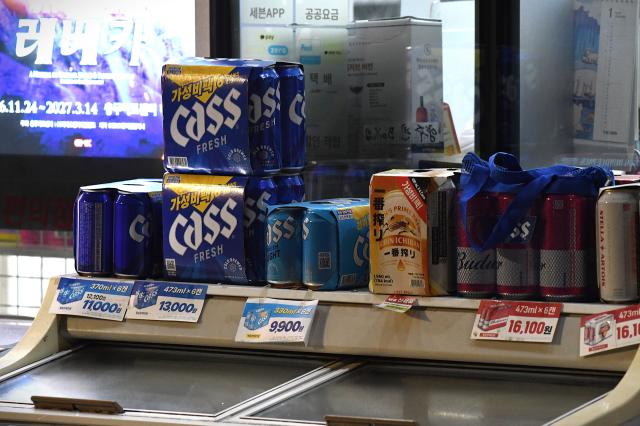
A September report by consumer research firm Opensurvey found that 67.2 percent of South Koreans aged 20 to 39 had consumed alcohol in the previous month, down 4.9 percentage points from 2024. Average monthly drinking frequency fell from roughly seven occasions to 6.4.
A separate survey published this year by University Tomorrow 20s Lab found that 42.5 percent of respondents were drinking less than a year earlier.
Among those cutting back, 51 percent cited health and physical condition, followed by fewer social gatherings at 43.1 percent.
Managing next-day schedules was cited by 29.8 percent, declining interest in alcohol by 29 percent and financial concerns by 27.5 percent.
What goes into the glass is changing, too. Opensurvey found that among recent drinkers aged 20 to 39, the share consuming non-alcoholic beverages in the previous month doubled from 16.6 percent in 2024 to 33.3 percent in 2026.
An industry survey released in April by the agriculture ministry and the Korea Agro-Fisheries & Food Trade Corp. also identified drinking at home and drinking alone as prominent trends.
That shift leaves neighborhood pubs particularly exposed: unlike packaged beer, draft beer depends heavily on customers drinking in pubs and restaurants.
Breweries cut costs as sales slide
HiteJinro’s beer division generated 540.8 billion won in revenue during the first nine months of 2026, down 11.1 percent from a year earlier. Operating profit fell 31.2 percent to 17.7 billion won.
Third-quarter beer revenue declined 9.7 percent to 204.4 billion won, although the division’s operating profit rose 8.4 percent to 11.7 billion won.
"South Korean domestic beer and soju demands have contracted by around 7 percent and 6 percent, respectively, during the third quarter," said Kim Jung-wook, an analyst at Meritz Securities.
"HiteJinro improved overall quarterly operating profit through cost reductions, including a 21.6 billion won cut in marketing expenses," Kim said. He also noted signs of a recovery in beer sales in October.
HiteJinro, Oriental Brewery and Lotte Chilsung Beverage have all introduced voluntary retirement programs this year. HiteJinro’s program, launched in November, was its first in four years.
Higher taxes, fewer customers
South Korea introduced the draft beer tax reduction in 2020 when it switched from taxing beer by value to taxing it by volume, seeking to address disparities between domestic and imported beer and ease the burden on craft breweries.
The switch reduced the tax burden on bottled and canned beer but increased it for draft beer, which had benefited from lower packaging costs under the previous system.
The temporary 20 percent reduction applies to beer in containers of eight liters or more served through separate dispensing equipment. It has been extended twice to support the hospitality industry and stabilize prices.
The current liquor tax on eligible draft beer stands at 708,560 won per kiloliter, compared with the standard rate of 885,700 won. Allowing the reduction to expire would raise the base liquor tax by 25 percent.
Including education tax and value-added tax, the additional burden is estimated at approximately 127 won per 500-milliliter glass. The wholesale industry estimates retail prices could rise by 500 won to 1,000 won per glass once distribution costs and other pricing factors are included.
The government said in September that the reduction was intended as a temporary measure and cautioned against predicting retail price increases substantially exceeding the additional tax burden.
Lawmakers from both the Democratic Party and the People Power Party have proposed retaining or expanding the relief. Song has proposed extending the existing reduction through 2029, while Democratic Party lawmaker Ahn Do-geol has called for a 30 percent reduction through 2028.
For pub owners, absorbing the tax increase would leave less to cover their bills. Passing it on could leave more tables empty. An extension would buy some breathing room, but bringing customers back is a harder task.

Joonha Yoo
Joonha Yoo is a bilingual journalist at AJU Press (AJP), covering music, culture, entertainment and Korea’s automotive industry.
Raised in Fort Collins, Colorado, he often writes from the scene, bringing firsthand detail to stories ranging
from BTS comeback concerts to unique cultural events that catch the world's eye.
Copyright ⓒ Aju Press All rights reserved.
Related News
-
 Drunk Driver Caught Trying to Drink After Accident in Convenience Store
A woman in her 50s was caught attempting to drink after causing an accident while parking her car while intoxicated.On November 25, the Chungnam Provincial Police Agency announced that they had sent a woman, identified as A, in her 50s, to the prosecution without detention on charges of violating the Road Traffic Act (drunk driving).A is accused of driving approximately 2 kilometers while intoxicated from Tangjeong-myeon in Asan to an underground parking lot of an apartment in Baebang-eup on November 13.Footage released on the police agency's official YouTube channel shows A attempting to park her vehicle by moving it back and forth multiple times in the underground parking lot, but she ended up hitting a pillar.A resident who observed A's unusual behavior approached her and detected the smell of alcohol, prompting them to report her. A noticed this and hurriedly left the scene, with the reporter following her.Subsequently, A went to a convenience store, took out a soju bottle, and was about to open it when the police arrived and intercepted her. This act was referred to as 'drunk drinking,' where a person attempts to drink again after causing an accident to interfere with the blood alcohol concentration measurement at the time of the incident.The term 'drunk drinking' gained notoriety following the incident involving singer Kim Ho-joong, and as such incidents increased, a law was enacted in June of last year imposing penalties of one to five years in prison or fines ranging from 5 million won (KRW) to 20 million won (KRW) for obstructing drunk driving measurements.The results of the breathalyzer test conducted at the scene indicated that A's blood alcohol concentration was 0.184%, significantly exceeding the license suspension threshold of 0.08%.The Chungnam Provincial Police Agency sent A to the prosecution on charges of drunk driving, but did not apply the charge of obstructing the measurement of alcohol concentration, considering that she was stopped by police before she could drink more.* This article has been translated by AI.
-
NVIDIA CEO Jensen Huang's Favorite Drink 'Tesla' Set for Release
NVIDIA CEO Jensen Huang's favorite drink, a mix of beer and soju known as 'so-maek,' is set to be released as a ready-made product. Following his visit, there is growing interest in whether this consumption trend will also impact the alcohol market.According to the alcohol industry on November 4, Hite Jinro is preparing to launch a ready-made version of so-maek, which combines its beer 'Terra' and soju 'Chamisul.' This combination, informally referred to as 'Tesla' by consumers, has not yet had its specific release date or product details disclosed.This drink gained attention during a meeting on October 30 last year between Jensen Huang, Samsung Electronics Chairman Lee Jae-yong, and Hyundai Motor Group Chairman Chung Eui-sun.During that meeting, the three toasted with a mix of Terra and Chamisul at Kkanbu Chicken in Gangnam, Seoul. Huang showed interest in the so-maek dispenser known as the 'Terra Tower,' and images of the trio taking so-maek shots were shared publicly.The consumer response following the meeting was notable. Kkanbu Chicken's Samsung branch saw a surge in visitors, leading to a one-hour limit on table usage where Huang had sat. Some locations even experienced stock shortages.Financial results also improved. Kkanbu's revenue last year reached 33.2986 billion won, a 14.0% increase from the previous year. Operating profit also rose by 9.1% to 5.3631 billion won. While it may not be accurate to attribute the entire increase to the October meeting, analysts suggest it benefited from heightened publicity.A similar trend was observed at BBQ, where Huang visited in June. The BBQ Hongdae branch reported over a 20% increase in sales from Friday to Sunday immediately following his visit compared to the same period the previous week.Hite Jinro has also leveraged this buzz in its marketing efforts. Last November, the company released a digital advertisement parodying the chicken and beer meeting with Jensen Huang and domestic business leaders, filmed at the Kkanbu Chicken Samsung branch where the actual meeting took place.The launch of the ready-made so-maek comes at a time when growth in the domestic alcohol market is slowing.Hite Jinro's consolidated revenue for the first half of this year was 1.2094 trillion won, a 4.0% decrease from the same period last year. Notably, beer sales dropped by 11.9% to 336.4 billion won. The company plans to expand its product lineup through the introduction of ready-made so-maek.Competitors have already entered the ready-made so-maek market. Sunyang Soju launched 'Sunyang Oak So-maek' in June, while Life Beer introduced 'Kisomaek' in July.Given that consumers typically adjust the ratio of beer to soju themselves, it remains uncertain how broad the demand for a ready-made version will be. While the connection to Jensen Huang may initially attract interest, actual sales performance will depend on the product's taste, price, and distribution competitiveness.* This article has been translated by AI.
-
Hite Jinro to Launch Ready-to-Drink Soju and Beer Mix
Hite Jinro plans to launch a ready-to-drink product combining its soju 'Chamisul' and beer 'Terra' as early as this month. According to the liquor industry on November 3, Hite Jinro has decided to commercialize the soju-beer mix. A company representative confirmed, "We are preparing to launch the soju-beer product this month." However, specific details regarding the product composition and release timing have not been disclosed. Recently, the liquor industry has seen a trend of products that allow consumers to enjoy the soju-beer mix in a single can without the need for separate mixing. Sanyang Soju introduced 'Sanyang Oak Soju Mix' on June 10, which combines 450ml of lager beer with 40ml of 'Sanyang Oak' soju and 10ml of oak-aged rice distilled soju. Life Beer followed suit a month later in July, launching 'Khee Soju Mix' in collaboration with the distilled soju brand 'KHEE' at CU convenience stores nationwide.* This article has been translated by AI.