SEOUL, November 27 (AJP) —South Korea pledged closer scrutiny of risks spilling from the chip boom into financial markets Friday but gave no update on deploying a stock market stabilization fund, as officials found no unusual short-selling activity despite retail investors’ calls for a temporary ban.
Stock market volatility has increased amid uncertainty over the global AI industry and shifting trade conditions, the Ministry of Finance and Economy said after a meeting of top economic and financial officials.
Officials agreed to closely monitor how risks spread between the real economy and financial markets as their links to the chip cycle deepen.
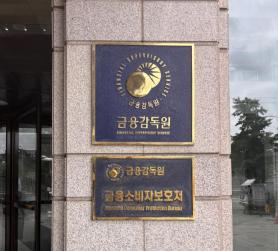
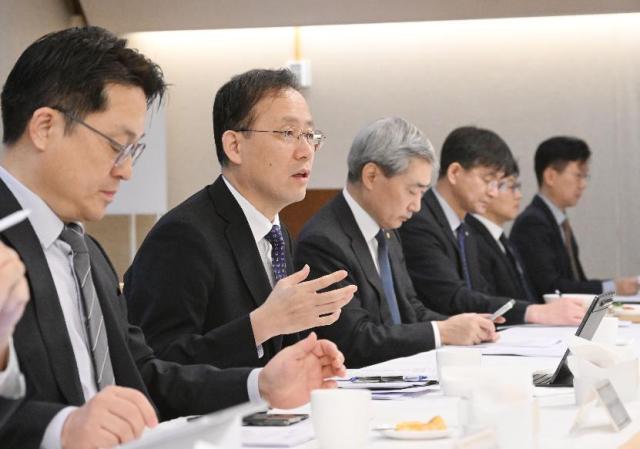
The meeting was chaired by Deputy Prime Minister and Finance Minister Lee Hyoung-il and attended by Bank of Korea Governor Shin Hyun-song, Financial Services Commission Chairman Lee Eog-weon and Financial Supervisory Service Governor Lee Chan-jin.
The government began preparing to deploy a stock market stabilization fund and eased daily share buyback limits for three months under its Nov. 22 stabilization package. The measures followed a 5.21 percent plunge in the KOSPI on Nov. 20.
Friday’s statement offered no further details on the fund’s activation. Officials said they remained ready to take additional steps depending on market conditions.
A temporary short-selling ban, sought by retail investors, was also absent from the Nov. 22 package.
Officials reviewed short-selling trading value, outstanding balances and the number of stocks flagged for overheated short selling but found no unusual trends. A joint task force on illegal short selling launched Nov. 24 will monitor daily trading and respond firmly to violations, the ministry said.
The meeting came a day after the BOK warned that big tech’s growing reliance on bond markets to finance AI investment has made the chip boom more sensitive to financing conditions.
Bond issuance by five major hyperscalers — technology companies operating vast cloud and data-center networks — surged to $169.1 billion in the first half of this year from $20.4 billion a year earlier, according to the central bank’s report.
Officials said currency and bond markets had remained broadly stable as oil prices fell. Housing prices in Seoul were also showing clearer signs of stabilizing.
Kim Yeon-jae
Kim Yeon-jae is a journalist at AJU Press (AJP's English platform),
covering macroeconomics, international finance, and geopolitics.
He closely tracks central bank monetary policies, global energy supply chains,
and the Korean defense industry.
Copyright ⓒ Aju Press All rights reserved.