

Journalist
Kim Dong-young김동영
davekim0807@ajupress.com
ReporterSamsung Biologics, CJ CheilJedang, LG Chem, Celltrion, Naver, Krafton, Nexon, Hyundai Mobis etc. & energy, game, food, bio, petrochemical, AI
Kim Dong-young is a bilingual journalist at AJU Press (AJP), covering Korean tech, energy, and bio/pharma.
He reports from the field at events like CES and APEC, runs AJP's YouTube channels,
and is pursuing a master's at Sogang's MOT program. "I try everything in this AI era that can improve yet preserve the facts. Journalism still serves as my core."
He reports from the field at events like CES and APEC, runs AJP's YouTube channels,
and is pursuing a master's at Sogang's MOT program. "I try everything in this AI era that can improve yet preserve the facts. Journalism still serves as my core."
Latest by Kim Dong-young
-
 South Korea stands to reap the rewards of breeding robot dogs SEOUL, October 21 (AJP) - Humanoids steal the show at China's robot races, but it's the four-legged machines that do the actual work. South Korea is among the few countries outside China that can breed them. KAIST's HOUND once held the Guinness World Record for the fastest 100 meters by a quadruped robot, clocking 19.87 seconds. Zhejiang University's White Rhino took that crown last year with a 16.33-second dash. Beyond the racetrack, however, China's lead is measured in shipments. Chinese companies accounted for more than 90 percent of the 46,000 quadruped robots shipped worldwide last year, according to Counterpoint Research. Industry revenue approached $700 million, including supporting hardware and software. Unitree took 37 percent of the nearly 35,000 units shipped in the first half of this year. About 40 percent of total shipments went into industrial applications, including plant patrols, equipment inspections and firefighting. AgiQuad, spun out of China's AgiBot, led the industrial segment, followed by Deep Robotics with a 26 percent share. "Boston Dynamics has already commercialized Spot and supplies it to industrial sites," Counterpoint said. "Yet Chinese companies dominate the global market in this very product category." Much of the groundwork was laid in the United States. The Defense Advanced Research Projects Agency, or DARPA, funded pioneering machines including Boston Dynamics' hydraulic LS3, conceived as a mechanical pack mule for troops. The U.S. Marine Corps shelved it in 2015 because its gasoline engine was loud enough to give away a unit's position. MIT professor Kim Sang-bae took a quieter route with his DARPA-funded Cheetah robots. Powerful electric motors with little gearing allowed the legs to absorb impacts and respond to contact with the ground—an approach known as quasi-direct drive, or QDD. "Eventually, we hope to develop a machine that can rescue a person," Kim said in a 2018 MIT article, as his team prepared Cheetah III for hazardous environments such as damaged nuclear plants. That research also helped inform China's emerging robot industry. Unitree founder Wang Xingxing's 2016 master's thesis, which described the XDog prototype that preceded the company, cites MIT's Cheetah work. Unitree subsequently pushed into the market with lower-priced machines. Its Go2 launched in 2023 at $1,600, while Spot went on sale to businesses in 2020 at a base price of $74,500. The launch prices covered different machines and capabilities, but illustrate the range of customers manufacturers were pursuing. "Humanoid robots and the quadruped robots fundamentally implement similar technology," said Park Hae-won, a KAIST professor whose laboratory built HOUND. "Many are already in use for reconnaissance, search, or moving around doing inspections." Boston Dynamics says more than 1,500 Spot robots have been deployed worldwide. Their assignments have taken them into places people would rather avoid, from Chernobyl's confinement structure to BP's Mad Dog oil platform and POSCO's blast furnaces. Closer to home, a security version of Spot has patrolled Hyundai Motor and Kia's Seoul headquarters since May. Hyundai Motor Group acquired Boston Dynamics in 2021. "Industrial grounds already have a great many hazards, but existing sensors and CCTV can't cover them all, so robots are going in to cover those areas," said Jeon Han-gu, head of industrial support at the Korea Association of AI Robot Industry. Four legs offer a practical advantage on difficult terrain. "They just don't fall over as much," Jeon said. "A humanoid's hands stay idle when it walks, but a quadruped uses all four legs, so the force can be shared." South Korean companies are also pursuing military applications. Rainbow Robotics, backed by Samsung Electronics, delivered a counterterrorism quadruped prototype developed with Hyundai Rotem to the Army in 2024. LIG Nex1 owns 60 percent of Ghost Robotics, a U.S. maker of military robot dogs. Endurance remains a constraint. Spot typically runs for about 90 minutes per charge, limiting how long it can work before returning to a charger or receiving a fresh battery. KAIST's RAIBO2 offered a glimpse of what might come next. In November 2024, it completed a full marathon without recharging or changing its battery. The research behind the feat was published in Nature this year. Counterpoint expects global quadruped shipments to exceed 90,000 this year, nearly double last year's total, as industrial demand expands. For Korean developers, the challenge is turning laboratory achievements into regular orders. "Korea is in a special situation, so the government, including the military, could buy more of domestic products and provide more subsidies for quadruped robot developments," Park said. There is also room to experiment with what a working robot should look like. Humanoids copy the human body so they can step into workplaces built for people. Robot dogs are less bound by anatomy. Spot can carry an arm where a head might be. Unitree's B2-W rolls on wheels. Others rear up on two legs or assemble from two wheeled halves. Four legs are the only house rule. Judging by the wheels, some designers treat even that as a suggestion. AJP Takeaways - Chinese companies made more than 90 percent of the 46,000 quadruped robots shipped worldwide in 2025, according to Counterpoint Research data released Oct. 20, 2026. - Unitree took 37 percent of global quadruped shipments in the first half of 2026, and Counterpoint expects full-year shipments to top 90,000 units. - Today's electric robot dogs trace back to DARPA-funded research, including MIT professor Kim Sang-bae's Cheetah robots, which used quasi-direct-drive motors. - In South Korea, Rainbow Robotics delivered a counterterrorism quadruped prototype built with Hyundai Rotem to the Army in 2024, and Hyundai Motor and Kia deployed a security version of Boston Dynamics' Spot at their Seoul headquarters in May 2026. 2026-10-21 15:13:15
 -
 Global bio leaders rally around AI in Seoul SEOUL, October 21 (AJP) - Health officials, drugmakers and AI developers converged on Seoul on Wednesday to map how artificial intelligence could reshape biomedical science, from drug discovery to pandemic defense, the Ministry of Health and Welfare said. Health and Welfare Minister Jeong Eun-kyeong and World Health Organization (WHO) chief Tedros Adhanom Ghebreyesus unveiled the AI Healthcare Seoul Declaration at the opening of the two-day 2026 World Bio Summit. The ministry said it is the first AI pledge it has issued jointly with a WHO director-general. The summit's first session was set to examine AI's shift from a research tool into a "scientific agent" that forms its own hypotheses and designs experiments. Topics include multi-agent AI systems, foundation models trained on biological data and virtual cells used to fine-tune clinical trials. The speaker lineup paired executives from firms including Amgen, AstraZeneca, and Novo Nordisk, also with an AI architect from OpenAI is also attending the event. The declaration calls for AI's gains to be shared fairly, oversight scaled to each tool's purpose and risk, AI-based early warning of public health crises and tighter biosecurity. It also acknowledges uneven readiness among countries and leaves implementation to national laws. "The ministry will lead responsible AI innovation so that everyone can share in the benefits of AI development," Jeong said. Tedros' trip is his first to South Korea since he took office in 2017, and the first by a WHO chief since Margaret Chan visited in 2015. Jeong was also scheduled to meet the health ministers of Turkey, Armenia, Tunisia and Qatar to discuss medical AI and digital health. AJP Takeaways - South Korea's Ministry of Health and Welfare and the World Health Organization jointly announced the AI Healthcare Seoul Declaration on Oct. 21, 2026, at the opening of the 2026 World Bio Summit in Seoul. - The two-day summit brings health officials, global drugmakers including Amgen, AstraZeneca and Novo Nordisk, and Korean AI drug developers together to discuss AI's role in drug discovery, clinical trials and pandemic preparedness. - WHO Director-General Tedros Adhanom Ghebreyesus' visit is his first to South Korea since taking office in 2017, and the first by a WHO chief since Margaret Chan's 2015 trip. 2026-10-21 14:42:36
 -
 KAI's onboard AI flags capacity to fix satellite fault in orbit SEOUL, October 21 (AJP) - An artificial intelligence module built by Korea Aerospace Industries (KAI) diagnosed a simulated satellite malfunction in orbit and drafted its own remedy, the South Korean aerospace company said Wednesday. The pilot mission ran Tuesday aboard BEE-1012, a CubeSat that reached orbit on Oct. 7 aboard Nuri, South Korea's homegrown space rocket. A ground station beamed up a mock fault signal, and the module traced its cause and scope before compiling a technical report on how to respond and transmitting it back to Earth, KAI said. Conventional satellites must relay data to the ground and wait for engineers to diagnose a problem. Processing on board allows decisions in real time, which KAI said would bolster a satellite's survivability and sharply cut communication costs. KAI developed the module with defense AI firm Funzin and trained it on tens of thousands of failure scenarios, drawing on fault-prediction systems refined in its aircraft programs. It runs on a chip from Mobilint, which said it was the first Korean-designed AI processor to fly on a satellite. "We plan to integrate all space systems on the basis of AI technology," said Seo Hyun-seok, head of KAI's space business division. The company will begin its main autonomous-operation mission in December and aims to make the technology standard on satellites it builds. AJP Takeaways - Korea Aerospace Industries said on Oct. 21, 2026, that its in-house AI module diagnosed a simulated fault and generated a response report in orbit aboard the BEE-1012 CubeSat on Oct. 20. - BEE-1012 reached orbit on Oct. 7, 2026, on the fifth flight of South Korea's Nuri rocket, which carried a record 15 satellites. The module runs on a neural processing unit from Korean startup Mobilint. - KAI plans to begin its main autonomous satellite operation mission in December 2026 and to make the technology a standard feature of the satellites it builds. 2026-10-21 11:38:15
 -
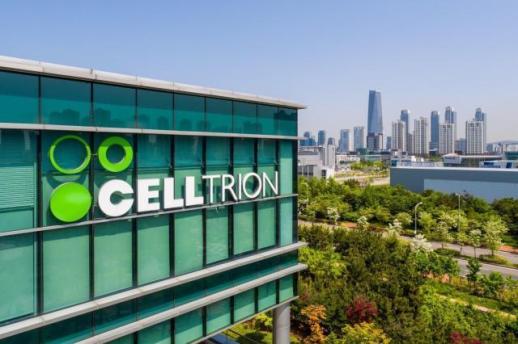 Celltrion taps French pharmacies to extend record run SEOUL, October 21 (AJP) - South Korean biosimilar maker Celltrion is pushing beyond hospital tenders into European pharmacies, aiming to carry its record third-quarter performance into the final months of the year, the company said Wednesday. Celltrion will use Gifrer, the French health care firm it acquired in May, to start pharmacy sales of its denosumab biosimilars for bone disease, Stoboclo and Osenvelt. Gifrer supplies more than 9,000 pharmacies and about 800 hospitals across France. It also brings about 140 over-the-counter drugs and health supplements that give Celltrion a new source of revenue. Newer biosimilars, which earn higher margins, are also gaining ground. Omlyclo, the first omalizumab biosimilar launched in Europe, held about 90 percent of the Spanish market as of July. Avtozma, a tocilizumab biosimilar, won major purchasing tenders in the Netherlands that cover about 58 percent of that country's tocilizumab supply. Vegzelma, a bevacizumab biosimilar for colorectal and breast cancer, has led the European market for 21 consecutive months with about 28 percent share. Yuflyma, an adalimumab biosimilar, holds about 22 percent, the company said. "We will sustain revenue growth and improve profitability in the fourth quarter through sales strategies tailored to each country's market and wider sales of high-margin follow-on products," a Celltrion official said. The drugmaker posted a preliminary consolidated operating profit of 510 billion won ($380 million) for the July-September quarter on revenue of 1.5 trillion won, according to its Oct. 12 disclosure. Both figures were quarterly records. AJP Takeaways - Celltrion said on Oct. 21, 2026, that it is expanding its European sales from hospitals into pharmacies through Gifrer, the French health care company it acquired in May 2026. - Celltrion posted a record preliminary third-quarter 2026 operating profit of 510 billion won on revenue of 1.5 trillion won, according to its Oct. 12 disclosure. - Celltrion's omalizumab biosimilar Omlyclo held about 90 percent of Spain's market as of July 2026, and the company expects its growth to continue in the fourth quarter. 2026-10-21 09:46:06
 -
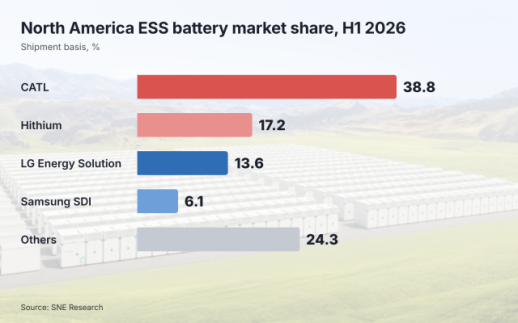 AJP Factbox: China in North America ESS battery market H1 2026 China’s CATL and Hithium together supplied 56 percent of the batteries shipped to North America’s energy storage system (ESS) market in the first half of 2026, according to SNE Research. CATL led with 38.8 percent and Hithium followed with 17.2 percent. South Korea’s LG Energy Solution held 13.6 percent and Samsung SDI 6.1 percent. The share held by Chinese suppliers has come under pressure from U.S. measures. Section 301 tariffs on Chinese lithium-ion batteries for non-vehicle use rose to 25 percent from 7.5 percent in January. President Donald Trump signed Executive Order 14421 on Aug. 26, which allows the Energy Department to restrict foreign-produced grid equipment, including battery storage systems. 2026-10-20 15:24:39
 -
 Korean batteries charge ahead as China retreats from US storage SEOUL, October 20 (AJP) - Chinese batteries that long powered America's grid-scale storage yards are being squeezed out under stricter U.S. regulations, allowing greater room for South Korean producers like LG Energy Solution and Samsung SDI. Major Chinese energy storage system (ESS) suppliers have largely withdrawn from U.S. operations this year, Taiwanese media (name), citing U.S. supply chain sources. The reports attributed the retreat to mounting regulatory restrictions, overlapping tariffs and tighter scrutiny of corporate ownership. Korean battery shares rallied Monday despite a decline in the benchmark KOSPI, as investors weighed the prospect of reduced Chinese competition alongside hopes for a recovery in electric vehicle demand. "It's a mix of factors. Chinese batteries had dominated the U.S. ESS market, but the Trump administration issued an executive order shutting out Chinese products on security grounds," said Han Byung-hwa, a battery analyst at Eugene Investment & Securities. The potential opening is substantial. China's CATL and Hithium accounted for 38.8 percent and 17.2 percent, respectively, of batteries shipped to North America's ESS market in the first half, according to SNE Research. LG Energy Solution held 13.6 percent and Samsung SDI 6.1 percent. Several policy changes are reshaping that market. The U.S. Section 301 tariff on Chinese lithium-ion batteries for non-vehicle use rose from 7.5 percent to 25 percent in January. Storage projects seeking federal tax credits also face restrictions on material assistance from prohibited foreign entities, including covered Chinese companies. President Donald Trump tightened the pressure on Aug. 26 with Executive Order 14421, which gives the Energy Department authority to restrict transactions involving foreign-produced grid equipment deemed to pose national security risks. The order covers battery storage systems and allows the department to require the replacement or removal of existing equipment where the specified risks are identified. It does not automatically require all Chinese batteries already installed to be retired. Implementing rules are due within 120 days of the order, in late December. Beijing has imposed constraints of its own. Last year, China added certain lithium iron phosphate (LFP) cathode production technologies to its restricted-export list, placing controls on the transfer of that know-how overseas. Korean manufacturers are moving to turn the opening into orders and earnings. LG Energy Solution is already seeing the benefit. Its third-quarter operating profit rose 25.7 percent from a year earlier to 756 billion won ($569.2 million), on record quarterly sales of 9.64 trillion won, according to preliminary results released Oct. 8. The company credited higher ESS shipments to North America. Excluding 416.9 billion won in U.S. production tax credits, operating profit stood at 339.1 billion won, about three times the second-quarter figure. LG Energy Solution aims to have more than 50 gigawatt-hours (GWh) of ESS production capacity in North America by year-end. Its Michigan plant, central to that expansion, has been converted entirely to LFP cells. In May, the company signed a $1.8 billion agreement to supply 6 GWh of storage batteries to Michigan utility DTE Energy. On Sept. 30, it announced a master supply agreement with Canadian storage integrator Eneon. Samsung SDI is set to begin mass production of prismatic LFP storage cells this month at StarPlus Energy, its joint venture with Stellantis in Kokomo, Indiana. Last December, it secured an order worth more than 2 trillion won to supply a U.S. energy infrastructure company from 2027 through 2030. Samsung SDI Executive Vice President Cho Yong-hwi said on a July 30 earnings call that secured U.S. ESS orders already accounted for a large share of production capacity through 2029. Including orders anticipated in the second half, "demand is projected to exceed our production capacity from 2028 onward," he said. Analysts expect Samsung SDI to report third-quarter operating profit of 165.4 billion won, reversing a year-earlier loss, according to an FnGuide consensus. Results are due Oct. 29. SK On, the battery unit of SK Innovation, faces a more difficult transition. The company agreed in August to supply about 9 GWh of LFP batteries to NeoVolta Power over five years from 2027, in a deal valued at about 1.5 trillion won. Its storage production lines in Georgia and Tennessee, however, are still ramping up. Meritz Securities forecasts a third-quarter operating loss of 179.4 billion won, wider than a year earlier. The one-off gains that lifted second-quarter operating profit to 821.8 billion won are not expected to recur. Beyond storage, investors are also weighing the possibility of a more favorable U.S. policy environment for electric vehicles. "If Democrats win the U.S. midterm elections, the EV purchase subsidy that Washington scrapped might come back as the House reworks the budget, and that expectation has helped lift share prices," Han said. He expects the U.S. EV market to return to growth next year. "With Chinese batteries blocked in the U.S., any improvement there, whether EVs come back or not, is good for Korean companies. From next year, K-batteries are entering a second golden age," he said. The U.S. may offer Korean battery makers room to regain ground, but their opening there has yet to translate into a broader reversal of Chinese dominance. "China's lithium battery exports rose 36 percent in the first three quarters, as gains elsewhere offset lower U.S. shipments. CATL's share of the EV battery market outside China rose to 34 percent from 29 percent, while the combined overseas share of Korea's three makers fell to 27 percent from 38 percent," said Kim Hyun-soo, an analyst at Hana Securities. AJP Takeaways - Chinese energy storage suppliers have pulled out of nearly all U.S. operations in 2026, citing regulation, tariffs and ownership scrutiny. - CATL and Hithium held a combined 56 percent of North American ESS battery shipments in the first half of 2026, according to SNE Research. LG Energy Solution held 13.6 percent and Samsung SDI 6.1 percent. - Samsung SDI shares rose 11.51 percent and LG Energy Solution 6.33 percent on Oct. 19, 2026. Eugene Investment & Securities analyst Han Byung-hwa expects Korean battery makers to enter a "second golden age" from 2027. - Outside the U.S., Korea's three battery makers saw their combined EV battery share fall to 27 percent from 38 percent, while CATL's rose to 34 percent, according to Hana Securities. 2026-10-20 14:58:18
 -
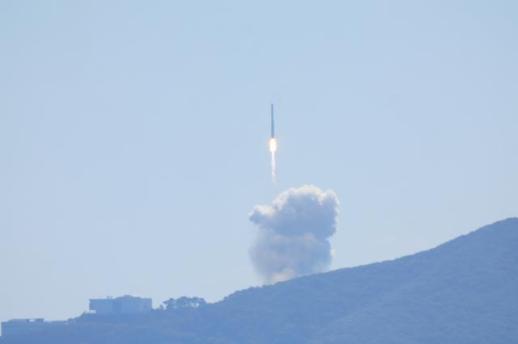 Nuri to carry first military satellites in 2031 SEOUL, October 20 (AJP) - South Korea's homegrown Nuri rocket will carry military satellites for the first time in 2031, under a government plan to launch national satellites on it at least once a year through 2032, the Korea AeroSpace Administration (KASA) said Tuesday. KASA Administrator Oh Tae-seog unveiled the roadmap at a cabinet meeting. Nuri's 11th launch will put four electro-optical satellites for the military's micro-satellite system into orbit. It is the first defense payload assigned to the rocket. Nuri's success rate would reach 90 percent by the 11th flight if every launch before it succeeds. Satellites "are likely to become key military assets," President Lee Jae Myung said at the meeting, urging a sharp increase in investment in rockets and satellites tied to national security. The 12th launch in 2032 will carry three companion satellites for Arirang 8, a synthetic aperture radar satellite. Arirang 8 will be the first Korean satellite to use a multistatic setup, in which radar signals are transmitted and received on separate platforms. Before then, Nuri will loft micro-satellites Nos. 7 to 11 in the second half of 2027, the fifth next-generation medium satellite in 2028 and a lunar-orbit communications satellite in 2029. Two flights in 2030 will carry two low Earth orbit communications satellites and a small lunar lander. The rocket flew for the fifth time on Oct. 7 from the Naro Space Center in Goheung. It carried a record 15 satellites and, for the first time, a payload of more than 1 ton. The five micro-satellites on board sent back their first Earth images about 14.5 hours after liftoff. AJP Takeaways - The Korea AeroSpace Administration said on Oct. 20, 2026, that the Nuri rocket will launch four military EO satellites on its 11th flight in 2031, its first defense payload. - The government plans to launch national satellites on Nuri at least once a year through 2032, including three Arirang-8 companion satellites in 2032. - Nuri's fifth launch on Oct. 7, 2026, carried a record 15 satellites and its first payload of more than 1 ton. 2026-10-20 13:29:53
 -
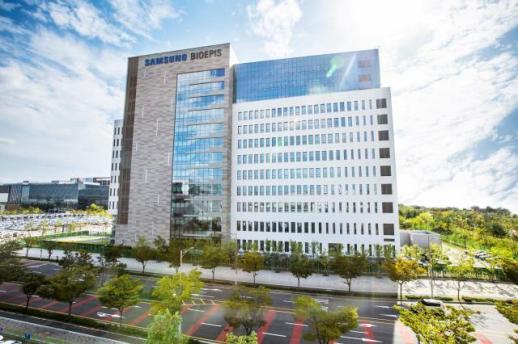 Samsung Bioepis wins 10-year rare disease drug deal in Brazil SEOUL, October 20 (AJP) - Samsung Bioepis will be the sole supplier of a rare blood disease treatment to Brazil's government-run market for 10 years starting next year, the South Korean biosimilar maker said Tuesday. The company signed a partnership agreement with Brazil's Ministry of Health to supply SB12, a biosimilar of Alexion's Soliris (eculizumab). Biosimilars are near-identical, lower-cost versions of biologic drugs. Brazil's health regulator, ANVISA, approved SB12 in December 2024. SB12 treats paroxysmal nocturnal hemoglobinuria (PNH) and atypical hemolytic uremic syndrome (aHUS), two rare blood disorders. Brazil's eculizumab market was worth about $170 million last year, according to the company. The contract was awarded under Brazil's Productive Development Partnership (PDP) program. Brazil launched the program in 2008 to build up its biotech industry, granting global drugmakers supply rights in exchange for transferring production technology to local partners. Samsung Bioepis will work with local drugmaker Bionovis and state-run Bahiafarma. The deal brings Samsung Bioepis' lineup in Brazil to three products. Under earlier PDP contracts, the company has supplied SB4, a biosimilar of Enbrel, since 2019, and SB3, a biosimilar of Herceptin, since 2020, shipping more than 6 million units in total. "We will contribute to improving access to treatment for patients with rare diseases in Brazil by providing a stable supply of high-quality medicines," said Chung Jin-han, a vice president at Samsung Bioepis. AJP Takeaways - Samsung Bioepis said on Oct. 20, 2026 it will be the sole supplier of SB12, its biosimilar of the rare blood disease drug Soliris, to Brazil's government-run market for 10 years starting in 2027. - Brazil's market for eculizumab, the active ingredient in Soliris, was worth about $170 million in 2025. The contract was awarded under Brazil's Productive Development Partnership program, which trades supply rights for technology transfer. - SB12 is the third Samsung Bioepis biosimilar supplied to Brazil, after SB4 (Enbrel) and SB3 (Herceptin). Cumulative shipments of those two have topped 6 million units. 2026-10-20 11:39:26
 -
 Krafton to bring five games to G-Star as rivals sit out SEOUL, October 20 (AJP) - Krafton will showcase five titles at G-Star 2026, South Korea's largest game exhibition, the company said Tuesday, as most of the country's major publishers skip the Busan show this year. Nexon, Netmarble and NC are absent from the exhibitor lineup, leaving Krafton as the lone heavyweight in the main consumer hall. It shares that space with China's HoYoverse, Google Play and mid-sized Korean publisher Webzen, each of which also runs a booth of more than 100 spaces. The four-day show opens Nov. 19 at BEXCO in Busan, and it is Krafton's 10th consecutive year at the event. PUBG, the company's flagship battle royale franchise, will have a large dedicated zone with hands-on play, photo spots and stage programs. Tarae: The Unbound, an Eastern dark-fantasy action role-playing game inspired by the Buddhist cycle of rebirth, will debut a new playable class worldwide at the show. Three other classes, including the samurai, were first shown at Gamescom in Germany in August. Age Twisters is a two-player cooperative adventure in which a grandfather and his granddaughter move between stages of life. Waltz and Jam, an action platformer set in an afterlife city, will be playable ahead of its global release on Dec. 3. Overgeared Hero, a roguelike strategy game built around arranging items inside a backpack, will be available to try on mobile phones and tablets. AJP Takeaways - Krafton said on Oct. 20, 2026, that it will exhibit five titles, including PUBG and four new games, at G-Star 2026 in Busan from Nov. 19 to 22. - Nexon, Netmarble and NC are not on the G-Star 2026 exhibitor list. That makes Krafton the only top-tier Korean publisher with a large booth in the consumer hall, alongside HoYoverse, Google Play and Webzen. - G-Star 2026 is Krafton's 10th consecutive year at the show. Its new title Waltz and Jam will be playable there before its global release on Dec. 3. 2026-10-20 10:27:01
 -
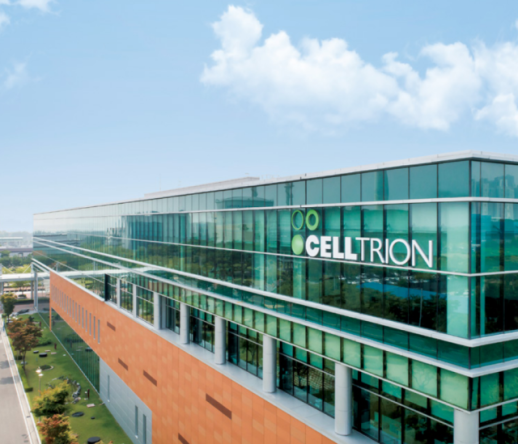 Celltrion eyes record Q4 operating profit SEOUL, October 19 (AJP) - Celltrion aims to post an operating profit of more than 600 billion won ($450.7 million) in the fourth quarter, the South Korean biosimilar maker said Monday, after hitting every quarterly target it set for shareholders earlier this year. The company had pledged operating profits of 300 billion won, 400 billion won and 500 billion won for the first three quarters. Its preliminary third-quarter operating profit, released Oct. 12, came in at 510 billion won, up 69.2 percent from a year earlier, on record quarterly sales of 1.5 trillion won. “We are concentrating all our capabilities on achieving an operating profit of more than 600 billion won in the fourth quarter to fully deliver on this year’s promise,” the company said in a statement. Chairman Seo Jung-jin will tour major markets worldwide from mid-October to inspect local operations and spur sales, Celltrion said. A review Seo held in Uzbekistan earlier this month with about 80 overseas and headquarters executives found the target within reach. Celltrion said it will keep sharpening its competitive edge through new drug development, more efficient research and development spending, lower manufacturing costs and higher productivity. The company also pledged to return one-third of its net profit to shareholders through cash dividends or share cancellations, adding that it will gather shareholder views to settle on “the most reasonable” approach. AJP Takeaways - Celltrion said on Oct. 19, 2026, that it aims to post an operating profit of more than 600 billion won in the fourth quarter of 2026. - The company met its quarterly operating profit targets of 300 billion, 400 billion and 500 billion won for the first three quarters, posting a preliminary 510 billion won in the third quarter. - Celltrion Chairman Seo Jung-jin will tour major global markets from mid-October to push sales, and the company plans to keep returning one-third of net profit to shareholders. 2026-10-19 16:16:00