

Journalist
Kim Dong-young김동영
davekim0807@ajupress.com
ReporterSamsung Biologics, CJ CheilJedang, LG Chem, Celltrion, Naver, Krafton, Nexon, Hyundai Mobis etc. & energy, game, food, bio, petrochemical, AI
Kim Dong-young is a bilingual journalist at AJU Press (AJP), covering Korean tech, energy, and bio/pharma.
He reports from the field at events like CES and APEC, runs AJP's YouTube channels,
and is pursuing a master's at Sogang's MOT program. "I try everything in this AI era that can improve yet preserve the facts. Journalism still serves as my core."
He reports from the field at events like CES and APEC, runs AJP's YouTube channels,
and is pursuing a master's at Sogang's MOT program. "I try everything in this AI era that can improve yet preserve the facts. Journalism still serves as my core."
Latest by Kim Dong-young
-
 Celltrion lifts 2026 buybacks to 500 bln won SEOUL, October 26 (AJP) - Celltrion will buy back another 100 billion won ($75.6 million) of its own shares, swelling its repurchases this year to 500 billion won, the South Korean biosimilar maker said Monday. The company will buy 514,404 shares on the open market from Tuesday to Jan. 26, its second such tranche in less than a month. Celltrion will decide at its March 2027 annual shareholders' meeting whether to cancel the shares, after weighing the move against a larger cash dividend. The drugmaker said its market value has failed to keep pace with its earnings. Its third-quarter operating profit surged 69.2 percent from a year earlier to a record 510 billion won on revenue of 1.5 trillion won, according to preliminary results released Oct. 12. "We will consistently honor our mid- to long-term principle of returning one-third of consolidated net income to shareholders, and keep sharing the fruits of our growth with them," a Celltrion official said. The company retired 9.11 million treasury shares worth about 1.78 trillion won in April, which it called its largest cancellation ever. Celltrion shares fell 1.8 percent to 190,900 won in afternoon trading Monday, giving the company a market value of about 44.37 trillion won. AJP Takeaways - Celltrion said on Oct. 26, 2026 that it will buy back about 100 billion won of its shares between Oct. 27, 2026 and Jan. 26, 2027, bringing its 2026 buybacks to about 500 billion won. - Celltrion posted a preliminary third-quarter 2026 operating profit of 510 billion won, up 69.2 percent from a year earlier, on revenue of 1.5 trillion won. - Celltrion will decide at its March 2027 annual shareholders' meeting whether to cancel the repurchased shares or expand cash dividends instead. 2026-10-26 14:59:01
 -
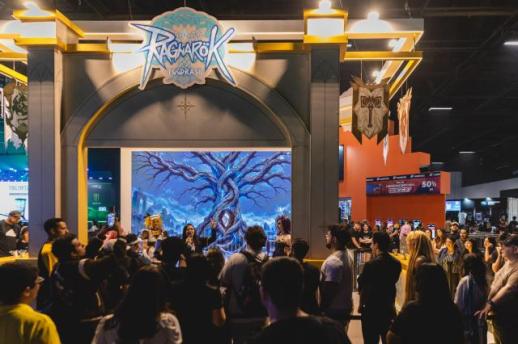 Latin American dreaming for Korean game publishers SEOUL, October 26 (AJP) - Long before K-pop reached Latin American stadiums, a Korean dance machine had teenagers across the region stomping on flashing arrows. Andamiro's Pump It Up, launched in 1999, packed Mexico's arcades in the early 2000s and spread across Latin America. Korean PC games followed into Brazil’s internet cafes. Gravity's Ragnarok Online began commercial service there in 2005 through local publisher Level Up, which later brought in Nexon's Combat Arms in 2010 and Sudden Attack in 2011. Two decades on, Korean game makers are heading south again, this time with local servers and Portuguese voice actors. The draw is a growing market abroad as gaming participation falls at home. The challenge is turning enthusiasm into spending. Latin America's games market is forecast to grow 7.9 percent to $9.3 billion this year, outpacing North America and Europe, according to Newzoo figures cited by Gamescom Latam. In South Korea, gaming participation fell to 50.2 percent in KOCCA’s 2025 survey, down from 74.4 percent in 2022. The survey covers people aged 10 to 69. "Latin Americans are very friendly toward Korean culture" said Kim Jung-tae, a professor at the School of Game at Dongyang University. "The region is not that different from the US cultural sphere, so what works in the Americas can travel there." Kim said fighting over a limited domestic market would offer Korean companies few answers. But winning Brazilian players does not mean they will accept Korean pricing. NC's Aion 2 launched globally on Oct. 5 after opening early access on Sept. 30, offering South American servers and Brazilian Portuguese support. It topped Steam's sales chart in Brazil during early access, the company said. Some of its most-upvoted Brazilian Portuguese reviews, however, took aim at the price. "This is the first game with reverse regional pricing," one player wrote on Steam on Sept. 30. Reviewers said the monthly membership needed to trade on the in-game market costs about 82 reais, roughly 5 percent of Brazil’s monthly minimum wage. The response is far from uniformly negative. Of the game's 2,786 Brazilian Portuguese-language reviews, 69 percent are positive, compared with 52 percent of its English-language reviews. Even criticism can come from committed players. "The game is good in many ways: combat, graphics, soundtrack," wrote one player with more than 160 hours logged, before calling its monetization "extremely predatory." Pearl Abyss' Crimson Desert has received a warmer reception, with 92 percent of its 2,463 Portuguese-language reviews positive. The company added full Brazilian Portuguese voice-over in an update unveiled in August. "A perfect game for salaried workers, freelancers, family men and pet parents," one reviewer wrote. Brazil's growing visibility also extends to competitive gaming. Its team won Krafton's PUBG Nations Cup in Seoul in June, becoming the tournament's first champion from the Americas. Speculation about a Brazilian base for Krafton has followed, although the company has announced no decision. "Krafton constantly reviews business opportunities in various regions to expand its global business," a company spokesperson said. "Nothing has been confirmed or officially decided regarding Brazil." Brazil is strengthening support for its own games industry. President Luiz Inacio Lula da Silva, who secured a fourth term in Sunday's runoff, signed an Oct. 14 decree implementing the country's 2024 games law. It establishes the Brazilian games sector's eligibility for federal support in culture, technology, research and innovation, subject to each program's rules. Beyond Latin America, Kim sees Africa as another potential growth market, although one requiring more time and adaptation. Africa's games revenue is forecast to rise 11.9 percent to $1.98 billion this year, according to Carry1st and Newzoo — faster than Latin America's growth, but from a much smaller base. "Much of Africa's working population is in its early 20s, which opens even more opportunities for us than Asia," Kim said. "But gaps in technology and culture still limit how far Korean games can go there, and it will take more time." Whether the next hit finds its audience in Sao Paulo or Lagos, Kim said, its Korean origins may matter less than the experience it delivers. "Nationality doesn't matter," he said. "A game just has to be fun." AJP Takeaways - Korean game makers are expanding local servers and language support in Latin America as gaming participation declines at home. - Latin America’s games market is forecast to grow 7.9 percent to $9.3 billion in 2026, but player enthusiasm does not guarantee acceptance of subscription fees and in-game charges. - Krafton has made no decision on a Brazilian base. Africa offers another growth prospect, though infrastructure and cultural differences remain barriers. 2026-10-26 14:39:21
 -
 Node.js flaw puts web servers on alert after PHP scare SEOUL, October 26 (AJP) - A newly disclosed flaw in Node.js, software that runs the back end of many websites, could let attackers seize servers remotely, the Korea Internet & Security Agency (KISA) warned, days after a critical PHP bug sent web hosts scrambling for patches. "An attacker who can supply Brotli data that an application decompresses with node:zlib can corrupt process memory, leading to a crash, disclosure of process memory, or remote code execution," the Node.js project said in an Oct. 21 advisory. The project rated the flaw, tracked as CVE-2026 111497 and dubbed Node2Shell, as high severity and fixed it in versions 22.23.4, 24.22.1 and 26.12.1. OpenAI's Codex Security team reported the bug. OpenAI said its AI agents found it while trying to break out of the company's own training sandbox. KISA urged users of affected versions to update. Seoul-based security firm Theori said Monday it had reproduced the flaw. It said services can be exposed through the Node.js runtime itself even when developers' own code is sound. The warning comes on the heels of PHP2Shell, two flaws in the PHP engine that cloud security firm Wiz said it uncovered with the help of AI models. PHP patched them Oct. 21 and scored them 9.2 out of 10 for severity. The language powers about 71 percent of websites with a known server-side language, according to W3Techs. Purported exploit code for PHP2Shell surfaced on GitHub a day before PHP's official disclosure and multiplied on the day of the announcement, according to AhnLab. AJP Takeaways - The Node.js project disclosed CVE-2026 111497 (Node2Shell) on Oct. 21, 2026, a high-severity flaw in Node.js' Brotli decompression code that can allow remote code execution. - OpenAI's Codex Security team reported the bug, and OpenAI said its AI agents found it during internal sandbox-escape testing. - The flaw follows PHP2Shell (CVE-2026 109618 and CVE-2026 109619), two PHP engine flaws patched on Oct. 21, 2026. 2026-10-26 10:10:25
 -
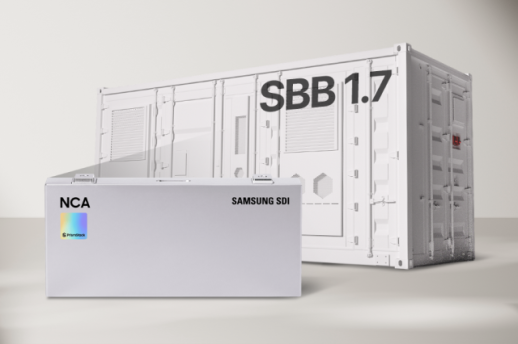 Samsung SDI expands US energy storage push with Texas deal SEOUL, October 26 (AJP) - Samsung SDI has won a 1-gigawatt-hour (GWh) order to supply energy storage systems (ESS) to U.S. power producer Alpha Omega Power (AOP), the South Korean battery maker said Monday. The follow-on deal, signed through its U.S. subsidiary Samsung SDI America, lifts the total volume contracted with AOP to 1.5 GWh after an initial order late last year. AOP will deploy the systems, due for delivery by year-end, at a large-scale Texas power project set to break ground next year. The order covers the Samsung Battery Box 1.7, an all-in-one unit built with high-nickel NCA cells at StarPlus Energy, Samsung SDI's Indiana joint venture with Stellantis. It packs 17 percent more energy density than its predecessor into the same 20-foot container and holds NFPA 855 and UL 9540 safety certifications. All three Korean battery makers are retooling U.S. electric vehicle lines for energy storage as EV demand cools, and Samsung SDI's turn has gathered pace this year. It landed a 1.5 trillion won ($1.13 billion) U.S. ESS order in March and agreed in August to buy General Motors' stake in their Indiana joint venture, with storage batteries the near-term priority. Samsung SDI says it is the only non-Chinese maker of prismatic ESS batteries in North America, a format it says outlasts pouch cells in durability and fire safety. The company is in talks with several other U.S. customers and expects further orders soon. "Alpha Omega Power is one of the fastest growing independent power producers in the country, and the kind of sophisticated operator we want to partner with to tackle grid reliability challenges," said Fabrice Hudry, executive vice president and head of the ESS team at Samsung SDI America. He said the company would widen its footing in North America through "differentiated technology and local production capabilities." AJP Takeaways - Samsung SDI said on Oct. 26, 2026 that its U.S. unit had signed a 1 GWh energy storage supply deal with Alpha Omega Power, bringing their total contracts to 1.5 GWh. - The SBB 1.7 units will be made at StarPlus Energy in Indiana, Samsung SDI's joint venture with Stellantis, for a Texas power project due to break ground in 2027. - The order follows Samsung SDI's 1.5 trillion won U.S. ESS deal in March 2026 and its August 2026 agreement to buy General Motors' stake in their Indiana battery joint venture. 2026-10-26 09:27:49
 -
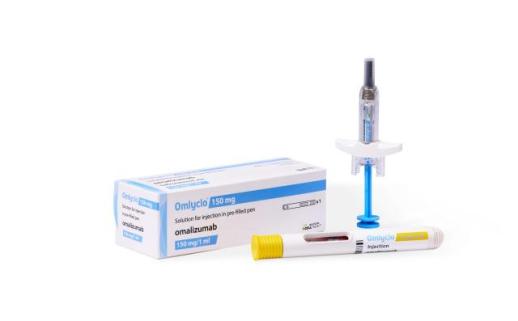 Celltrion lands exclusive US deals for two biosimilars SEOUL, October 26 (AJP) - South Korea's Celltrion has won an exclusive U.S. supply contract for its allergy drug Omlyclo and autoimmune treatment Avtozma, edging out the original brands for preferred status at a major American health care group, the company said Monday. The contract, signed earlier this month by Celltrion's U.S. unit, covers Omlyclo's prefilled syringe and every intravenous and subcutaneous form of Avtozma. The group runs hospitals, insurers and a pharmacy benefit manager (PBM), and its hospitals already buy Celltrion's bone drugs Stoboclo and Osenvelt. Both drugs will be listed as preferred medicines on the group's insurance formulary and supplied to its affiliated hospitals. Deliveries and reimbursement began this month, so insured patients with a doctor's prescription can now get either treatment covered by their plan. Omlyclo, the first Xolair biosimilar launched in the U.S., also struck a deal this month with a major global retailer and went on sale at its in-store pharmacies. It replaced the original as the exclusive preferred drug for most prescriptions under the retailer's employee health plan, which covers about 350,000 people. The drug also joined the retailer's prescription discount program for about 74 million members, which lets uninsured people and dependents buy it at a lower price. Celltrion said talks with several large PBMs to list its high-margin new products are in the final stage, with deals expected in the fourth quarter. "Omlyclo and Avtozma have entered the supply channels of major health care and retail companies from early in their U.S. launch, proving our product competitiveness and direct sales capabilities," said Kim Bon-joong, chief executive of Celltrion's U.S. unit. AJP Takeaways - Celltrion's U.S. unit signed an exclusive supply contract in October 2026 with a major U.S. health care group that runs hospitals, insurers and a PBM. The contract puts the biosimilars Omlyclo (omalizumab) and Avtozma (tocilizumab) on the group's preferred drug list ahead of the original brands. - In October 2026 Omlyclo also became the exclusive preferred drug for most prescriptions under a major global retailer's employee health plan, which covers about 350,000 people. It was added to the retailer's discount program for about 74 million members. - Celltrion expects to close formulary listing deals with several large U.S. PBMs in the fourth quarter of 2026. 2026-10-26 09:14:13
 -
 Call of Duty's fictional Korean war hits close to home SEOUL, October 22 (AJP) - North Korea’s preparations to resume propaganda broadcasts and its recent missile tests have renewed tensions on the Korean Peninsula, alongside accusations that it planted a border mine that wounded three South Korean soldiers. For South Koreans watching the destruction in Ukraine and the Middle East, the prospect of similar devastation reaching their own streets carries a particular dread. For those who survived the 1950–53 Korean War, it also carries memories. Now a video game is giving that prospect a vivid and unsettling form. Call of Duty: Modern Warfare 4, which Activision releases Oct. 23, puts players in the boots of a young South Korean marine after North Korean troops overrun Hajin, a fictional South Korean city. Early access to the campaign began Oct. 16, a week before the full release. Among Korean players, the response has mixed enthusiasm for the game with unease at seeing familiar surroundings become a battlefield. "Watching Korea get bombed and soldiers get swept away made me uncomfortable," wrote a Korean-language Steam reviewer using the name "문라바." The reviewer added that civilian massacres in earlier entries had barely registered. Another reviewer, a former marine, said the game brought "a vague fear of war" to the surface amid North Korea’s provocations. Hajin is fictional, but the tension it borrows from is not. A North Korean mine planted south of the inter-Korean border wounded three South Korean soldiers in the Demilitarized Zone on Sept. 21, according to Seoul and the U.N. Command. Pyongyang denies responsibility. Kim Yo-jong, sister of North Korean leader Kim Jong-un, said Thursday that propaganda loudspeakers aimed at the South would be ready "in a matter of days." State media had told border troops a day earlier to take "prompt and resolute action" if threatened. The game draws on that atmosphere while inventing its own city and ruling family. Its plot includes a coup in which the supreme leader’s sister seizes power and has her brother executed. Players have also been sharing a mission in which shooting a portrait of the Supreme Leader gets the player’s character beaten and executed by his own comrades. The campaign trailer has drawn more than 97 million YouTube views since Sept. 17. To promote the release, Activision recreated a Korean back alley from the game, complete with a convenience store, in Los Angeles and London. Under a Korean trailer, one YouTube user wrote that the situation looked "very similar to right before the Korean War." "Imagine you watching football and see this in the commercial break," read the top comment on the same trailer, with about 1,200 likes. For some players, the game’s emotional weight comes from family history as much as present-day tensions. About 92 percent of 6,055 Steam user reviews were positive as of Oct. 22. The most-upvoted review, marked helpful by 866 users, came from a self-described South Korean military veteran using the name "Old Man." He described the game as a fantasy every private has entertained about taking out Pyongyang’s leadership. Then his review turned personal. "My grandfather fled south during the Korean War and was never able to see the family he left behind in the North ever again," he wrote. "I played this game thinking about him." North Korea has appeared as a video-game antagonist before. Call of Duty: Advanced Warfare opened in 2014 with U.S. Marines defending a near-future Seoul against North Korean troops. THQ’s 2011 shooter Homefront went further, imagining a Korea unified under the North occupying the western United States. South Korea banned Homefront, while its Japanese release replaced references to North Korea with "a certain country to the north." Modern Warfare 4 names North Korea outright. Its fictional characters and locations still leave Korean players confronting a recognizable fear: renewed war at home. "Some may simply find it uncomfortable, but it can also serve as a wake-up call," said Lim Jae-cheon, a professor of unification, diplomacy and security studies at Korea University. "It is history that actually happened, and it must never be repeated." The unease over turning war into entertainment extends beyond the Korean Peninsula. Battlefield 1 and Battlefield V revisited the world wars, while Rising Storm 2: Vietnam returned to the Vietnam War. In each, players enter a conflict whose outcome is already known. Historical distance, however, does not settle questions about whose suffering becomes the setting for a game. The Iraq War shooter Six Days in Fallujah drew calls for a ban from a U.S. Muslim civil rights group, which branded it an "Arab murder simulator." Other developers have approached war through the lives of civilians trying to survive it. Kyiv-based Starni Games released Ukraine War Stories in 2022. Its visual novels follow civilians escaping Russian occupation in Hostomel, Bucha and Mariupol, drawing on eyewitness accounts. Among them is that of a team member who hid with his family in a Bucha basement. Modern Warfare 4 depicts a war that has not happened. Yet it unfolds on a peninsula where the last one never formally ended: the 1950–53 Korean War stopped with an armistice, not a peace treaty. For some Korean players, enjoying the campaign has only sharpened their aversion to its premise. One reviewer gave the game 8 out of 10, but said finishing it had reinforced a conviction that extended beyond the screen. "War must never happen on the Korean Peninsula. Never." AJP Takeaways - Activision releases Call of Duty: Modern Warfare 4 on Oct. 23, 2026. Its campaign centers on a fictional North Korean invasion of South Korea. - The game arrives as inter-Korean tension rises. A Sept. 21 mine blast in the DMZ injured three South Korean soldiers, and Pyongyang said on Oct. 22 that border loudspeakers would be ready within days. - About 92 percent of 6,055 Steam user reviews were positive as of Oct. 22, 2026. The campaign trailer passed 97 million YouTube views. - Earlier Korea-themed shooters were handled more cautiously. THQ’s 2011 game Homefront was banned in South Korea, and Japan removed its North Korean references. 2026-10-22 15:02:31
 -
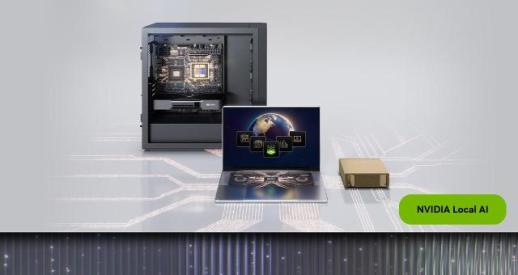 Nvidia leans on Korea to ease AI capacity crunch SEOUL, October 22 (AJP) - Nvidia is pouring money into suppliers from South Korea to Taiwan to ease a severe shortage of AI hardware capacity, with Samsung Electro-Mechanics the latest company to sign. The U.S. chip designer struck capacity deals with six suppliers in substrates, packaging, testing and optics, aiming to raise substrate supply 2.5 times over three years. Samsung Electro-Mechanics announced Wednesday that it will build jointly funded lines in Sejong and Busan and start shipping this year. "Demand is extraordinary. Capacity is the constraint," Nvidia Chief Executive Jensen Huang said in a statement released during the company's GTC Berlin event on Wednesday. Nvidia is giving Japan's Ibiden a multibillion-dollar advance to reserve capacity at its Ono plant, and Taiwan's King Yuan Electronics $1.1 billion to support new U.S. testing facilities. Amkor Technology will expand advanced packaging in South Korea, targeting a more than 300 percent increase in interposer wafer capacity by the end of 2028. Nvidia orders are projected to account for a significant share of Samsung Electro-Mechanics' total package substrate capacity by 2028, the companies said. The Korean firm plans to embed its own capacitors in the substrates to curb power noise. In September, it approved a 4.27 trillion won ($3.21 billion) expansion of its Sejong plant. The deals add to Nvidia's commitments in the country, where it pledged last October to supply more than 260,000 GPUs to the government and companies including Samsung, SK and Hyundai. AJP Takeaways - Nvidia announced capacity agreements with six suppliers on Oct. 21, 2026. The deals cover substrates, packaging, testing and optics, and aim to raise substrate supply 2.5 times over three years. - Samsung Electro-Mechanics will supply Nvidia with AI chip substrates from 2026 under a multiyear deal. The two companies are jointly funding dedicated lines at the Sejong and Busan plants. - Amkor Technology will expand advanced packaging in South Korea, targeting a more than 300 percent increase in interposer wafer capacity by the end of 2028. 2026-10-22 11:47:00
 -
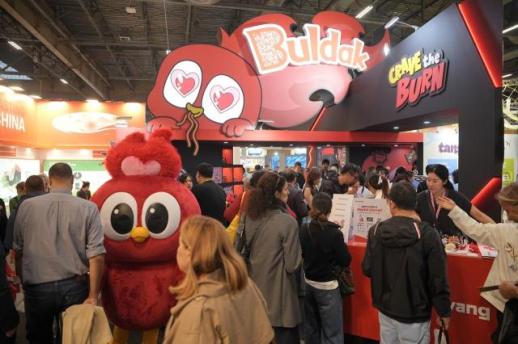 Samyang brings Buldak heat to Paris food fair SEOUL, October 22 (AJP) - Samyang Foods drew about 56,000 visits at its first appearance at SIAL Paris, the world's largest food trade fair, as the South Korean maker of Buldak fire noodles pushes deeper into European retail. The count, compiled by the company, covered its "Crave Land" booth and business lounge over the five-day show that ended Wednesday. More than 16,000 people sampled Buldak noodles and Tangle, its protein pasta line, at tastings held four times a day. Samyang's European sales jumped 61 percent from a year earlier to 80.6 billion won ($60.7 million) in the second quarter, powered by brisk demand in Germany and France. The company runs its push into the region from a sales subsidiary in the Netherlands. Samyang said the fair laid the groundwork for new listings in France and other major European markets. "Building on the fervent response from local consumers and the buyer network we secured here, we will cement the brand power of Buldak and Tangle in Europe and broaden our distribution on all fronts," a company official said. Overseas sales topped 600 billion won for the first time in a quarter, accounting for about 84 percent of Samyang’s second-quarter revenue of 770.3 billion won, which rose 39.3 percent from a year earlier. AJP Takeaways - Samyang Foods, the South Korean maker of Buldak noodles, made its debut at SIAL Paris 2026, held Oct. 17-21, 2026, and logged about 56,000 visits to its booth and business lounge, by its own count. - Samyang's European sales rose 61 percent from a year earlier to 80.6 billion won in the second quarter of 2026, driven by Germany and France. - Overseas markets made up about 84 percent of Samyang's second-quarter 2026 revenue of 770.3 billion won, and operating profit rose 46.7 percent to 176.2 billion won. 2026-10-22 10:09:22
 -
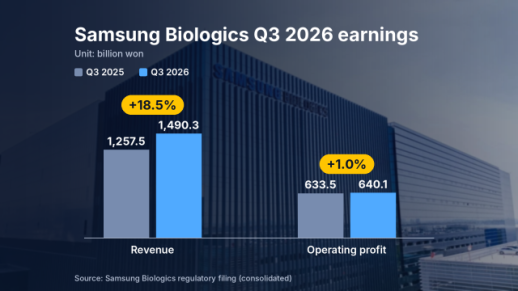 AJP Factbox: Samsung Biologics Q3 2026 sales top $1 billion Samsung Biologics on Oct. 21 posted in a regulatory filing consolidated revenue of 1.49 trillion won ($1.12 billion) for the quarter ended September, up 18.5 percent from a year earlier, driven by full-capacity operations at Plants 1 through 4, the ramp-up of Plant 5 and the first sales from its Rockville, Maryland, facility. Operating profit rose 1 percent to 640.1 billion won. The company raised its 2026 revenue growth target to 20 percent from a range of 15 to 20 percent, pointing to annual sales of about 5.47 trillion won. Nine-month revenue reached 4.07 trillion won, up 24.4 percent from a year earlier. 2026-10-21 16:28:44
 -
 Samsung Biologics Q3 sales jump 19% on full plant run SEOUL, October 21 (AJP) - Samsung Biologics, South Korea's largest contract drugmaker, posted an 18.5 percent jump in third-quarter revenue on Wednesday, as its four flagship plants ran at full tilt and newly added capacity in South Korea and the United States began to pay off. According to regulatory filings, consolidated revenue climbed to 1.49 trillion won ($1.12 billion) in the July to September quarter from 1.26 trillion won a year earlier. Operating profit edged up 1 percent to 640.1 billion won. Net profit slid 21.2 percent to 391.1 billion won. From the previous quarter, revenue rose 12.8 percent and operating profit 9.1 percent. The company explained that the ramp-up of Plant 5 and the first sales from a Rockville, Maryland, facility acquired in March lifted the top line. In a separate filing, Samsung Biologics raised its 2026 revenue growth target to 20 percent, the top of its earlier range of 15 percent to 20 percent, pointing to annual sales of about 5.47 trillion won. The results arrived a day after the company's labor union postponed a three-week strike slated to begin Oct. 26. The Incheon branch of the Seoul High Court ruled on Oct. 16 that nine core production processes must keep running at normal levels during any walkout. Samsung Biologics estimated on May 1, the first day of a five-day full strike, that production disruptions had caused losses of about 150 billion won. AJP Takeaways - Samsung Biologics reported consolidated third-quarter revenue of 1.49 trillion won on Oct. 21, 2026, up 18.5 percent from a year earlier, while operating profit rose 1 percent to 640.1 billion won. - The company raised its 2026 revenue growth target to 20 percent, the top of its earlier 15 percent to 20 percent range, after nine-month revenue climbed 24.4 percent to 4.07 trillion won. - The company's labor union postponed a three-week strike set to begin Oct. 26, 2026, after the Seoul High Court's Incheon branch ruled on Oct. 16 that nine core production processes must run at normal levels during any walkout. 2026-10-21 16:25:39