

Journalist
Kim Dong-young김동영
davekim0807@ajupress.com
ReporterSamsung Biologics, CJ CheilJedang, LG Chem, Celltrion, Naver, Krafton, Nexon, Hyundai Mobis etc. & energy, game, food, bio, petrochemical, AI
Kim Dong-young is a bilingual journalist at AJU Press (AJP), covering Korean tech, energy, and bio/pharma.
He reports from the field at events like CES and APEC, runs AJP's YouTube channels,
and is pursuing a master's at Sogang's MOT program. "I try everything in this AI era that can improve yet preserve the facts. Journalism still serves as my core."
He reports from the field at events like CES and APEC, runs AJP's YouTube channels,
and is pursuing a master's at Sogang's MOT program. "I try everything in this AI era that can improve yet preserve the facts. Journalism still serves as my core."
Latest by Kim Dong-young
-
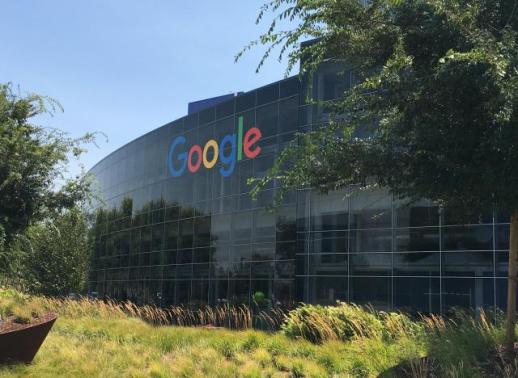 Google Korea wins final ruling over 154 bln won tax bill SEOUL, October 12 (AJP) - Google Korea has won a final ruling against a tax bill of more than 154 billion won ($115.4 million), after South Korea's Supreme Court threw out an appeal by the tax authorities, according to the legal community on Monday. The Supreme Court's Second Division, presided over by Justice Oh Kyung-mi, dismissed the appeal by the head of the Yeoksam Tax Office on Oct. 8 without a full review. The decision cemented two lower court rulings in favor of the Korean unit of the U.S. tech giant. Tax authorities imposed the corporate and local income taxes in 2020. They took issue with part of Google Korea's domestic advertising revenue which was sent to the group's Singapore-based regional headquarters, Google Asia Pacific, between September 2016 and December 2018. The authorities classified the payments as taxable royalties for the use of copyrights and know-how. Google Korea countered that the money was business income of the Singapore entity and therefore beyond Korea's taxing reach, and challenged the levy in court. The Seoul Administrative Court sided with Google Korea in January 2025, ruling that the payments were not compensation for computer programs, know-how or information on knowledge and experience. The Seoul High Court upheld the ruling on May 7. It also overturned the lower court's decision on a related local tax claim against the Gangnam-gu Office and dismissed it, saying the local tax would be canceled automatically along with the corporate tax. The ruling follows a series of court wins by global tech companies against Korean tax authorities. The Seoul Administrative Court in April canceled 68.7 billion won of about 76.2 billion won in taxes challenged by Netflix Services Korea, in a lower court ruling. AJP Takeaways - South Korea's Supreme Court on Oct. 8, 2026 dismissed the Yeoksam Tax Office's appeal without a full review, finalizing Google Korea's win against a tax bill of more than 154 billion won. - Tax authorities had treated payments Google Korea sent to Singapore-based Google Asia Pacific between September 2016 and December 2018 as taxable royalties. The courts found they could hardly be deemed compensation for know-how. - The ruling follows the Seoul Administrative Court's decision in April 2026 to cancel 68.7 billion won of a 76.2 billion won tax bill imposed on Netflix Services Korea. 2026-10-12 14:09:27
 -
 Home of Baby Shark can't get enough of Bukang Photo: AJP Yoo Na-hyun Visual news · Busan Bukangthe Shark Busan made a star of a wild shark. Keeping her safe is harder. 1,015,800visitors in 17 days Day 21in the canal 0meals seen Oct 8, 2026 · Data as of Oct 7 Data, investigation, script AJP Kim Dong-young Infographics AJP Song Ji-yoon Photos & video AJP Yoo Na-hyun SCROLL ENDANGERED 01 · Who she is Three weeks. One shark. A million fans. She swam into Busan's North Port canal on Sep 18 and chose to stay. Photo: AJP Yoo Na-hyun That fin is a dusky shark First reported as a bronze whaler. On Oct 6, close-up video showed a ridge between her two dorsal fins, and NIFS corrected the species. She is female and about 3 meters long. Endangered Dusky sharks are listed as Endangered on the IUCN Red List. They grow slowly and give birth only every 2–3 years. Bukhang북항 · North Port + -ifriendly ending = Bukang-i부캉이 · said aloud There's no "shark" in her name. North Port opened in 1876 as Korea's first modern port. 02 · Where she lives A canal 1.3 km long One footbridge from Busan Station. Six bridges cross it. She stays between the 4th and 5th. SEA 123456 SHE STAYS HERE Oct 2 net ~100 m from sea Schematic, not to scale 1.3km long 2.5–4meters deep 60meters wide, max Watch her Back and forth. Over and over. Follow the fin along the wall. The crowd moves with her. She swims the same stretch of wall again and again. Scientists at NIFS liken it to the stress behavior of animals kept in captivity. 03 · Sep 18 – Oct 7 Two evictions. Zero wins. Sep 18The first try took six hours The Coast Guard gave up after scientists warned that forcing her could make her aggressive. Oct 6City stops trying No more rescue attempts for now. Officials are monitoring her instead. 04 · The crowd 1,015,800 people came to see her in 17 days Photo: AJP Yoo Na-hyun Peak day: 70× normal Each dot is 2,000 people. A usual day before the shark ~2,000 Sep 26, Chuseok holiday 140,000 Shark vs. Expo One shark beat a national expo 05 · Nearby sales The shark economy Toy sales at a nearby Emart24 rose 741% too. 06 · The city's response Branded fast. Protected slowly. What Busan did Gave her a nickname within three days Named her honorary PR ambassador (91% approval in a poll) Plans to trademark her name after 5 private filings What it couldn't do Ban flashlights at night. It can only make announcements. Follow a shark manual. None exists yet. Keep her from getting hurt Photo: AJP Yoo Na-hyun At night Lights in the water Visitors shine flashlights and lanterns into the shallow canal after dark. Oct 7: a wound on her snoutScientists believe she thrashed in the light and scraped the wall or bottom. 07 · Health watch Warm enough, for now Below 18°C the water is unsuitable for her. A large shark can last about a month without food. TOO COLD PREFERRED 18–26°C 10°18°20°26°30° CANAL ~20°C · OCT 8 Elsewhere China tried rules, not nets A spotted seal named Nana swam about 200 km back to Changhai County after being moved. Officials let her stay. Bye for now… back in 6 days! Busan · Bukang Moved twice. Failed twice. Now monitoring. Lights at night can't be banned. Changhai · Nana "Respect her choice" No touching, no feeding, no disturbing. A buffer zone and daily patrols. 08 · Test yourself Real or fake? Music on Read along with a playful sea tune, “Sailor’s Hornpipe.” Data, investigation, script AJP Kim Dong-young Infographics AJP Song Ji-yoon Photos & video AJP Yoo Na-hyun Music: “Sailor’s Hornpipe,” traditional, after Harding’s All Round Collection (1905). Visitor figures are Busan Facilities Corp. counts as reported by Korean media; the Oct 5 total was calculated from published running totals. A later total of 1,062,800 was reported on Oct 7 without an as-of date. Data as of Oct 7, 2026. Sources Busan Facilities Corp. via Money Today, Hankyung, Edaily, Munhwa Ilbo National Institute of Fisheries Science (NIFS) press release, Oct 6 Kookje Shinmun (canal size; snout wound), Kyunghyang Shinmun (wound timing) Kukmin Ilbo (trademark filings; no ban on lights), Hankyung (night lanterns) Weekly Kyunghyang fact-check (name origin, ambassador) Seoul Economic Daily (retail sales; canal temperature), Etoday (CU sales; net) Yeosu World Islands Expo Organizing Committee via Etoday (Expo through Oct 1) Financial News (staff on site), YTN (first sighting) The Paper via NetEase; Jimu News (Nana) Meet Bukang, Busan's unexpected shark star 2026-10-12 11:16:33
 -
 AJP Factbox: Celltrion sets quarterly milestone in Q3 2026 Celltrion on Oct. 12 earnings guidance filed its largest-yet quarterly operating profit of 510 billion won ($381 million) for the quarter ended September, up 69.2 percent from a year earlier, driven by higher-margin newer biosimilars. Revenue rose 45.8 percent on year to 1.5 trillion won. The result marked the first time Celltrion’s quarterly operating profit topped 500 billion won and the third straight quarter it beat its own profit targets set early this year. Operating profit for the first nine months jumped 85.2 percent to 1.28 trillion won. 2026-10-12 09:30:24
 -
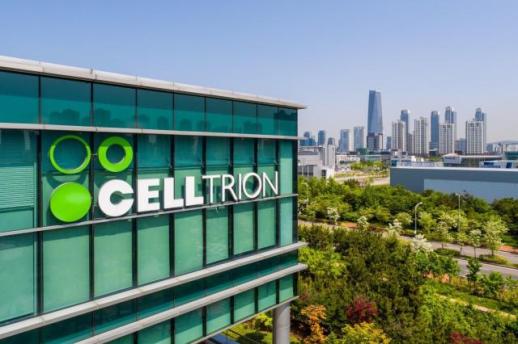 Celltrion's Q3 profit hits record on newer biosimilars SEOUL, October 12 (AJP) - Celltrion’s third-quarter operating profit surged 69.2 percent from a year earlier to a record 510 billion won ($380.3 million), powered by higher-margin newer biosimilars, the South Korean drugmaker said in a preliminary earnings filing Monday. Revenue climbed 45.8 percent to 1.5 trillion won, also a quarterly high, and the operating margin widened 4.7 percentage points to 34 percent. Quarterly operating profit topped 500 billion won for the first time since the company’s founding. Operating profit for the first nine months jumped 85.2 percent to 1.28 trillion won. Omlyclo, Celltrion’s near-identical version of the asthma and allergy drug Xolair, led gains in Europe. The drug is sold in 26 countries there and held more than 90 percent of Spain’s market as of July, according to local market data cited by the company. Steqeyma and Yuflyma, its versions of Stelara and Humira, took 15 percent and 11 percent of the U.S. market in August. Omlyclo launched in the United States this month as the first Xolair biosimilar there and won preferred status with a major pharmacy benefit manager. “We will do our utmost to achieve our fourth-quarter and annual business plans, building on growth drivers such as the U.S. launch of Omlyclo and expanded supply in Europe,” a Celltrion official said. AJP Takeaways - Celltrion reported preliminary third-quarter 2026 operating profit of 510 billion won on Oct. 12, 2026, up 69.2 percent from a year earlier and a quarterly record. - Third-quarter revenue rose 45.8 percent to 1.5 trillion won, and the operating margin widened to 34 percent, up 4.7 percentage points. - Celltrion beat its own quarterly profit targets for a third straight quarter and launched its omalizumab biosimilar Omlyclo in the United States in October 2026. 2026-10-12 08:36:25
 -
 Holiday crowds flock to Busan's stranded shark SEOUL, October 10 (AJP) - Holiday crowds packed Busan's North Port on Saturday, the second day of a three-day Hangeul Day weekend, to catch a glimpse of Bukang, an endangered shark that has stayed in a narrow waterfront canal for 23 days. Visitors to North Port Waterfront Park topped 1.2 million as of Friday. On an ordinary day the park drew about 2,000 people. The shark, first spotted on Sept. 18, is a female dusky shark about 3 meters long. The National Institute of Fisheries Science confirmed the species on Oct. 6 after studying close-up footage. The International Union for Conservation of Nature lists dusky sharks as endangered. Authorities failed twice to steer the shark back to open sea, first with water pumps on Sept. 29 and then with a custom-made net on Oct. 2. The institute has since called off the effort and left the passage open so the shark can swim out on its own. Scrapes have since appeared on the shark’s snout. The institute said they may have come from sudden turns in reaction to outside stimuli, and it urged visitors to “stay away from the waterway and refrain from shining lanterns or mobile phone lights directly” at the animal. Part of the park now closes at 6 p.m., and some YouTubers have started night patrols to shield the shark from glare. Dusky sharks generally favor waters between 18 C and 26 C. Busan’s harbor was at about 23 C in early October. AJP Takeaways - Bukang-i, a female dusky shark about 3 meters long, has stayed in a canal at North Port Waterfront Park in Busan, South Korea, since Sept. 18, 2026. - The park had drawn more than 1.2 million visitors as of Oct. 9, 2026, according to Busan Infrastructure Corp., against a usual daily average of about 2,000. - The National Institute of Fisheries Science stopped trying to guide the shark out after attempts on Sept. 29 and Oct. 2 failed, and it has asked visitors not to shine lights at the shark after scrapes appeared on its snout. 2026-10-10 16:48:12
 -
 Nvidia's Huang wins top US science medal SEOUL, October 10 (AJP) - Nvidia CEO Jensen Huang received the National Medal of Science, the highest U.S. honor for scientists and engineers, the White House said Thursday (local time). President Donald Trump presented the medal at the “Science: A New Golden Age” summit in Washington. The White House honored Huang "for advancing the graphics processing unit into a general-purpose computing architecture," citing his chip and software designs. "Our next recipient is a man whose determination laid the foundations for the explosion of superintelligence and put America at the front of the race," Trump said, adding that "the entire world is now running on Nvidia." GPUs were designed to render video game graphics, but their knack for running many calculations at once proved ideal for scientific computing and AI. Nvidia’s CUDA platform, launched in 2006, let researchers harness that power for work from drug discovery to deep learning. Huang, who was born in Taiwan and co-founded Nvidia in 1993, was honored alongside Elon Musk, Google co-founder Sergey Brin and AMD CEO Lisa Su. Michael Dell and Microsoft CEO Satya Nadella received the National Medal of Technology and Innovation. Nvidia, an industry partner in the Energy Department-led Genesis Mission, also announced commitments valued at $1 billion over five years for AI and quantum computing research in the United States. "President Trump's Genesis Mission is launching a new golden age of American discovery," Huang said in a statement. AJP Takeaways - Nvidia CEO Jensen Huang received the U.S. National Medal of Science from President Donald Trump on Oct. 8, 2026, at the “Science: A New Golden Age” summit in Washington. - The White House cited Huang for turning the graphics processing unit into a general-purpose computing architecture, the basis of today’s AI and scientific computing. - Nvidia pledged about $1 billion over five years to the Genesis Mission on the same day. The company had agreed in October 2025 to supply more than 260,000 AI chips to South Korea. 2026-10-10 14:27:26
 -
 Seoul's envoy to Kyiv returns home in POW row SEOUL, October 10 (AJP) - South Korea’s ambassador to Ukraine, Park Ki-chang, returned to Seoul on Saturday morning, the Foreign Ministry said, two days after the government recalled him over Kyiv’s refusal to apologize for disclosing a confidential prisoner transfer. The recall, announced on Thursday, is Seoul’s first protest recall of an ambassador in 18 years. The last one came in July 2008, when it called home its envoy to Tokyo over Japanese textbook guidelines that laid claim to the Dokdo islets. The dispute began on Sept. 23, when President Volodymyr Zelensky told the U.N. General Assembly that Ukraine had sent two North Korean soldiers, captured while fighting for Russia, to South Korea. Seoul said the two sides had agreed to keep the transfer secret to shield the soldiers’ relatives in the North. President Lee Jae Myung said on X the following day that Ukraine had breached that agreement. Kyiv flatly denied that any such deal existed, and Lee’s office demanded an explanation and a public apology. The two sides have since dug in. Foreign Minister Cho Hyun told lawmakers on Tuesday that a message from his Ukrainian counterpart, Andrii Sybiha, had fallen short of Seoul’s expectations. Ukraine’s Foreign Ministry later said the message expressed regret over the two countries’ public exchange of criticism and was not an apology. Kyiv held its ground after the recall. “We are convinced that diplomacy must prevail over emotions,” Ukrainian Foreign Ministry spokesperson Heorhii Tykhyi said on Thursday. He added that Ukraine remained open to restoring constructive dialogue, even if that takes time. South Korea’s embassy in Kyiv remains open. The ministry said it would keep working to resolve the issue, and that Park would take part in consultations and in reviewing follow-up measures. “The government hopes that all outstanding issues between the two countries will be resolved amicably,” it said. AJP Takeaways - South Korea’s ambassador to Ukraine, Park Ki-chang, returned to Seoul on Oct. 10, 2026, after the government recalled him on Oct. 8. - It was Seoul’s first protest recall of an ambassador since July 2008, when it recalled its envoy to Japan over a textbook claim to Dokdo. - The row began when Zelensky disclosed the transfer of two North Korean POWs at the U.N. on Sept. 23, 2026. Seoul says this broke a confidentiality agreement, and Kyiv denies one existed. 2026-10-10 13:17:46
 -
 Developer shutters AI tool tied to Korean bank hacks SEOUL, October 10 (AJP) - ARTEX, a Chinese AI penetration-testing tool linked to a string of breaches at South Korean banks, is going closed-source and will receive no further updates, its developer said. “Given the misuse of the tool, the ARTEX project will no longer be updated and will be converted to closed source,” the developer, known as Autumn-27, said in a GitHub post on Oct. 8. The developer added that no new versions would be released to the public. The developer said ARTEX was built to help organizations test their defenses and disclaimed responsibility for any illegal use, without referring to the attacks in Korea. The project’s GitHub page has since been taken down. U.S. cybersecurity firm CrowdStrike said on Oct. 7 that a financially motivated actor, likely a Chinese speaker, ran ARTEX on a DeepSeek model to target South Korean financial institutions between late September and early October. Shinhan Bank, KB Kookmin Bank and Hana Bank have reported customer data leaks, with Shinhan alone exposing information on about 25,000 customers. NH NongHyup Bank and Woori Bank fended off the intrusions. The shutdown covers only future versions. A Korean-language translation of ARTEX, with added detection rules, surfaced on GitHub on Wednesday, a day before the announcement. AJP Takeaways - The Chinese developer of ARTEX, an AI penetration-testing tool linked to attacks on South Korean banks, said on Oct. 8, 2026 that the project will go closed-source and get no further updates. - CrowdStrike said on Oct. 7, 2026 that a likely Chinese-speaking, financially motivated actor used ARTEX with a DeepSeek model against South Korean financial institutions from late September to early October. - The decision does not cover copies already out there. A Korean-language translation appeared on GitHub on Oct. 7, 2026, a day before the announcement. 2026-10-10 11:35:31
 -
 OPINION: Blame AI, change nothing SEOUL, October 10 (AJP) - The Steam alert hardly registers anymore. Another sign-in attempt from a country you have never visited, another warning that someone, somewhere, has your password. For many South Koreans who grew up online, the losses follow a familiar timeline. A KakaoTalk account hijacked in high school, a Facebook account in college, and later a profile photo resurfacing on a stranger’s Instagram, attached to a life that is not yours. Deleting old accounts does little. Whatever remains tied to your personal information, including the sensitive ones, keeps getting compromised with a regularity that now feels routine. Some people quit online games not because they lost interest but because their accounts were stolen and never recovered. About 34,000 users of Kakao Golf Reservation joined that list this week, after an unauthorized outsider took their names, phone numbers and booking details. Kakao VX said it discovered the breach on Oct. 7. A week earlier, a breach report from Shinhan Bank led regulators to attacks on KB Kookmin Bank, Hana Bank, BNK Busan Bank and other lenders. Before that came Tving, where a government investigation found 39.54 million accounts compromised, a count that includes duplicates. Coupang disclosed the exposure of 33.7 million accounts in November 2025. SK Telecom lost USIM data tied to about 23 million subscribers that year. Rogue femtocells siphoned information from 22,227 KT users, and Lotte Card leaked credit data on 2.97 million customers. The Personal Information Protection Commission received 432 breach reports in the first half of 2026, nearly matching the record 447 filed in all of 2025. South Korea markets itself as an IT powerhouse and an aspiring AI leader. The bank attacks have been widely described as the arrival of AI hacking. Investigators found traces of ARTEX, an open-source AI penetration-testing platform, on suspected attack servers, and the campaign’s speed and breadth fit automation. How much of the work AI actually did remains unconfirmed. What regulators did confirm is more mundane. One lookup service displayed loan-application data without verifying identity. A staff system lacked controls over access from mobile devices. In another case, attackers used a known web vulnerability to plant malware. South Korea once ran one of the most demanding online security regimes in the world. Banking meant a government-accredited digital certificate, a numbered security card, sometimes an OTP device, and a stack of plug-ins that made every transaction a small ordeal. People hated it, with good reason. The accredited certificate lost its exclusive legal status in December 2020, and simple authentication took its place. PASS, Kakao and Naver logins, fingerprints and face scans now settle a payment in a second. Security experts contacted by AJP this week said that convenience came at a price. Much of the country’s verification still runs through text messages and a handful of universal apps, so a single weak point can open many doors. “Security is hard to achieve without a little inconvenience,” Park Choon-sik, a professor of information security at Seoul Women’s University, told AJP. He compares passwords to seatbelts, which drivers still need even when their cars have good brakes. Most users have taken the seatbelt off. Reused passwords let attackers test credentials stolen from one service against every other, a process that can be automated without any AI at all. Yet after Coupang, after the carriers and after TVING, few people seem to have changed theirs. When a site forces a change, the usual fix is to keep the same base and shuffle the digits at the end. The logic is hard to argue with. If everything has already leaked, why bother? Companies seem to have reached a similar conclusion. Tving Chief Executive Choi Joo-hee apologized on Sept. 3 and unveiled a compensation package of one-year hacking and phishing insurance, a premium viewing upgrade, 5,000 won in Tving points and an entertainment coupon. The apology arrived as an invitation to keep watching. Compensation has become a line item, and loyalty the expected return. One expert offered advice that sounded half like a joke: the safest place for a password, he told AJP, may now be a paper notebook kept in a drawer. No AI agent can scan a page that never touches the internet. It is a bleak irony for a country racing to build sovereign AI models and data centers. After years of digital upgrades, the most reliable lock may be the oldest one there is. Blaming AI is convenient for everyone. It lets institutions describe basic failures as a new and unstoppable threat, and it lets users keep the passwords they set a decade ago. The leaks will continue as long as losing data costs less than protecting it. Until that changes, the notebook in the drawer may be the best defense on offer. *The author is a business reporter at AJP. 2026-10-10 10:20:41
 -
 Big firms take 77% of Korean pharma profits SEOUL, October 10 (AJP) - Eight large companies captured about 77 percent of operating profit at South Korea’s listed pharmaceutical and biotech firms in the first half, while smaller rivals sank deeper into the red, according to the Korea Biotechnology Industry Organization. The eight posted a combined operating profit of 2.12 trillion won ($1.58 billion) in January to June, out of 2.76 trillion won for all 58 listed pharmaceutical firms, the industry body’s analysis of half-year reports showed. It did not name the companies. Operating margins at the large firms held steady at 39.9 percent, little changed from 40 percent a year earlier. Mid-sized companies slipped to 9.5 percent from 10.2 percent, while small firms plunged to minus 27.6 percent from minus 10.3 percent. The 22 small companies nearly tripled their combined operating loss to 129.3 billion won from 45.2 billion won. Their research and development spending jumped 28.5 percent, the fastest pace among the three groups. Large firms’ profit rose 11.3 percent, as a 66.1 percent first-quarter surge outweighed a 17 percent second-quarter drop. Samsung Biologics alone booked 1.17 trillion won in first-half operating profit, according to its earnings release. “Sales growth on a financial-statement basis has slowed from a year earlier, and profitability trends have diverged by sector,” said Kim Eun-hee, head of the industry statistics team at the association. She said performance by company size needs close examination. AJP Takeaways - Eight large companies earned 76.9 percent of the 2.76 trillion won in operating profit that 58 listed South Korean pharmaceutical firms made in the first half of 2026, according to the Korea Biotechnology Industry Organization (KoreaBIO). - The 22 small pharmaceutical firms in the KoreaBIO survey saw their combined operating loss widen to 129.3 billion won from 45.2 billion won, and their operating margin fell to minus 27.6 percent. - KoreaBIO released the findings on Sept. 30, 2026, in its survey of 82 listed bio-healthcare companies. It did not disclose results for individual companies. 2026-10-10 09:46:54