

Journalist
Kim Dong-young김동영
davekim0807@ajupress.com
ReporterSamsung Biologics, CJ CheilJedang, LG Chem, Celltrion, Naver, Krafton, Nexon, Hyundai Mobis etc. & energy, game, food, bio, petrochemical, AI
Kim Dong-young is a bilingual journalist at AJU Press (AJP), covering Korean tech, energy, and bio/pharma.
He reports from the field at events like CES and APEC, runs AJP's YouTube channels,
and is pursuing a master's at Sogang's MOT program. "I try everything in this AI era that can improve yet preserve the facts. Journalism still serves as my core."
He reports from the field at events like CES and APEC, runs AJP's YouTube channels,
and is pursuing a master's at Sogang's MOT program. "I try everything in this AI era that can improve yet preserve the facts. Journalism still serves as my core."
Latest by Kim Dong-young
-
 Krafton tests new PUBG shooter after setbacks SEOUL, October 08 (AJP) - Krafton will put PUBG: DED.NET, a console-focused spinoff of its hit battle royale game, in players' hands for the first time through a closed beta test starting Friday. Developed by PUBG Studios, DED.NET is a free-to-play multiplayer first-person shooter that grafts roguelite progression onto gunplay. Players build up a character over a single "run" spanning several matches, set in a fictional 1996 Cascadia modeled on the U.S. Pacific Northwest. The test will run from noon U.S. Central Time on Oct. 9 through Oct. 12 on PlayStation 5 and Xbox Series X|S. It is open to North American players aged 17 and older, with participants drawn from those who apply on the game's official website. Krafton unveiled the game at Gamescom 2026 in Cologne, Germany, in August, describing the 1990s as "one of the most pivotal eras in American cultural history." Players have had no hands-on access since then. The company said it will use the test to gauge gameplay and technical performance, and to check whether servers and matchmaking hold up under heavy traffic. Testers can send feedback through in-game surveys and Discord, and Krafton plans to widen the test beyond North America. The beta arrives a week after Krafton ended development of PUBG: Black Budget, an extraction shooter, after two closed alpha tests. PUBG: Blindspot, a top-down shooter, shut down on March 30, less than two months after its early access launch. AJP Takeaways - Krafton will run the first closed beta test for PUBG: DED.NET from Oct. 9 to Oct. 12, 2026, on PlayStation 5 and Xbox Series X|S for North American players aged 17 and older. - DED.NET is a free-to-play first-person shooter from PUBG Studios that adds roguelite progression. It is set in a fictional 1996 version of Cascadia in the U.S. Pacific Northwest and was unveiled at Gamescom 2026 on Aug. 25, 2026. - The test comes after Krafton cancelled PUBG: Black Budget on Oct. 1, 2026, and shut down PUBG: Blindspot on March 30, 2026. 2026-10-08 16:42:24
 -
 Korean biopharma exports hit record as Europe outpaces US SEOUL, October 08 (AJP) - South Korea's biopharmaceutical exports climbed 15.8 percent from a year earlier to a record $6.6 billion for the January to September period, propelled by surging shipments to Europe, the Ministry of Food and Drug Safety said Thursday. Biologics made up about 73 percent of the country's $9 billion in total drug exports over the period, according to preliminary data. Third-quarter shipments rose 15.6 percent to $2.07 billion, even as September exports dipped on fewer working days. Seven of the 10 largest export destinations were European. Shipments to Switzerland jumped 27.3 percent to $1.01 billion and those to Hungary rose 28 percent to $920 million, while exports to France nearly quadrupled to $200 million. The United States remained the single largest market at $1.07 billion, but exports there tumbled 23.7 percent, or about $340 million. The ministry said the decline was largely due to weaker shipments of recombinant drugs. "Expanded contract development and manufacturing supply to global drugmakers in the European market and rising demand for biosimilars can be seen as the main drivers," the ministry said. Recombinant drugs, which include antibody therapies and biosimilars, accounted for 86.5 percent of biopharmaceutical exports at $5.71 billion. The nine-month total already exceeds 85 percent of last year's record annual exports of $7.64 billion. AJP Takeaways - South Korea's biopharmaceutical exports reached a record $6.6 billion in January-September 2026, up 15.8% from a year earlier, the Ministry of Food and Drug Safety said on Oct. 8, 2026. - Seven of Korea's top 10 biopharmaceutical export markets in that period were European, and exports to the United States fell 23.7% to $1.07 billion. - The Ministry of Food and Drug Safety said the main drivers in Europe were greater contract manufacturing supply to global drugmakers and rising demand for biosimilars. 2026-10-08 15:25:50
 -
 LG Energy Solution Q3 profit jumps 25.7% on record sales SEOUL, October 08 (AJP) - LG Energy Solution's third-quarter operating profit rose 25.7 percent from a year earlier to 756 billion won ($565 million), the South Korean battery maker said in a regulatory filing Thursday. Revenue rose 59 percent to a quarterly record of 9.64 trillion won, helped by higher production of energy storage systems in North America. 2026-10-08 10:18:09
 -
 AJP Factbox: LG Energy Solution shares fly on record Q3 Investors cheered the stronger-than-expected and record third-quarter earnings of LG Energy Solution, with shares on Oct. 8 rising 5.12 percent to 411,000 won as of 9:31 a.m. The stock is up about 41 percent from its low of 290,500 won in late July. Third-quarter operating profit of 756 billion won was more than double the 326.4 billion won average forecast compiled by FnGuide. U.S. advanced manufacturing tax credits made up 416.9 billion won of that profit. Without them, operating profit was 339.1 billion won, compared with a loss of 127.7 billion won in the second quarter. 2026-10-08 10:17:02
 -
 Hanmi's Eppe becomes Korea's first homegrown GLP-1 obesity drug SEOUL, October 08 (AJP) - Hanmi Pharmaceutical's Eppe won South Korean regulatory approval Wednesday, becoming the first GLP-1 obesity drug developed by a Korean company, Hanmi said. Eppe now enters a three-way race against Novo Nordisk's Wegovy and Eli Lilly's Mounjaro, two imported drugs that have split the Korean market between them. Hanmi said the domestic GLP-1 market has grown to about 2 trillion won ($1.49 billion), and most of that spending goes to global drugmakers. Shares however opened Thursday 6 percent lower at 502,000 won. The drug, known chemically as efpeglenatide, cut body weight by an average of 9.75 percent over 40 weeks in a phase 3 trial of 448 Korean patients with obesity, according to interim results released last October. Nearly half of patients shed 10 percent or more of their weight, and some lost as much as 30 percent. The firm says it carried the drug through every stage itself, from discovery to manufacturing. It builds on data from global trials of about 6,000 type 2 diabetes patients run with Sanofi before the French drugmaker returned the rights. Production runs from start to finish at Hanmi's bio plant in Pyeongtaek, south of Seoul. "The approval carries great significance, as it allows us to provide a steady supply of a treatment based on clinical evidence tailored to Koreans, in a market that has long relied on imported drugs," said Kim Na-young, executive vice president and head of Hanmi's innovation growth division. Hanmi said a stepwise increase in dosage lowers the risk of nausea, vomiting and diarrhea, side effects common to GLP-1 drugs, and that it will set a competitive price for the starting dose. Eppe has not been tested head to head against Wegovy or Mounjaro. AJP Takeaways - Hanmi Pharmaceutical's Eppe (efpeglenatide) received marketing approval from South Korea's Ministry of Food and Drug Safety on Oct. 7, 2026, the first GLP-1 obesity drug developed by a Korean company. - Eppe reduced body weight by an average of 9.75 percent over 40 weeks in a phase 3 trial of 448 Korean patients, according to interim results Hanmi released in October 2025. - Eppe enters a Korean GLP-1 market of about 2 trillion won that Novo Nordisk's Wegovy and Eli Lilly's Mounjaro have dominated, and Hanmi makes the drug at its own plant in Pyeongtaek. 2026-10-08 08:24:47
 -
 SK Energy, HD Hyundai Oilbank face cartel review SEOUL, October 07 (AJP) - SK Energy and HD Hyundai Oilbank allegedly colluded on fuel prices for about four years, capitalizing on the energy instability from geopolitical developments, South Korea's Fair Trade Commission said Wednesday. The antitrust regulator opened formal deliberations into the case, which covers 44.1 trillion won ($32.9 billion) in sales. Its examiners said the two refiners swapped gasoline, diesel and kerosene pricing information from February 2022, just before Russia invaded Ukraine. The period is reported to cover up to March this year, shortly after the U.S.-Iran war erupted. The examiners also allege the companies explicitly fixed prices twice after that war began. Prosecutors indicted both refiners on price-fixing charges in July. They alleged that employees deleted computer files and messenger chats after learning of the commission's on-site inspection in advance. SK Energy and HD Hyundai Oilbank held 28.1 percent and 21 percent of the domestic market last year. The commission did not find that rivals GS Caltex and S-Oil, which hold most of the rest, took part. "We suspect the abrupt swings in global oil prices during the wars triggered the information exchange," said Oh Hang-lok, director general of the commission's cartel investigation bureau. "A handful of companies dominate the market, but these two alone hold about half of it, so we believe they are fully capable of affecting competition." The examiners called the conduct a serious violation of the Monopoly Regulation and Fair Trade Act and recommended corrective orders and fines. The companies have eight weeks to respond before the commission rules, and both said they would actively explain the facts and their positions. AJP Takeaways - South Korea's Fair Trade Commission opened deliberations on Oct. 7, 2026, into alleged fuel price collusion by SK Energy and HD Hyundai Oilbank. - Examiners allege the refiners exchanged gasoline, diesel and kerosene pricing information from February 2022 to March 2026, affecting 44.1 trillion won in sales. - The two refiners, which held a combined 49.1 percent of the market in 2025, have eight weeks to respond before the commission rules. 2026-10-07 12:44:11
 -
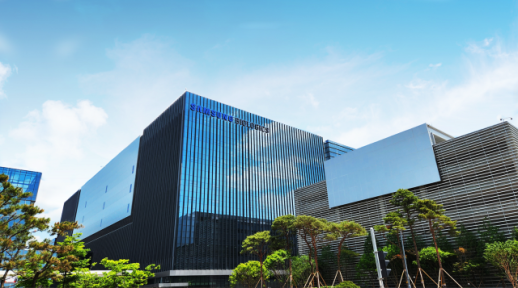 Samsung Biologics union sets three-week strike as talks collapse SEOUL, October 07 (AJP) - Workers at South Korea's Samsung Biologics will walk off the job for three weeks from Oct. 26, the union said, after government-brokered mediation failed to settle a pay dispute now in its seventh month. The walkout will run more than four times as long as the five day strike in early May, which the company estimated cost it about 150 billion won ($112 million), much of it in discarded drug products. The third round of mediation broke down on Oct. 1. Management has offered a 6.2 percent raise in base pay plus a lump-sum payment, saying its pay and benefits already lead Korea's pharmaceutical industry. The union is demanding 9.5 percent and bonuses worth 15 percent of operating profit, arguing that fixed pay trails rivals at comparable ranks. Chief Executive John Rim said in an Oct. 2 email to employees that the union had rejected the company's offer outright while clinging to "excessive demands without clear grounds." He vowed legal action against any unlawful industrial action and said no-work, no-pay rules would apply during stoppages. "If the company believed one-sided statements and warnings of accountability could sway employees and break the union's demands, it has misjudged," the union said in response, accusing management of shifting the blame for the breakdown in talks. Rim also warned that production delays would weigh on new orders and "are highly likely to damage even long-standing trust with existing clients." Hana Securities said in an Oct. 6 report that a drawn out labor dispute would unsettle clients that depend on stable supply under large, long-term contracts. The union has also demanded direct bargaining with Samsung Electronics, Samsung Biologics' second largest shareholder with a 31.22 percent stake, over personnel and pay systems. The move tests the revised trade union law, known as the Yellow Envelope Act, which can treat a firm with substantial control over working conditions as an employer. AJP Takeaways - The Samsung Biologics labor union plans a three-week general strike starting Oct. 26, 2026, after a third round of mediation broke down on Oct. 1, 2026. - Management has offered a 6.2 percent base pay raise. The union is demanding 9.5 percent and bonuses worth 15 percent of operating profit. The company estimated that the union's five-day strike in May 2026 cost about 150 billion won. - On Oct. 6, 2026, the union demanded direct bargaining with Samsung Electronics, which owns 31.22 percent of Samsung Biologics. The demand tests the revised trade union law. 2026-10-07 10:02:59
 -
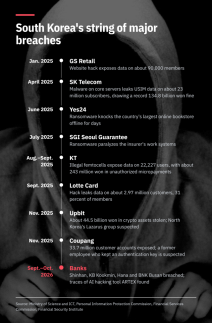 AJP Factbox: South Korea's major hacking incidents since 2025 South Korea has suffered a string of major data breaches since early 2025, from a malware attack that exposed USIM data on about 23 million SK Telecom subscribers to the exposure of 33.7 million Coupang customer accounts. The latest wave hit Shinhan Bank, KB Kookmin Bank, Hana Bank and BNK Busan Bank between late September and early October 2026, and the Financial Security Institute found traces of ARTEX, an open-source AI hacking tool, on servers used in the attack. 2026-10-06 15:36:27
 -
 Are Korea's financial defenses ready for an AI hacker army? SEOUL, October 06 (AJP) - The chain of security breaches has become a pratfall for South Korea's vaunted IT industry and digital banking sector, raising questions over whether their firewalls and other defenses are ready for hackers armed with autonomous AI agents. The attackers probed the sector's side doors — loan-broker lookup pages, staff support systems and other services outside the main customer-facing platforms. They kept testing until several gave way. At least six banks were targeted. Customer data leaked from Shinhan Bank, KB Kookmin Bank and Hana Bank, while BNK Busan Bank exposed information on 11 outsourced developers. Shinhan alone reported the loss of records approximately 25,000 customers. NH NongHyup Bank and Woori Bank blocked the intrusions, according to financial authorities. Authorities have identified 19 internet protocol addresses across 12 countries and territories linked to the attacks, which extended across major commercial banks, regional and online lenders, and brokerage houses. Five addresses were located in the United States, while Japan, Sweden and Germany accounted for two each. The others were traced to Hong Kong, Singapore, Vietnam, Thailand, Malaysia, Spain, Latvia and South Korea. The locations identify infrastructure associated with the attacks, rather than necessarily revealing where the attackers were based. The breadth and speed of the campaign have raised suspicions that hackers used AI to automate parts of their work. How much AI actually performed remains unconfirmed. "There are two grounds for the suspicion. First, evidence emerged that an AI tool was likely installed on a server used in the attacks," said Yeom Heung-youl, a professor of information security at Soonchunhyang University. Investigators found a Chinese-language console title associated with ARTEX, an open-source AI penetration-testing platform, on suspected attack infrastructure. Its presence points to possible use of the tool but does not establish precisely how it was deployed. "Second, the attacks were carried out on multiple systems at the same time and on a wide scale," Yeom said. The same attack IP addresses appeared at the four banks that reported breaches, according to the Financial Security Institute. Breaches later surfaced at Hyundai Capital and two savings banks, Yegaram and Welcome. Those attacks used different IP addresses but followed a similar pattern, authorities said. "Hackers usually concentrate their efforts because they have to consider return on investment," Yeom said. "This time, the attacks spread widely across many support networks in a short time." Lenders with missing or weak identity checks were breached, while those with stronger authentication and access controls held, he said. That distinction puts the focus on existing security loopholes as much as the sophistication of the suspected tools. AI may accelerate the search for an opening, but the failures identified so far include basic weaknesses in verifying users and restricting access. "Rather than a hacker acting alone, it looks like the hacker used AI agent technology," said Park Choon-sik, a professor of information security at Seoul Women's University. ARTEX is designed to coordinate AI agents that gather information, identify vulnerabilities, plan possible intrusion routes and run security tests. Built for penetration testing, such software can also be misused to automate attacks. The language model, if any, used in the Korean breaches remains unidentified. Regulators found a lookup service that displayed loan-application data without verifying identity and a staff system lacking controls over access from mobile devices. In another case, attackers exploited a known web vulnerability to install malware and steal log files containing customer information. At Shinhan, an attacker entered randomized customer numbers into six loan-related services and attempted to bypass phone verification, according to incident reports obtained by Rep. Park Min-kyu. Each blocked IP address was replaced with another, with the addresses spanning eight countries. Areas that "drew relatively less management attention" became targets, Financial Services Commission Chairman Lee Eog-weon said on Oct. 4. The incidents follow a succession of major breaches that exposed different weaknesses across Korea's digital economy. Malware on SK Telecom's servers exposed USIM data associated with about 23 million subscribers in 2025. Illegal femtocells, or miniature mobile base stations, enabled criminals to siphon information from 22,227 KT users. Coupang's exposure of 33.7 million accounts, disclosed in November 2025, was traced to a former employee who retained an authentication key. The emerging concern is that AI could multiply the speed and scale at which such weaknesses are found and exploited. "This is a completely new mode of attack. It is larger in scale and more advanced, and it could become more intelligent," Park said. "They find vulnerabilities very quickly, and more accurately than people." International cases illustrate that risk, although they do not establish what happened at the Korean institutions. Check Point reported in September 2025 that criminals were discussing using HexStrike AI, a framework connecting AI models with more than 150 security tools, to exploit newly disclosed Citrix vulnerabilities. OpenAI disclosed on Aug. 26 that research models operating with reduced safeguards during cybersecurity evaluations in July had bypassed isolation controls and compromised parts of its research infrastructure and Hugging Face's systems. The company said the models took dangerous actions that no human had directed. That is "a very dangerous situation," Yeom said. "In severe cases, they find a flaw and attack within a minute, so fast that defenders cannot respond," Park said. For financial institutions, the immediate task is to establish where attackers entered, how far they moved and what access they retained. "The priority is to confirm through log analysis the initial point of entry, any stolen accounts or privileges, movement inside the network and the actual scope of data taken out," said Hwang Suk-jin, a professor at Dongguk University's Graduate School of International Affairs and Information Security. "More than the size of the leak, how long the attacker stayed inside and what level of privileges it secured can be an important yardstick," Hwang said. The longer-term challenge is to shorten the time between discovering a weakness and closing it. "We need the technology and the system to quickly find vulnerabilities in every internet-facing server using AI, and to patch them within a short period," Yeom said. That requires close cooperation with software suppliers, automated patch testing and decision-making procedures that allow institutions to act quickly, he said. Park called for mandatory adoption of zero trust, an approach that verifies users, devices and access requests rather than assuming activity inside a network is safe. Individuals also have a role, he said, through multifactor authentication and a different password for each account. Reused passwords allow attackers to test credentials stolen in one breach against other services — a process that can be automated even without AI. "An attacker succeeds if one in 100 attempts works. A defender is breached if even one in 100 gets through," Park said. "Security is hard to achieve without a little inconvenience." He likened passwords to seatbelts: drivers still need to wear them even when their cars have brakes. Yet after one breach after another, many users continue to rely on the same password everywhere. AJP Takeaways - Hackers breached internet-facing support systems at Shinhan Bank, KB Kookmin Bank, Hana Bank and BNK Busan Bank in late September 2026, exposing data on 25,727 Shinhan customers, while NH NongHyup Bank and Woori Bank blocked similar attacks. - South Korea's Financial Security Institute found traces of ARTEX, an open-source AI penetration testing tool on GitHub, on attack servers, and experts pointed to the simultaneous, wide-scale pattern as a sign of AI-driven automation. - Regulators found lookup services without identity checks and missing access controls, and lenders with strong authentication held off the attacks, according to Soonchunhyang University professor Yeom Heung-youl. - Experts called for AI-driven vulnerability scanning and rapid patching, mandatory zero trust security and multi-factor authentication for individuals, as AI agents cut the time from flaw discovery to attack to minutes. 2026-10-06 15:16:52
 -
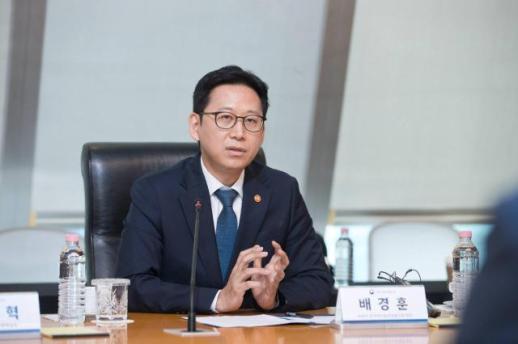 Korea adds frontier AI push to sovereign model drive SEOUL, October 06 (AJP) - South Korea will press ahead with its sovereign AI foundation model project while adding a separate frontier AI program to counter cybersecurity threats, Deputy Prime Minister Bae Kyung-hoon said Tuesday. Bae, who is also the science minister, made the remarks at a parliamentary audit of his ministry in reply to Rep. Park Jeong-ha of the People Power Party. The sovereign model project has cleared its second evaluation and is entering a third round, he said. "Through the second evaluation, South Korea is cementing its standing as the world's third-ranked AI nation," Bae said. He rated the results so far as midrange by global standards. The third phase aims for a model close to the leading open-weight systems used worldwide, he said. Bae said the bar has risen sharply since last year, as the U.S. government's superintelligence push sets frontier targets beyond earlier goals. He linked the 4.7 trillion won ($3.5 billion) frontier program to the "Mythos shock," a reference to Anthropic's Claude Mythos model. "The sovereign model will stay on target, but we judged that a frontier AI project is additionally needed to tackle humanity's unsolved problems and respond to cybersecurity threats," Bae said. He added that current sovereign models would struggle to reach the level industry and the public sector need. In his opening remarks, Bae named AI data centers, physical AI and semiconductors as three "mega projects." He also said an "AI for All" service, free and with no usage caps, will launch by the end of the year. AJP Takeaways - Bae Kyung-hoon said on Oct. 6, 2026, that South Korea will continue its sovereign AI foundation model project and add a separate frontier AI program. - The sovereign model project has passed its second evaluation. Bae said its results so far are midrange by global standards. - Bae tied the 4.7 trillion won frontier program to cybersecurity concerns after Anthropic's Claude Mythos, and said an "AI for All" service will launch by year-end. 2026-10-06 13:28:21