

Journalist
Kim Dong-young김동영
davekim0807@ajupress.com
ReporterSamsung Biologics, CJ CheilJedang, LG Chem, Celltrion, Naver, Krafton, Nexon, Hyundai Mobis etc. & energy, game, food, bio, petrochemical, AI
Kim Dong-young is a bilingual journalist at AJU Press (AJP), covering Korean tech, energy, and bio/pharma.
He reports from the field at events like CES and APEC, runs AJP's YouTube channels,
and is pursuing a master's at Sogang's MOT program. "I try everything in this AI era that can improve yet preserve the facts. Journalism still serves as my core."
He reports from the field at events like CES and APEC, runs AJP's YouTube channels,
and is pursuing a master's at Sogang's MOT program. "I try everything in this AI era that can improve yet preserve the facts. Journalism still serves as my core."
Latest by Kim Dong-young
-
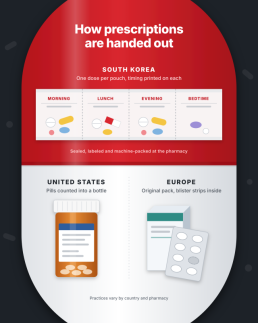 AJP FAQ: What's different about prescribed drugs in Korea? At South Korean pharmacies, even the packaging offers a glimpse of everyday convenience: prescription pills come sealed in individual pouches, each containing one scheduled dose and labeled for morning, lunchtime, evening or bedtime. In the United States, pharmacists usually dispense pills in labeled bottles. In much of Europe, patients receive the manufacturer’s original packaging, typically containing blister strips. Automated dispensing machines sort and package the pills. JVM, a Hanmi Science subsidiary, describes itself as the global leader in pouch-type dispensing automation. Pharmacies are also a frequent stop for overseas visitors: they accounted for 12.9 percent of foreign visitors’ medical spending in Korea in May 2026 and 69.8 percent of their medical transactions, according to the Korea Tourism Data Lab. 2026-10-06 13:03:03
 -
 Nuri rocket set for fifth launch after reaching pad SEOUL, October 06 (AJP) - South Korea's Nuri rocket reached its launch pad at the Naro Space Center on Tuesday morning, a day before its fifth flight, the Korea AeroSpace Administration (KASA) said. The 47.2-meter vehicle left the assembly building at 6 a.m. and crawled 1.8 kilometers to the second launch pad aboard an unmanned transporter, arriving at 7:30 a.m. after about 90 minutes, KASA and the Korea Aerospace Research Institute (KARI) said. Engineers will stand the rocket upright with a lifting rig known as an erector, anchor it to the pad and hook up umbilical lines carrying power, fuel and oxidizer. Installation should be finished later Tuesday if no faults surface, KARI said. KASA will convene its launch management committee at 8 a.m. Wednesday to clear propellant loading and set the final liftoff time, weighing technical readiness, weather, the launch window and the chance of a collision with orbiting debris. The window opens at 12:23 p.m. The rocket is carrying 15 satellites weighing about 1,071 kilograms, its heaviest load yet, to a sun-synchronous orbit about 570 kilometers up. Five NEONSAT microsatellites, the second through sixth in a planned 10-satellite constellation, will peel off 35 to 40 seconds apart, followed by 10 cubesats released in pairs. KAIST's Satellite Technology Research Center oversaw their development and Satrec Initiative built them, the first units off the company's satellite production line. Nuri's fourth flight succeeded on Nov. 27, 2025, placing 13 satellites in orbit in Korea's first overnight launch and its first mission with Hanwha Aerospace as prime contractor. The rocket has flown successfully three straight times since falling short on its 2021 debut. AJP Takeaways - The Korea AeroSpace Administration said South Korea's Nuri rocket reached the second launch pad at the Naro Space Center in Goheung at 7:30 a.m. on Oct. 6, 2026, one day before its fifth flight. - The Oct. 7, 2026 flight carries 15 satellites weighing about 1,071 kilograms, the heaviest payload of any Nuri mission, bound for a sun-synchronous orbit about 570 kilometers above Earth. - The five NEONSAT microsatellites are the first half of South Korea's first domestically launched satellite constellation, which will image the Korean Peninsula more than three times a day once all 10 are in orbit; the remaining five are planned for Nuri's sixth flight in 2027. 2026-10-06 10:48:43
 -
 Celltrion launches first US biosimilar to Xolair SEOUL, October 06 (AJP) - Celltrion began selling Omlyclo, the first biosimilar to the blockbuster allergy drug Xolair to reach the United States, the South Korean drugmaker said Tuesday. Omlyclo was entered the same day as a preferred drug on the commercial formulary of a major U.S. pharmacy benefit manager, Celltrion said. Talks with other large managers are under way, some near completion. The drug carries a wholesale acquisition cost about 15 percent below Xolair's and comes in 75, 150 and 300 milligram prefilled syringes. The US Food and Drug Administration cleared it in March 2025 for all four of Xolair's indications and designated it interchangeable, letting pharmacists swap it for the originator where state law and insurance rules allow. "Omlyclo pairs the advantage of being the first omalizumab biosimilar in the United States with full indication coverage, interchangeability and three dose strengths," said Kim Bon-joong, chief executive of Celltrion USA. "We will wrap up additional PBM listings quickly and grow it into a major product here." Omlyclo already sells in 26 European countries and commanded more than 90 percent of the Spanish market as of July, Celltrion said, citing IQVIA data. A national tender win should lift its Danish share to about 98% by year-end, the company said. Xolair, marketed in the United States by Roche's Genentech unit, posted US sales of 3.08 billion Swiss francs ($3.7 billion) last year, a 32 percent jump driven by its food allergy indication. AJP Takeaways - Celltrion on Oct. 5, 2026 launched Omlyclo (omalizumab-igec) in the United States, the first biosimilar to Xolair to reach the US market, and priced it about 15% below the originator's wholesale cost. - Omlyclo secured a preferred placement a major U.S. pharmacy benefit manager's commercial formulary at launch and holds FDA interchangeability plus approval for all four Xolair indications — asthma, chronic rhinosinusitis with nasal polyps, chronic spontaneous urticaria and IgE-mediated food allergy. - Xolair generated 3.08 billion Swiss francs in US sales in 2025, up 32 percent, giving Celltrion a multibillion-dollar market to contest as it negotiates listings with the remaining major pharmacy benefit managers. 2026-10-06 09:01:22
 -
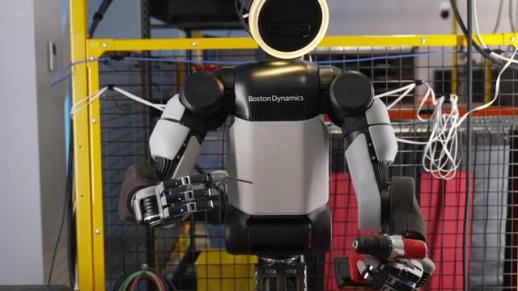 Boston Dynamics gives Atlas a factory-ready hand SEOUL, October 02 (AJP) - Boston Dynamics, the robotics affiliate of South Korea's Hyundai Motor Group, has fitted its Atlas humanoid with a four-fingered hand built for assembly-line work, the company said Thursday (local time). The hand carries 13 degrees of freedom, nearly double the seven on the previous three-fingered generation, with four axes in the thumb and three in each of the other fingers. It is slightly larger and, on average, stronger than a human hand. In a video released with the announcement, Atlas loaded a bit into a power drill and bored into wood, tightened a small nut by fingertip. The humanoid robot also swung around a frying pan without stopping for directional changes. Engineers dropped the little finger after Chief Product and Technology Officer Zack Jackowski asked the team to tape their pinky and ring fingers together for a day. "At the end of the experiment we had agreement: no pinky," the company said in a blog post. Pressure sensors blanket the fingertips and palm, and the direct-drive joints were designed to be simulated with high fidelity, letting the company train grasping policies through reinforcement learning in simulation before loading them onto the machine. Atlas is already in training at the Robotics Metaplant Application Center, which Boston Dynamics opened on Sept. 21 inside Hyundai Motor Group Metaplant America near Savannah, Georgia. Hyundai and Kia will take 25,000 of the robots across their global plants over the next few years, with component assembly targeted for 2030 AJP Takeaways - Boston Dynamics unveiled a new four-fingered hand for its Atlas humanoid robot on Oct. 1, 2026, replacing the three-fingered design used until now. - The hand has 13 degrees of freedom against seven in the previous generation, with pressure sensors across the fingertips and palm and direct-drive actuators chosen for durability and mass production. - Hyundai Motor Group, which owns Boston Dynamics, is training Atlas on real parts at the Robotics Metaplant Application Center in Georgia, opened Sept. 21, 2026, ahead of a planned 25,000-unit rollout at Hyundai and Kia plants. 2026-10-02 10:36:15
 -
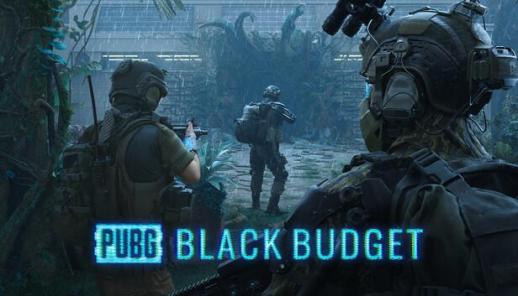 Krafton cancels PUBG extraction shooter Black Budget SEOUL, October 01 (AJP) - Krafton has halted development of PUBG: Black Budget, abandoning a nearly four-year attempt to carry its battle royale franchise into the extraction shooter genre, PUBG Studios said in a development update posted on Steam on Thursday. "After reviewing the project's development status and future direction, we judged that the current direction would make it difficult to deliver an experience players can enjoy for a long time," the studio said, adding that testing had ended with it. The game dropped players onto Coli, an island locked in a time loop, as contractors sent to loot a classified research site and fight their way to an extraction point. Up to 45 of them played in three-man squads against rival teams, artificial intelligence creatures and supernatural anomalies. Krafton first disclosed the title as Project Black Budget in its third-quarter 2022 earnings materials, calling it a PvPvE looter shooter, and attached the PUBG name to it in November 2025. Two closed alpha tests followed, in December and in June. Testers of the first alpha pointed to muddled combat perception, weak situational clarity and fatigue over repeated runs, the studio said when that test closed, along with crashes and unauthorized programs. The cancellation trails the shutdown of PUBG: Blindspot, a top-down 5-on-5 shooter, on March 30, less than two months after its early access debut. Krafton said in January it was running a pipeline of 26 new titles while turning PUBG into a content platform. AJP Takeaways - Krafton ended development of PUBG: Black Budget on Oct. 1, 2026, closing a push that began when the project first appeared in the company's Q3 2022 earnings materials. - The extraction shooter ran two closed alpha tests, from Dec. 12 to Dec. 21, 2025 and from June 26 to June 29, 2026, and never received a release date. - PUBG: Blindspot, Krafton's other PUBG spin-off, shut down on March 30, 2026, about eight weeks after its Feb. 5 early access launch. 2026-10-01 15:59:39
 -
 Korea's reactor comes full circle in America SEOUL, October 01 (AJP) - South Korea today ranks fifth in nuclear power capacity and belongs to a select group of countries capable of designing and building their own reactors. Its journey began with Kori 1, which entered commercial service in 1978 with the help of Westinghouse Electric Company. The pupil has learned well enough to become its American teacher's partner. A South Korea-U.S. investment framework unveiled Thursday would bring Korean-designed reactors to America, nearly half a century after American technology helped launch Korea's nuclear industry. The framework forms part of Seoul's $350 billion investment commitment under last year's trade agreement, which lowered U.S. tariffs on most Korean goods to 15 percent from 25 percent. It envisages up to $120 billion in investment to build eight reactors, including two units based on Korea's homegrown APR1400 design. Each has a generating capacity of about 1,400 megawatts, more than twice Kori 1's 576 megawatts. The other six would use Westinghouse's AP1000 design. The Ministry of Trade, Industry and Resources described the agreement as Korean companies becoming Westinghouse's partners nearly 50 years after Kori 1. It said the cooperation could help pave the way for further Korean reactor exports to Europe and elsewhere. The joint statement frames the partnership as combining "U.S. technological expertise with Korea's supply chain capabilities." Korean engineers developed the APR1400 from the domestic OPR1000 and System 80+, a design by Combustion Engineering, a U.S. company later absorbed by Westinghouse. Four APR1400 units were built at Barakah in the United Arab Emirates under a 2009 contract worth $20.4 billion. All four have been in commercial operation since September 2024. That American lineage also lay at the heart of an intellectual property dispute over Korean reactor exports. Westinghouse, Korea Electric Power Corp. and Korea Hydro & Nuclear Power reached a settlement in January 2025, although its detailed terms remained confidential. The two reactor designs take different approaches to emergency cooling. The APR1400 uses powered safety systems, including four independent cooling circuits that inject water directly into the reactor vessel. The AP1000's passive safety systems rely on gravity and natural circulation. They are designed to function for at least 72 hours under design-basis accident conditions without operator action, according to the U.S. Nuclear Regulatory Commission, or NRC. "If you go by generations, Westinghouse's AP1000 was developed a generation after ours. There is a technology gap of about 10 years," said Chung Bum-jin, a professor of nuclear engineering at Kyung Hee University. "The problem is that not many AP1000s have been built, and with no parts or construction market in the U.S., its recent report card isn't good," Chung said. Georgia's Vogtle units 3 and 4, the only AP1000s completed in the United States, cost more than $30 billion against an initial estimate of about $14 billion. Chung pointed to the APR1400's NRC design certification in 2019 as a credential for entering the American market. Its European version has also secured European Utility Requirements certification. "If construction is delayed by eight years, costs go up at least twofold, and as much as threefold," Chung said. "It's the difference between taking a Grandeur you can drive right now or a BMW that might get more expensive," he added, referring to Hyundai Motor's large sedan. The APR1400 would still have to wait its turn. Under the planned sequence, two AP1000s would be built first. The Korean pair would follow in the second phase alongside two more AP1000s, with the final AP1000 pair coming last. Investment from the fund would be capped at $30 billion per pair, with any overruns excluded, the ministry said. The framework also calls for Korean companies to pursue "a significant minority interest" in Westinghouse to share in the commercial gains from the projects. Industry Minister Kim Jung-kwan put the prospective stake at 5 to 10 percent, below the 15 to 20 percent and a board seat Seoul had sought. "The stake is being set below 10 percent because Westinghouse finds Korea's entry into its board burdensome," Kim said. For Chung, the size of the investment would not necessarily translate into influence over the company. Japan's Toshiba bought Westinghouse outright for $5.4 billion in 2006. Yet ownership exposed it to the risks of American nuclear construction. Westinghouse filed for bankruptcy protection in March 2017 after cost overruns at the Vogtle and V.C. Summer projects. The losses helped force Toshiba to sell its memory chip business for about $18 billion. Brookfield acquired Westinghouse in 2018 for about $4.6 billion. "Investing won't give us a level where we can secure management control, and Toshiba could not be said to have properly secured it either," Chung said. Under the broader investment arrangement, returns across the projects would be split evenly until Korea recovers its total principal and interest. After that, 90 percent would go to the United States. The reactor sites and individual investment decisions also remain unsettled. U.S. Commerce Secretary Howard Lutnick said Wednesday that the plants would be built in states including Ohio, Tennessee, South Carolina and Kentucky. The joint fact sheet, however, lists the location only as the United States, with "specific sites to be specified." Kim said Seoul would scrutinize each U.S. proposal in the fourth quarter, examining ground conditions, access to cooling water, prospective electricity buyers and grid connections. Kori 1, the Westinghouse unit where Korea's nuclear story began, was permanently shut down in June 2017 and is now being decommissioned. Nearly half a century after its debut, Korea's own reactor design could make the journey back to America. AJP Takeaways - The framework envisages up to $120 billion from Korea's $200 billion strategic investment pledge to build eight U.S. reactors, including two Korean APR1400s and six Westinghouse AP1000s. Individual projects remain subject to review. - Experts see the AP1000 as technologically more advanced but points to U.S. construction costs and delays as a weakness. The APR1400 brings a record of deployment in Korea and the UAE. - Two AP1000s would lead construction, followed by the Korean pair and two more AP1000s. Investment from the fund would be capped at $30 billion per pair. - Seoul is pursuing a 5 to 10 percent Westinghouse stake. Chung cautions that the investment would not deliver management control. 2026-10-01 13:45:57
 -
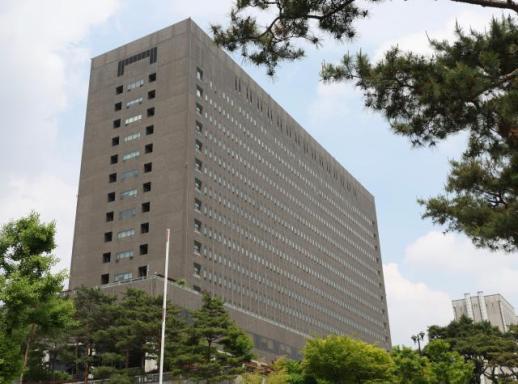 Korean chemical makers charged over record cartel SEOUL, October 01 (AJP) - Six South Korean petrochemical makers were charged on Thursday with rigging the prices of industrial chemicals worth 16.4 trillion won ($12 billion), the largest cartel ever brought by the country's prosecutors, the Seoul Central District Prosecutors' Office said. The companies kept fixing prices even after the government paid out about 146.5 billion won to steady petrochemical output when the U.S.-Iran war sent oil prices soaring, prosecutors said. LG Chem, OCI, Lotte Fine Chemical, Aekyung Chemical, PKC and Unid were indicted along with 37 current and former executives and employees, including OCI Vice Chairman and Chief Executive Kim Yㅐㅐ-shin. Hanwha Solutions, also raided in August, was not charged. The scheme ran from January 2021 to April this year and spanned eight chemicals, among them PVC, caustic soda, plasticizers and hydrochloric acid, which run through pipes, cables, semiconductors and water treatment plants. The sum eclipses the three biggest cases the same unit had handled, a 10.15 trillion won cartel in starch sugar, a 5.99 trillion won cartel in flour and a 3.27 trillion won case in sugar. Team leaders met to set the size and timing of each price increase and settled in advance which supplier would win contracts from large buyers, prosecutors said. Reports say the firms staggered their price increase letters to blunt suspicion and moved to destroy evidence once investigators closed in. A court jailed two executives from LG Chem and PKC on Sept. 19 but rejected warrants for six others, including Kim. AJP Takeaways - The Seoul Central District Prosecutors' Office on Oct. 1, 2026, indicted LG Chem, OCI, Lotte Fine Chemical, Aekyung Chemical, PKC and Unid, along with 37 current and former executives and employees, on charges of fixing prices of eight industrial chemicals. - Prosecutors put the cartel at 16.4 trillion won ($12.2 billion) between January 2021 and April 2026, exceeding their previous largest case, a 10.15 trillion won starch sugar cartel. - Prosecutors said the price fixing continued after the government disbursed about 146.5 billion won to stabilize petrochemical output following the oil price surge caused by the U.S.-Iran war. 2026-10-01 13:23:42
 -
 G-Star goes global by chance as Korean publishers lose home ground SEOUL, September 30 (AJP) - South Korean game publishers are losing the battle for attention at home as short-form videos and streaming lure players away from marathon gaming sessions. Their retreat has a floor plan. Foreign publishers are filling the gaps at G-Star, the country's flagship game show in Busan this November, while Korean heavyweights chase audiences abroad. A floor plan released Tuesday for the Nov. 19–22 show in Busan lists Krafton and mid-sized Webzen as the only major Korean publishers in the main consumer hall. Household names Nexon, NC, Netmarble, Kakao Games and Smilegate are absent. “Overseas sales are taking up a bigger share at Korean game companies,” said Kim Jung-tae, a professor of game studies at Dongyang University. “Domestic users are scattering to short-form video and streaming, and MMORPG fatigue has built up, so the home market has its limits.” South Korea’s game industry revenue grew just 3.9 percent to 23.85 trillion won ($17.5 billion) in 2024, according to the Korea Creative Content Agency (KOCCA). The game pales against the industry’s boom years, including a 21.3 percent surge in 2020. Overseas sales accounted for nearly half the total, at $8.5 billion. At home, the gaming audience is shrinking. Last year, 50.2 percent of South Koreans aged 10 to 69 played games, down from 74.4 percent in 2022, according to a KOCCA survey. Publishers are increasingly looking abroad for players, tailoring their offerings to different markets. Nexon, NC, Netmarble and Smilegate drew queues of more than two hours at the Tokyo Game Show in September, local media reported. Some 127 Korean companies exhibited there, about 2.5 times last year's count and second only to host Japan. Many of their Tokyo headliners, including Nexon's "Paraidolia" and NC's "Astrae Oratio," were anime-style character-collection games aimed at Japan’s fans of the genre. At Gamescom in Cologne in August, Korean publishers leaned toward PC and console games. Krafton brought five new titles, while NC showcased "Aion 2" and "Cinder City." Pearl Abyss' "Crimson Desert" and Krafton-published "Age Twisters" both made the Gamescom Awards shortlist, though neither won. The oversea pivot has left a thinner lineup for Busan. "Nexon decided not to take part in G-Star this year so it can focus on polishing the new titles it is preparing and strengthening its fundamentals," a Nexon spokesperson told AJP. Krafton, returning for a 10th straight year, will again operate one of the main hall’s largest booths. "G-Star has been where we talk directly with Korean players and introduce our major titles and new games," a Krafton spokesperson said. "Big game companies simply don’t have many new titles to unveil at G-Star," Cho Young-ki, chairman of the organizing committee, told reporters on Aug. 13. Many Korean firms now earn more overseas than at home, he said. The shift extends to the show’s main sponsorship, which went to Crack, an AI character-chat and storytelling app run by Wrtn Technologies. It is the first business outside the games industry to take the role since G-Star began in 2005. "It's hard to agree that only game companies should sponsor a game show," said Jung Seung-woo, a director at the committee, pointing to Rolex at Wimbledon and Hyundai Motor at the World Cup. Chinese publishers are filling much of the exhibition gap. HoYoverse, the maker of "Genshin Impact," has taken one of the main hall's six largest spaces, while NetEase will spread across two halls. Neither operated a consumer booth at the Tokyo Game Show, where the number of mainland Chinese exhibitors fell to 72 from 112 a year earlier, according to Niko Partners. A record 60 Chinese companies attended Gamescom. "Chinese game companies have the political issue between China and Japan, which is probably why many of them skipped TGS this time," Kim said. "As an alternative, they turned to Korea, whose show opens a month later." Kim described the shift as a windfall for Busan. K-culture's growing appeal has also made companies that once overlooked Korea more eager to reach its players, he said. The changing presence of CD Projekt Red offers one illustration. On Nov. 18, 2018, during G-Star, the studio behind "Cyberpunk 2077" and "The Witcher" series rented a small craft beer pub in Busan's Gwangalli neighborhood to watch gameplay and chat with fans. This year, it will have its own space inside the show to premiere a Korean-voiced playthrough of "Songs of the Past," the new "Witcher 3" expansion. Sega will bring "Total War: Warhammer 40,000," which beat "Crimson Desert" for best PC game at Gamescom, for its Korean debut. “This should be seen as a good thing,” Kim said. “Instead of always ending as a home-turf affair, giving global companies a chance and welcoming foreign guests here is the best model for an international game show.” AJP Takeaways - A thinner home lineup: Krafton and Webzen are the only major Korean publishers listed in G-Star's main consumer hall for the Nov. 19–22 show. - Korean publishers look abroad: Some 127 Korean companies exhibited at September's Tokyo Game Show, about 2.5 times the previous year's count. - Foreign publishers fill the gap: HoYoverse and NetEase are taking large spaces in Busan as G-Star gains a broader international lineup. - Domestic participation falls: Half of South Koreans aged 10 to 69 played games in 2025, down from nearly three-quarters in 2022, according to KOCCA. 2026-09-30 16:16:16
 -
 Korea breaks ground on Boston-style biotech hub SEOUL, September 30 (AJP) - Construction of a state-backed lab complex for South Korean biotech startups began Wednesday in Incheon, the Ministry of SMEs and Startups said, with 60 companies due to move in on completion in November 2028. The K-Bio Lab Hub, modeled on Boston's LabCentral incubator, carries a total cost of 217.3 billion won ($160.4 million). Yonsei University is supplying the site on its Songdo campus, and Incheon city is funding construction. Fifty units for early-stage firms will fill the third to seventh floors, with 10 larger spaces for growth-stage companies above. Twenty-four general-purpose research instruments will be installed at a temporary campus site next month, rising to 134 units at completion. The ministry will channel 41.4 billion won from 2029 into six programs spanning drug-candidate discovery, clinical trials, regulatory approval and fundraising. Anchor companies will be able to nominate promising startups for tenancy under a "golden ticket" track. "The K-Bio Lab Hub will be a key cradle for South Korean bio startups to grow into global unicorns," said Lee So-young, minister of SMEs and startups. The hub sits in a Songdo cluster that is home to Celltrion, Samsung Biologics, SK bioscience and Lotte Biologics. Incheon Mayor Park Chan-dae said the project would layer startups and drug discovery onto the city's biomanufacturing base and create quality jobs. Seoul has earmarked 11.6 trillion won for bio and vaccines in its 150 trillion won National Growth Fund, launched in December. Smaller drug developers complained earlier this year that the fund favors firms with big factories, while the government leaves early-stage ventures to the ministry's fund of funds. AJP Takeaways - Construction of the K-Bio Lab Hub, a biotech startup incubator modeled on Boston's LabCentral, began on Sept. 30, 2026, at Yonsei University's international campus in Songdo, Incheon, the Ministry of SMEs and Startups said. - The 217.3 billion won facility will house 60 startups when it is completed in November 2028, and the ministry plans to provide 41.4 billion won in support programs from 2029. - The hub targets early-stage firms as South Korea's 150 trillion won National Growth Fund sets aside 11.6 trillion won for bio and vaccines. 2026-09-30 15:51:41
 -
 Nvidia steps up Korea push with AI Seoul Day SEOUL, September 30 (AJP) - Nvidia will bring its AI Day back to Seoul in November with physical AI at the center, as the U.S. chip giant deepens ties with South Korea's largest conglomerates, the company said Wednesday. The announcement came days after Nvidia CEO Jensen Huang received the Korea Society's Van Fleet Award in New York for promoting U.S.-Korea ties. SK Group Chairman Chey Tae-won toasted Huang at the gala, saying Nvidia designs the brain and SK makes the memory. "Robotics is going to be the next major sector here in Korea — this is a great opportunity for Korea to invest in artificial intelligence," Huang told reporters on June, arriving in Seoul. AI Day Seoul 2026 will run from Nov. 9 to 10 at COEX, pairing a conference on physical AI, agentic AI and AI infrastructure with paid workshops from Nvidia's Deep Learning Institute. Nvidia expects about 2,000 attendees, roughly double last year. Twenty partners will take part, including Samsung Electronics, SK hynix, SK Telecom, LG Electronics, Naver Cloud and Hyundai Engineering & Construction, alongside Dell Technologies and Deloitte. AJP Takeaways - Nvidia will hold AI Day Seoul 2026 at COEX in Seoul on Nov. 9-10, 2026, centered on physical AI, agentic AI and AI infrastructure, with 20 partners including Samsung Electronics, SK hynix and LG Electronics. - The announcement followed Nvidia CEO Jensen Huang receiving the Korea Society's Van Fleet Award in New York on Sept. 28, 2026, where SK Group Chairman Chey Tae-won toasted him. - Huang visited Seoul for four days in June 2026, expanding Nvidia's partnerships with SK, LG, Hyundai Motor, Naver and Doosan across AI factories, memory and robotics. 2026-09-30 11:09:12