

Journalist
Kim Dong-young김동영
davekim0807@ajupress.com
ReporterSamsung Biologics, CJ CheilJedang, LG Chem, Celltrion, Naver, Krafton, Nexon, Hyundai Mobis etc. & energy, game, food, bio, petrochemical, AI
Kim Dong-young is a bilingual journalist at AJU Press (AJP), covering Korean tech, energy, and bio/pharma.
He reports from the field at events like CES and APEC, runs AJP's YouTube channels,
and is pursuing a master's at Sogang's MOT program. "I try everything in this AI era that can improve yet preserve the facts. Journalism still serves as my core."
He reports from the field at events like CES and APEC, runs AJP's YouTube channels,
and is pursuing a master's at Sogang's MOT program. "I try everything in this AI era that can improve yet preserve the facts. Journalism still serves as my core."
Latest by Kim Dong-young
-
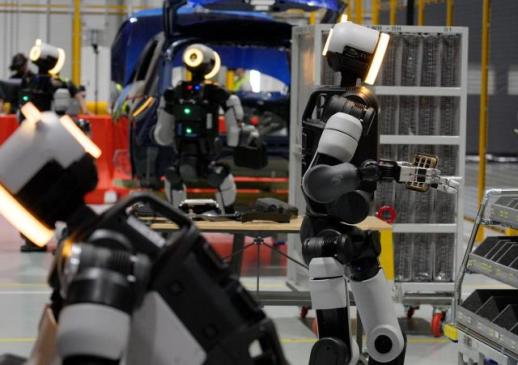 Atlas humanoids go to school at Hyundai's Georgia plant SEOUL, September 22 (AJP) - Boston Dynamics has opened a training center for its Atlas humanoid robots at Hyundai Motor Group's electric vehicle plant in Georgia, the U.S. robotics unit of South Korea's largest automaker said Monday (local time). The Robotics Metaplant Application Center, or RMAC, at Hyundai Motor Group Metaplant America (HMGMA) near Savannah will serve as a testbed where Atlas is drilled in factory work before it steps onto Hyundai's production lines. The robots are training on real shop-floor tasks such as preparing logistics and sequencing auto parts, lining up components in the exact order needed for assembly. Atlas is slated to take over parts sequencing at HMGMA from 2028 and move on to component assembly by 2030. The center, which began pilot operations in June, is already set to outgrow its quarters. It will move into a separate building on the HMGMA site next year, expanding to about 10 times its current size. Hyundai Motor Group plans to deploy 25,000 Atlas units at Hyundai Motor and Kia plants worldwide over the next few years and build a U.S. factory capable of producing 30,000 robots a year. Boston Dynamics said it will begin exploring uses for Atlas in other industries next year and is in talks with existing customers in sectors such as aerospace and semiconductors to expand data collection for training. "Together with Hyundai Motor Group, we are pioneering physical artificial intelligence at enterprise scale," said Zack Jackowski, chief product and technology officer at Boston Dynamics. "RMAC reinforces our shared ambition to create a future where robots amplify human potential by making work safer and more productive." AJP Takeaways - Boston Dynamics opened the Robotics Metaplant Application Center (RMAC) at Hyundai Motor Group Metaplant America in Georgia on Sept. 21, 2026, to train Atlas humanoid robots for automotive manufacturing. - Atlas is scheduled to handle parts sequencing at the Georgia plant from 2028 and component assembly by 2030, with the center expanding about tenfold in 2027. - Hyundai Motor Group plans to deploy 25,000 Atlas robots at Hyundai Motor and Kia plants and build a U.S. facility able to produce 30,000 robots annually. 2026-09-22 10:02:43
 -
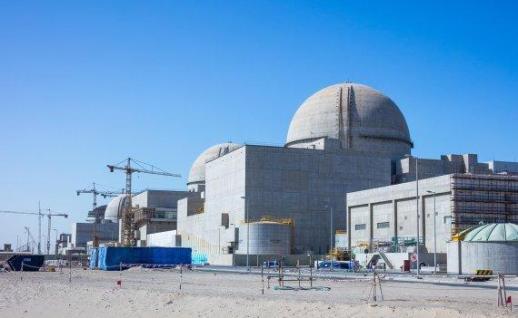 Westinghouse stake hits snag between Seoul, Washington SEOUL, September 21 (AJP) - South Korea's stake in Westinghouse Electric may be capped at about 7 percent, well below the 15 to 20 percent Seoul had sought, government sources said on Monday. A stake that small would likely leave the country without a seat on the U.S. reactor maker's board. Seoul had pushed for a board seat and voting rights, hoping to improve on the terms it accepted in its Czech reactor deal and gain an edge in future overseas bids. The stake is part of a plan to build eight large reactors in the U.S. under the US$200 billion strategic portion of South Korea's $350 billion investment pledge. Seoul had proposed six Westinghouse AP1000 units and two homegrown APR1400s, but the domestic model has barely been discussed, according to the sources. The Alaska liquefied natural gas project, a signature priority of U.S. President Donald Trump, has emerged as another sticking point. It would pipe gas about 1,300 kilometers from the North Slope to near Anchorage, and its steep upfront costs have long clouded its commercial prospects. "Looking at the details, there are parts that are not easy to agree to, so we are discussing them again," President Lee Jae Myung also said during his press conference last Friday. "We only do projects that are commercially reasonable." The trade ministry is set to brief the parliamentary committee behind closed doors on Tuesday, before a memorandum of understanding could be signed as early as Wednesday, according to ruling Democratic Party (DP) lawmakers. But pundits say the timeline could still slip if remaining differences are not settled. AJP Takeaways - Washington is seeking to limit South Korea's stake in Westinghouse Electric to about 7 percent, below the 15 to 20 percent Seoul sought to secure board participation, political sources said on Sept. 21, 2026. - The stake is linked to a plan to build eight large U.S. reactors under the $200 billion strategic portion of Korea's $350 billion U.S. investment pledge, with the Korean APR1400 model largely sidelined in talks. - The Korean government is set to brief the National Assembly on Sept. 22, 2026, with a memorandum of understanding possibly signed as early as Sept. 23. 2026-09-21 17:10:01
 -
 Esports has the money. Can it run a tournament? SEOUL, September 21 (AJP) - Krafton launched PUBG Asia Stars on Sept. 17 ambitiously dubbed as a new pan-Asian showcase with 48 participants from six regions, a $70,000 purse and a format inspired by the Asian Games. Within two days, it had lost control of the competition. All eight Korean participants boycotted the second day over the handling of suspected cheating. Krafton removed two Vietnamese participants, revoked their PUBG Partner status and, on Sunday, canceled the final day. It said prize money would be paid equally across the participating regions. The cheating allegation remains under investigation. In the meantime, the Korean streamer at the center of the episode ended her own broadcast at 5 a.m. to write a post explaining why she had not cheated herself. It was a major pratfall for an industry in which South Korea is a powerhouse, arriving just as esports takes a prominent place at the Asian Games in Japan. Two Vietnamese participants, Himass and TanVuu, were found to have accessed information outside the game while running their own viewer chat on a second monitor. Krafton says it is still investigating whether they directly watched another participant's stream, used outside information during play or passed such information to teammates. When a Korean participant first asked organizers to investigate suspected stream sniping, however, he was told it was not stream sniping. Korean viewers then did much of the investigative work themselves, circulating clips and translations of the Vietnamese players' voice communications. Krafton has since said it is examining broadcast footage, match video and point-of-view recordings. The Korean term for what happened is bangpeul, or "broadcast play" — watching a rival's live stream during a match to learn information unavailable inside the game. Information, not just mechanical skill, decides matches at the top of nearly every competitive title. In a battle royale, the payoff can be instant and terminal. Knowing an opponent is prone behind the second rock on a ridgeline turns a coin-flip firefight into an execution, with no second leg in which to recover. Krafton's rulebook carried general obligations on fair play but did not clearly spell out chat-borne information, watching another player's stream or the sanctions either would bring. The target of the suspected Day 1 stream sniping was Soopi, a Korean streamer competing under Krafton's own PUBG Partner Streamer title. Within a day, she was the one being accused. Vietnamese accounts circulated posts claiming she had cheated, assembling their case from screenshots of programs visible on her taskbar during a replay. A link to the allegations was pinned at the top of one accuser's live chat. "I've never done stream sniping or hacks, and I have no intention of doing it," she wrote on Sept. 20, explaining why she had cut her stream short. "My gaming PC has one monitor, so unlike a certain someone, I can't look at the internet on a second monitor beside it. I don't know why I even have to say this." She had spent the week closing her YouTube comments and banning viewers when anti-Vietnamese slurs escalated. What came back, she wrote, was an accusation from the other side that she had been stream sniping too. Her demand was not that Krafton ban anyone. It was that the company strip her of its own partner title if it could not stand behind it. "Why hand out Partner Streamer status if you can't protect us when we get sniped and cyberbullied," she wrote. The sponsors moved first. Coffee chain 10 Billion Coffee suspended its campaign on the morning of Sept. 20 after complaints piled up on its customer inquiry board. Kkanbu Chicken, where Nvidia's Jensen Huang shared fried chicken with the Samsung and Hyundai chairmen last October, shelved related promotions that afternoon. Krafton canceled the final day that night, though a company official told AJP it would be difficult to link the decision directly to the sponsors' moves. On Reddit, the argument ran in every direction but repeatedly came back to one point. "While there might still be moral criticism regarding the fact that stream-sniping isn't fair play, the responsibility for that lies with Krafton," one user posted. Krafton rejects the premise that what collapsed was an esports tournament. "It was clearly not an esports tournament," an official told AJP. "The accurate term would be an event match." The company frequently offers prize money for events featuring influencers, the spokesperson said, and confusion arose partly because some Vietnamese participants happened to be professional esports players. Krafton's formal esports leagues, she added, are run by an entirely separate department. Inside the company, that distinction may be clear. Outside it, it was barely visible. Asia Stars had regional rosters, professional players, a published rulebook, sponsors and a cash purse. Krafton itself promoted it as a tournament inspired by Asian Games medal events. Nothing obvious to viewers distinguished a competition backed by esports-grade safeguards from one that was not. The esports Krafton does recognize carries stakes no hobby does. The Asian Games opened in Aichi-Nagoya on Sept. 19, with esports a medal sport across 13 titles through Oct. 2 and PUBG Mobile among them. South Korea took silver in PUBG Mobile at Hangzhou and is chasing gold in Japan. Under South Korea's military-service system, an Asian Games gold medal can qualify a male athlete for arts-and-sports service rather than regular active-duty service, making the consequence of a disputed result extend far beyond a podium. The money is not hobby money either. The 2025 Esports World Cup in Riyadh carried a prize pool of more than $70 million. Dota 2's The International passed $40 million in prize money in 2021. Questions over integrity are hardly new. South Korea's 2010 StarCraft match-fixing scandal ended with 11 players banned for life from professional StarCraft competition and criminal proceedings against those involved. Five years later, prosecutors in Changwon uncovered another StarCraft 2 match-fixing ring involving players, a coach, brokers and financial backers. At the 2012 League of Legends world championship, evidence surfaced that a player on Korean team Azubu Frost had looked at a venue screen displaying information about his opponents. He was not the only player caught looking at screens during the tournament. Riot Games investigated the incidents one by one, weighing what it called "intent, severity and tangible impact." It fined Azubu Frost $30,000 after concluding that the information had affected subsequent play, but allowed the match result to stand. Organizers then changed the screen setup before the final. The case was not remarkable because esports had eliminated cheating. It was remarkable because the publisher showed its work. More than a decade later, governance remains fragmented. A 2025 systematic review in the International Sports Law Journal noted the continuing absence of "reliable and independent arbitral institutions" in esports and surveyed proposals ranging from universal codes of conduct to stronger independent oversight. Krafton says it is working on the problem. "On Sept. 19 we replaced the participants and revoked their PUBG Partner status, among other measures, and we are currently conducting a thorough investigation," the company told AJP. "If further violations are confirmed, we will swiftly take corresponding action, and we will transparently share the investigation results and measures to prevent a recurrence." The company has also said future competitive events will spell out such matters as broadcast delays, restrictions on outside information, monitoring procedures and sanctions in advance. An exhibition with a $70,000 purse is the cheapest possible place to learn that lesson. The expensive version is a medal final, with a career and a military exemption riding on whether somebody's handset reset or somebody's second monitor was open — and nobody in the room whose job is to say so. AJP Takeaways - Krafton canceled the final day of its PUBG Asia Stars event on Sept. 20, 2026, after all eight South Korean participants boycotted the second day on Sept. 19 over the handling of suspected stream sniping by two Vietnamese participants. - The event, which drew 48 participants from six regions and carried a $70,000 purse, ended without final standings; Krafton removed the two players, revoked their PUBG Partner status and will split prize money equally across regions. - Krafton told AJP the event was an event match rather than an esports tournament, and said it would act swiftly and disclose its findings if further violations are confirmed. - The episode coincided with the 20th Asian Games in Aichi-Nagoya, where esports is a medal sport across 13 titles through Oct. 2 and a gold medal can qualify South Korean men for alternative military service. 2026-09-21 16:11:21
 -
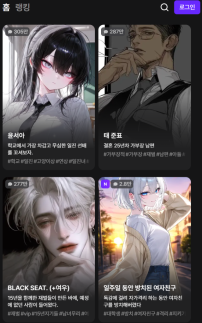 AI chat apps fall outside Korea's game law SEOUL, September 21 (AJP) - Artificial intelligence character chat apps such as Zeta and Crack are unlikely to qualify as games under South Korea's game industry law, the National Assembly Research Service said Monday. The service told the office of Rep. Lee Jeong-moon of the ruling Democratic Party (DP) that open-ended conversation lacks the machinery that makes a game a game. "Free conversation does not contain rules that evaluate user input, goals that must be reached, or outcomes such as success and failure," it said. Korea's 2006 game law defines a game as a video work, or a device built to run one, made with information technology for amusement. The word amusement alone cannot separate chat services from games, the service said, since webtoons, video and social media all carry the same label. Where the apps borrow game grammar, the service drew a sliding scale. Affection meters and anniversary logs are incidental staging such as level gates, dice rolls and branching endings begin to look like rules. Paid currency wagered on a probability outcome is the most likely to be pulled under the law, with gambling review to follow. That places Crack's "cracker baking" event, in which users staked paid currency for a chance to multiply or lose it, on the boundary. The service said the event is hard to classify outright as a gambling game because nothing leaves the app, while the Game Rating and Administration Committee said in August that such structures may constitute games. Sexual and violent role-play, the harder complaint, falls outside the game law's reach either way. Ratings must be issued before distribution, the service said, an impossible fit for content generated anew for every user, and the same problem blunts any attempt to register the apps as material harmful to youth. Crack and Zeta ranked sixth and eighth by revenue in Google Play's entertainment category last month, and Crack operator Wrtn Technologies became the first non-game company to lead G-Star, Korea's largest game show. AJP Takeaways - The National Assembly Research Service said on Sept. 21, 2026 that AI character chat apps including Zeta and Crack are unlikely to qualify as games under South Korea's Game Industry Promotion Act. - Paid currency wagered on a probability outcome is the feature most likely to pull such apps under the law, the service said, leaving Crack's "cracker baking" event on the boundary. - Pre-distribution rating cannot apply to content generated anew for each user, the service said, leaving sexual and violent role-play outside the game law's reach. 2026-09-21 11:11:35
 -
 Seoul kimchi museum marks 40th year SEOUL, September 21 (AJP) - Museum Kimchikan, the country's first museum devoted to kimchi, will mark the 40th anniversary of its founding on Sept. 29 with free admission, its operator Pulmuone said Monday. The museum opened in 1986 in Pil-dong, central Seoul, and passed to Pulmuone a year later as the food company's flagship philanthropic venture. It moved to the Korea World Trade Center complex in 1988 and to COEX Mall in 2000, before reopening in the Insa-dong art district in 2015 under its current name. Entry will be free for all visitors on Sept. 29, the anniversary date. The anniversary exhibition, opening the same day, traces four decades of the museum through yellowed newspaper clippings and photographs displayed in the fifth-floor study room. Two upper floors will screen 28 kimchi videos alongside 100 photographs of different varieties, while visitor guest books will stand on each floor from Sept. 22 to Oct. 4. Two workshops will also run. Children aged 6 to 13, accompanied by a guardian, can make tomato cabbage kimchi on Oct. 3 and 4, and an English-language session for adult foreign visitors, DIY Kimchi 101, will be held at 2 p.m. on Sept. 29 and 30. "This event was planned to mark 40 years of the kimchi museum and, at the same time, to express gratitude to the many people who have loved it over those four decades," said Na Kyung-in, team manager at Museum Kimchikan. AJP Takeaways - Museum Kimchikan, the kimchi museum operated by Pulmuone Co. in Seoul's Insa-dong district, marks the 40th anniversary of its founding on Sept. 29, 2026, with free admission, an anniversary exhibition and kimchi-making workshops. - Admission is half price through Oct. 4, 2026, and the first 40 ticket holders each day receive a pack of Pulmuone stir-fried kimchi and a bottled drink; the anniversary exhibition screens 28 kimchi videos and displays 100 photographs of kimchi varieties. - The museum, which opened in Pil-dong in 1986 and reopened in Insa-dong in 2015, draws about 40,000 visitors a year, roughly half of them from abroad, according to Pulmuone. 2026-09-21 08:49:15
 -
 Chip bonuses drive a third of Korea's wage gains SEOUL, September 20 (AJP) - Semiconductor bonuses accounted for about a third of the rise in South Korean workers' average monthly pay in the first half of 2026, the Korea Enterprises Federation said Sunday. Regular employees earned an average 4.318 million won ($3,115.3) a month in January to June, up 3.1 percent from a year earlier, based on Ministry of Employment and Labor survey data. Bonuses and other special pay jumped 9.3 percent to a record 601,000 won, while base pay growth cooled to 2.2 percent. Pay in the electronics and telecommunications sector, home to the country's chipmakers, soared 23.1 percent to 9.434 million won as special pay surged 66 percent. The sector employs just 2.5 percent of regular workers, yet its bonuses alone added 42,000 won to the national average, or 32.4 percent of the total gain. Ha Sang-woo, a economic researcher at the federation, said companies should share their gains with workers but size payouts with future investment in mind. "Demands for pay raises beyond a company's ability to pay, benchmarked against compensation at other high-performing firms, should be guarded against," Ha said. Semiconductors made up 47.5 percent of South Korea's exports in August, as chip shipments more than tripled from a year earlier to $46.65 billion, Ministry of Trade, Industry and Resources data showed. The 10 largest exporters accounted for 55.3 percent of second-quarter exports, up 17 percentage points from a year earlier. AJP Takeaways - Chip bonuses accounted for 32.4 percent of the 131,000-won rise in South Korean regular workers' average monthly pay in January-June 2026, the Korea Enterprises Federation said on September 20, 2026. - Monthly pay in the electronics and telecommunications sector rose 23.1 percent to 9.434 million won, while the sector employs only 2.5 percent of regular workers. - Semiconductors made up 47.5 percent of South Korea's exports in August 2026, and the Bank of Korea has warned that concentrated gains limit consumption growth. 2026-09-20 16:15:35
 -
 Coupang offers blanket cash aid to Incheon fire neighbors SEOUL, September 20 (AJP) - About 28,000 residents near a Coupang warehouse in Incheon that burned for more than four days in July will receive cash aid without having to prove any damage, the company's logistics arm said Sunday. Coupang Fulfillment Services (CFS) will pay 50,000 won ($36.07) per person and 100,000 won per household in parts of Seoknam 1-dong and Sinhyeon-dong, under a 4.5 billion won package that also covers local schools and firefighters. Payments double in the section of Seoknam 1-dong closest to the blaze, where many residents were driven into evacuation shelters. A four-person household there will receive 600,000 won, against 300,000 won elsewhere. About 15,000 households qualify. Residents affected by past factory and warehouse fires in South Korea have generally had to document their losses to receive aid. CFS said it chose automatic payouts because some neighbors, including elderly people living alone, would struggle to file claims. "We sincerely apologize once again to local residents who went through hardship, and we will do our best so that this support can help the community recover quickly and regain stability," said Jung Jong-chul, chief executive of CFS. Residents with specific losses can still seek separate compensation through a dedicated call center, which has logged about 1,800 claims and will operate through the end of November. CFS will also give 150 million won to four schools that closed or served as shelters during the fire. The fire broke out on the morning of July 18 and raged for 109 hours and 40 minutes before it was extinguished. Coupang, the U.S.-listed parent, has estimated related losses at about $246 million. The blaze came months after a data breach, disclosed late last year, that exposed information from about 33.7 million customer accounts. AJP Takeaways - Coupang Fulfillment Services said on Sept. 20, 2026, it will pay cash aid to about 28,000 residents near its Incheon warehouse, which caught fire on July 18, 2026, without requiring proof of damage. - The 4.5 billion won ($3.24 million) package gives up to 600,000 won to a four-person household in the hardest-hit area and 150 million won to four local schools. - Individual damage claims remain open through a Coupang call center until the end of November 2026, with about 1,800 filed so far. 2026-09-20 13:51:07
 -
 South Korea triples KTX network gear for Chuseok rush SEOUL, September 20 (AJP) - Mobile network equipment along the main routes of South Korea's KTX bullet train has been tripled ahead of the Chuseok holiday rush, lifting average download speeds by more than 20 percent, the Ministry of Science and ICT said Sunday. Chuseok, the autumn harvest festival often likened to Thanksgiving, falls on Sept. 25 this year and sends millions streaming back to their hometowns. Carriers have added 305 base stations and 32 mobile units at highways, train stations, airports and tourist spots after about 37,000 advance inspections. SK Telecom, KT and LG Uplus will staff 24-hour emergency centers throughout the break and offer free carrier-based video calls to all users, including budget-plan subscribers, from Sept. 24 to 27. About 2.8 million people logged some 310,000 hours of free video calls last Chuseok. Subscribers behind on their bills will be able to receive calls for up to three months, up from 21 days, while keeping identity verification and phishing and spam blocking. Overdue mobile micropayments will no longer be grounds for suspending service. Naver Map and Kakao Map will list hospitals, pharmacies and emergency rooms open over the holiday, along with free parking lots. Kakao will send anti-phishing alerts to about 27 million users, warning of scams such as so-called "team mission" schemes. The holiday is the first Chuseok since Korail absorbed the rival SRT service on Sept. 1, adding about 15,000 weekday seats and cutting fares by an average of 10 percent. AJP Takeaways - South Korea's three mobile carriers have tripled network equipment on key KTX routes ahead of the 2026 Chuseok holiday, raising average download speeds by more than 20 percent, the Ministry of Science and ICT said on Sept. 20, 2026. - SK Telecom, KT and LG Uplus added 305 base stations and 32 mobile units nationwide and will offer free carrier video calls to all users from Sept. 24 to 27, 2026. - The holiday is the first Chuseok since Korail merged the SRT high-speed service into the KTX network on Sept. 1, 2026, a move that cut fares by an average of 10 percent. 2026-09-20 12:19:46
 -
 Samsung, LG tapped for revived AI draft perk SEOUL, September 20 (AJP) - Samsung Electronics and LG Electronics are among four South Korean conglomerates recommended to host artificial intelligence researchers in lieu of military service, government data showed Sunday. The Ministry of Science and ICT put forward LG Electronics, HD Hyundai Robotics, Samsung Medison and Samsung Electronics for the 2027 program, reviving a perk shut off to large companies since 2013, the data submitted to Rep. Hwang Jung-a of the ruling Democratic Party showed. Nine labs under the four companies are seeking a combined 81 researchers. The tally fills only 67.5 percent of the 120 annual slots the Military Manpower Administration set aside for conglomerate labs in June, leaving 39 seats empty. Some large companies that applied were weeded out before the recommendation stage for failing to meet the criteria. The program, known as technical research personnel, lets science and engineering graduate students fulfill mandatory military service by working three years at designated research institutes. Most South Korean men must otherwise serve about 18 months in uniform. Conglomerates once received about 300 such researchers a year before the government halted new allocations in 2013, amid complaints they drained talent from smaller firms' R&D labs. The June notice reopened the door for AI alone, carving out 240 master's-level slots a year from 2027 to 2029, split evenly between conglomerates and state-funded and defense research institutes. Participating companies must spend at least 5 percent of revenue on R&D, work in fields that do not compete directly with small businesses and prove research results with objective evidence. The window runs only three years, and the manpower agency has yet to finalize selections and headcounts. "Military service exceptions should be opened up more boldly to secure talent and strategic technologies, so that rigid requirements do not limit their effect," Hwang said. She added that young researchers once again have a path to serve at institutions with the country's best research infrastructure. The Ministry of National Defense floated plans in 2016 and 2019 to shrink the program, citing a shortage of conscripts. The science ministry countered in 2019 that cutting alternative service would only defer the problem as the population declines, while lawmakers and scientists warned of a brain drain. AJP Takeaways - South Korea's Ministry of Science and ICT recommended LG Electronics, HD Hyundai Robotics, Samsung Medison and Samsung Electronics to host AI researchers doing alternative military service from 2027, according to data released Sept. 20, 2026. - The four companies' nine labs requested 81 researchers, filling 67.5 percent of the 120 annual conglomerate slots set by the Military Manpower Administration in June 2026. - The conglomerate track, halted in 2013, runs only from 2027 to 2029, and the Military Manpower Administration has yet to make final selections. 2026-09-20 10:35:22
 -
 Long-term residents drive record foreign jobless payouts SEOUL, September 20 (AJP) - Unemployment benefits paid to foreign workers in South Korea hit the highest with 113.4 billion won ($81.8 million) last year, flowing overwhelmingly to long-settled residents, according to labor ministry data submitted to parliament Saturday. Foreign enrollment in employment insurance swelled 2.6 times fold to 458,644 between 2021 and 2025, while benefit recipients rose only to 16,789 from 15,421. Premiums levied on foreign regular workers nearly doubled to 177.3 billion won over the same period, outstripping payouts. Coverage widened after a revision to the employment insurance act took effect in January 2021, making enrollment mandatory for workers on E-9 non-professional and H-2 visit-employment visas. The rule was phased in by company size through 2023, though unemployment benefits remain optional for those workers. Ethnic Koreans from China and other Chinese nationals collected 89.5 billion won, or 78.9 percent of the total, though they made up just 25.9 percent of insured foreign workers. Viet Nam followed with 768 recipients, and the United States with 408. Holders of long-term F-series visas accounted for more than nine in 10 recipients, led by permanent residents at 6,895, overseas Koreans at 4,900 and marriage migrants at 3,138. E-9 guest workers, who must leave the country if they cannot find new jobs, numbered only 20. AJP Takeaways - Unemployment benefits paid to foreign workers in South Korea reached a record 113.4 billion won in 2025, according to Ministry of Employment and Labor data submitted to the National Assembly on Sept. 19, 2026. - Foreign employment insurance enrollment grew 2.6-fold to 458,644 from 2021 to 2025, while recipients rose to 16,789 from 15,421 and premiums nearly doubled to 177.3 billion won. - About 96 percent of 2025 recipients held long-term F-series visas, while E-9 guest workers, who must leave Korea if they fail to find new jobs, accounted for only 20. 2026-09-20 09:50:03