

Journalist
Kim Dong-young김동영
davekim0807@ajupress.com
ReporterSamsung Biologics, CJ CheilJedang, LG Chem, Celltrion, Naver, Krafton, Nexon, Hyundai Mobis etc. & energy, game, food, bio, petrochemical, AI
Kim Dong-young is a bilingual journalist at AJU Press (AJP), covering Korean tech, energy, and bio/pharma.
He reports from the field at events like CES and APEC, runs AJP's YouTube channels,
and is pursuing a master's at Sogang's MOT program. "I try everything in this AI era that can improve yet preserve the facts. Journalism still serves as my core."
He reports from the field at events like CES and APEC, runs AJP's YouTube channels,
and is pursuing a master's at Sogang's MOT program. "I try everything in this AI era that can improve yet preserve the facts. Journalism still serves as my core."
Latest by Kim Dong-young
-
 Korea, Indonesia sign halal pact ahead of import mandate SEOUL, September 18 (AJP) - Korean food and cosmetics makers gained state support for Indonesia's upcoming halal mandate, the food safety ministry said Friday. The Ministry of Food and Drug Safety said it signed a memorandum of understanding with Indonesia's Halal Product Assurance Organizing Agency (BPJPH) at the fifth Summit of Halal 20, which opened in Indonesia. The deal follows up on President Lee Jae Myung's state visit to Jakarta in March and covers technical cooperation and information sharing on certification systems. Imported food, beverages and cosmetics will need halal certification from Oct. 18, confirming they contain no pork, alcohol or other ingredients forbidden under Islamic law. Indonesia's population of about 280 million is roughly 87 percent Muslim, making Halal a critical factor for imports, according to the Korea Agro-Fisheries & Food Trade Corporation. "Indonesia is a core halal market with great potential for expanding K-food and K-beauty exports," said Oh Yu-kyoung, minister of food and drug safety. She said Seoul would widen government-to-government cooperation with major Islamic countries to help Korean firms win certification. Korean food exports to Indonesia reached $123.3 million in the first half of the year, with instant noodle shipments jumping 28.9 percent from a year earlier to $11.78 million, according to the Ministry of Agriculture, Food and Rural Affairs. Experts said the paperwork, which tracks everything from additives to logistics, could weigh on smaller exporters. AJP Takeaways - South Korea's Ministry of Food and Drug Safety signed a halal certification cooperation pact with Indonesia's Halal Product Assurance Organizing Agency (BPJPH) on Sept. 18, 2026, at the fifth Halal 20 Summit. - Indonesia will require halal certification for imported food, beverages and cosmetics from Oct. 18, 2026, covering a population of about 280 million, roughly 87 percent of whom are Muslim. - Paris Baguette and Daesang have already certified their Indonesian operations, while Korean food exports to Indonesia rose about 8 percent to $128.87 million in January-August 2026. 2026-09-18 13:55:51
 -
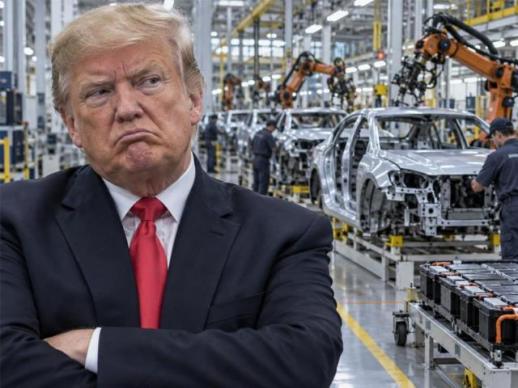 Korean battery makers under Trump whims – from EV retreat to datacenters SEOUL, September 17 (AJP) - U.S. President Donald Trump's retreat from Biden-era electric-vehicle policies has upended the American growth plans of South Korean battery makers, leaving factories built for an EV boom idled, scaled back or searching for a new purpose. Now, some are finding one in the power-hungry data-center boom. Canceled U.S. EV and battery projects between January 2025 and August this year had promised about 27,000 jobs, according to a Reuters analysis of Atlas Public Policy data. About four-fifths of the canceled investment was in Republican-leaning states. The reversal has hit a string of multibillion-dollar ventures involving LG Energy Solution, SK On and Samsung SDI. Ultium Cells, the $2.3 billion battery plant in Lordstown, Ohio, owned by General Motors and LG Energy Solution, halted production in January after weakening EV demand and initially placed about 480 workers on indefinite layoff. Cell production resumed in mid-August, bringing back about 700 workers, but roughly 600 remained on indefinite layoff, the company told Reuters. In Glendale, Kentucky, about 1,500 workers were laid off in December at the $5.8 billion battery complex originally built by Ford and SK On. The project had once been pitched as creating about 5,000 jobs. Part of the roughly $6 billion, 2,800-job battery complex planned by Stellantis and Samsung SDI in Kokomo, Indiana, has also stalled. The retrenchment accelerated after the $7,500 federal EV purchase tax credit expired on Sept. 30, 2025, following legislation backed by Trump and congressional Republicans. The administration also eased vehicle-emissions rules and other policies that had supported EV adoption. Automakers have cited those policy changes, together with softer-than-expected consumer demand, in reassessing EV investment. "Electric cars are fine, but not everyone should be forced to own one," Trump wrote on Truth Social in July 2025, calling what he described as the EV mandate "ridiculous." U.S. EV sales fell 20.5 percent from a year earlier to 247,226 vehicles in the second quarter, according to Cox Automotive. EVs accounted for about 5.8 percent of total new-vehicle sales, down sharply from a record 10.6 percent in the third quarter of 2025, when buyers rushed to qualify for expiring incentives. Ford has been among the most aggressive in resetting its EV ambitions. The automaker booked a $19.5 billion writedown in December, ended plans for several electric models and dissolved its battery joint venture with SK On. Ford also terminated a large battery-supply agreement with LG Energy Solution as it shifted capital away from some EV programs. Its unopened Tennessee assembly plant, once intended to build electric pickups, is being redirected toward gasoline-powered trucks. But the battery factories built to power cars are not necessarily being abandoned. Increasingly, they are being retooled to power something else: artificial intelligence. The explosive construction of data centers is creating a new market for energy-storage systems, or ESS, which absorb electricity and release it when grids or facilities need additional power. Ford plans to hire about 2,100 workers at its Glendale battery complex from late 2027 to produce energy-storage batteries — less than half the workforce originally projected for the site when it was built around EV demand. LG Energy Solution is making a similar pivot. The company is expanding lithium iron phosphate, or LFP, battery production for stationary storage and aims to have more than 50 gigawatt-hours of ESS production capacity across North America by the end of this year. Its North American network includes plants in Michigan and Ontario as well as joint-venture facilities in Ohio and Tennessee. Samsung SDI is also pushing deeper into storage. Its StarPlus Energy venture in Indiana is producing batteries for U.S. ESS contracts, and the company has signed large supply deals aimed at the North American market. Samsung SDI said in August that another Indiana plant would also be used for energy-storage batteries as market demand changes. SK On, meanwhile, has been reviewing ways to redirect underused U.S. production capacity as EV demand softens. The shift toward storage is already showing up in Korean battery makers' earnings. All three major Korean battery companies returned to operating profit in the second quarter, though for different reasons. Samsung SDI posted a 203.8 billion won operating profit, its first in seven quarters, with demand for batteries used in energy storage and AI-related backup-power applications helping the rebound. LG Energy Solution posted a 113.3 billion won operating profit as ESS revenue surged. LG Energy Solution’s underlying business, however, remained in the red. Excluding 241 billion won in U.S. production tax credits, it recorded an operating loss of about 127.7 billion won. SK On also returned to profit after seven quarters, helped by increased Asian battery sales, customer compensation and U.S. production incentives rather than storage alone. The new market offers relief, but not a full replacement for the EV boom the plants were designed to serve. Converting battery lines can take months or years because stationary-storage batteries often use different chemistries and specifications. Storage demand is also not expected to absorb all of the EV capacity now sitting idle or underused. For Korean battery makers, the U.S. bet has therefore changed more quickly than the factories themselves. Plants built to ride America's EV transition are being forced to chase its next power-hungry growth engine — the data centers feeding the artificial-intelligence boom. "Because subsidies expired on Sept. 30, 2025, pull-forward demand concentrated sales between July and September, meaning this year's third quarter will face a much steeper year-on-year comparison," said Kim Hyun-soo, an analyst at Hana Securities. "From October, the base effect eases, making a return to year-on-year growth likely." AJP Takeaways - Canceled U.S. EV and battery projects between January 2025 and August 2026 had promised about 27,000 jobs, according to a Reuters analysis of Atlas Public Policy data. About four-fifths of canceled investment was in Republican-leaning states. - U.S. facilities involving LG Energy Solution, SK On and Samsung SDI have been idled, scaled back or reworked as EV demand weakened following the expiry of the $7,500 federal tax credit. - Korean battery makers are increasingly redirecting U.S. capacity toward energy-storage batteries serving utilities and the fast-growing AI and data-center market. Ford plans to hire 2,100 workers for storage-battery production at its Glendale, Kentucky, complex from late 2027. 2026-09-17 15:12:30
 -
 Korean refiners' windfall meets a supply test SEOUL, September 17 (AJP) - South Korean refiners, fresh from a record first half, face uncertain crude supply for November after Saudi Arabia shut its main pipeline bypassing the Strait of Hormuz, industry officials said on Thursday. SK Innovation, S-Oil, GS Caltex and HD Hyundai Oilbank earned a combined operating profit of about 14.8 trillion won ($10.73 billion) from January to June. Industry estimates show about half of first-quarter profit came from inventory gains and the lagging effect, the windfall from refining crude bought before prices spiked. Refining profits roughly halved in the second quarter, when ceasefire hopes drove crude down more than 50 percent from its peak and saddled refiners with inventory valuation losses. S-Oil said on Aug. 3 it expected tight product supply to keep margins firm in the third quarter. Saudi Arabia closed its East-West pipeline, which carries crude to the Red Sea port of Yanbu, on Sept. 11 after drone attacks launched from Iraq. Refiners have secured cargoes through October, but November volumes hinge on how quickly the line is repaired. Brent crude has averaged $100.40 a barrel so far in September and West Texas Intermediate $96.30, according to Petronet, the price service of state-run Korea National Oil Corp. Brent settled at $105.83 on Sept. 16, up more than 16 percent for the month. Refiners are weighing detours through the Suez Canal, though the route adds about 30 days and pushes up freight costs. HD Hyundai Oilbank has trialed Argentine crude, and SK Innovation recently bought a small volume as refiners widen sourcing to the Americas. AJP Takeaways - South Korea's four refiners posted about 14.8 trillion won in combined operating profit in the first half of 2026, with inventory gains driving much of the first quarter. - Saudi Arabia shut its East-West crude pipeline on Sept. 11, 2026, after drone attacks, leaving Korean refiners' November supply uncertain. - Brent crude averaged $100.40 a barrel in September through Sept. 17, according to Korea National Oil Corp., as refiners weigh costlier Suez routes and Argentine crude. 2026-09-17 10:40:23
 -
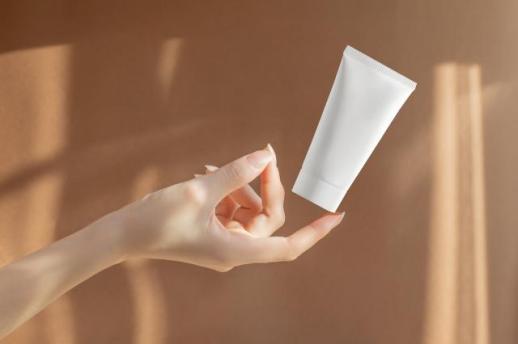 Korea cracks down on misleading holiday gift ads SEOUL, September 17 (AJP) - Online listings for toothpaste, cosmetics and medical devices were caught in 308 cases of misleading advertising and illegal distribution ahead of the Chuseok holiday, the Ministry of Food and Drug Safety said Thursday. Cosmetics accounted for 63 cases, 44 of which touted drug-like benefits such as "skin regeneration" and "anti-inflammatory" effects. Toothpaste, mouthwash and tooth whiteners, staples of holiday gift sets, drew 45 cases of false or exaggerated claims. Another 142 ads peddled illegally distributed medical devices such as blood pressure monitors, and 58 passed off ordinary goods as medical devices with claims of "pain relief." The ministry asked regulators to block the offending sites. South Koreans customarily exchange gift sets with relatives, colleagues and business partners before Chuseok, the autumn harvest holiday, and Seollal, the Korean New Year holiday. This year's Chuseok holiday runs from Sept. 24 to 26. The ministry uncovered 178 similar violations before Seollal and 214 ahead of Chuseok last year, with oral care products such as toothpaste flagged both times. AJP Takeaways - South Korea's Ministry of Food and Drug Safety said on Sept. 17, 2026, that it found 308 cases of misleading ads and illegal distribution for toothpaste, cosmetics and medical devices sold online before Chuseok. - The 308 cases break down into 142 illegal medical device ads, 63 cosmetics ads, 58 ads passing off consumer goods as medical devices, and 45 oral care product ads. - The ministry found 214 violations before Chuseok in 2025 and 178 before Seollal in February 2026. 2026-09-17 09:10:55
 -
 Homeplus struggles to regain footing after court rescue SEOUL, September 16 (AJP) - Homeplus is generating only about 40 percent of its targeted sales two weeks after securing court approval for its rehabilitation plan, forcing it to split overdue wages into two payments, according to industry sources on Wednesday. The hypermarket chain reportedly told its two labor unions that revenue was falling short of what it needs to meet repayments under the plan. Unpaid July wages will be paid in two installments on Sept. 23 and 30, with payments to suppliers for goods ahead of the Chuseok harvest holiday taking priority. Management also floated a voluntary redundancy program but shelved it after the unions balked, and discussed whether and when to close its Paju Unjeong store. Homeplus' unpaid wages totaled 387.1 billion won ($282.9 million) from December 2025 through August, according to Ministry of Employment and Labor data. The Chuseok bonus payment date has yet to be set. Homeplus, acquired by private equity firm MBK Partners in 2015 for about 7.2 trillion won, filed for court receivership in March 2025 after a credit rating downgrade squeezed its short-term funding. The Seoul Bankruptcy Court approved the plan on Sept. 2, two months after it had ordered the proceedings terminated, a decision Homeplus appealed after securing 200 billion won in emergency funding from Meritz Financial Group. The sale of the hypermarket business has yet to gain traction. Samil PwC, the sale manager, plans to send teaser letters to major domestic and foreign companies soon, and Homeplus aims to secure at least one interested bidder by October. AJP Takeaways - Homeplus is generating about 40 percent of its targeted sales and will split unpaid July wages into two payments on Sept. 23 and 30, 2026, after the Seoul Bankruptcy Court approved its rehabilitation plan on Sept. 2, 2026. - Homeplus' unpaid wages totaled 387.1 billion won from December 2025 through August 2026, according to Ministry of Employment and Labor data submitted to lawmaker Kim Wi-sang. - Homeplus, owned by MBK Partners, aims to secure at least one interested bidder by October 2026, with Samil PwC preparing to send teaser letters to potential buyers. 2026-09-16 16:01:19
 -
 Chip binge intoxicates Korean Inc. stakeholders, waves of strikes spread SEOUL, September 16 (AJP) - Two years on, the still-strong chip bonanza of the AI-driven economic age has bestowed on South Korea a double-digit growth in national wealth in nominal terms unseen in more than three decades, thrusting stakeholders — employees and shareholders — into brawls for a bigger share of the newfound riches. Strikes and strike threats have become a recurring scene this year, spreading from chipmakers and shipbuilders to digital platforms such as Kakao. A weak Korean won and soaring semiconductor prices fattened the top and bottom lines of major exporters in the first half, encouraging workers to press for a greater share of the windfall while it lasts. A revised labor law that took effect in March has also changed the bargaining terrain, triggering a rush of industrial actions. The latest to join the wave was POSCO, the privatized steel giant long known for labor peace. POSCO's union launched a 120-hour partial strike at hot-rolling mills in Pohang and Gwangyang on Wednesday, just a week after its first walkout ended a 58-year record without a strike dating back to the steelmaker's founding in 1968. HD Hyundai Heavy Industries' union extended its all-member walkouts to seven hours a day through Friday. The union, representing about 8,100 workers, will have staged a combined 33 hours of walkouts since Sept. 11. At the heart of the disputes is no longer simply how much wages should rise. Increasingly, unions want a fixed claim on corporate profits. HD Hyundai Heavy's union is seeking at least 30 percent of operating profit. POSCO says its union's demands would cost about 1.4 trillion won ($1.02 billion), equivalent to roughly 80 percent of the company's operating profit last year. Profit-linked compensation has emerged as a defining issue in South Korea's 2026 bargaining season. The Labor Ministry put the question on the agenda at a July forum examining how gains generated by artificial intelligence should be shared. "Companies with technological prowess can now reap enormous profits as AI reshapes industry, and sharing them has become hard through traditional collective bargaining alone," Jung Heung-jun, a business administration professor at Seoul National University of Science and Technology, said at the forum. "AI and digital transformation create enormous added value, but they are a double-edged sword that accelerates labor market polarization," said Yoon Dong-yeol, a business professor at Konkuk University. The current wave gained momentum at Samsung Electronics, whose chip union threatened a strike in May as it demanded a fixed share of booming semiconductor profits. The union stood down after a government-mediated agreement created a special semiconductor performance bonus tied to 10.5 percent of business performance. Based on profit forecasts, the formula could translate into total bonuses of up to 600 million won for some memory-chip employees. The settlement did not end the argument over who should benefit from Samsung's windfall. A shareholder group said Sept. 7 that it would file an additional breach-of-trust complaint over the bonuses against Samsung Electronics' entire board and the leaders of its largest union. Unions at Hyundai Motor, HD Hyundai Heavy, LG Uplus and Kakao soon pressed similar demands. Hyundai Motor workers staged their first full-day strike in a decade on Aug. 21. The disputes are unfolding under a substantially different labor framework. Business groups say the so-called Yellow Envelope Act, which took effect March 10, has emboldened unions by giving workers greater legal room to pursue industrial action. The revised Trade Union Act recognizes companies that effectively control subcontracted workers' conditions as employers, opening the door for those workers to demand direct bargaining with prime contractors. It also broadens the scope of disputes that can qualify for legal strikes and restricts companies' ability to seek damages from workers involved in industrial action. The law takes its name from a 2014 campaign in which citizens mailed small donations in yellow envelopes to workers at SsangYong Motor, now KG Mobility, who faced massive court-ordered damage claims after a strike. The impact was immediate. Within a month of the law taking effect, 1,011 subcontractor unions had sought negotiations with 372 prime contractors, according to the Labor Ministry. Hyundai Mobis was among them. Walkouts at its subsidiaries idled Hyundai Motor production lines in Ulsan on Aug. 26, showing how a labor dispute deep in a supply chain can quickly reach the final assembly floor. The risks are equally visible at POSCO. Its hot-rolled steel feeds carmakers, shipyards and appliance manufacturers across the country. During a 16-day nationwide truckers' strike in 2022, the Trade Ministry estimated disruptions across five industries at about 3.5 trillion won, with more than 1 trillion won of the losses in steel. POSCO has called the union's demands excessive at a time when its own earnings are deteriorating. First-half operating profit fell 43 percent as the steelmaker grappled with Chinese oversupply and rising trade protectionism. HD Hyundai Heavy faces a different calculation. Its union wants workers to share in a shipbuilding boom that has filled order books for years. Industry officials warn, however, that prolonged walkouts could delay vessel deliveries one after another through a tightly scheduled production chain. A coalition of eight shipbuilding unions has warned of joint action, including a strike, after next week's Chuseok autumn harvest holiday if companies fail to present acceptable offers by Friday. To critics of the wage push, unions are "rowing while the tide is in," as a Korean saying for capitalizing on favorable conditions goes. Yet the tide may be narrower than the headline numbers suggest. The AI-driven semiconductor boom has become so powerful that it increasingly masks weaker conditions across other parts of the economy. "The economy looks good only because Samsung Electronics and SK hynix are pulling it along together," said Cho Dong-geun, professor emeritus of economics at Myongji University. "Take those two out, and things are not so good." Financial markets offer some evidence of that divergence. Hyundai Motor shares, which climbed to 712,000 won in May amid excitement over humanoid robots, have since retreated to trade at 361,500 won on Wednesday. Samsung Biologics, hit by the first strike since its founding in May, has fallen to about 1.4 million won from 1.965 million won in mid-January. The flood of chip dollars has created another complication by lifting the Korean won, eroding some of the currency advantage enjoyed by traditional exporters. The dollar, which touched 1,559.2 won on July 1, traded at 1,365.2 won on Wednesday. The appreciation came as semiconductor exports reached $281.2 billion in the first eight months of the year, accounting for more than 40 percent of South Korea's total exports. "When the won strengthens this much, traditional exporters could see their exports shrink sharply," Cho said. "Put it all together, and the economy is in crisis. It's just hidden, so no one sees it." Cho urged unions to exercise restraint and shore up their fundamentals before pressing for more. "This is no time to strike," he said. As labor action spread across industries, the government moved to draw a line around how far profit-sharing demands could go under the revised labor law. The Labor Ministry issued guidelines on Sept. 3 stating that demands for bonuses fixed to a percentage of corporate profit are not mandatory bargaining items and generally cannot, by themselves, serve as the basis for a legal strike. The guidance clarified the government's interpretation of the law without changing the statute itself. The Federation of Korean Trade Unions called the move an infringement on constitutional labor rights. "Not being a mandatory bargaining item does not mean unions cannot make the demand," Vice Labor Minister Kwon Chang-joon said. The Yellow Envelope Act took its name from envelopes that once carried small donations to striking workers facing financial ruin. Twelve years on, South Korea's labor fight is increasingly about how much goes into the pay envelope. AJP Takeaways - POSCO's union began a 120-hour partial strike on Sept. 16, ending decades of labor peace, while HD Hyundai Heavy Industries' roughly 8,100 union members extended walkouts to seven hours a day. - Profit-linked compensation has emerged as a defining demand of the 2026 bargaining season, with HD Hyundai Heavy's union seeking at least 30 percent of operating profit after Samsung Electronics agreed to a new semiconductor bonus formula in May. - The Yellow Envelope Act, effective March 10, expanded subcontracted workers' bargaining rights, broadened the scope of labor disputes and limited some damage claims against strikers, changing the terrain for industrial action. 2026-09-16 15:23:31
 -
 Korean robots may lag, but stocks are flying SEOUL, September 16 (AJP) -South Korean humanoid robots may still be grounded and stand awkwardly compared with their Chinese peers, but stocks of their makers are flying, helping sustain the junior KOSDAQ market against broadly bearish sentiment in Seoul. A correction took hold Wednesday, but robotics stocks have stood out throughout the month and remained strong through Tuesday despite renewed anxiety over artificial intelligence investment in the United States. Shares of Robotis fell 5.24 percent in early Wednesday trading after a steep run that pushed the robot maker into the KOSDAQ's top 10 by market capitalization. The stock had gained 50.6 percent since Aug. 3 through Tuesday, lifting Robotis to 10th place on the KOSDAQ from 19th about a month earlier. Other robotics-related shares surged Tuesday before giving up some of their gains to profit-taking Wednesday. Samhyun jumped 29.8 percent Tuesday, near the daily limit, while HigenRNM soared 24.69 percent. Wonik Holdings rose 14.38 percent, SPG gained 13.34 percent and CP System advanced 11.52 percent. Rainbow Robotics added 3.09 percent. The rally has put two robotics companies among the KOSDAQ's 10 largest stocks. Rainbow Robotics ranked fifth with a market capitalization of 8.41 trillion won as of Tuesday, while Robotis ranked 10th at 4.76 trillion won. Investor enthusiasm is being fueled by expectations that the next phase of AI investment will spread from chips and data centers into physical AI, where artificial intelligence is embedded in robots and other machines operating in the real world. Government spending is adding to those expectations. South Korea plans to more than triple spending on physical AI to 3.1 trillion won next year from 900 billion won this year under its proposed 2027 budget. The government plans field trials across eight areas including manufacturing, smart factories, construction, agriculture, defense, care services, logistics and ports, while deploying about 2,000 domestically produced AI robots. Eugene Investment & Securities said government support is expected to expand beyond research and development into purchases, field trials and mass production, potentially helping robotics companies move closer to commercialization. Support is also being directed at components critical to humanoid robots. The 2027 budget proposal includes 62 billion won for sensors, actuators and secondary batteries for humanoids, up about 50.4 billion won from this year. Second Vice Finance Minister Huh Chang underscored the policy push during a Sept. 10 visit to Robotis headquarters in Seoul, where he inspected humanoid robots and actuator technology. “We will actively support the private sector through the 2027 budget for future industry core components,” Huh said. The government has said it plans to expand support from technology development to field testing as it tries to build a domestic supply chain for key humanoid components. AJP Takeaways - South Korean robot stocks rallied on Sept. 15, 2026, as Samhyun rose 29.8 percent and Hyzen R&M gained 24.7 percent on the KOSDAQ, according to Korea Exchange data. - Rainbow Robotics and Robotis ranked fifth and 10th by market value on the KOSDAQ as of Sept. 15, 2026, with five of the top 10 companies in chips and electronic parts. - South Korea's 2027 budget proposal would raise physical AI spending to 3.1 trillion won from 900 billion won, pending approval by the National Assembly. 2026-09-16 10:22:10
 -
 Naver bets on solar to power AI data centers SEOUL, September 16 (AJP) - Naver plans to take a stake in a 216-megawatt solar project and buy its output under a long-term deal to power its data centers with renewable energy, the company said Wednesday. South Korea's largest internet portal signed a memorandum of understanding with Singapore-based developer Gurīn Energy over the Jindo Green Solar project on Jindo. The two companies aim to hammer out the details and sign a binding agreement by the end of the year. Gurīn Energy will lead development and operation of the plant, which secured its electricity business license earlier this year. Naver will buy the electricity to supply its Gak Sejong and Gak Chuncheon data centers, which run its AI and cloud services. "As data center power demand rises with the spread of AI and cloud, securing a stable supply of renewable energy is an essential task for sustainable infrastructure," said Chae Seon-ju, Naver's head of strategic business. Chae said the deal would help the company meet its goal of becoming carbon negative by 2040. Naver set that target in 2020 and has since sourced power from solar, small hydropower and wind to cut emissions from its electricity use. Pairing an equity stake with a power purchase agreement will further diversify its renewable supply, the company said. The agreement follows Naver's April deal to acquire a 30 percent stake in a wind farm GS Wind Power is building in Yeongyang County, North Gyeongsang Province, and buy its electricity for 25 years. Naver said the deal was the first time a South Korean RE100 member had secured renewable power by investing directly in a generating company. RE100 is a global initiative of companies pledging to use only renewable electricity. AJP Takeaways - Naver signed an MOU with Singapore-based Gurīn Energy on Sept. 16, 2026, to invest in the 216-megawatt Jindo Green Solar project and sign a long-term power purchase agreement. - Naver plans to use the solar power at its Gak Sejong and Gak Chuncheon data centers, citing rising electricity demand from AI and cloud services. - The two companies aim to sign a binding agreement by the end of 2026, as Naver pursues its goal of becoming carbon negative by 2040. 2026-09-16 09:44:04
 -
 Repeat quality breaches dog South Korean drugmakers SEOUL, September 16 (AJP) - More than one in five drug factory inspections in South Korea have turned up quality breaches each year since 2022, according to regulator data released by a lawmaker Wednesday. The violation rate under Good Manufacturing Practice (GMP) rules climbed from 37.9 percent in 2022 to 41.3 percent in 2023, before easing to 26.8 percent last year and 22.7 percent in the first half of 2026. The Ministry of Food and Drug Safety compiled the figures from regular and special inspections and submitted them to Rep. Heo Jong-sik of the ruling Democratic Party. The 20 worst offenders racked up 166 violations, and five were caught 10 times or more. One manufacturer was cited 12 times over the period, though the data did not name any companies. "The entire system of monitoring, sanctions and follow-up for repeat violators must be overhauled," said Heo, who sits on the National Assembly's health and welfare committee. GMP rules, which the ministry uses to guarantee drug quality, cover every stage from production and testing to packaging and shipment. AJP Takeaways - GMP violations were found in more than 20 percent of South Korean drug factory inspections every year from 2022 through June 2026, according to Ministry of Food and Drug Safety data released Sept. 16, 2026 by Rep. Heo Jong-sik. - The 20 manufacturers with the most violations accounted for 166 breaches, and one company was cited 12 times. - GMP lapses abroad have been linked to patient deaths and drug shortages, including a 2020 contamination case at Japan's Kobayashi Kako that led to a record 116-day suspension. 2026-09-16 09:38:09
 -
 Korea dreams big on humanoids, but they still run on foreign parts SEOUL, September 15 (AJP) - South Korea's humanoid robots hardly look like formidable competitors beside their free-wheeling Chinese counterparts, and their awkward moves betray a much deeper problem. Despite South Korea's much-hyped push to become an artificial intelligence powerhouse, its physical AI ecosystem remains fledgling, short of both scale and a homegrown supply chain. Aei Robot, one of the country's leading bipedal robot makers, is largely forced to fend for itself, machining the frame, actuators and a gearless linear drive for its Alice humanoid line at its own factory in Ansan, south of Seoul. "We build the parts ourselves, because otherwise we can't control the price," said Kim Ho-jung, the company's marketing manager. "But take a motor — there are rare earths in it, and that's the materials layer. We can't make that here at all, so it's imported." The Hanyang University spin-off comes closer to building a humanoid entirely in-house than almost any Korean rival. Tally the machine up part by part, however, and a stubborn share still has to be sourced from abroad. South Korea localizes only about 40 percent of the core parts used in its robots. It sourced 88.8 percent of the permanent magnets used in robot motors from China last year and buys much of its precision reducers and controllers from Japan, according to a January report from the Korea International Trade Association. Japan's Harmonic Drive Systems and Yaskawa Electric together command 60 percent to 70 percent of global markets for key robot components. "Korea has outstanding robot utilization capability, but faces structural limits from its heavy overseas dependence on core materials and components," said Jin Sil, a senior research fellow at the association's Institute for International Trade. Localization was largely a matter of industrial ambition until late July. Then it became a condition for selling new robot models into the United States. The Federal Communications Commission put foreign-produced advanced robotic devices on its Covered List on July 28, blocking new U.S. equipment authorizations for humanoids, quadrupeds, autonomous mobile robots and other covered platforms regardless of the manufacturer's nationality. Absent conditional approval from U.S. authorities, a robot escapes classification as foreign-produced only if it is manufactured in the United States and domestic parts account for more than 65 percent of total component costs. The threshold rises to 75 percent in 2029. Parts Korea cannot make, rare-earth materials among them, complicate that arithmetic. The chip inside the robot complicates it further. "Nvidia Jetson goes in, Orin on one model, Thor on the next. That isn't ours," Kim said. "On a cost basis, that eats up a big share of the non-localized portion. I can't tell you that the whole thing is localized. I don't think that's even possible." Nvidia's Jetson computing platform runs many of the humanoids now coming out of China. AgiBot, Unitree, Galbot, Engine AI and UBTech all use Jetson platforms, as does Alice. Nvidia's Jetson T5000 module launched at $2,999 apiece for orders of at least 1,000 units. The same module now costs about $4,999 at that volume, a 67 percent jump that robot makers link to the AI-driven memory boom pushing up chip costs. South Korea is one of the world's dominant memory-chip producers. But the memory it excels at making cannot replace the processor sitting inside a humanoid's head. Neural processing units, or NPUs, offer a lower-power alternative to power-hungry GPUs. Rebellions and FuriosaAI, two of Korea's leading AI chip designers, have neither the production volume nor the robotics optimization to step in yet. The problem reaches beyond parts. Rainbow Robotics, the Samsung Electronics affiliate, has stopped shipping its RB-Y1 semi-humanoid to the United States. An order for dozens of units from a major North American customer has stalled, and the company cannot say when shipments will resume. Most Korean humanoid startups have not reached mass production at all, leaving them struggling to meet the new U.S. requirements before they have sold a single robot there. China is already operating on another scale. Chinese vendors shipped more than 30,000 humanoids in the first half of 2026, above the roughly 20,000 shipped in all of 2025, according to China's Humanoid Robot Scene Application Alliance, an industry body. South Korea had only hundreds of humanoids deployed last year, compared with an estimated 10,000 to 15,000 in China, according to Goldman Sachs. Aei Robot, which receives support from the industry ministry, has built more than 10 Alice units and booked commercial revenue on two, both sold to small manufacturers. The rest were supplied under state research projects that cover parts and labor but do not translate into commercial robot sales. Funding constraints extend into state research institutes. The Korea Institute of Machinery and Materials unveiled version 0.7 of its KAIROS humanoid on Sept. 7 and made a funding appeal at the same time. "We need at least 3 billion won ($2.21 million) budgeted, and we will answer it with results," said Park Chan-hoon, director of its AI Robotics Institute. China's overwhelming shipment numbers come with a caveat: much of the demand is created at home, often with the state itself helping generate the market. "The key performance indicator for the Chinese government is just the number of units," Kim said. "Through last year there were performance targets. From this year it's purely volume, print enough of them and the state will take care of the rest." "Once they've taken the market completely, they'll switch to backing only whoever survives the fight among themselves," he said. "They've already run that play with electric vehicles and solar, and I think they're running it again." South Korea is now preparing its own state-backed push to nurture an industry still learning to walk. Physical AI spending is set to climb to 3.1 trillion won next year from 900 billion won this year under the 2027 budget proposal approved by the Cabinet on Sept. 1. Of that, 500 billion won is earmarked for field trials across eight sectors, including manufacturing, construction, defense and care. The government also plans to deploy about 2,000 Korean-made AI robots, including 650 at research and education sites and 369 with police and fire services. The Ministry of Trade, Industry and Energy has budgeted 30 billion won to place 200 research humanoids at engineering schools and state institutes. Another 30 billion won would support deployment of 200 humanoids on factory floors. A new 37 billion won research program targets actuators, reducers and sensors, among the core parts Korea still relies on foreign suppliers to provide. Government spending on three core components designated for future industries — sensors, actuators and humanoid batteries — is set to rise to 62 billion won next year from 11.6 billion won this year. "We will actively support the private sector through the 2027 budget for future industry core components," said Huh Chang, second vice minister at the Ministry of Economy and Finance, during a Sept. 10 visit to robot maker Robotis in Seoul. None of it is money yet. The budget was submitted to the National Assembly on Sept. 3 and must still clear committee review and a floor vote. Separate tax incentives will also depend on an enforcement decree expected in February to determine the applicable rates. The longer-term potential is much bigger than today's production figures suggest. Goldman Sachs expects Korean companies to account directly and indirectly for 30 percent of global humanoid production by 2035, drawing on expertise in actuators, motors, sensors and dexterous hands already developed for the country's vast automotive and manufacturing industries. The bank estimates Korean supply chains could support about 74,000 humanoids by 2030. The industry ministry is now surveying government agencies and companies to find out how many of those robots they would actually buy. For an industry in which China can already count its machines in the tens of thousands, that may be the number that matters most. AJP Takeaways - Aei Robot builds the frame, actuators and linear drive of its Alice humanoid in house but imports its Nvidia Jetson compute module and China-sourced rare-earth magnets, and has booked revenue on two of the more than 10 units it has built. - The U.S. Federal Communications Commission added foreign-made humanoids and mobile robots to its Covered List on July 28, 2026, exempting only robots assembled in the United States with domestic content above 65 percent of component costs, which halted Rainbow Robotics' RB-Y1 shipments. - South Korea localizes about 40 percent of its robot core components and sourced 88.8 percent of its robot-motor permanent magnets from China in 2025, according to the Korea International Trade Association, with Japan supplying most precision reducers and controllers. - Goldman Sachs expects Korean companies to take 30 percent of global humanoid production by 2035, while SBB Tech, Korea's only full-cycle harmonic reducer maker, does not expect an operating profit before 2028. 2026-09-15 15:28:48