

Journalist
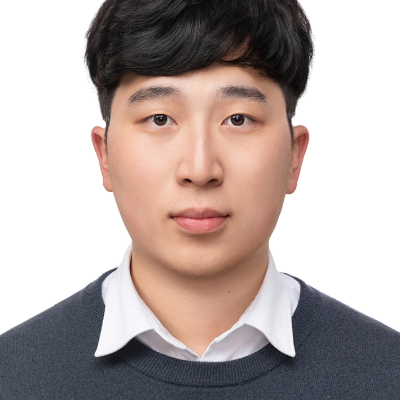
Kim Dong-young김동영
davekim0807@ajupress.com
ReporterSamsung Biologics, CJ CheilJedang, LG Chem, Celltrion, Naver, Krafton, Nexon, Hyundai Mobis etc. & energy, game, food, bio, petrochemical, AI
Kim Dong-young is a bilingual journalist at AJU Press (AJP), covering Korean tech, energy, and bio/pharma.
He reports from the field at events like CES and APEC, runs AJP's YouTube channels,
and is pursuing a master's at Sogang's MOT program. "I try everything in this AI era that can improve yet preserve the facts. Journalism still serves as my core."
He reports from the field at events like CES and APEC, runs AJP's YouTube channels,
and is pursuing a master's at Sogang's MOT program. "I try everything in this AI era that can improve yet preserve the facts. Journalism still serves as my core."
Latest by Kim Dong-young
-
 Coupang creates outside security panel after record privacy fine SEOUL, September 15 (AJP) - Coupang has opened its internal security policies to review by seven outside experts, the South Korean e-commerce operator said Tuesday, 10 months after a breach exposed personal data belonging to about 37.6 million people. The information protection advisory committee, co-chaired by Coupang chief information security officer Brett Mathis and Korea Chief Private Officers' Forum president Hur Sung-wook, held its first meeting the on same day and will convene quarterly. Lawyers from two large Seoul firms and four university professors fill the remaining seats. The company said the panel's findings will be written into internal security rules and work processes. The security measure enhancement follows after a record fine of 624.68 billion won ($460.6 million) slapped on by the Personal Information Protection Commission (PIPC) on June 10, the heaviest privacy penalty ever levied in South Korea. The PIPC concluded that sloppy management of an authentication signing key and weak access controls let a former employee harvest user records for about five months. The regulator also ordered the company to strengthen safeguards, notify non-members whose data leaked and guarantee a substantive role for its privacy chief, and said it would verify compliance within three months. Coupang's monthly active users reached 35.95 million in August, above the 34.38 million logged in October 2025, before the breach surfaced, according to Mobile Index. Estimated card spending on the platform came to 4.93 trillion won that month. AJP Takeaways - Coupang launched an information protection advisory committee of seven outside experts on Sept. 15, 2026, co-chaired by chief information security officer Brett Mathis and CPO Forum chairman Huh Sung-wook, with quarterly meetings planned. - South Korea's Personal Information Protection Commission fined Coupang Corp. 624.68 billion won ($410 million) on June 10, 2026, over a leak affecting about 37.55 million people, the largest privacy penalty in the country's history. - Coupang's monthly active users stood at 35.95 million in August 2026, above the 34.38 million recorded in October 2025 before the breach was disclosed. 2026-09-15 15:05:46
 -
 Korea scraps renewable quotas in energy transition push SEOUL, September 15 (AJP) - New renewable power projects in South Korea will sell electricity under long-term fixed-price contracts won at government auctions from January, the Ministry of Climate, Energy and Environment said Tuesday. The revised renewable energy promotion act retires the renewable portfolio standard that has shaped the market since 2012. Developers will bid beneath a government ceiling price in auctions run separately for each energy source, and winners will sign long-term fixed-price supply contracts with Korea Electric Power Corporation. Bids will also be scored on their contribution to domestic industry, supply chains and energy security. Renewable energy certificates, the tradable credits generators now buy to meet their quotas, will no longer be issued for new facilities. Existing operators will keep receiving them for up to 20 years, and the certificate spot market will trade until Dec. 31, 2029. Renewables supplied about 10 percent of Korea's electricity in 2024, among the lowest shares in the OECD, according to data compiled by Ember. The government's first renewable energy master plan, unveiled in May, targets 100 gigawatts of installed capacity by 2030 and a 30 percent share of generation by 2035. The ministry will hold a public hearing in Seoul on Sept. 30, finish drafting subordinate rules this year and announce the first solar and wind auctions next year. AJP Takeaways - South Korea's Ministry of Climate, Energy and Environment promulgated on Sept. 15, 2026 a revised renewable energy promotion act that abolishes the 2012 renewable portfolio standard and replaces it with government-run competitive auctions from Jan. 1, 2027. - Winning bidders will sign long-term fixed-price power purchase contracts with Korea Electric Power Corporation, while renewable energy certificates stop being issued for new facilities and the certificate spot market closes on Dec. 31, 2029. - The overhaul supports the government's first renewable energy master plan, released in May 2026, which targets 100 gigawatts of installed renewable capacity by 2030 and a 30 percent share of power generation by 2035, up from about 10 percent in 2024. 2026-09-15 13:23:58
 -
 Korean carbon firms sign supply deals at Shanghai expo SEOUL, September 15 (AJP) - Two South Korean carbon material makers signed preliminary supply agreements with Chinese buyers at the China Composites Expo in Shanghai last week, World-OKTA said Tuesday. World-OKTA, a Seoul-based association founded in 1981 that connects overseas Korean businesspeople through 157 chapters in 76 countries, ran the Korean pavilion at the expo from Sept. 1 to 3. Seven South Korean carbon and composite companies took part. Mcell, which coats fabric with carbon nanotubes to generate heat, signed a memorandum of understanding worth $20,000 with Yoon Networks (Shanghai). Cleantech, a maker of carbon-fiber anti-static workwear, signed a $10,000 agreement with DINO TEXTILE. “These consultations and agreements came from combining the technology of Korean carbon and composite companies with World-OKTA’s local network,” said Park Chong-bum, chairman of the association. Both agreements were brokered by members of World-OKTA’s Shanghai chapter, which assigned seven members to support the participating companies. World-OKTA will hold its 2026 Korea Business Expo Shenzhen from Oct. 8 to 11, expanding this year’s event into a Korea-China trade exposition. The association is targeting 750 exhibiting companies, 2,000 buyers and 6,000 visitors and has signed a cooperation agreement with the Shenzhen General Chamber of Commerce. AJP Takeaways - World-OKTA arranged 146 buyer meetings for seven South Korean carbon and composite companies at the China Composites Expo in Shanghai from Sept. 1 to 3, resulting in two preliminary agreements. - Mcell signed a $20,000 memorandum of understanding with Yoon Networks (Shanghai), while Cleantech signed a $10,000 agreement with DINO TEXTILE. - World-OKTA will hold its 2026 Korea Business Expo Shenzhen from Oct. 8 to 11, expanding the event into a Korea-China trade exposition. 2026-09-15 10:53:29
 -
 LG Chem pushes into China's chip cleaning materials market SEOUL, September 14 (AJP) - LG Chem has agreed to supply a Chinese specialty chemicals maker with the raw material for an ultra-high-purity solvent used to clean semiconductor wafers. The South Korean company said Monday that it will ship propylene-based isopropyl alcohol from its Yeosu plant, which produces about 165,000 tons a year. Partner Jiangyin Jianghua Microelectronics Materials is to refine it into semiconductor-grade isopropyl alcohol (IPA) for Chinese fabs. Chip fabrication draws on the solvent repeatedly, and trace impurities can erode yields. The two companies will court customers making artificial intelligence chips and high-bandwidth memory. "We will strengthen our base for supplying ultra-high-purity raw materials for semiconductors and seek new growth opportunities in the global semiconductor materials market," said Kim Sang-min, head of LG Chem's petrochemicals business. LG Chem is steering that business toward specialty products as Chinese oversupply grinds down margins on commodity plastics. Chief Financial Officer Cha Dong-seok told an earnings call on July 31 that high-value applications including semiconductor-grade IPA should account for more than 25 percent of revenue by 2030, from about 10 percent this year. AJP Takeaways - LG Chem disclosed on Sept. 14, 2026 a memorandum of understanding with China's Jiangyin Jianghua Microelectronics Materials to build a local supply chain for ultra-high-purity isopropyl alcohol, a cleaning material used throughout semiconductor manufacturing. - LG Chem produces about 165,000 tons a year of propylene-based isopropyl alcohol at its Yeosu plant and will supply it to Jianghua for further refining, targeting Chinese customers making AI chips and high-bandwidth memory. - The Ministry of Trade, Industry and Resources has asked domestic producers to cut naphtha-fed cracker capacity by 2.7 million to 3.7 million tons a year, and LG Chem submitted its restructuring plan to the government in December 2025. 2026-09-14 16:12:06
 -
 AI time-out calls grow just as Korea readies AI jolt SEOUL, September 14 (AJP) - After years of acceleration and frenzied infatuation with generative artificial intelligence, U.S. creators and users are suddenly shouting time-out, with debate spreading among incumbent and former presidents, Silicon Valley and beyond over warnings of a Frankenstein moment and even doomsday for humanity. The sober reckoning, raised most dramatically by former OpenAI and Anthropic researchers, has arrived just as the latest generation of models pushes closer to artificial general intelligence, or AGI. Even the people running the race are beginning to question its speed. Anthropic Chief Executive Dario Amodei, after years of competing fiercely with OpenAI and other frontier laboratories, called for greater restraint. "Over the last few months, I have become convinced that fully addressing the risks requires even more prudence—not just investing in risk prevention, but pacing the rate of capabilities advancement so that risk prevention has time to keep up," Amodei wrote Saturday. OpenAI Chief Executive Sam Altman quickly backed stronger independent evaluation. Elon Musk of xAI responded, "Dario is right," while Google DeepMind Chief Executive Demis Hassabis also lent his support. Their convergence is striking because all four are competing to build increasingly powerful AI. U.S. President Donald Trump, whose administration has put beating China at the center of its AI strategy, was clearly unhappy with the interruption. Trump said the United States was leading China and that "whoever wins AI wins." "We can put guardrails, we can do this and that, but I think you have a lot of negative forces that are bringing it up that ... shouldn't be bringing it up, and they're bringing up things that won't happen," Trump told reporters Sunday during a weekend trip to Ireland. Former President Barack Obama took almost the opposite position at a closed-door Democratic fundraiser in New York on Sept. 10. The technology is "moving very fast in private hands," he said, and could become dangerous if it is not brought under control. For South Korea, however, the argument is no philosophical exercise. Seoul is only now preparing its biggest push into AI after starting late against the United States and China. Slowing down could widen that gap. Racing ahead without stronger safeguards could leave Korea repeating mistakes that the companies at the technological frontier are only beginning to confront. South Korea's 2027 budget bill raises spending on AI and three related flagship industrial projects by 97.2 percent to 21.3 trillion won ($15.8 billion). The National AI Computing Center planned for Solasido is targeting 15,000 GPUs by 2028, while Nvidia agreed late last year to supply 260,000 GPUs to Korean buyers. Korea, in other words, is preparing to sprint at precisely the moment some of the world's fastest runners are asking whether the race itself has become dangerous. Trump's reaction nevertheless exposes the other half of Seoul's dilemma. Countries already running behind can hardly afford a breather, much less a moral reconsideration, if their competitors keep moving. China has continued rolling out increasingly capable models, while Washington increasingly treats AI leadership as a matter of economic and national security. "The government should hold its own center of gravity and not be rattled by a single remark from Trump," said Moon Hyoung-nam, professor of interdisciplinary studies at Sookmyung Women's University. "The United States has spent 2026 institutionalizing this, down to fast-tracking AI for national security and locking in AI talent," Moon said. "Korea needs to execute infrastructure, talent and industrial application at the same time, rather than issue declarations." AI debate in Korea has largely centered on catching up — computing capacity, sovereign models, data centers, talent and industrial adoption — rather than on what happens when increasingly autonomous systems become difficult to control. It has institutionalized risk management now being debated in Silicon Valley. The AI Basic Act, in force since Jan. 22, requires lifecycle risk management for systems meeting three conditions simultaneously, including cumulative training compute above 10^26 floating-point operations. No known domestic developer currently reaches that threshold. Korea has introduced rules for frontier-scale AI before producing much frontier-scale AI of its own, while massive public and private investment is rapidly expanding the computing infrastructure that could eventually bring Korean systems within reach of those rules. But the casualty has become visible in Korea's youth job market. Youth employment fell by 285,000 between June 2022 and June 2026, and industries with high exposure to AI accounted for 268,000, or 94 percent, of the decline, according to a Bank of Korea study released this month. Employment among young people fell 31.4 percent in information services, 27.4 percent in publishing, 16.6 percent in computer programming and 11.6 percent in professional services. The question is therefore not whether Korea should abandon its AI push. It is whether safety, cybersecurity and evaluation can be built into the expansion before Korea reaches the scale at which failures become harder and more expensive to contain and whether the country can absorb the labor-market disruption already emerging as AI begins to erode the entry-level jobs. Some Korean experts acknowledge the trade-off to some extent. "If you build AI at that kind of pace, the security gives way later," said Kong Duk-jo, professor of AI policy and strategy at the Gwangju Institute of Science and Technology. "It is like stretching chewed gum. Holes open up in the middle." The answer is not to cut investment, Kong said, but to change strategy. "Securing a general-purpose model is close to intractable, because it has to stay open to everyone," Kong said. "Korea could build enough AI usage cases through actual security attack and defense training, and we just might be able to stand on equal terms with the United States." Korea cannot realistically stop running while Washington and Beijing are still way ahead in the game. It also has little reason to reproduce an American development model whose own architects increasingly say has allowed capabilities to run ahead of safeguards. For Korea, the immediate danger is not necessarily Skynet. It is arriving late to the AI race and then running so hard to catch up that it ignores the warning signs being raised by those already ahead. Trump, asked whether the industry should slow down or face greater regulation, allowed that some rules might eventually be needed but named none. He answered after watching a golfer tee off. AJP Takeaways - South Korea is sharply accelerating its AI investment just as leading U.S. researchers and executives are warning that capability development may be outrunning safety and control. - The 2027 budget allocates 21.3 trillion won ($15.8 billion) to AI and three related flagship projects, while Korea is rapidly expanding computing capacity through the National AI Computing Center and large-scale GPU purchases. - Korea already has frontier-AI risk rules, but no known domestic developer currently meets the legal threshold, giving Seoul a window to strengthen security and evaluation before domestic systems reach much greater scale. - The Korean dilemma is not simply whether to slow down. Falling further behind the United States and China carries strategic costs, but racing ahead without stronger safeguards could import the same problems Silicon Valley is now confronting. 2026-09-14 15:42:18
 -
 Korea boosts meat supply to fight Chuseok inflation SEOUL, September 14 (AJP) - Beef, pork and egg supplies will be sharply increased before the Chuseok holiday as South Korea seeks to contain prices ahead of one of the country's biggest family gatherings. The Ministry of Agriculture, Food and Rural Affairs said Monday that beef will be supplied at 1.3 times usual volumes and pork at 1.4 times, while egg supplies, including imports, will reach 2.4 times normal levels. Government-backed discounts and producer levy funds will cut prices of hanwoo, beef from Korea's native cattle breed, by up to 50 percent and pork by about 20 percent. Agriculture Minister Song Mi-ryung announced the plan during a visit to a livestock auction house run by the Nonghyup farm cooperative in Eumseong, North Chungcheong Province. "We will do our utmost to supply livestock products stably so that consumers can enjoy a happy Chuseok," she said. Chuseok, the autumn harvest holiday falling on Sept. 25 this year, brings families back to their hometowns for gatherings and ancestral rites. Traditional holiday tables often include braised beef short ribs, beef soup and jeon, pan-fried savory pancakes that commonly use eggs. Demand typically peaks in the three weeks before Chuseok, when slaughterhouses add weekend shifts. Cattle slaughter during that period is forecast at about 96,000 head this year, down 13.7 percent from a year earlier, according to the Korea Rural Economic Institute. The supply increase comes as higher food prices raise the cost of preparing for the holiday. A four-person ancestral rite table costs 302,500 won ($225.1) at traditional markets, up 1.2 percent from a year earlier, according to the Korea Price Research Center. AJP Takeaways - South Korea will increase beef supplies to 1.3 times normal levels, pork to 1.4 times and eggs to 2.4 times ahead of Chuseok on Sept. 25. - Cattle slaughter during the peak holiday-demand period is forecast at about 96,000 head, down 13.7 percent from a year earlier. - Government-backed discounts will cut hanwoo beef prices by up to 50 percent and pork by about 20 percent as holiday food costs continue to rise. 2026-09-14 14:05:49
 -
 SK AX wins Korean govt award for in-house AI training program SEOUL, September 14 (AJP) - SK AX has gained a government validation for its in-house program training and certifying employees in generative artificial intelligence. The award was presented by The Ministry of Employment and Labor on Sept. 11 at a human-resources development conference at COEX Magok in Seoul, cited as a standout case under a government program that endorses corporate qualifications. The company has already been awarded with government validation for in-house courses AI Literacy and AI Bootcamp in January. AI Literacy targets basic AI skills for all staff regardless of role, covering document drafting, data structuring, spreadsheet use and elementary programming. AI Bootcamp trains specialists who can build custom AI agents that draw on internal data to carry out tasks on their own, producing experts ready for immediate deployment on the factory floor. The company has groomed the system to keep results fair and reliable since AI itsefl runs the training and assessment. It has minimized bias in exam questions and grading and left final review to human evaluators based on the transparency and safety principles of the AI Basic Act that took effect in January. "This award recognizes the credibility and field value of the AI-competency certification platform SK AX built ahead of the curve," said Kim Min-hwan, who leads the company's HR transformation efforts. "We will keep developing it into a certification system that is trusted and used across industry, not just one that supports our own employees' growth." AJP Takeaways - SK AX, the IT arm of South Korea's SK Group, won a minister's award from the Ministry of Employment and Labor on Sept. 11 for an in-house generative-AI training and certification program. - The company's AI Literacy and AI Bootcamp courses became the first AI-competency credentials in South Korea to earn government recognition, awarded in January under the labor ministry's corporate-qualification endorsement program. - SK AX plans to extend the certification system to outside companies and educational institutions, and reflected the AI Basic Act's transparency and safety principles by keeping human evaluators in charge of final results. 2026-09-14 09:52:48
 -
 Krafton, Neople win top employer honors SEOUL, September 11 (AJP) - South Korean game makers Krafton and Neople have been named top job creators by the Ministry of Employment and Labor, cited for expanded parental benefits and youth hiring. Krafton, the publisher of "PUBG: Battlegrounds," pays up to 100 million won ($74,382) over a lifetime for each child born to employees on or after Jan. 1, 2025, and has extended parental leave to as long as two years. The selection announced Friday also reflected non-cash support, including remote work for childcare, prenatal checkup leave for employees with pregnant spouses, and automated hiring of replacement staff. It also included counseling for returning parents. It marks Krafton's fifth selection since 2019. Neople, a Nexon subsidiary behind the "Dungeon & Fighter" franchise, offers housing and airfare support to help staff from other regions settle near its Jeju Island headquarters. Its headcount rose 7 percent in 2025 from a year earlier, with young people accounting for 81 percent of new hires. "We will keep hiring talent and improving our workplace so that talented young people can fully realize their potential and grow with Neople," said Yoon Myung-jin, chief executive of Neople. Separately, live-streaming platform SOOP received a Minister of Health and Welfare commendation at a World Suicide Prevention Day ceremony in Seoul on Thursday, recognized for curbing suicide-inducing and harmful content and running awareness campaigns for streamers and users. AJP Takeaways - Krafton and Nexon subsidiary Neople were selected as 2026 top job creators under a South Korean Ministry of Employment and Labor program, the companies said on Sept. 11, 2026. - Krafton pays up to 100 million won per child born to employees since Jan. 1, 2025, and earned its fifth selection since 2019, while Neople's headcount grew 7 percent in 2025, with young people making up 81 percent of new hires. - Live-streaming platform SOOP Co. received a Minister of Health and Welfare commendation on Sept. 10, 2026, for countering suicide-related and harmful content on its platform. 2026-09-11 16:10:18
 -
 Samsung E&A lands $3.5 billion Saudi fertilizer plant deal SEOUL, September 11 (AJP) -Samsung E&A has won a $3.5 billion contract to build a major fertilizer complex in Saudi Arabia, extending its run of large overseas orders and deepening its foothold in one of its most important Middle Eastern markets. The South Korean engineering company said Friday it signed an engineering, procurement and construction contract with SABIC Agri-Nutrients for the SAN-7 project, worth about 4.7 trillion won ($3.5 billion). Samsung E&A will carry out the project on a sole EPC basis, with completion scheduled for 2030. The plant will be built in the industrial city of Jubail in eastern Saudi Arabia and will use natural gas to produce 3,500 tons of ammonia a day. The ammonia will then be used to manufacture 7,700 tons of urea fertilizer daily, with all output destined for export. The project will also incorporate a post-combustion carbon capture system designed to capture carbon dioxide generated during ammonia production and reuse it in the synthesis of urea, reducing emissions while improving operating efficiency, according to the company. The contract was signed Wednesday at SABIC's headquarters in Jubail. Samsung E&A Chief Executive Namkoong Hong attended alongside senior executives from SABIC and SABIC Agri-Nutrients. The deal adds to Samsung E&A's long track record in Saudi Arabia, where it entered the market in 2003 and has since carried out about 30 projects. In 2024, the company secured a roughly $6 billion contract for Saudi Aramco's Fadhili gas expansion project, its largest order since its establishment. Samsung E&A also has extensive project experience in the Jubail industrial complex, giving it access to existing infrastructure, local suppliers and project resources that could support execution of the latest contract. The SAN-7 order further strengthens its relationship with SABIC, Saudi Arabia's state-linked petrochemical producer. SABIC Agri-Nutrients is the group's fertilizer arm. Samsung E&A has worked on major SABIC petrochemical projects since 2003, including ethylene oxide and ethylene glycol facilities and polypropylene plants. Ammonia and urea plants are among Samsung E&A's core chemical-engineering businesses. The company is also working on a low-carbon ammonia project in the United States. Demand for fertilizer investment is expected to remain firm as growing global food consumption, food-security concerns and supply-chain disruptions push governments and producers to secure production capacity, Samsung E&A said. The company has been building its overseas order book this year. It won a $2.4 billion overseas chemical project in February and a $790 million water-treatment project in the Middle East in June before adding the SAN-7 contract. Samsung E&A is also bidding for several fertilizer and gas projects in Saudi Arabia and Qatar. Shares of Samsung E&A are 0.6 percent higher at 50,500 won as of 1:30 p.m. in Seoul where the main KOSPI remains 2 percent lower from the previous session. AJP Takeaways - Samsung E&A won a $3.5 billion EPC contract from SABIC Agri-Nutrients to build the SAN-7 fertilizer complex in Jubail, Saudi Arabia, with completion scheduled for 2030. - The plant will produce 3,500 tons of ammonia and 7,700 tons of urea fertilizer a day, with all urea output destined for export and carbon capture used to recycle CO2 into production. - The deal strengthens Samsung E&A’s Saudi foothold after about 30 projects since 2003, including its record $6 billion Fadhili project secured in 2024. 2026-09-11 13:45:03
 -
 South Korea puts SMR law into force SEOUL, September 11 (AJP) - South Korea's small modular reactor law took effect, setting up state support to bring the technology to market as artificial intelligence and data centers drive up power demand. Enacted in March, the special act and its enforcement decree require the Ministry of Science and ICT to draw up a basic plan for SMR development every five years, backed by annual implementation plans and regular progress reviews. The plan taking effect Friday must address nuclear fuel supply chains, public acceptance, workforce training and regulatory reform. A promotion committee chaired by the science minister, including vice-minister-level officials from the energy, industry and defense ministries alongside private experts, will review key issues. The law allows the government to bankroll projects by companies co-invested by private firms and public institutions, within budget limits, and to back joint research consortia. Areas clustering universities, research institutes and companies can also be designated SMR research zones. The ministry said it will launch public-private detailed design work next year, aiming to commercialize a light-water SMR before 2035. It also plans to foster co-invested firms for non-light-water designs and explore maritime, defense and space applications. "The enforcement of the SMR special act and its decree is an institutional starting point for linking the nuclear research capabilities Korea has built up to demonstration and commercialization, and expanding them into an industry," said Bae Kyung-hoon, Deputy Prime Minister and Science Minister. AJP Takeaways - South Korea's special act on small modular reactor development and its enforcement decree took effect on Sept. 11, 2026, establishing a government-wide framework led by the Ministry of Science and ICT to move SMRs from research to commercialization. - The law requires the Ministry of Science and ICT to draw up an SMR development plan every five years, creates a promotion committee chaired by the science minister, and permits state funding for companies co-invested by private firms and public institutions. - The Ministry of Science and ICT aims to commercialize a light-water SMR before 2035, while the Nuclear Safety and Security Commission's review of the i-SMR design, filed in February 2026, has no fixed completion date. 2026-09-11 10:49:12