

Journalist
Kim Dong-young김동영
davekim0807@ajupress.com
ReporterSamsung Biologics, CJ CheilJedang, LG Chem, Celltrion, Naver, Krafton, Nexon, Hyundai Mobis etc. & energy, game, food, bio, petrochemical, AI
Kim Dong-young is a bilingual journalist at AJU Press (AJP), covering Korean tech, energy, and bio/pharma.
He reports from the field at events like CES and APEC, runs AJP's YouTube channels,
and is pursuing a master's at Sogang's MOT program. "I try everything in this AI era that can improve yet preserve the facts. Journalism still serves as my core."
He reports from the field at events like CES and APEC, runs AJP's YouTube channels,
and is pursuing a master's at Sogang's MOT program. "I try everything in this AI era that can improve yet preserve the facts. Journalism still serves as my core."
Latest by Kim Dong-young
-
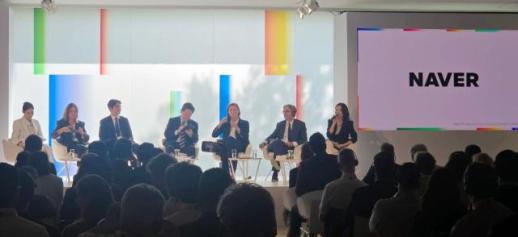 Naver courts France in widening global AI push SEOUL, September 09 (AJP) - Naver proposed that French companies join it in building artificial intelligence computing complexes for the European market, widening a drive that has carried South Korea's largest internet firm into India and Saudi Arabia this year. Chief Executive Choi Soo-yeon made the pitch at a Korea-France business roundtable in Paris Monday (local time), held during President Lee Jae Myung's state visit. "We want to combine France's stable energy base and Naver's experience in the AI ecosystem to build an AI factory that European companies and startups can use," she said. Naver unveiled the project, which it calls an AI factory, with Nvidia Corp. in June. Brookfield Asset Management will commit up to $9 billion through a special purpose vehicle for a first 200-megawatt phase, and Nvidia has taken a $1 billion equity stake in Naver. Choi told the roundtable that Naver would help French firms and institutions build industry specific systems, citing BOKI, a finance model developed with the Bank of Korea. The company also pitched Hy-NuRI, a reactor model built with Korea Hydro & Nuclear Power that runs cut off from outside networks. Naver separately signed a memorandum of understanding with France's National Audiovisual Institute to apply its AI to the institute's audiovisual archives. The company invested in Mistral AI in 2024 and operates Naver Labs Europe, a research center in Grenoble. Naver signed a memorandum of understanding with Tata Consultancy Services in New Delhi on April 20 to explore AI, cloud and consumer service business in India. Naver Cloud's Saudi joint venture, Naver Innovation, signed further agreements at the LEAP 2026 technology show that ran in Riyadh through Sept. 3. Naver Webtoon has drawn more than 2 million readers in France with over 70 original titles, the company said. Choi presented a $100 million intellectual property adaptation fund at the Lumiere Summit in Saint Paul de Vence on Sept. 7. AJP Takeaways - Naver proposed on Sept. 8, 2026, that French companies jointly build AI computing complexes in Europe, speaking at a Korea-France business roundtable in Paris held during President Lee Jae Myung's state visit to France. - Naver's AI factory project, announced with Nvidia in June 2026, covers a first 200-megawatt phase backed by up to $9 billion arranged by Brookfield Asset Management and a $1 billion equity investment from Nvidia. - Naver signed a strategic memorandum of understanding with Tata Consultancy Services in New Delhi on April 20, 2026, and its Saudi joint venture Naver Innovation exchanged eight agreements at LEAP 2026 in Riyadh in early September 2026. 2026-09-09 09:37:05
 -
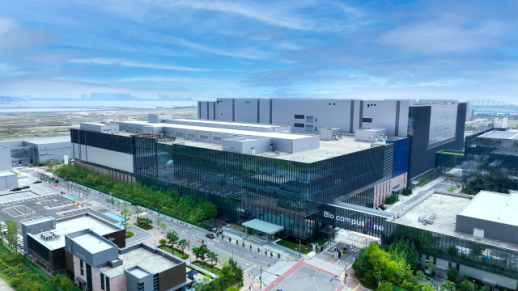 Samsung Biologics, union to bargain under mediators' watch SEOUL, September 08 (AJP) - Samsung Biologics and its labor union agreed to hold further bargaining under the watch of state mediators, carrying a wage dispute at the South Korean contract drug manufacturer into a second mediation session on Sept. 15. The two sides are to read through their collective agreement clause once more, with management tabling a proposal and giving reasons for any demand it rejects, the union said in a statement on Tuesday. The announcement comes right after the first post-mediation session at the Incheon Regional Labor Relations Commission. "Post-mediation has no particular limit on the number of sessions, so it does not look likely to wrap up today," the union said ahead of the meeting. The next session is set for 2 p.m. on Sept. 15. Talks first collapsed on March 23, prompting a partial walkout in late April and a full strike from May 1 to 5, the first in the company's history. The union has since refused overtime and holiday shifts. The revised Trade Union Act took effect on March 10, curbing company damage claims against striking workers and widening the grounds on which unions may lawfully press a dispute. AJP Takeaways - Samsung Biologics and its labor union agreed on Sept. 8, 2026, to hold additional bargaining sessions observed by mediators at the Incheon Regional Labor Relations Commission, with a second post-mediation session scheduled for Sept. 15, 2026. - The dispute over pay and personnel rules escalated after mediation collapsed on March 23, 2026, producing a partial strike in late April and the company's first full walkout from May 1 to 5, 2026, followed by a work-to-rule campaign refusing overtime and holiday shifts. - Samsung Electronics unions called off an 18-day strike on May 20, 2026, after post-mediation at the National Labor Relations Commission, while South Korea's revised Trade Union and Labor Relations Adjustment Act, the Yellow Envelope Act, took effect on March 10, 2026, limiting damage claims against strikers. 2026-09-08 17:11:19
 -
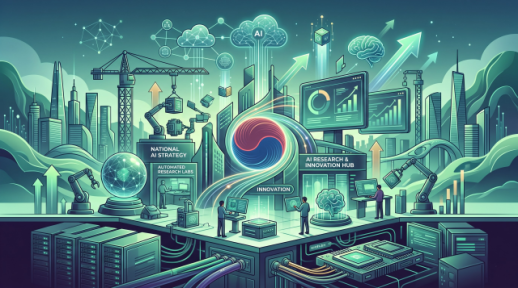 Korea's AI committee pledges results as budget nearly doubles SEOUL, September 08 (AJP) - South Korea's presidential artificial intelligence committee marked its first anniversary with a pledge to turn a year of policy blueprints into gains that businesses and households can feel, a week after the government proposed nearly doubling AI spending. "Global AI competition is spreading beyond technology development into an all-out national contest that decides industry, security and growth," said Ha Jung-woo, standing vice chair of the Presidential Council on National AI Strategy Committee, at a keynote at Seoul Square on Tuesday. Korea has the potential to build a full-stack AI ecosystem on its technology, infrastructure and manufacturing strengths, he told around 150 officials. "If the past year was the time to lay the groundwork, now is the time to build a bigger leap on that base," Ha said, adding that the committee's second term would focus on clearing obstacles in the field. Ha took the post on Aug. 31, three months after losing a National Assembly by-election in Busan's Buk-gu A district to independent Han Dong-hoon by 1.7 percentage points. He had quit in April as President Lee Jae Myung's first senior secretary for AI to run, and Lee returned him to a seat left empty since May. The 2027 budget bill sent to the National Assembly last week earmarks 21.3 trillion won ($15.8 billion) for AI and three mega-projects spanning semiconductors, physical AI and data centers, up 97.2 percent from this year's 10.8 trillion won. The AI Basic Act, Asia's first comprehensive AI law, took effect on Jan. 22, and the committee in February approved a national action plan of 99 tasks. The Science Ministry has since narrowed its sovereign model contest to LG AI Research, SK Telecom and Upstage. The government broke ground on August on a 2.41 trillion won national AI computing center in Haenam, which is to secure 15,000 GPUs by 2028. The 260,000-chip national build-out announced at last October's APEC summit runs on Nvidia hardware. AJP Takeaways - South Korea's Presidential Council on National AI Strategy Committee marked its first anniversary on Sept. 8, 2026, with standing Vice Chair Ha Jung-woo pledging to move the presidential body from strategy-setting to execution. - The 2027 budget bill submitted to the National Assembly on Sept. 3, 2026, allocates 21.3 trillion won to AI and three mega-projects covering semiconductors, physical AI and AI data centers, up 97.2 percent from 10.8 trillion won in 2026. - Ha Jung-woo took the post on Aug. 31, 2026, after losing the June 3, 2026, National Assembly by-election in Busan's Buk-gu A district to independent Han Dong-hoon by 1.7 percentage points, having resigned as President Lee Jae Myung's senior secretary for AI future planning in April 2026. 2026-09-08 16:03:19
 -
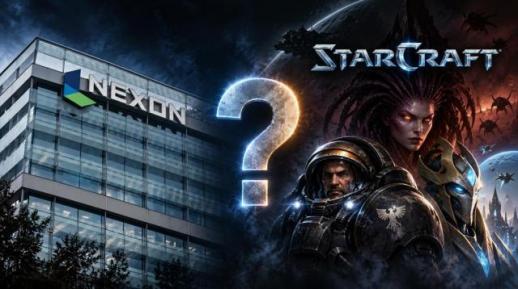 Will Korea's most-loved game StarCraft become a K-game? SEOUL, September 08 (AJP) - South Korean game publisher Nexon is moving to bring the iconic StarCraft franchise under its arm through a licensing deal with Blizzard Entertainment, aiming to roll out the first new mainline installment of the battle game loved for nearly three decades in 16 years. The Chosun Ilbo reported that the deal was "on the verge of being finalized," after which Nexon would hold development rights to a successor to the existing series. "We can't say anything at all about anything related to StarCraft," a Nexon spokesperson said when asked about the report. The California-based Blizzard has not commented publicly. Yet Blizzard's official StarCraft website has begun behaving strangely. Text reading "Transmission Failure!" flickered across the site, background art distorted and the screen turned red as if sending a hidden message to its global fan base. The kind of malfunction that arrives suspiciously close to BlizzCon, which opens Sept. 12. Fans pulled the site apart. A Reddit user posting as beyond1sgrasp dug eight hidden messages out of the developer console, and the community decoded them within hours. They read like the opening reel of a horror film: a Terran unit called Theta Squadron is en route to the Roxara Lunar Mining Complex, carrying cargo described as pivotal to research. One message is dated Aug. 8, 2575, roughly 70 years after the events of StarCraft II: Legacy of the Void, the latest major installment in the series apart from the remastered original. Roxara is not new. The moon appears in older StarCraft lore tied to Dominion bioweapon experiments and StarCraft: Ghost, the shooter whose development effectively ground to a halt in 2006. And the clues all seem to point toward BlizzCon at the Anaheim Convention Center. The published main-stage schedule leaves a conspicuous one-hour gap between the first World of Warcraft panel and the Diablo developer update, giving fans another opening for speculation over a possible StarCraft announcement. Blizzard has reportedly also been incubating a StarCraft shooter under Dan Hay, the Ubisoft veteran who previously ran the Far Cry franchise before joining Blizzard as a vice president. In April, Blizzard posted a job opening for a design director for an unannounced AAA open-world shooter being built in Unreal Engine, a notable departure for a studio known for developing much of its technology in-house. For Nexon, a deeper Blizzard partnership would not come out of nowhere. The two companies have already tested the commercial logic through Overwatch. Nexon signed a Korean PC publishing agreement with Blizzard in March and took over the Korean PC service on Aug. 12, handling localized services and live operations while Blizzard retains the intellectual property and leads development. Walter Kong, Blizzard's senior vice president and head of development for live games and mobile, said at a news conference in Busan on Aug. 23 that the groundwork for the partnership had been laid as far back as 2022. Nexon scored highly against Blizzard's checklist for live-service operating experience, genre expertise and familiarity with Korean players, he said. "The whole goal of this partnership is to get closer to our fans," said Ben Bell, executive producer and senior vice president for Overwatch. Nexon's reach among Korean PC players, he said, lets Blizzard listen more closely to what would make the game better in the region. Media reports have suggested since April 2025 that Nexon emerged as the preferred bidder for StarCraft rights after competing with Krafton, Netmarble and NC. Founded in South Korea by Kim Jung-ju in 1994, Nexon moved its headquarters to Tokyo in 2005 and listed on the Tokyo Stock Exchange in 2011. Its main development and operating base remains deeply rooted in South Korea. Korea is also where StarCraft never really died. StarCraft arrived in 1998 alongside the country's broadband boom, filled its PC bangs and helped turn competitive gaming into a professional occupation years before esports became a global industry. After StarCraft: Remastered, Blizzard gave the Korean server its own warning. "The Land of the Calm Dawn has mastered the art of war, and emerged as home to the most renowned StarCraft players on Earth. Do not arrive idle to this melee." Korean players often describe StarCraft as a folk game — one that has survived long enough to be played across generations, from older players who discovered it in the late 1990s to their children and younger relatives. "It’s just one of those games you can play together with your nephews or relatives on national holidays like Chuseok," said Kim Jong-chul, a 55-year-old businessman. "Plus, the computer requirements are quite low, so any kind of computer or laptop can run it. Gather round any computers on a holiday, and you’re set." That audience is Nexon's biggest asset if it gets StarCraft. It is also the risk. Nexon has taken on major outside franchises before without always turning them into lasting successes. Its planned mobile adaptation of Final Fantasy XI, announced with Square Enix in 2015, was ultimately cancelled. Blizzard itself has an even longer history of struggling to expand StarCraft beyond its real-time strategy roots, cancelling or shelving at least two shooter projects. A new StarCraft therefore would arrive carrying more than the expectations normally attached to a sequel. For Korean players who have kept the original alive for nearly three decades, whoever takes control of StarCraft's next chapter would inherit not merely a valuable game license, but one of the country's most enduring pieces of gaming culture. AJP Takeaways - Nexon is nearing a licensing deal with Blizzard Entertainment for development rights to a new StarCraft title, the Chosun Ilbo reported on Sept. 2, citing a senior games industry official. Blizzard and parent Microsoft would retain ownership of the intellectual property. - Blizzard's official StarCraft website began displaying deliberate glitch effects, and fans decoded eight hidden lore messages set in the year 2575, nine days before BlizzCon 2026 opens in Anaheim, California, on Sept. 12. - Nexon took over Korean PC publishing of Blizzard's Overwatch on Aug. 12 under a March 29 agreement, and was named preferred bidder for StarCraft rights over Krafton, Netmarble and NCSoft in 2025. - A Nexon spokesperson declined to discuss anything related to StarCraft when asked about the report, and Blizzard has not commented publicly. No title, genre, platform or release window has been announced. 2026-09-08 14:41:41
 -
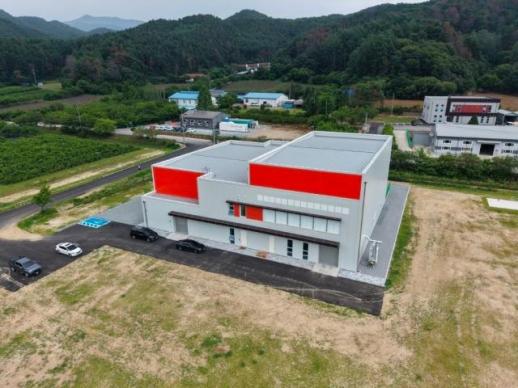 Korea opens first industrial insect protein complex SEOUL, September 08 (AJP) - South Korea opened its first industrial-scale insect complex in Chuncheon, a 20 billion won ($14.85 million) facility built to produce up to 1,000 tons of mealworms a year for food and pharmaceutical buyers. The Ministry of Agriculture, Food and Rural Affairs said Tuesday the site in Gangwon Province covers 23,815 square meters and is anchored by a smart factory farm where artificial intelligence and robots watch the larvae and adjust temperature, humidity and feed. Around it stands 33 rental greenhouses that will draw breeding stock from participating farmers, including young growers, and every stage of rearing and processing carries HACCP hygiene certification, a first for insect production in the country. "We want zero waste," said Seok Young-seek, the center's director, in an interview with AJP when the complex broke ground. "Insects aren't just food. Their chitin shells can be used in bioplastics and sensors." Gangwon Province and Chuncheon signed a cooperation agreement at the ceremony with Hanmi Nutrition, a health supplement maker, and insect food company OMO. Both companies plan to develop medical foods and protein ingredients from the site's output. Cabbage and other produce discarded by nearby distribution centers will be fed to the insects, a recycling loop the ministry said should lower rearing costs and disposal bills while cutting carbon emissions. Nationwide insect sales reached 52.8 billion won in 2024, up 11.6 percent from a year earlier. The number of registered insect businesses fell 2.1 percent to 2,949 during the same period, according to the ministry's latest industry survey. AJP Takeaways - South Korea's first insect industry hub opened in Chuncheon, Gangwon Province, on Sept. 8, 2026, built with 20 billion won ($14.9 million) split evenly between central and local government funding. - The complex can produce up to 1,000 tons of mealworms annually using AI- and robot-controlled rearing, and is the first Korean insect facility to apply HACCP hygiene certification across the full production chain. - South Korea's insect industry sold 52.8 billion won worth of product in 2024, an 11.6 percent rise from 2023, while registered producers fell to 2,949 from 3,031, according to the Ministry of Agriculture, Food and Rural Affairs. 2026-09-08 14:00:34
 -
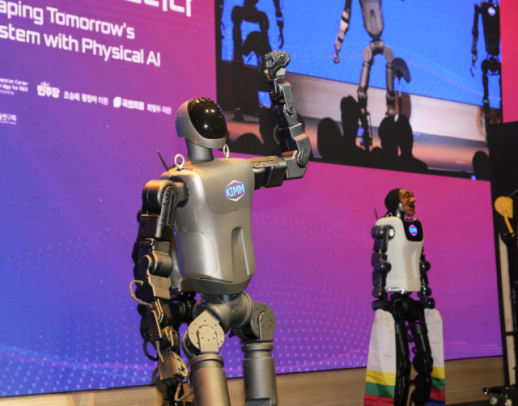 One year in, Korea's humanoid still toddles SEOUL, September 07 (AJP) - KAIROS showed off its dancing skills to a national calisthenics tune on a Seoul stage Monday, but to an audience accustomed to somersaulting and kung fu-performing Chinese humanoids, its wobbly movements and seemingly glued feet hardly drew genuine applause. The performance offered a candid look at how far South Korea has come — and how far it still has to go — little more than a year into a state-backed effort to close the humanoid gap with China and the United States. Four of the six KAIROS units on display performed. Each had to be lowered from hangers holding it upright and worked into a starting posture before it could move. "We started humanoid research a little over a year ago," said Park Dong-il, director of the Advanced Robotics Research Center at the Korea Institute of Machinery & Materials (KIMM), with a rueful smile. "We got here from nothing, on the software, hardware and AI the institute has built up over a long time." The arms came up to shoulder height and no higher. Each command took a beat to register before the machine began to move, and the joints turned as if they were dry. One unit stood in a white body with hansam on its wrists, the long white sleeves used in talchum, Korea's traditional masked dance, and slowly traced the steps on the beat. Its feet stayed almost firmly on the floor. The audience clapped through every crank and sway, almost as if coaxing the machines along. However feeble the movements looked, nobody in the hall laughed. Humanoid industry leaders are well past that stage. China's Unitree Robotics has demonstrated G1 humanoids performing coordinated kung fu routines and other highly dynamic movements, while Boston Dynamics' Atlas has performed a "Ghost Rabona" — a feint followed by a cross-legged football kick requiring the robot to leave the ground and regain its balance. KAIROS is not there yet, and Park said so plainly. The robot, whose name comes from the Greek word for a decisive or opportune moment, is KIMM's attempt to create a homegrown humanoid platform at a time when physical AI is emerging as the next global technology race. Korea's broader K-Moonshot initiative uses AI to accelerate science and technology development and includes humanoid robots among 12 national missions. The government formally launched the program this year with the goal of doubling research productivity by 2030 and achieving its key missions by 2035. KAIROS itself grew out of work launched in May 2025 by KIMM's Global TOP strategic research group for self-growing AI humanoids. The rationale is straightforward: a country confronting a shrinking workforce does not want to depend entirely on foreign humanoid platforms once robots begin moving from laboratories into factories, logistics centers and eventually homes. KAIROS stands about 170 centimeters tall, weighs roughly 80 kilograms and has 29 degrees of freedom, according to the institute. The version shown Monday is V0.7. V1 is scheduled for April 2027 and V2 for 2030. The six machines are not identical. Each carries a different combination of components, including different reducers and motors, and is designed to test a different role and set of trade-offs, Park said. "We prepared a scenario with unit zero handing me a glass of water as for my dry throat. Technical difficulties barred us from the skit toady," Park said. "Units one, two, three, four — every one of them does something different." The aborted glass-of-water demonstration underscored the size of the challenge. Walking, balancing and moving an arm are only the beginning for humanoids expected eventually to perceive their surroundings, make decisions, manipulate objects and work safely around people. Zhang Byoung-tak, a professor of computer science and engineering at Seoul National University who heads its Humanoid AI Robot Center, opened the forum by arguing that humanoid AI represents the next major wave of artificial intelligence after generative and agentic AI. Generative AI gave machines the ability to understand and produce language and images. Agentic AI moved toward systems capable of setting goals and using tools within digital environments, Zhang said. Humanoid AI takes that evolution into the physical world. It gives intelligence a body capable of perceiving, judging and acting in real environments rather than remaining behind a screen. The global race is accelerating quickly. China has built a broad humanoid hardware ecosystem backed by its enormous manufacturing supply chain, while U.S. companies are pushing advances in AI models and sophisticated robot control. Korea's researchers acknowledge they are trying to catch up rather than defending a lead. Park Chan-hoon, director of KIMM's AI Robotics Institute, has described the effort as a "humanoid one-team" bringing together roughly 20 teams including Seoul National University and LG Electronics to develop an indigenous platform. He has argued that Korea needs to master the technology from "head to toe" rather than rely on foreign systems. KAIROS is intended to become the common platform on which those technologies can be integrated and tested. Ryu Seok-hyun, president of KIMM, and Doosan Robotics Chief Executive Kim Min-pyo also spoke at Monday's event. But the clearest message came at the end of the robots' performances. The researchers who built KAIROS joined the machines on stage, bowed and asked lawmakers and government agencies in the audience for sustained support. "Humanoid development is a race against speed, and we have pulled our schedule forward as far as we can," Park Chan-hoon said. "We need at least 3 billion won ($2.2 million) budgeted, and we will answer it with results." The engineers behind him were dressed head to toe in black T-shirts and jeans. Their robots may still toddle, but their eyes were steady. AJP Takeaways - KAIROS managed a slow dance on a Seoul stage Monday, a modest display beside the acrobatics already demonstrated by Chinese and U.S. humanoids. - Korea began developing the homegrown humanoid little more than a year ago in a bid to build its own hardware, software and physical AI platform. - Researchers say speed is now critical as KAIROS moves toward V1 in 2027 and V2 in 2030. 2026-09-07 17:13:09
 -
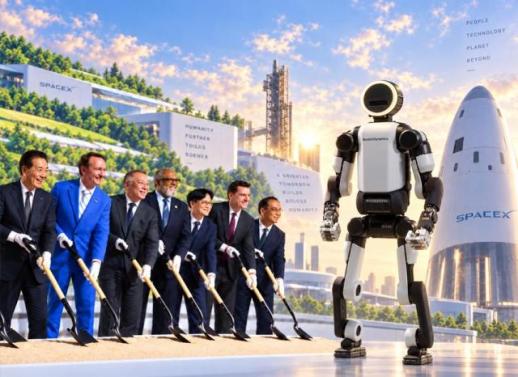 Robotics may be the destination for Louisiana steel mill SEOUL, September 07 (AJP) - The $5.8 billion Louisiana mill backed by South Korea's two biggest steelmakers is designed primarily to feed America's auto industry, but its largest customer and investor Hyundai Motor Group has a deeper ambition for the metal — robotics. Hyundai Motor Group Chairman Chung Eui-sun said Sept. 4 that steel from Hyundai-POSCO Louisiana Steel (HPLS) should eventually find its way into Atlas, the humanoid robot being developed by group-owned Boston Dynamics. "I think we naturally should apply it," Chung said after the mill's groundbreaking ceremony in Donaldsonville, Louisiana. He went further, saying he hoped steel produced there could one day reach rockets made by companies such as SpaceX. The ambition is less of a leap than it sounds. Industry shorthand increasingly describes a humanoid as an electric vehicle standing on two legs. Both depend on batteries, motors, reducers, inverters and controllers, except a humanoid multiplies those systems across dozens of moving joints. Atlas stands 1.9 meters tall, weighs about 90 kilograms and has 56 degrees of freedom across its body. Each moving joint requires its own compact drive system. Reducer gears, splines and shafts need high-strength, durable specialty steel. Motors, meanwhile, depend on stacks of ultra-thin non-oriented electrical steel, from the same family of magnetic steel used in electric-vehicle motors. POSCO says electrical steel accounts for roughly 20 to 30 percent of a motor's manufacturing cost. Only five or six steelmakers worldwide, including POSCO, can stably mass-produce its thinnest high-performance grades. The bigger money sits in the finished robot joint. Actuators combine motors, gears, sensors and control systems to create the joints and muscles of a humanoid. Hyundai Motor Group says the components can account for about 60 percent of robot manufacturing costs. Hyundai Mobis has agreed to supply actuators for Atlas and is expected to become a central part of Hyundai Motor Group's effort to localize the robot supply chain in the United States. The group plans to establish U.S. actuator production capacity exceeding 350,000 units annually from 2028 alongside a robot manufacturing system capable of producing 30,000 units a year. More than 25,000 Atlas robots are expected to be deployed across Hyundai Motor and Kia manufacturing facilities, giving the group captive demand as it scales production. Louisiana is where that supply chain touches steelmaking. HPLS is designed to produce 2.7 million tons of steel annually from 2029, including 1.8 million tons of automotive steel and 900,000 tons of general-purpose products. Cars will account for the bulk of the mill's output because automotive steel is what anchors the $5.8 billion investment. Iron ore and natural gas will be used to produce direct-reduced iron, which will be melted with scrap in electric-arc furnaces before being cast into slabs and rolled into hot-rolled, cold-rolled and coated steel. Hyundai Steel says the process can reduce carbon emissions by about 70 percent compared with conventional blast-furnace production. The more specialized grades a humanoid requires sit elsewhere in the Korean steelmakers' portfolios for now. Electrical steel and specialty bar steel are not on HPLS' announced product list, which currently covers hot-rolled, cold-rolled and coated sheets. POSCO's 20 percent stake therefore adds another dimension to the partnership. Hyundai Steel owns 50 percent of HPLS, while Hyundai Motor and Kia each hold 15 percent. Chung has described the tie-up with POSCO as an opportunity to cooperate on future steel materials and next-generation batteries, extending a relationship traditionally centered on automobiles. Boston Dynamics is moving in much the same direction from the other end of the chain. "Every component has been designed for compatibility with automotive supply chains," Atlas General Manager Zack Jackowski said when the production version was unveiled at CES 2026. Boston Dynamics reduced the number of unique components in Atlas as it redesigned the humanoid for mass manufacturing, drawing on the scale and cost discipline of the auto industry. Steelmakers are following those same customers into AI. POSCO aims to increase steel sales to AI-related markets to 1 million tons by 2030 from about 380,000 tons last year, including electrical steel for power equipment and humanoid robots. Hyundai Steel is separately targeting growing demand from AI data centers and power infrastructure, with the company expecting the data-center share of its long-product sales to rise to about 6 percent from roughly 3 percent. Atlas could eventually complete the circle by working inside facilities that produce the materials and machines used to build it. Chung was cautious about how quickly that might happen. "Atlas is intended to do work that is difficult for people," he said, adding that feasibility testing would have to come first. 2026-09-07 13:58:55
 -
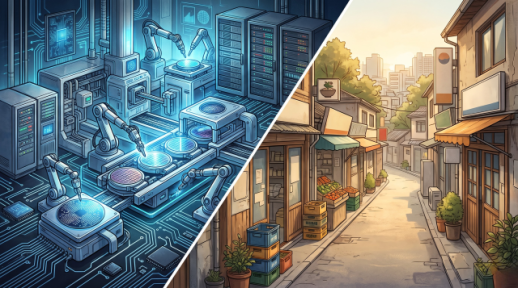 South Korea leans on AI boom as consumer recovery lags SEOUL, September 07 (AJP) - South Korea's economy is riding a wave of artificial intelligence investment that has powered exports and factory equipment spending to blistering growth, even as the windfall struggles to reach ordinary households, the state run Korea Development Institute (KDI) said. In its September economic assessment released Monday, the KDI said the recovery remains narrowly anchored to sectors tied to the global AI build-out. Data said that sectors including semiconductors, fabricated metals, electrical equipment and machinery lead the charge while broader consumption limps behind. "The Korean economy continues to improve, led by sectors closely tied to AI-related investment," the institute said. August exports surged 68.7 percent from a year earlier, driven by information and communications technology goods. Semiconductor and computer shipments jumped 216.1 percent and 431.2 percent respectively in daily-value terms as chip prices soared. Equipment investment climbed 24.9 percent in July, fueled by a boom in semiconductor manufacturing gear. Imports of chipmaking equipment accelerated to 96.5 percent growth in August, and domestic machinery orders pointed to sustained demand for the tools that underpin AI infrastructure, the KDI said. Yet the prosperity has proved difficult to spread as retail sales slipped 0.8 percent in July, dragged down by declines in cars, home appliances and communications devices, as real wage growth for workers crawled to just 0.3 percent in the first half of the year. The institute said household purchasing power had recovered only modestly, leaving consumption to improve at a gradual pace. Consumer prices rose 3.1 percent in August, lifted mainly by base effects from telecommunications charges, while core inflation excluding food and energy quickened to 3.4 percent. The KDI cautioned that risks remain elevated, pointing to persistent tensions in the Middle East and lingering uncertainty over U.S. trade policy, both of which continue to cloud the outlook for Korean economy. AJP Takeaways - The Korea Development Institute said South Korea's economy is holding its recovery on the strength of AI-related investment, with semiconductors, machinery and electrical equipment driving output while household consumption lags. - Exports rose 68.7 percent from a year earlier in August and equipment investment climbed 24.9 percent in July, but retail sales fell 0.8 percent as first-half real wage growth reached only 0.3 percent. - The KDI warned that Middle East tensions and uncertainty over U.S. trade policy keep downside risks elevated for an economy concentrated on a single growth engine. 2026-09-07 12:35:34
 -
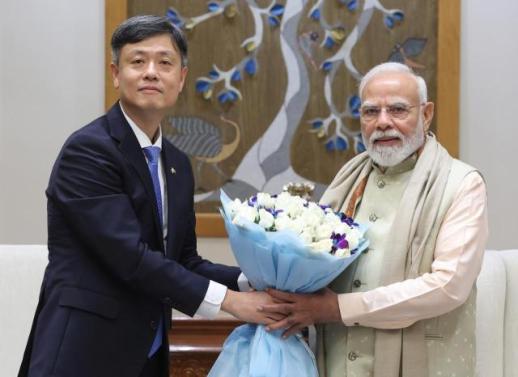 Krafton steers India bet toward AI, robotics SEOUL, September 07 (AJP) - Krafton will invest an additional $250 million in India over the next three to four years, pushing beyond mobile gaming into artificial intelligence, the company said after its founder met Prime Minister Narendra Modi. The move deepens a push that already runs through a South Korean consortium as Krafton earlier this year joined internet giant Naver and asset manager Mirae Asset to launch the $670 million Unicorn Growth Fund, an India-focused vehicle backing growth stage startups in AI, software and deep tech. The fresh pledge, separate from that fund, lifts Krafton's total planned direct investment in India to $500 million. Krafton has quietly built a substantial Indian startup portfolio, backing around 18 companies, of which only a handful are gaming studios, with bets spanning audio platform Kuku FM, streaming platform Loco and storytelling service Pratilipi. Krafton Chairman Chang Byung-gyu, who met Modi on Sept. 4, cast the outlay as a durable wager on Indian talent. "India is a major market with outstanding talent across gaming, technology and innovation," Chang said, adding that the investment reflected long-term confidence in the country's digital economy. The bet dovetails with warming ties between Seoul and New Delhi, which in April unveiled an "Korea-India Digital Bridge" to anchor cooperation in AI and semiconductors and pledged to nearly double bilateral trade to $50 billion by 2030. Korean heavyweights from Samsung Electronics to HD Hyundai have been widening their footprint in the fast-digitizing economy. Alongside the capital, Krafton is building local capacity, having acquired Pune-based Nautilus Mobile, maker of the Real Cricket franchise, and launched the KIGI Academy training program with the Indian Institute of Technology Madras. AJP Takeaways - Krafton will invest an additional $250 million in India over the next three to four years, expanding beyond mobile gaming into artificial intelligence, robotics and deep tech, and lifting its total planned direct investment in the country to about $500 million. - The commitment builds on the $670 million Unicorn Growth Fund that Krafton launched with Naver and Mirae Asset to back growth-stage Indian startups, and follows the "Korea-India Digital Bridge" that South Korea and India unveiled in April 2026 to deepen cooperation in AI and semiconductors. - Krafton has backed around 18 Indian companies, most of them outside gaming, including audio platform Kuku FM, streaming platform Loco and storytelling service Pratilipi, and has acquired Pune-based Nautilus Mobile while launching the KIGI Academy training program with the Indian Institute of Technology Madras. 2026-09-07 09:50:50
 -
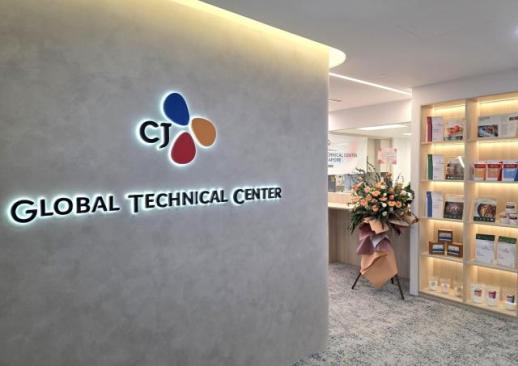 CJ CheilJedang chases Asia growth with Singapore lab SEOUL, September 07 (AJP) - CJ CheilJedang is racing to win Asia-Pacific food makers over to its fermented seasonings, opening a Singapore technical center as South Korea's largest food company bets on cutting salt and additives to drive its next wave of overseas growth. The facility announced Monday, located in Singapore's Biopolis research cluster, is the company's fifth Global Technical Center after sites in South Korea, Chicago, and the Dutch city of Wageningen. It anchors the firm's technical support for food manufacturers across the fast-growing region. At the center, CJ CheilJedang develops ways to fold its seasoning lines, including TasteNrich, CJ TIDE and the Add-Mi nucleotide solution, into customers' products and helps bring them to market. The company said it will lead with its premium TasteNrich brand to court major clients in nearby countries and lift regional sales. TasteNrich is a fermented natural seasoning made from cane sugar and other plant-based materials without artificial additives, and can trim sodium and other additives in food while preserving taste. "Through the Singapore Global Technical Center, we can now collaborate more closely with customers across the Asia-Pacific region," said a CJ CheilJedang spokesperson, adding the company would offer solutions that satisfy both health and taste. AJP Takeaways - CJ CheilJedang opened its fifth Global Technical Center in Singapore's Biopolis research cluster, following facilities in South Korea, Chicago and Wageningen, the Netherlands. - The South Korean food maker is leading its Asia-Pacific expansion with TasteNrich, a fermented seasoning made from cane sugar and other plant-based materials that cuts sodium without sacrificing taste. - The site opened with a ceremony on Sept. 1 attended by Singapore's Economic Development Board and South Korean Embassy officials, followed by client showcases through Sept. 4. 2026-09-07 09:27:04