

Journalist

Kim Dong-young김동영
davekim0807@ajupress.com
ReporterSamsung Biologics, CJ CheilJedang, LG Chem, Celltrion, Naver, Krafton, Nexon, Hyundai Mobis etc. & energy, game, food, bio, petrochemical, AI
Kim Dong-young is a bilingual journalist at AJU Press (AJP), covering Korean tech, energy, and bio/pharma.
He reports from the field at events like CES and APEC, runs AJP's YouTube channels,
and is pursuing a master's at Sogang's MOT program. "I try everything in this AI era that can improve yet preserve the facts. Journalism still serves as my core."
He reports from the field at events like CES and APEC, runs AJP's YouTube channels,
and is pursuing a master's at Sogang's MOT program. "I try everything in this AI era that can improve yet preserve the facts. Journalism still serves as my core."
Latest by Kim Dong-young
-
 Korean games swap console blockbusters for phone anime in Tokyo SEOUL, September 10 (AJP) - South Korea's biggest game publishers arrive at Tokyo Game Show next week with a lineup that fits in a pocket, trading the console blockbusters they hauled to Gamescom three weeks ago for free-to-play anime games built mostly for phones. Nexon, Netmarble, NC and Smilegate are all bringing what the industry calls subculture titles — character-driven games drawn in Japanese animation style and largely monetized through randomized character draws. Nearly all are mobile-first. Not one is a packaged single-player console release. Their Japanese hosts are moving in the opposite direction. Capcom is showing new expansions for "Monster Hunter Wilds" and "Dragon's Dogma 2." Sega has "Crazy Taxi: World Tour," Konami is unveiling three new intellectual properties, and Square Enix has dated "Final Fantasy VII Revelation" for April 8. All are built around console and PC gaming. The contrast follows a disappointing Gamescom for Korean titles. Korean games won nothing at the Gamescom awards on Aug. 28. Pearl Abyss's "Crimson Desert" was nominated for Best PC Game and Most Epic but took neither, while Krafton's "Age Twisters" lost in the Most Wholesome category. Capcom's "Onimusha: Way of the Sword," still a week from release at the time, walked away with two awards. In Tokyo, however, Korean publishers are playing on more familiar ground. Nexon Games' "Blue Archive" is the template many are working from. Japan accounted for 72 percent of the game's revenue and 34 percent of its downloads between its Japanese launch in February 2021 and August 2024, according to market tracker Sensor Tower. Japan's own mobile game developers, meanwhile, are under growing pressure. Research firm Teikoku Databank counted 10 smartphone game operator bankruptcies from January through July, compared with three in all of 2025 and approaching the record 12 recorded in 2015. The firm pointed to development budgets that now routinely run into hundreds of millions of yen and competition from Chinese and South Korean companies with what it described as "abundant financial resources and high development capabilities." Nexon goes back to the 'Blue Archive' well Nexon is returning to that market with "Fareidolia," developed by the same IO division behind "Blue Archive" and built on Unreal Engine 5. Players manage a restoration center in Anima City and share an office building called Tasogare Hall with girls known as Mates. "Fareidolia is set in Anima City, a world that resembles our own yet feels subtly different," said Cha Min-seo, the game's director. Nexon has recreated Tasogare Hall inside the TGS exhibition halls, where visitors will get the world's first hands-on session and can play rock-paper-scissors against a character on screen. The game is also one of the bigger leaps of faith on the show floor. No gameplay footage has yet been released under its official name. Its first trailer arrives on Sept. 17, meaning almost everything audiences have seen so far was revealed while the title was still known by its Project RX code name. NC's entry carries an unusually direct link to "Blue Archive." "Astrae Oratio" is being developed by Dynamis One, founded by Park Byung-rim after he resigned in April 2024 as producer of the Japanese service for "Blue Archive" at Nexon Games. The new game unfolds in an alternate Tokyo in 1889, where magic and industry have pushed the city a century ahead of schedule. Players handle municipal paperwork for the city's mages before dealing with the problems that follow. The studio arrives in Tokyo carrying some baggage. Its first announced game, Project KV, was scrapped in 2024 after fans accused it of resembling "Blue Archive" too closely. Seoul police raided the studio's offices in February 2025 over allegations that former Nexon Games employees had taken unpublished company material with them. Netmarble borrows fame, then builds its own Netmarble, the last of Korea's traditional "3-N" gaming giants alongside Nexon and NC, is bringing three titles, two of them powered by established intellectual property. "Shangri-La Frontier: The Seven Colossi" is the first game adaptation of a manga franchise that has surpassed 1 billion views in Japan and 17 million copies in circulation. "Solo Leveling: KARMA" takes the Korean webtoon franchise into roguelite action, adopting some of the genre's repeat-run structure without the heavier penalties associated with traditional roguelikes. "Pearl in Blue," by contrast, is Netmarble's own creation — a romantic-comedy collectible RPG about girls who double as influencers, scheduled for release in 2027. All three will be playable in Chiba. Netmarble has also booked the anime voice cast of "Shangri-La Frontier" to play the demo live on Sept. 20. Taito Ban, who voices Sung Jin-woo, will race streamers k4sen and Vodka through a timed run of "Solo Leveling: KARMA" the same day. Smilegate is showing "Mirai Vision: Unseen Future" and "Dead Account: Two Blue Flames," a roguelite centered on exorcising the social media accounts of the dead. Masangsoft, meanwhile, is attempting to revive "King's Raid," two years after original developer Vespa collapsed. The approaches differ, but the target is much the same: Japan's enormous appetite for character-driven games and the recurring revenue they can generate long after launch. Tokyo Game Show turns 30 this year and runs for five days for the first time, from Sept. 17 to 21 at Makuhari Messe in Chiba. Organizer CESA said Thursday that 1,138 companies from a record 53 countries and regions will occupy 3,999 booths, making this the largest edition in the show's history. About 300,000 visitors are expected. Three weeks ago in Cologne, Korean publishers tested their biggest games against the global PC and console industry. In Chiba, they are making a different bet. Cologne handed out trophies. Tokyo will test whether players reach for their phones. AJP Takeaways - South Korean publishers Nexon, Netmarble, NC and Smilegate will exhibit mobile-first, anime-styled collectible role-playing games at Tokyo Game Show 2026 from Sept. 17 to 21, a genre and platform shift away from the PC and console blockbusters they showed at Gamescom in August. - No South Korean title won a Gamescom award on Aug. 28, 2026. Pearl Abyss's "Crimson Desert" lost in two categories and Krafton's "Age Twisters" lost in one, while Capcom's then-unreleased "Onimusha: Way of the Sword" took two trophies. - Japan accounted for 8.3 percent of South Korea's $8.5 billion in game exports in 2024, down from 13.6% in 2023, according to the Korea Creative Content Agency. - Japanese research firm Teikoku Databank recorded 10 smartphone game operator bankruptcies between January and July 2026, compared with three in all of 2025, citing rising development costs and competition from Chinese and South Korean publishers. 2026-09-10 15:49:44
 -
 Nexon opens Mabinogi Mobile to outside AI agents SEOUL, September 10 (AJP) - Nexon will let its cross-platform role playing game "Mabinogi Mobile" players hand routine chores to outside AI agents such as Claude Code, while keeping trading, payments and character growth off-limits. The feature, called AI Connector, will first arrive as a beta on the role-playing game's PC version in an upcoming update, its operators said in a notice posted Wednesday. It is switched off by default and works only with AI tools players install themselves. Once connected, players can ask an agent about their currency, location or unfinished daily missions without opening a single menu. A request to collect 20 pieces of wool sends the character off to gather it, and the agent can also travel to a facility to craft items. "We believe this feature should not become a tool that plays the game in place of players," the operators said. Agents are barred from the in-game exchange, payments, the cash shop and guild management. The agents also cannot send one-on-one messages or discard items. Chat messages drafted by an agent go out only with the player's approval and carry an AI icon beside the character's name. Other players' character names, guild names and chat logs are withheld from AI tools, according to the notice. The operators described the feature as taking only its first step and said they would widen its scope cautiously after watching how players use it. Bringing the tools to mobile devices remains technically difficult for now, they added. AJP Takeaways - Nexon said on Sept. 9, 2026, that "Mabinogi Mobile" will add AI Connector, a beta feature linking the game's PC version to third-party agentic AI tools including Claude Code, Cursor and Gemini CLI. - Players can query game data and delegate gathering, processing and crafting, but the exchange, payments, guild management and character growth remain closed to AI agents. - AI usage fees are borne by players, an hourly presence check curbs idle play, and Nexon said it will expand the feature gradually after observing real-world use. 2026-09-10 15:18:57
 -
 Korea doubles disability care target, invoking 'Peter Pan' father SEOUL, September 10 (AJP) - South Korea will double state-funded daytime care for adults with developmental disabilities to 30,000 by 2030, in a plan the health ministry closed by invoking a father who died searching for a home for his autistic son. Jeon Gyeong-chul, who for 26 years raised a severely autistic son he called Peter Pan after the boy who never grew up, died on Sept. 5 at 63. Given about six months to live in April last year, he spent most of what remained looking for somewhere his son could go. Roughly 1,000 residential facilities turned them away. His account of that search, published as an essay and retold on tvN's "You Quiz on the Block," one of the country's most widely watched talk shows, in an episode that peaked at 7.1 percent of Seoul-area households. His son, 27, whose developmental age is about two, now lives in a community village for the most severely affected. Jeon spent his final months setting up a foundation for autistic adults. The Ministry of Health and Welfare laid out the plan on Thursday with seven other ministries at the Government Complex in Seoul, bundling 50 measures for people whose care needs outlast their parents. About 288,000 people had intellectual or autism spectrum disabilities at the end of last year, 11.0 percent of all registered disabled people, and adults account for 69.5 percent of them. The government expects 335,000 by 2030. "Next year's related budget across ministries has been reflected at about 2.8 trillion won ($2.1 billion), a 15.9 percent increase," said Jeong Eun-kyeong, the health minister, who promised yearly funding as the population grows. Integrated care for the most severely affected will reach 2,760 people next year from 2,340 this year, and emergency care providers will grow to five from two. Round the clock one-to-one support, confined to weekdays, will stretch into weekends. "We will remember the life and the will of the late Jeon Gyeong-chul," Jeong said, pledging a society where people with developmental disabilities can live safely once their parents are gone. AJP Takeaways - South Korea's Ministry of Health and Welfare, joined by seven other ministries, announced a developmental disability care plan on Sept. 10, 2026, that recasts lifelong care as a state responsibility rather than a family one. - Daytime activity services for adults with developmental disabilities will expand to 20,000 people in 2027 and 30,000 by 2030 from 15,000 now, while integrated care for the most severe cases rises to 2,760 from 2,340. - About 288,000 people in South Korea had a developmental disability at the end of 2025, or 11.0 percent of registered disabled people, and the government projects 335,000 by 2030. 2026-09-10 14:28:47
 -
 'AI for All' starts work at SK Telecom SEOUL, September 10 (AJP) - SK Telecom set out to build an artificial intelligence assistant that books the hospital slot, files the government form and pays the bill in one conversation, one of three such services South Korea has commissioned. Partners across eight fields joined the launch at the carrier's T Tower headquarters in central Seoul on Thursday. Areas spanned from education, finance, to public administration and welfare checks on older people living alone. The announcement comes two weeks after the Ministry of Science and ICT and the National IT Industry Promotion Agency selected the SK Telecom, Kakao and KT consortiums on Aug. 28 to run the AI for All project. "With companies representing so many fields gathered here, we will properly build a nationwide AI ecosystem that exists nowhere else in the world," said Yoo Kyung-sang, head of SK Telecom's AI CIC. SK Telecom will serve as orchestrator, matching each request to the model and partner service best suited to it rather than building every function itself. The project funded by the government aims to give the public free access to domestically built AI ahead of a full launch before year-end. It also aligns with Seoul pressing for sovereign AI. Korea launched a separate foundation-model competition that has narrowed to SK Telecom, LG AI Research and Upstage, arguing the country cannot lean on foreign models alone if it is to rank among the world's top three AI powers. AJP Takeaways - SK Telecom opened its AI for All consortium on Sept. 10, 2026, at its Seoul headquarters, bringing together partners in eight fields to build an AI agent that completes administrative filings, payments and hospital bookings. - SK Telecom will act as orchestrator on its A.X K2 foundation model, with a beta service due in October 2026 and a full launch before the end of the year. - The Ministry of Science and ICT and the National IT Industry Promotion Agency chose the SK Telecom, Kakao and KT consortiums on Aug. 28, 2026, to run the project, an extension of South Korea's sovereign AI push. 2026-09-10 10:37:13
 -
 South Korea takes state-led route in AI race as latecomer SEOUL, September 09 (AJP) - America's biggest technology companies are preparing to pour roughly $725 billion into artificial intelligence infrastructure this year. South Korea cannot come close to matching that private-sector firepower. So Seoul is reaching for something Silicon Valley does not need nearly as much — the state balance sheet. The government's 2027 budget bill submitted to the National Assembly on Sept. 3 lifts spending on AI and three linked mega-projects by 97.2 percent to 21.3 trillion won ($15.8 billion), equivalent to about 2.6 percent of total government expenditure of 820.9 trillion won. Their share was about 1.5 percent this year. Gartner forecasts worldwide AI spending will reach $2.59 trillion in 2026, up 47 percent from a year earlier. The four biggest U.S. hyperscalers — Amazon, Microsoft, Google and Meta — alone plan around $725 billion in capital expenditure this year, up 77 percent from 2025, according to Value Add VC's tracker. Korea's wager is different. Private AI investment in the country came to a paltry $1.78 billion in 2025, compared with $285.9 billion in the United States, according to Stanford University's 2026 AI Index. Still, Korea ranked first globally in AI patents per 100,000 people, at 14.31, and third in notable AI models released. The mismatch points to the problem Seoul is trying to solve through state-led investment. Korea has technological capability, but the pools of private capital needed to scale it remain far smaller than in the United States. The treasury is moving to fill part of that gap. The 2027 money goes beyond R&D. It includes another 10,000 high-end graphics processing units, 3.1 trillion won for physical AI and roughly 2,000 domestically produced robots to be deployed in defense, policing, firefighting, care services and agriculture. Korea has reason to believe the factory floor could be its strongest AI battlefield. It already has the world's highest industrial robot density, with 1,220 robots for every 10,000 manufacturing workers, according to the International Federation of Robotics. Singapore is second at 818, while Germany and Japan have 449 and 446, respectively. If Korea cannot match the United States in software capital or China in industrial scale, Seoul is betting that it can compete where AI meets manufacturing. China illustrates the size of the challenge. It installed 295,000 industrial robots in 2024, accounting for 54 percent of all installations worldwide, and operates roughly 2 million robots, according to the IFR. South Korea is therefore trying to combine its semiconductor and automation strengths with a government-financed AI layer. AI colleges will expand from KAIST to all four national science and technology institutes, alongside new industry-linked graduate programs. The science ministry's budget rises 24.5 percent to a record 29.6 trillion won next year. Deputy Prime Minister and Science Minister Bae Kyung-hoon, who oversees 9.4 trillion won of the ministry's budget, has framed physical AI as an export strategy. Korea will "export the Republic of Korea's factories to the world" on a homegrown physical AI platform, he told a fiscal strategy meeting at the presidential compound in June. The budget push sits inside a much larger corporate investment drive unveiled by President Lee Jae Myung that month. Samsung Electronics, SK hynix and suppliers plan about 800 trillion won in new semiconductor investment, including fabrication plants in southwestern Korea, while SK Group, GS Group and Naver are backing an initial 550 trillion won buildout of AI data centers. Those sums are corporate investment rather than direct government expenditure. Seoul is seeking to accelerate them through infrastructure, policy support and public investment. "We must secure the core elements of AI faster than any other country," Lee said in announcing the three mega-project strategy. Nvidia is another part of the buildout. Chief Executive Jensen Huang said his company had agreed to supply 260,000 GPUs to the Korean government and four conglomerates, describing Korea as "the only government that has directly purchased AI chips for national R&D." The supply would push Korea's chip stock above 300,000 units from about 65,000 and feed new computing infrastructure, including a 2.41 trillion won national computing center in Haenam that broke ground in August. The model stands in sharp contrast to the United States. Washington's AI leadership has largely been financed by corporations and venture capital, with federal spending concentrated on research, procurement and strategic programs rather than attempting to replicate hyperscaler investment. Japan has taken a more interventionist approach, setting aside about 1.23 trillion yen ($8 billion) for advanced chips and AI this fiscal year, while India's five-year IndiaAI Mission totals 103.72 billion rupees ($1.09 billion). China offers the closer parallel, having long used government guidance funds and industrial policy to direct capital toward semiconductors, AI and other strategic technologies. Seoul is also extending its strategy beyond chips and robots. The Ministry of Land, Infrastructure and Transport on Wednesday presented a "K-AI City" strategy in Busan that would apply AI to building permits, municipal control rooms and other urban functions. Wonju, Cheonan-Asan, Saemangeum and Gwangju have been selected as pilot areas. Land Minister Kim Yun-duk said the program would be judged by whether it made everyday life safer rather than by the sophistication of the technology itself, promising "a people-centered AI city, where technology is not the goal itself." Money, however, may not remain Korea's biggest constraint. Electricity is emerging as another. The semiconductor factories and AI data centers planned across the country could require an additional 25 to 30 gigawatts of power, roughly equivalent to the output of 20 nuclear reactors, Reuters reported Tuesday, citing government estimates. Nuclear power currently supplies nearly a third of Korea's electricity. The initial AI data-center plan alone calls for about 8.4 GW of capacity, backed by SK, GS and Naver, with another 10 GW envisaged by 2035. Korea may therefore find that financing GPUs and factories is easier than supplying them with enough electricity. There is also a fiscal vulnerability built into Seoul's strategy. National tax revenue is forecast to jump 49.8 percent next year, with the semiconductor upcycle creating much of the fiscal room for the government's spending expansion. The global AI boom is generating extraordinary profits and tax receipts from Korea's memory-chip industry. Seoul is recycling part of that windfall into an attempt to build a broader domestic AI industry. A reversal in the memory cycle would weaken both sides of the equation at once. For now, the government is treating the race as one Korea cannot afford to sit out. Ha Jung-woo, standing vice chair of the Presidential Council on National AI Strategy since Aug. 31, described it Tuesday as "an all-out national contest that decides industry, security and growth." Unlike the United States, where companies are financing most of that contest, Korea is making the government one of its biggest early investors. AJP Takeaways - Korea nearly doubles 2027 spending on AI and three linked mega-projects to 21.3 trillion won. - Private AI investment remains a fraction of U.S. levels despite Korea's strength in patents and notable AI models. - Seoul is betting heavily on physical AI, building on the world's highest industrial robot density. - Electricity demand and reliance on the semiconductor upcycle pose longer-term risks to the state-led strategy. 2026-09-09 15:59:35
 -
 Smilegate divorce may top Chey's as Korea's costliest at $1.79 bln SEOUL, September 09 (AJP) - A Seoul court ordered Smilegate founder Kwon Hyuk-bin to pay his estranged wife roughly 2.4 trillion won ($1.79 billion) in stock, the largest divorce settlement in South Korean history. The Seoul Family Court granted the divorce petition filed by the wife, surnamed Lee, and ordered that the award be paid in shares rather than cash. "The marriage has broken down to a point beyond repair," the court said, adding that both spouses bore equal responsibility for the collapse. On that basis it granted the divorce but dismissed Lee's claim for consolation money and instead arranged for her to a direct stake in the privately held firm behind hit titles such as "Lost Ark" and "Epic Seven." The ruling caps a legal fight that began in November 2022, when Lee sued Kwon roughly two years after the couple separated, accusing him of neglecting the family. She had sought half of his holdings, arguing that she once held a 30 percent founding stake and served as a registered director while shouldering more than two decades of domestic work. The court valued Kwon's Smilegate shares at about 7.1 trillion won and set the division at 35 percent. Kwon, who denied any fault and opposed the divorce, contended that Lee never invested in or worked for the company and could not be considered a co-founder. The award eclipses the 944 billion won granted in July to Roh Soh-yeong in her divorce from SK Group Chairman Chey Tae-won, itself the country's largest at the time. The dispute remains before the Supreme Court on appeal over how the sum should be paid. Born in 1974, Kwon graduated from Sogang University with a degree in electronic engineering, married Lee in 2001 and founded Smilegate the following year. He became chairman of the affiliated Heemang Studio foundation in 2012 and took the title of chief visionary officer in 2020, the year the couple began living apart. AJP Takeaways - A Seoul court ordered Smilegate founder Kwon Hyuk-bin to hand about 2.4 trillion won ($1.8 billion) in company stock to his estranged wife, the largest divorce settlement in South Korean history. - The court ordered payment in Smilegate shares rather than cash, an unusual remedy that would give Lee a direct stake, though the two sides were found equally at fault and her claim for consolation money was dismissed. - The judgment is a first-instance ruling and could be appealed, as Kwon disputes that Lee qualifies as a co-founder. 2026-09-09 15:10:16
 -
 Korea picks 32 startups for cross-ministry finals SEOUL, September 09 (AJP) - South Korea's startup ministry named 32 early-stage companies to advance to the cross-ministry finals of its flagship entrepreneurship contest. The Ministry of SMEs and Startups announced Tuesday that 32 firms emerged from its two preliminary leagues, 10 from the artificial intelligence league and 22 from the innovation startup league. The firms were drawn from about 344 and 630 applicants respectively. This year nine ministries including the science and education ministries, each run a specialized league while funneling their top performers into a combined final field of 130 teams. An AI firm called Intellicia, which offers market-research solutions built on synthetic data generated to spare clients the time and cost of conventional surveys, won the AI league. Finalists gather for a kickoff event on Sept. 22, after which 20 teams will reach a grand championship offering up to 500 million won and preferential treatment in follow-up support programs. "We will create many opportunities and offer active support so that these early-stage founders keep pushing ahead with innovation and bold challenges," said Mok Seung-hwan, head of the ministry's startup and venture innovation office. The program runs under the same ministry that oversaw Startup for All, the separate tournament-style audition that drew a record 62,944 applicants earlier this year before the exposure of 5,000 finalists' personal data triggered a public apology. AJP Takeaways - Seoul's marquee startup contest returns with a tighter, nine-ministry structure after this summer's data-leak fallout, signaling the government wants continuity without another trust crisis. - The winners point to where Korean early-stage capital is flowing: synthetic-data market research and semiconductor-process safety, both AI-adjacent industrial plays. - With nine ministries now funneling talent into one final and up to 500 million won on the line, the contest has become the government's single largest gateway for early-stage founders. 2026-09-09 14:11:31
 -
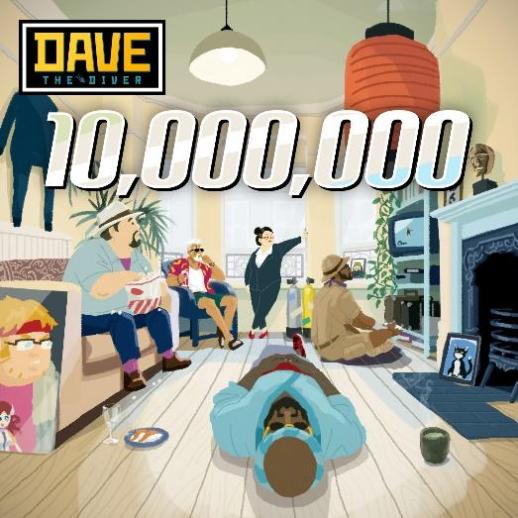 'Dave the Diver' tops 10 million in a Korean first SEOUL, September 09 (AJP) - South Korean studio Mintrocket said that its diving-and-sushi adventure "Dave the Diver" has sold more than 10 million copies worldwide, the first domestic single-player packaged game to cross that mark. The milestone announced Tuesday comes as Korean developers, long dominant in free-to-play online titles, increasingly bet on premium single-purchase games for console and PC. "Dave the Diver," released in full in mid-2023, casts players as a diver who harvests marine life by day and runs a sushi restaurant by night, blending exploration, collection and management. Sales have kept climbing three years after launch on the strength of new content, platform expansion and outside collaborations, Mintrocket said, evidence that the title has matured into a durable franchise rather than a one-off hit. The game debuted on PC before reaching PlayStation, Nintendo Switch and Xbox, and a mobile version launches globally on Apple's App Store and Google Play on Sept. 17. The "In the Jungle" downloadable content released in June sold about 1 million copies in roughly two months, while cameo appearances in "Fortnite" and franchise collaborations with China's KFC and Sushiro have widened the game's reach. The success arrives amid a broader shift that has drawn government notice, following Pearl Abyss's "Crimson Desert," which sold 5 million copies within 26 days of its March release, and earlier console breakthroughs from Neowiz's "Lies of P" and Shift Up's "Stellar Blade." Nexon, Mintrocket's parent, has separately leaned into single-player development with titles including "The First Berserker: Khazan." AJP Takeaways - Mintrocket, a Nexon studio, said on Sept. 8, 2026, that "Dave the Diver" has sold more than 10 million copies worldwide, the first South Korean single-player packaged game to reach that level. - The game's "In the Jungle" expansion sold about 1 million copies in roughly two months after its June 2026 release, and a global mobile version arrives Sept. 17, 2026. - The milestone reinforces a Korean industry pivot toward premium console and PC games, alongside Pearl Abyss's "Crimson Desert," which sold 5 million copies within 26 days of its March 2026 launch. 2026-09-09 10:47:04
 -
 Ransomware gangs turn on each other, Group-IB says SEOUL, September 09 (AJP) - Rival ransomware crews are increasingly fighting among themselves, weaponizing supply chains and enlisting artificial intelligence, in a shift South Korea felt early when one breach exposed dozens of its banks. Ransomware groups logged 2,393 attacks on their public leak sites in the first quarter, up 4.5 percent from the previous quarter, across 79 active groups, according to Group-IB's 2026 ransomware ecosystem report released Tuesday. The structure that once organized the trade is breaking down. A handful of large ransomware as a service operations used to recruit affiliates and split the proceeds, but affiliates skimming funds and operators refusing to pay have eroded trust in the criminal underground. The report said that it led to pushing more attackers to work alone and sharpening competition. Korea has already lived that scenario. The threat has already surfaced in Korea. Ransomware reports to the Korea Internet & Security Agency jumped to 192 in the second half of 2025 from 82 in the first half, and the January attack on conglomerate Kyowon Group crippled about 600 of its 800 servers and exposed as many as 9.6 million user accounts. AI is deepening the threat across the attack chain, Group-IB said, citing its use to help build the payload behind the group known as The Gentlemen and to set ransom demands based on victims' cyber insurance coverage. The firm urged companies to watch underground markets for stolen access before intrusions begin and to fold contractors and service providers into their security reviews. AJP Takeaways - Group-IB's 2026 ransomware ecosystem report, released Sept. 9, 2026, counted 2,393 attacks posted to leak sites by 79 active groups in the first quarter, up 4.5 percent from the previous quarter, as criminal operators fragmented into competing independent crews. - Ransomware reports to the Korea Internet & Security Agency rose to 192 in the second half of 2025 from 82 in the first half. - Attackers are increasingly using artificial intelligence to develop malware and calibrate ransom demands, prompting Group-IB to urge firms to monitor underground access markets and extend security assessments to contractors and service providers. 2026-09-09 10:22:26
 -
 Public Home Shopping faces origin-fraud probe over seafood sales SEOUL, September 09 (AJP) - State-run Public Home Shopping is under investigation over suspicions that it sold about 9,935 packages of skate and flatfish labeled as domestic but believed to be foreign-caught, earning roughly 284 million won ($211,923). The Gunsan Coast Guard in North Jeolla Province searched the shopping network's offices on May to examine suspected country-of-origin violations, after notifying the company of the concern in late February and questioning officials in March. The materials were released Tuesday by Rep. Choi Soo-jin of the opposition People Power Party. The seasoned skate aired in September last year and January this year, selling 7,331 packages for 182 million won. The dressed flatfish moved 2,604 packages across broadcasts in February last year and January, bringing in 102 million won. Both products carried domestic-origin labels. Investigators have largely built their case and plan to refer it to prosecutors this month, Choi said. "That Public Home Shopping sells tainted food every year is an act that deceives the public, who trust a public institution and buy its goods," she said, urging a sweeping overhaul of the company's pre-sale screening. Public Home Shopping rejected the account, saying the products' origin has not been determined and that a supplier is suspected of passing off foreign goods as domestic. "The investigation is ongoing, and it has not been confirmed whether the products are foreign or domestic," the company said, adding it is cooperating with authorities as a victim and vets all merchandise before sale. The company, under the Ministry of SMEs and Startups, has issued six product recalls totaling about 2.35 billion won since 2020, covering cases from sesame oil mislabeling to inadequately sterilized broth. AJP Takeaways - Public Home Shopping, the state-run network under South Korea's Ministry of SMEs and Startups, is under Coast Guard investigation over suspicions that skate and flatfish sold as domestic were actually foreign-caught, following a raid on May 27, 2026. - The products in question moved about 9,935 packages for roughly 284 million won ($211,923) across broadcasts between February 2024 and January 2026, with investigators planning to refer the case to prosecutors in September 2026. - Public Home Shopping denies deceiving customers, saying origin has not been confirmed and that a supplier is the suspected party, while lawmaker Choi Soo-jin cites six prior recalls worth 2.35 billion won since 2020 as evidence of repeated screening failures. 2026-09-09 09:57:35