

Journalist
Kim Dong-young김동영
davekim0807@ajupress.com
ReporterSamsung Biologics, CJ CheilJedang, LG Chem, Celltrion, Naver, Krafton, Nexon, Hyundai Mobis etc. & energy, game, food, bio, petrochemical, AI
Kim Dong-young is a bilingual journalist at AJU Press (AJP), covering Korean tech, energy, and bio/pharma.
He reports from the field at events like CES and APEC, runs AJP's YouTube channels,
and is pursuing a master's at Sogang's MOT program. "I try everything in this AI era that can improve yet preserve the facts. Journalism still serves as my core."
He reports from the field at events like CES and APEC, runs AJP's YouTube channels,
and is pursuing a master's at Sogang's MOT program. "I try everything in this AI era that can improve yet preserve the facts. Journalism still serves as my core."
Latest by Kim Dong-young
-
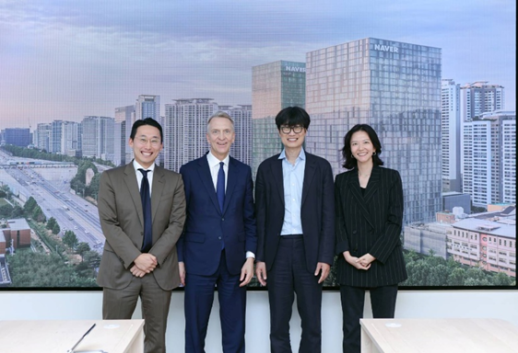 Naver deepens AI factory push in Brookfield talks SEOUL, September 04 (AJP) - Naver is accelerating its bid to build one of Asia's largest artificial intelligence computing hubs. Founder and board chair Lee Hae-jin met Brookfield Asset Management Chief Executive Bruce Flatt in Seoul on Thursday to review progress on a gigawatt-scale AI factory backed by up to $60 billion in investment. The two met at Naver's 1784 headquarters in Seongnam, south of Seoul, to advance a project the company is pursuing with Nvidia to construct AI factories, facilities that bundle AI chips, servers, networking and software to train and run large models. Brookfield, which manages more than $1 trillion in assets, has committed up to $9 billion to the first 200-megawatt phase. "We aim to combine Brookfield's expertise in infrastructure investment with Naver's AI capabilities to lead the global AI infrastructure market," Lee said. Flatt said Brookfield would act as more than a capital partner, helping with equipment procurement and customer acquisition, according to Naver. The company said the partnership would continue through later phases of the project, which requires $60 billion in total to reach 1 gigawatt. The financing marks the clearest sign yet that Naver intends to fund the full 1-gigawatt build-out, a scale that would rank among the region's most ambitious data-center undertakings. Lee and Nvidia CEO Jensen Huang unveiled the AI factory plan in Seoul in June, and the Naver chief joined Samsung Electronics and SK Group leaders for a roundtable with Huang near Silicon Valley in July. AJP Takeaways - Naver and Brookfield Asset Management met in Seoul to advance a gigawatt-scale AI factory that Naver is building with Nvidia, part of a decade-long expansion of the South Korean firm's computing infrastructure. - Brookfield, which manages more than $1 trillion in assets, has committed up to $9 billion to the project's first 200-megawatt phase, completing the full 1-gigawatt facility requires $60 billion. - The buildout follows Naver's earlier data centers, Gak Chuncheon, opened in 2013, and the 270-megawatt Gak Sejong campus, opened in 2023, and ties into a partnership unveiled by Lee Hae-jin and Jensen Huang in Seoul in June 2026. 2026-09-04 15:51:28
 -
 'AI for All' race begins with SKT, Kakao, KT plans SEOUL, September 04 (AJP) - South Korea's push to homegrown artificial intelligence in daily life gathered pace, as three telecom and internet consortiums led by SK Telecom, Kakao and KT unveiled competing plans to launch "action-oriented" AI services before year-end. The Ministry of Science and ICT presented its rollout preparation plan at a kickoff meeting at the Korea Press Center in Seoul. Each group showed prototypes and video demonstrations of assistants that move beyond answering questions to handling tasks such as searches, applications, and payments on a user's behalf. The Kakao consortium said it would deliver a general chatbot and public-sector AI agents through familiar channels such as KakaoTalk and voice calls, drawing on domestic models including Kakao's Kanana and LG's Exaone. The consortium plans to build a platform that completes tasks within a single conversation, later expanding to personal agents and an open agent marketplace. The KT consortium introduced "Ieum," a real-time search-based agent linking specialized services across about 10 fields spanning public administration, education, and shopping. It runs on an AI operating platform called Token Factory that integrates domestic models with graphics and neural processing chips to route each query to the best-suited model. SK Telecom said its service would carry users from identity verification through application and payment, adding phone and text-based agents so people who struggle with mobile apps or websites can still tap the technology. "The ultimate goal of the AI for All project is for new homegrown AI services to settle naturally into people's daily lives," Science Minister Bae Kyung-hoon said, urging the consortiums to pool their efforts toward a launch this year that opens a fresh domestic market for AI firms. AJP Takeaways - SK Telecom, Kakao and KT consortiums unveiled plans on Sept. 4 to launch homegrown "action-oriented" AI services in South Korea before the end of 2026, under the government's AI for All project. - The services, built on domestic models including Kakao's Kanana and LG's Exaone, aim to handle searches, applications, bookings and payments for users, with KT's "Ieum" agent linking specialized services across about 10 fields. - Deputy Prime Minister Bae Kyung-hoon said the goal is for the services to settle into daily life, calling on the consortiums to meet the year-end launch target. 2026-09-04 11:42:12
 -
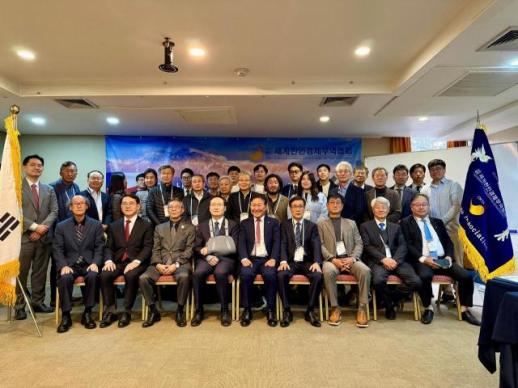 World-OKTA meets in Santiago to revive small Latin American chapters SEOUL, September 04 (AJP) - The World Federation of Overseas Korean Traders Associations, known as World-OKTA, convened a gathering in the Chilean capital this week to shore up its smaller branches across Latin America. The meeting, hosted by the group's Santiago chapter, drew regional officers and branch presidents from across the continent, along with South Korean Ambassador to Chile Kim Hak-jae and other local dignitaries. "Latin America is a land of opportunity, but the sheer distances between countries make it hard for members to meet often," Santiago chapter president Han Bong-rae said in an opening address, expressing hope the gathering would translate shared experience into concrete business. Delegates reviewed the strain on several under resourced chapters and weighed inclusive ways to draw dormant members back, agreeing that a unified regional event could help rebuild networks and tighten organizational bonds. Participants floated pairing a next-generation trade school with a regional business convention in Santiago in mid-2027, an event envisioned to host about 200 to 300 people. The program also featured a lecture on Latin American economic trends by a KOTRA trade official and a talk on deploying artificial intelligence in business, as attendees examined how fast-shifting conditions and emerging technology are reshaping trade in practice. Founded in 1981, World-OKTA is the largest economic body representing ethnic Koreans abroad, linking Korean business figures across 157 chapters in 76 countries to promote exports and overseas expansion for South Korean firms. AJP Takeaways - World-OKTA convened its 2026 gathering for small Latin American chapters in Santiago, Chile, on Sept. 3, 2026, bringing together regional officers and branch presidents to address falling membership and weakening ties across the continent. - Delegates weighed pairing a next-generation trade school with a regional business convention in Santiago in mid-2027, an event envisioned to draw about 200 to 300 participants. - Founded in 1981, World-OKTA is the largest economic organization representing ethnic Koreans abroad, linking business figures across 157 chapters in 76 countries to support South Korean exports and overseas expansion. 2026-09-04 11:42:02
 -
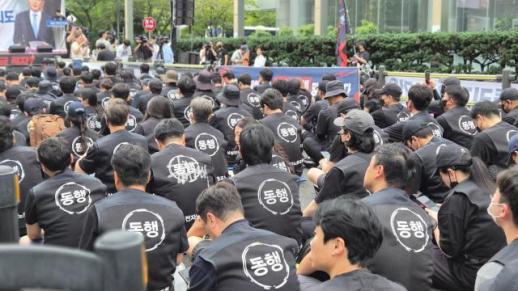 Seoul draws line on labor strikes over profit and capex SEOUL, September 03 (AJP) -South Korean unions can no longer strike over demands for bonuses pegged to a share of operating profit or over opposition to new plants, under government guidelines that side with employers as labor unrest spreads across the country's largest companies. The guidelines shown Thursday follow the so-called Yellow Envelope Act, the revised Trade Union Act that widened the grounds for bargaining and industrial action. They also come after a year in which labor activism spread beyond South Korea's traditionally union-heavy auto, shipbuilding and manufacturing sectors into semiconductors and information technology, as workers sought a larger share of windfall profits generated by the global AI boom. Samsung Electronics narrowly averted an 18-day strike in May after agreeing to a special bonus pool equivalent to 10.5 percent of semiconductor operating profit. At SK hynix, where workers last year secured bonuses funded by 10 percent of operating profit, production workers in August rejected a new wage agreement amid disputes over how the payouts would be made. The trend has spread into IT. Kakao workers staged the company's first-ever strike in June and later took coordinated leave after demanding that roughly 13 to 14 percent of operating profit be distributed as performance incentives. The ministry said demands that curb the rights of shareholders and others or that hinge on a mere possibility of changing working conditions fall outside that scope. At issue are demands popularized by a pay dispute at Samsung Electronics, where the union sought a bonus pegged to a percentage of operating profit. The ministry said such demands may be negotiated voluntarily but cannot trigger mediation or a lawful walkout. Operating profit is earned before interest, taxes and dividends and funds research and capital spending, the ministry said, and carving it out first for bonuses could fundamentally restrict a company's freedom to operate. Bonuses fixed as a share of salary or a flat sum remain open to bargaining. "Large-scale projects such as new plants take a long time from announcement to actual operation, so their impact on working conditions is uncertain in the early stages," the ministry said, adding that a possibility of future transfers alone does not create a duty to bargain. The measures will fall into the chip plants to be built in the Honam region, where Samsung's umbrella union sought to make the new plant a bargaining item over staff redeployment. Bargaining becomes mandatory only once layoffs, restructuring or transfers are confirmed and changes to working conditions are objectively expected. The same test applies to the introduction of artificial intelligence and new technology, such as Hyundai Motor Group's deployment of the Atlas robot. Employers who reject such demands will not be deemed to have committed unfair labor practices, the ministry said, and labor authorities may recommend that unions soften unreasonable claims or face administrative guidance akin to a court dismissal. AJP Takeaways • South Korea's Labor Ministry issued binding guidelines on Sept. 3, 2026, barring unions from making profit-linked bonus demands or opposition to new plant construction the basis for mandatory bargaining or legal strikes. • The guidelines interpret the revised Trade Union Act, known as the Yellow Envelope Act, and target disputes raised at Samsung Electronics over operating-profit bonuses and a planned chip plant in the Honam region. • Employers refusing such demands will not be found to have committed unfair labor practices, and the National Labor Relations Commission may direct unions toward administrative guidance rather than granting the right to strike. 2026-09-03 16:05:34
 -
 Seoul faces criticism over slow drug-pricing overhaul SEOUL, September 03 (AJP) -South Korea risks stalling its bid to become a global healthcare hub unless it expedites last year's drug-pricing overhaul with predictable and transparent execution, industry and government figures said at a seminar in Seoul. The warning ran through the American Chamber of Commerce in Korea's 17th Healthcare Innovation Seminar, held at the Shilla Hotel on Thursday and attended by about 150 government officials, industry executives and clinicians. Multinational drugmakers joined a chorus of concern that Korea often announces reform measures only to drag its feet on implementation. The delays have also become a source of friction in U.S.-Korea trade talks, where drug approvals and reimbursement rules increasingly influence where multinational pharmaceutical companies invest. Foreign drugmakers have long argued that Korea undervalues innovative medicines, discouraging investment and slowing patient access to new treatments. “Korea has made meaningful progress on healthcare reform. The priority now is to translate that progress into tangible results,” said James Kim, chairman and chief executive of AMCHAM, who cited drug pricing, vaccines and artificial intelligence as key areas that will shape the industry's direction. Speakers urged the government to set measurable targets rather than rely on broad policy pledges. “For the recent pricing reform to generate meaningful and sustainable impact, Korea should establish measurable policy objectives for innovative medicines,” said Lee Hye-young, general manager of BMS Pharmaceutical Korea, adding that visible outcomes could be achieved within two to three years. Bristol Myers Squibb, Eli Lilly, Pfizer, MSD, Moderna, Johnson & Johnson, Guardant Health and Eversight partnered on the seminar, an annual fixture in U.S.-Korea healthcare policy dialogue since its launch in the late 2010s. AJP Takeaways • The American Chamber of Commerce in Korea urged the South Korean government to fully implement the pharmaceutical pricing reforms announced in late 2025, warning at its 17th Healthcare Innovation Seminar that reform without execution could weaken Korea's standing as a global healthcare destination. • AMCHAM Chairman and CEO James Kim identified drug pricing, vaccines and AI as the three fields shaping Korea's healthcare future, while BMS Pharmaceutical Korea General Manager Lee Hye-young called for measurable policy targets deliverable within two to three years. • Held at Seoul's Shilla Hotel with about 150 government officials, executives and clinicians, the seminar was sponsored by eight multinational drugmakers including Bristol Myers Squibb, Eli Lilly, Pfizer and Johnson & Johnson. 2026-09-03 13:00:49
 -
 Humanoid robots trade the racetrack for the packing line SEOUL, September 03 (AJP) - Humanoid robots have spent the year setting speed records and drawing crowds. On Thursday, two of them started stuffing padding into boxes at a warehouse south of Seoul. CJ Logistics said it has put the dual-arm machines to work at an Olive Young fulfillment center in Yangji, Yongin, becoming the first company in South Korea's logistics industry to move humanoids from demonstration into a live operation. The step follows a partnership CJ Logistics sealed last year with domestic robot maker Robotis to develop physical AI, the branch of artificial intelligence that lets machines perceive and act in the physical world rather than only in software. Logistics has long been flagged as one of the earliest proving grounds for humanoids, because carrying and placing objects demands far less precision than assembly work on a factory line. Unlike manufacturing, where standardized goods move through fixed steps, warehouses handle countless items of different shapes, sizes and materials, with conditions shifting by order. "It is meaningful that humanoids have entered a stage where they play a role in actual logistics operations," said Kim Jung-hee, head of CJ Logistics' TES logistics technology research institute. "We will advance them on the basis of the vast operational data accumulated on-site." The deployment lands as Korean firms race to keep pace in a field where China dominates the hardware and the United States supplies much of the AI. LG Group signed a humanoid agreement with Nvidia last month, while Hyundai Motor Group is preparing Boston Dynamics' Atlas robots for its U.S. plants, and the government plans to buy 1,080 domestically made humanoids by 2030. CJ Logistics, which also takes part in the industry ministry's K-Humanoid Alliance, said it will widen the range of tasks the robots handle in phases. AJP Takeaways • CJ Logistics on Sept. 3 became the first South Korean logistics firm to deploy humanoid robots in a live operation, placing two dual-arm machines on a packaging line at an Olive Young center in Yongin. • The robots load cushioning into boxes under a physical-AI partnership with Robotis, part of a phased plan to expand humanoid use across the company's distribution network. • The move reflects logistics emerging as an early commercial frontier for humanoids, as South Korea races China's hardware lead and the U.S. edge in robotics AI ahead of a government plan to buy 1,080 domestic machines by 2030. 2026-09-03 11:59:27
 -
 GGGF 2026: Hyundai Motor bets on robots built for the job SEOUL, September 03 (AJP) - The first fleet of humanoid robots Hyundai Motor is readying to roll out starting 2028 won't resemble human workers, but replace their specialties in a way to boost productivity whether it be through wheels or single arm, a senior member of the robotics intelligence team of Hyundai Motor said. "When you look at real work sites, no single humanoid can handle every task," Joo Si-hyun, vice president of the robotics intelligence development group at Hyundai Motor Group, told the audience of 2026 GGGF in Seoul Thursday. The industry's fixation on human-shaped machines obscures the wider family of physical AI systems doing the actual work, a point that applies well beyond any single carmaker. Physical AI refers to systems that act in the physical world rather than on a screen, steering robots, vehicles and machines through real space. It is widely cast as the next frontier after generative AI, and a humanoid form is often treated as its natural endpoint. Yet a humanoid cannot cover every task anindustrial site demands, Joo said. It can climb stairs and strike a range of poses, but its payload and speed are limited, while a single plant can span indoor corridors, outdoor yards and staircases. Stairs suit legged robots of the kind exemplified by Boston Dynamics' Atlas and Spot, while flat factory floors without curbs favor wheeled autonomous mobile robots that glide between stations. Behind a single physical AI machine sits a stack of technologies that never appears in a demonstration, spanning embedded intelligence, perception, autonomous driving and fleet management, each a discipline of its own. "People think one physical AI model will handle the whole site, but that takes an enormous amount of control underneath, from the brain to motion control across many domains," Joo said. The field is pushing toward end-to-end systems that fold those layers into a single model, he said, but technical bottlenecks remain, forcing a compromise between what is realistic now and where the technology may eventually go. Cost is another constraint the sector cannot dodge. Squeezing prices by fitting cheaper parts and mass-producing them, the route Tesla has taken, is not what buyers actually want, Joo argued, since no customer asks for inferior components. Standardizing shared parts matters more, and the motors and actuators that give a robot its movement remain among the most expensive elements. The near-term aim is machines anyone can operate, including the elderly, on platforms open enough for others to build services on top. A follow-me function that trails a factory worker, or a golf caddie that shadows a player, hints at the range. The group is also developing electric-vehicle charging robots for high-speed cables that can weigh 5 to 10 kilograms, a burden for older or disabled drivers. "I believe robotics can solve a wide range of social problems, but no one group can do it alone," Joo said, closing his address with a call for partners across components, services, insurance and communications. His call for collaboration set the tone for the session that followed. Lim Kyeong-seob, who heads manufacturing-AI transition cooperation at the Ministry of Trade, Industry and Resources' industrial AI policy bureau, used his talk on the M.AX Alliance to argue that the manufacturing base long credited with driving South Korea's growth has hit a ceiling. "The competitiveness of manufacturing, which has driven our economy, has reached its limit," Lim said. "We have to take a different path from the United States and China, and we believe Korea needs a private-sector ecosystem where manufacturers and AI firms work together — which is why the M.AX Alliance was created." A panel discussion then took up where the success or failure of pairing manufacturing with physical AI will be decided, drawing industry insiders including Choi Jae-shik, chair professor at KAIST and chief executive of INEEJI, Kim Sun-tae, chief technology officer of NdotLight, and Hwang Hee-seung, head of Brain Commerce. Later sessions turned to the token economy's vanguard and the rise of the AI factory, before the forum closes Friday with a private session at the National Assembly. The three-day event, running under the theme "From Physical AI to Agentic AI, Beyond to AI Civilization," opened Wednesday at The Plaza in central Seoul, hosted by Aju News Corporation with the Global Economic and Financial Research Institute. AJP Takeaways • Hyundai Motor Group VP Joo Si-hyun told the 2026 GGGF that humanoids dominate the physical-AI conversation but can't cover most industrial tasks — wheeled AMRs and legged robots will hit factory floors first. • A single visible robot rests on an unseen stack — perception, embedded intelligence, autonomous driving and fleet management — split between optimal control and learning-based control, with true end-to-end systems still bottlenecked. • Cost hinges on standardizing shared parts rather than cheaper components, and no firm can build the full system alone, Joo said, citing Hyundai's charging robots and follow-me machines as near-term uses. 2026-09-03 11:46:37
 -
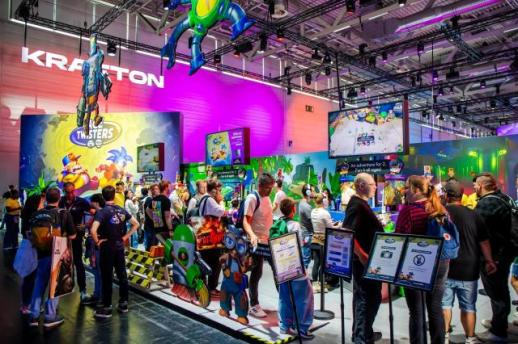 Krafton commits to G-Star for 10th straight year SEOUL, September 03 (AJP) - Krafton announced that it will exhibit at G-Star 2026, the country's largest gaming expo, extending its unbroken run of appearances to a decade and offering the beleaguered show a marquee domestic name. The Battlegrounds maker has taken part in the Busan event every year since 2017, using the fair to unveil marquee titles and let visitors sample upcoming releases through hands-on demos and interactive programs. The company announced Thursday that it will again set up a booth in the BTC hall of BEXCO's first exhibition center, though it said details of its slate, booth design and on-site events would follow. The commitment lands at a delicate moment for G-Star, which runs Nov. 19 to 22. When organizers unveiled a first roster of exhibitors in August, none of Korea's leading studios — among them Nexon, Netmarble, NC and Krafton — appeared, and Chinese publishers such as HoYoverse, NetEase Games and Bilibili filled much of the vacated floor. The main sponsor slot went to Crack, an AI-driven storytelling platform, the first time a non-gaming firm has held the position in the show's 22-year history. Krafton, whose participation was described as undecided as recently as mid-August, did not disclose which games it would bring. Industry observers expect it to draw on the five new titles it presented at Gamescom in Cologne in late August, including PUBG: Ded.Net, No Law, Project Zeta, Age Twisters and Tarae: The Unbound, alongside its flagship Battlegrounds franchise. Korean studios have leaned heavily on overseas showcases this year, with Krafton and NC confirming Gamescom appearances and Nexon Games heading to next month's Tokyo Game Show. AJP Takeaways • Krafton confirmed on Sept. 3, 2026, that it will exhibit at G-Star 2026 in Busan, running Nov. 19-22, extending its consecutive appearances at South Korea's largest gaming expo to a 10th year since 2017. The commitment gives the show a top-tier domestic exhibitor after none of Korea's leading studios appeared on the first roster organizers released in August. • When the G-Star organizing committee published its initial exhibitor list on Aug. 13, 2026, major Korean publishers including Nexon, Netmarble, NCSoft and Krafton were absent, and Chinese firms such as HoYoverse, NetEase and Bilibili filled much of the main hall, while the AI storytelling platform Krack became the first non-gaming main sponsor in the event's 22-year history. • Krafton did not disclose its Busan lineup, though industry observers expect it to feature the five titles it showed at Gamescom in Cologne in late August 2026 — PUBG: Ded.Net, No Law, Project Zeta, Age Twisters and Tarae: The Unbound — alongside Battlegrounds, as Korean studios continue prioritizing overseas showcases like Gamescom and the Tokyo Game Show. 2026-09-03 10:10:34
 -
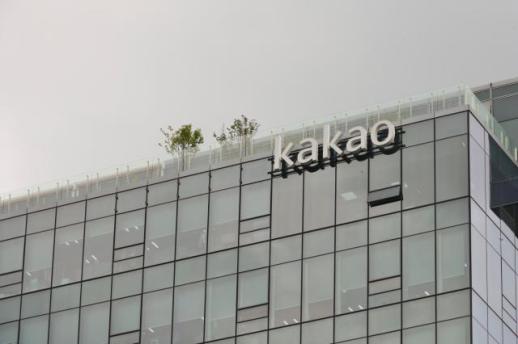 Kakao restructuring delays Kakao Mobility's US listing SEOUL, September 02 (AJP) - South Korea's Kakao has set in motion a sweeping corporate overhaul that is likely to push back Kakao Mobility's planned US share listing, leaving private equity backer TPG waiting longer to cash out of an investment it made nearly a decade ago. According to industry reports on Wednesday, Kakao Mobility's American depositary receipt (ADR) offering counts as a duplicate listing, which requires shareholder-protection procedures by parent Kakao and cannot be finalized until the corporate split settles the ownership structure. TPG recently met with officials at the Financial Services Commission and the Financial Supervisory Service to walk them through the state of the ADR plan. The firm told regulators it needs cooperation from Kakao, the majority owner with a 57.18 percent stake, but that talks have stalled, making the listing hard to advance. TPG's consortium first put about 500 billion won ($364 million) into Kakao Mobility in 2017 and added 130.7 billion won in 2021, yet has been unable to recoup either sum more than nine years on. Under a duplicate-listing guideline introduced in July, Kakao must assess how a Kakao Mobility offering would affect existing shareholders and draw up safeguards before the deal can proceed. Kakao must also top off an F-1 filing with the U.S. Securities and Exchange Commission and a separate securities filing at home. The company plans to divide into Kakao AI and Kakao X on Jan. 1 after an extraordinary shareholder meeting on Dec. 17, with the two entities relisting on Jan. 27, a sequence that all but rules out an ADR debut this year. The two sides broadly agree TPG should be able to exit, but they remain at odds over timing and shareholder terms. Ryu Geung-seon, Kakao Mobility's chief executive, has resisted pinning down a listing schedule even after backing the SEC registration itself, and the industry expects the tug-of-war to run on. AJP Takeaways • Kakao split into Kakao AI and Kakao X, to complete on Jan. 1, 2027, is expected to delay Kakao Mobility's planned US ADR listing, frustrating private equity backer TPG. • Kakao holds a 57.18 percent stake in Kakao Mobility, and a July 2026 duplicate-listing guideline requires the parent to complete shareholder-protection procedures before any overseas offering can proceed. • TPG invested about 500 billion won in Kakao Mobility in 2017 and a further 130.7 billion won in 2021 but has yet to recoup either after more than nine years, deepening its pressure to exit. 2026-09-02 12:34:50
 -
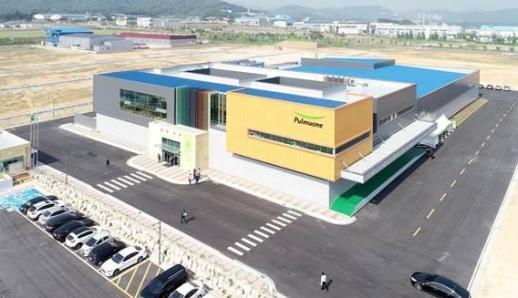 Pulmuone's shelf-stable food sales jump 25.5% in first half SEOUL, September 02 (AJP) - South Korea's Pulmuone Foods announced Wednesday that first-half sales of its ambient products rose 25.5 percent from a year earlier to a record high, as the company known for chilled and frozen fare pushes to diversify its portfolio. The ambient line, foods that require no refrigeration, has become a central growth target for Pulmuone Foods, the company's total food revenue climbing to 13 percent in the first half from about 7 percent a year earlier. Online sales led the surge, rising 51.9 percent from a year earlier. Compared with the first half of 2021, before the company built out its ambient range, sales soared 791.8 percent. The company explained that growth was concentrated in beverages, Korean home-meal replacements and noodles. The expansion carries a profit rationale as ambient products can contribute more favorably to operating income than chilled or frozen lines, and their longer shelf life eases exports, the company said. " We will scale up the shelf-stable business as a new growth engine, driving both top-line expansion and improved profitability," said Yoon Myeong-rang, head of global marketing at Pulmuone Foods. AJP Takeaways • Pulmuone Foods reported a 25.5 percent year-on-year rise in first-half ambient product sales to a record high, with the category's share of total food revenue rising to 13 percent from about 7 percent a year earlier. • Online ambient sales climbed 51.9 percent from a year earlier and were up 791.8 percent from the first half of 2021, driven by beverages, Korean home-meal replacements and noodles. • Pulmuone Foods aims to scale its shelf-stable line into a new growth axis, expanding overseas sales of longer-life products. 2026-09-02 08:19:45