

Journalist
Kim Dong-young김동영
davekim0807@ajupress.com
ReporterSamsung Biologics, CJ CheilJedang, LG Chem, Celltrion, Naver, Krafton, Nexon, Hyundai Mobis etc. & energy, game, food, bio, petrochemical, AI
Kim Dong-young is a bilingual journalist at AJU Press (AJP), covering Korean tech, energy, and bio/pharma.
He reports from the field at events like CES and APEC, runs AJP's YouTube channels,
and is pursuing a master's at Sogang's MOT program. "I try everything in this AI era that can improve yet preserve the facts. Journalism still serves as my core."
He reports from the field at events like CES and APEC, runs AJP's YouTube channels,
and is pursuing a master's at Sogang's MOT program. "I try everything in this AI era that can improve yet preserve the facts. Journalism still serves as my core."
Latest by Kim Dong-young
-
 Business groups welcome Lee So-young as nominee for SME minister SEOUL, August 30 (AJP) - South Korean business and women's entrepreneur groups welcomed the nomination of Lee So-young, a two-term lawmaker of the ruling Democratic Party, as minister of SMEs and startups, urging her to deliver tangible support and fresh momentum to a sector that accounts for the bulk of the country's jobs. The nomination fills a post left vacant for about two months after former minister Han Sung-sook was tapped as prime minister. A lawyer by training who served in the 21st and 22nd National Assemblies, Lee was named to the position by President Lee Jae Myung Sunday. The Korea Women Entrepreneurs Association praised her legislative record and pressed for policies aimed at women-led firms. "We hope she will listen to the field voices of small businesses and small merchants, including women-owned enterprises, and back their innovative growth and new engines of growth," the group said in a statement. The Korea Federation of SMEs said it expected her experience to help smaller firms weather artificial intelligence and digital transformation, break into global markets, and overcome the polarization of so-called K-shaped growth. The Korea Venture Business Association and the Korea Venture Capital Association each called for lighter regulation and deeper capital markets, urging her to spur private investment and modernize exit channels such as initial public offerings and mergers and acquisitions. The Korea Federation of Micro Enterprise, meanwhile, asked the nominee to treat the nation's 7.9 million small merchants as full participants in the economy rather than mere recipients of aid, calling for stronger safety nets and fairer business conditions. AJP Takeaways • President Lee Jae Myung nominated two-term Democratic Party lawmaker Lee So-young as minister of SMEs and startups, filling a post vacant for about two months. • Business and women's entrepreneur groups welcomed the pick, pressing for tangible support on AI transition, global expansion and women-led firms. • Venture groups pushed for lighter regulation and stronger exit channels such as IPOs and M&As to deepen the startup capital market. 2026-08-30 17:28:36
 -
 Chinese robotaxis to hit Seoul roads by 2028 under Pony.ai deal SEOUL, August 30 (AJP) - South Korean autonomous driving firm FutureLink has signed a strategic cooperation agreement with China's Pony.ai to bring 200 robotaxis onto the country's roads, aiming to launch a commercial driverless service in Seoul by around 2028. FutureLink announced the deal on Sunday, saying the two companies sealed it two days earlier at the Conrad Seoul hotel in Yeouido, the capital's main financial district. Pony.ai co-founder and Chief Executive James Peng attended the signing alongside FutureLink Chairman Nam Kyung-pil and Chief Executive Cha Doo-won. The agreement centers on deploying Pony.ai's seventh-generation robotaxis in South Korea as a commercial service. The partners plan to move from technology trials, run in Seoul's Gangnam autonomous driving pilot zone, into full service operation, and later intend to establish a joint venture. FutureLink, the autonomous driving subsidiary of KOSDAQ-listed PonyLink, has driven about 80,000 kilometers without an accident in Gangnam using modified Hyundai Kona EVs, localizing Pony.ai's technology for the Korean market. The company will handle domestic certification, market entry and service operation, while Pony.ai supplies its self-driving technology. The initial fleet of 200 vehicles will be built by China's BAIC Motor. Once certification is complete, the partners plan to expand the service from Seoul to other major cities. "Vehicle certification is the first step toward commercialization," Peng said. "After receiving certification, we plan to put fully driverless robotaxis on Korean roads." Peng added that Pony.ai also plans to deploy more than 4,000 autonomous vehicles across Europe and the Middle East. Addressing concerns over a Chinese firm entering the domestic market, FutureLink said data collected in South Korea would not be sent abroad, and framed the tie-up as a way to strengthen the local industry through technology cooperation. Nam said introducing Pony.ai's advanced technology and widening its localization could benefit not only FutureLink but South Korea's autonomous driving industry as a whole. AJP Takeaways • FutureLink, the autonomous driving unit of KOSDAQ-listed PonyLink, signed a strategic cooperation agreement with China's Pony.ai to operate 200 robotaxis in South Korea, with commercial service targeted in Seoul by around 2028. • The initial fleet, built by China's BAIC Motor, will use Pony.ai's seventh-generation robotaxis; FutureLink has driven about 80,000 kilometers without an accident in Seoul's Gangnam district localizing the technology. • FutureLink will handle domestic certification and operation while Pony.ai provides the self-driving technology, with the partners planning a joint venture and later expansion to other Korean cities. 2026-08-30 15:49:14
 -
 Shin warns Korea's financial risks nearing crisis threshold SEOUL, August 30 (AJP) - South Korea's central bank chief warned that the country's financial vulnerabilities are climbing at a dangerously steep pace, driven by surging home prices and household debt, and cautioned that the window for preemptive action is closing fast. Shin Hyun-song, governor of the Bank of Korea, delivered the warning on Aug. 28 on the sidelines of the annual Jackson Hole Economic Policy Symposium in Wyoming, where U.S. Federal Reserve Chair Kevin Warsh used his keynote to flag inflation risks of his own. Shin pointed to the Bank of Korea's Financial Vulnerability Index (FVI), a quarterly gauge that distills about 60 variables, from credit and household loans to leverage, liquidity and asset prices. Benchmarked at 100 for the eve of the 1997 Asian financial crisis, the index hit 79.5 during the 2008 global crisis and reached 65 during the rate-hike cycle that followed Russia's invasion of Ukraine. The index has since eased to 37.6 in the first quarter of 2024 before rebounding sharply. The FVI has since returned to its long-term average of 46.5, Shin said, and is likely to exceed that level by the time the central bank releases its financial stability report in September. He added that the steepness of the increase was the greater concern. Shin drew a sharp line between fighting inflation and safeguarding financial stability. Prices can be reined in belatedly by raising rates even at the cost of a downturn, he said, but financial vulnerabilities cannot be managed once they burst, likening the task to popping a balloon with a needle. He tied the deepening imbalance to double-digit gains in housing prices and rapid growth in household debt, adding that while the M2 money supply sits near its historical average, broader liquidity measures are running high. Preemptive coordination between the central bank and the government, he said, was no longer a choice but a necessity. AJP Takeaways • Bank of Korea Governor Shin Hyun-song warned on Aug. 28 that South Korea's financial vulnerabilities are rising at a steep pace, driven by surging home prices and household debt, and that the window for preemptive policy action is narrowing. • The Bank of Korea's Financial Vulnerability Index has returned to its long-term average of 46.5 and is likely to surpass it by the September financial stability report; the gauge reached 79.5 during the 2008 global financial crisis. • Shin urged preemptive coordination between the Bank of Korea and the government, speaking on the sidelines of the Jackson Hole symposium where Fed Chair Kevin Warsh flagged persistent U.S. inflation. 2026-08-30 12:29:09
 -
 (Update) Lee reshuffles cabinet, names new finance and justice ministers SEOUL, August 30 (AJP) - South Korean President Lee Jae Myung nominated a new finance minister and five other cabinet members on Sunday, in a second-year reshuffle that also replaced the ministers of justice and defense. Lee named Lee Hyoung-il, the first vice finance minister, to succeed Deputy Prime Minister and Finance Minister Koo Yun-cheol, presidential chief of staff Kang Hoon-sik told a briefing. Democratic Party lawmaker Kim Seung-won was tapped as justice minister. The president also nominated former South Korea-U.S. Combined Forces Command deputy commander Kang Shin-chul as defense minister and land ministry vice minister Hong Jee-sun to lead the land, infrastructure and transport portfolio. Democratic Party lawmaker Lee So-young was named minister of SMEs and startups, a post left vacant for more than a month, while Basic Income Party lawmaker Yong Hye-in was tapped for gender equality and family. The shake-up was brought forward after Justice Minister Jeong Seong-ho resigned citing ill health, accelerating a reshuffle originally expected after October's parliamentary audit. The incoming justice minister faces the Oct. 2 launch of new investigative and prosecution bodies that strip the prosecution of its investigative powers. Meanwhile, Koo initially abandoned a trip to a Group of 20 finance ministers' meeting in Asheville, North Carolina, turning back at Incheon International Airport on Sunday morning before reversing course and departing as scheduled. A deputy prime minister stays in office until a successor clears a parliamentary confirmation hearing and is formally appointed. Skipping the trip — including a planned bilateral with U.S. Treasury Secretary Scott Bessent and other counterparts — was seen as counter to the national interest, according to officials. AJP Takeaways • South Korean President Lee Jae Myung on Aug. 30, 2026, nominated six cabinet members, including first vice finance minister Lee Hyoung-il to succeed Deputy Prime Minister and Finance Minister Koo Yun-cheol and Democratic Party lawmaker Kim Seung-won as justice minister. • The reshuffle, accelerated by Justice Minister Jeong Seong-ho's resignation on health grounds, also named former South Korea-U.S. Combined Forces Command deputy commander Kang Shin-chul as defense minister and filled long-vacant posts including the SMEs and startups ministry, empty for more than a month. • The finance change came the same day Koo Yun-cheol turned back at Incheon International Airport, then reversed course and left as scheduled for the G20 finance ministers' meeting in Asheville, North Carolina, keeping a planned bilateral with U.S. Treasury Secretary Scott Bessent. 2026-08-30 11:58:32
 -
 Retail investors flee sliding Seoul market for Wall Street SEOUL, August 30 (AJP) - South Korean retail investors' net buying of U.S. equities outpaced their purchases on the domestic main board in the first two months of the second half, as a slump in Seoul shares drove capital abroad. Net purchases of U.S. stocks by individual investors reached $7.05 billion between July 1 and Aug. 27, according to the Korea Securities Depository, exceeding the 8.75 trillion won ($6.35 billion) they bought on the benchmark KOSPI over roughly the same period and running to about six times their 1.57 trillion won of net buying on the tech heavy KOSDAQ. The two-month total surpassed 70 percent of the $9.87 billion these investors had bought across the entire first half, after net purchases of $4.64 billion in July were followed by a further $2.40 billion in August. The exodus tracked a sharp reversal in Korean shares, which peaked at a record 9,114.55 on June 22 before tumbling toward the 6,000 line through July, even as the S&P 500 and Nasdaq indexes ground steadily higher and offered a more compelling draw. Leveraged semiconductor bets dominated the buying as the most-purchased security was the Direxion Daily Semiconductor Bull 3X Shares, or SOXL, drawing $3.01 billion — more than 40 percent of all U.S. stock purchases over the period. Trailing SOXL were the American depositary receipts of SK hynix at $815 million, Alphabet at $647 million and SpaceX at $515 million, while investors dumped shares of Nvidia, Palantir, Micron and Microsoft. Domestic idle capital thinned in step, as investor deposits parked for trading tumbled more than 33 trillion won to 98.92 trillion won on Aug. 26 from 132.47 trillion won on June 29, with much of the drained liquidity widely believed to have flowed into the U.S. market. AJP Takeaways • South Korean retail investors' net buying of U.S. equities reached $7.05 billion between July 1 and Aug. 27, 2026, exceeding their 8.75 trillion won of net purchases on the benchmark KOSPI and running to about six times their 1.57 trillion won on the KOSDAQ, according to the Korea Securities Depository. • The two-month total surpassed 70 percent of the $9.87 billion these investors bought across the entire first half of 2026. • The Direxion Daily Semiconductor Bull 3X Shares, or SOXL, drew $3.01 billion, more than 40 percent of all U.S. stock purchases in the period. 2026-08-30 10:37:54
 -
 Korea's convenience stores sharpen food rivalry SEOUL, August 30 (AJP) - South Korea's three biggest convenience store chains are sharpening their food rivalry, rolling out products tuned to increasingly granular consumer tastes as shoppers weigh texture, drink preferences and health alongside the traditional draws of price and convenience. GS25, E-mart24 and 7-Eleven are each leaning on sales data to expand categories where demand has already proven itself, from chewy frozen treats to cafe-style tea drinks and seasonal rice bowls. GS25's two chewy ice cream bars sold about 4 million units in roughly three months, GS Retail said, while E-mart24's average daily tea beverage sales per store rose 17.4 percent in the first seven months of the year from a year earlier. 7-Eleven, whose bibimbap sales climbed 25 percent this year, is grooming rice bowls made with seasonal ingredients into a core strategic line. E-mart24, meanwhile, launched a 350-milliliter ready-to-drink royal milk tea on Aug. 28 under its in-house cafe brand Seongsu 310, priced at 1,600 won ($1.16) — well below the 4,000 to 6,000 won charged at typical cafes and cheaper than rival convenience store versions in the 2,000-won range. 7-Eleven is elevating bibimbap into a signature lunchbox category, betting that its blend of assorted vegetables and easy preparation will win over a widening base of customers. Sales among foreign tourists rose 40 percent last year and a further 15 percent this year, and the chain will roll out a seasonal series with singer Sung Si-kyung starting Wednesday. AJP Takeaways • South Korea's three largest convenience store operators — GS25, E-mart24 and 7-Eleven — are competing on food products tailored to more specific consumer tastes such as texture, tea drinks and seasonal ingredients, rather than price and convenience alone. • GS25's chewy ice cream bars sold about 4 million units in roughly three months, E-mart24's per-store daily tea beverage sales rose 17.4 percent in the first seven months of the year from a year earlier, and 7-Eleven's bibimbap sales climbed 25 percent this year. • E-mart24 launched a 1,600-won ($1.16) ready-to-drink royal milk tea under its Seongsu 310 brand, while 7-Eleven will introduce a seasonal bibimbap series with singer Sung Si-kyung to broaden its customer base. 2026-08-30 10:01:43
 -
 Google-backed study finds Korean workers use AI more adeptly SEOUL, August 27 (AJP) - South Korean workers apply artificial intelligence with a sophistication about 1.7 times the global average, a report commissioned by Google Korea found, as employers increasingly treat fluency with the technology as a hiring priority. Google Korea released the findings on Thursday, drawing on a study by global consultancy Public First titled "Growth and Innovation in Korea Driven by AI." The report also concluded that training-driven productivity gains reach as much as 4.7 million won ($3,404) per worker each year. Forty percent of surveyed workers said companies now favor applicants who can demonstrate AI skills, and 35 percent named command of AI-based tools as the single most sought-after capability, ahead of adaptability and communication skills. Workers who advanced from basic prompts to refined ones after training cut their task time threefold, the report found, while 82 percent of respondents expected AI competence to become important or essential to their jobs within five years. Appetite for learning ran high on both sides of the classroom. Nearly three in four Koreans said they wanted to build AI skills, and more than eight in 10 parents rated safe, effective AI use as at least as important as core subjects such as math and English for their children. Google also pointed to its own economic footprint, citing Public First estimates that its products generated about 21 trillion won in domestic economic value and supported 130,000 jobs in 2025, of which 13 trillion won came from small and medium-sized enterprises. AJP Takeaways • A Google Korea-commissioned study by Public First, released Aug. 27, 2026, found South Korean workers use AI about 1.7 times more skillfully than the global average, with employers increasingly prioritizing AI fluency in hiring. • Forty percent of surveyed workers said companies favor AI-capable applicants, 35 percent ranked AI-tool proficiency as the top hiring criterion, and training raised annual productivity per worker by up to 4.7 million won. • Google Korea said it would expand AI training, including its "AI Olim" program and a new certificate course run with South Korea's Ministry of Employment and Labor, citing 21 trillion won in domestic economic value from its products in 2025. 2026-08-27 15:44:24
 -
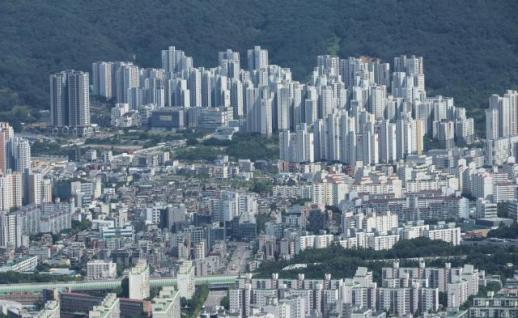 Top-income Koreans earn more cash, while real wages slide SEOUL, August 27 (AJP) - South Korea's richest households pocketed much larger income gains in cash terms than those at the bottom in the second quarter, widening the absolute income gap even as workers suffered a third straight month of falling inflation-adjusted wages. Average monthly household income rose 4.5 percent from a year earlier to 5.30 million won in the April-June period, according to the Ministry of Data and Statistics' quarterly household survey released Thursday. After adjusting for inflation, household income increased a much smaller 1.5 percent. Labor income, which accounts for the largest share of household earnings, rose only 0.8 percent to 3.22 million won, while transfer income surged 20.4 percent to 931,000 won. Public transfers alone jumped 27.6 percent. The headline increase also concealed a striking difference in the amount of additional income flowing to households at opposite ends of the income ladder. Average monthly income for households in the richest 20 percent rose to 11.15 million won from 10.74 million won a year earlier, an increase of about 407,000 won. Income for the poorest 20 percent climbed to 1.28 million won from 1.19 million won, an increase of about 89,000 won. The richest households therefore gained more than four times as much additional monthly income in won terms as the poorest households. The absolute gap between the two groups widened by about 318,000 won to 9.87 million won from 9.55 million won a year earlier. Income at the bottom rose at a faster percentage rate of 7.5 percent, compared with 3.8 percent for the top quintile, helped substantially by transfer payments, or government handout. The government's broader distribution indicator also pointed to an improvement rather than deterioration. The ratio of equivalized disposable income of the top 20 percent to the bottom 20 percent fell to 4.97 in the second quarter from 5.45 a year earlier. For workers dependent primarily on wages, however, purchasing power continued to deteriorate. South Korean workers saw their inflation-adjusted wages decline for a third consecutive month in June as stubbornly high prices erased modest pay gains, according to a separate Ministry of Employment and Labor survey released Thursday. Real monthly wages for workers at businesses with at least one regular employee slipped 0.1 percent from a year earlier to 3.41 million won in June. The three-month slide was the longest since real wages declined for five consecutive months from April through August 2023. The squeeze was more pronounced over the full second quarter. Real wages fell 0.8 percent to 3.37 million won even though nominal wages increased 2.1 percent to 4.04 million won. Consumer prices rose 3.0 percent over the same period, outpacing the increase in pay. The two sets of government data illustrate the divergence between rising headline household income and the weaker experience of workers relying on their paychecks. Much of the household-income increase came from transfers rather than wages, while inflation continued to erode the purchasing power of earned income. On the upside, household spending rose 3.0 percent from a year earlier to 3.99 million won per month in the second quarter. Consumer spending increased 3.4 percent in nominal terms but only 0.4 percent after adjusting for inflation. Higher borrowing costs continued to weigh on household budgets. Interest expenses climbed 12.1 percent from a year earlier, the household survey showed. AJP Takeaways South Korea's richest 20 percent gained about 407,000 won in monthly household income from a year earlier, versus about 89,000 won for the poorest 20 percent, widening the absolute top-bottom income gap to roughly 9.87 million won. The relative income picture was less unequal: bottom-quintile income rose 7.5 percent versus 3.8 percent for the top quintile, while the official equivalized disposable-income quintile ratio narrowed to 4.97 from 5.45. Workers' real wages fell for a third consecutive month in June and dropped 0.8 percent in the second quarter as 3.0 percent inflation outpaced a 2.1 percent rise in nominal pay. 2026-08-27 15:07:05
 -
 S. Korea finds no formaldehyde in Chinese cabbage kimchi SEOUL, August 27 (AJP) - South Korea's food safety regulator found no formaldehyde in any of 82 cabbage kimchi and cabbage samples pulled from the market, easing concerns that Chinese farms had used the carcinogen on their crops. The Ministry of Food and Drug Safety said Thursday it tested 50 samples of cabbage kimchi, 29 of napa cabbage and three of salted cabbage after reports that formaldehyde, a Group 1 carcinogen, had been applied to cabbage cultivation in China. The ministry said it screened products from every Chinese cabbage manufacturer and packaging firm distributing in South Korea. Through the Korea Agency of HACCP Accreditation and Services stationed in China, it also traced the sourcing regions of 55 Chinese kimchi makers exporting to the country, finding none had bought cabbage from Kangbao county in Zhangjiakou, Hebei province, where the tainted produce originated. All 55 manufacturers hold Hazard Analysis Critical Control Point (HACCP) certification, the ministry said, noting that since October 2024 only kimchi produced by HACCP-certified facilities may be imported. "Since strengthening inspections of Chinese cabbage on the 24th, we have been rigorously managing import safety, including testing for formaldehyde at the customs clearance stage," a ministry official said. Formaldehyde, classified as a Group 1 carcinogen by the World Health Organization's International Agency for Research on Cancer, is used in disinfection and tissue preservation. The alarm followed revelations that farmers in some rural parts of China had used the chemical to keep cabbage fresh, prompting Beijing's central government to order a special probe. AJP Takeaways • South Korea sourced the overwhelming majority of its commercial kimchi cabbage from China, giving any contamination scare outsized weight for the domestic food-service and restaurant supply chain. • All 82 tested samples — 50 cabbage kimchi, 29 napa cabbage and three salted cabbage — returned negative for formaldehyde, and none of 55 exporting makers sourced from the affected Kangbao county. • Beijing has ordered its own special investigation, with any findings potentially prompting tighter customs screening or a temporary import review in Korea. 2026-08-27 14:02:24
 -
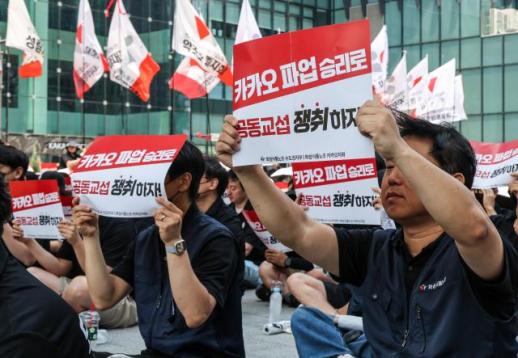 Kakao union vows to block spin-off at December vote SEOUL, August 26 (AJP) - Kakao's labor union will campaign to defeat the technology group's planned split at a December shareholder meeting, arguing the restructuring lacks concrete reform and job-security measures. The union, a chapter of the Korean Chemical, Textile and Food Workers' Union, declared its opposition at a press conference held Wednesday following a rally to authorize a strike at Kakao Bank. Kakao's board resolved on Aug. 21 to divide the company into Kakao AI, a new entity housing its artificial-intelligence platform business, and Kakao X, a surviving holding company overseeing investments and subsidiaries. "A perception is widespread that the company's claim of enhanced corporate value simply will not hold up in practice," said Suh Seung-wook, head of the Kakao union chapter. Suh said a credible reform plan addressing Kakao's existing problems should precede any split, adding that the current blueprint offers no concrete safeguards. He stressed the union was not opposing the division outright but rejecting one pursued without a proper diagnosis of its causes or remedies. The spin-off is subject to a special resolution at the extraordinary general meeting slated for Dec. 17, and the union intends to court major and minority shareholders to vote it down. Suh said that excluding the controlling shareholder's stake of about 24 percent, opposition from more than a third of attending shareholders would sink the motion. The union would first press the National Pension Service to cast its shares against it. The National Pension Service currently holds 5.4 percent of total shares for Kakao, the second largest shareholder. The union also demanded joint bargaining across all affiliates to secure group-wide employment stability, and handed management a common set of demands covering management reform, job security and a revamped compensation system. While a recent tentative wage agreement at Kakao's headquarters narrows the immediate scope for industrial action, the union left the door open to walkouts should the company refuse joint bargaining. Kakao said the spin-off marked a significant change for its workforce and that it would continue to gather employee views and communicate with the union, while dismissing industry speculation that founder Kim Beom-su was involved, casting the move instead as a reckoning with a "post-Kim Beom-su" structure. AJP Takeaways • Kakao's labor union said on Aug. 26, 2026 it will campaign to defeat the company's planned corporate split at an extraordinary shareholder meeting on Dec. 17, citing insufficient reform and job-security measures. • Kakao's board resolved on Aug. 21, 2026 to divide the group into Kakao AI, a new artificial-intelligence platform company, and Kakao X, a surviving investment and subsidiary holding entity, effective Jan. 1, 2027 • The union plans to lobby the National Pension Service and minority shareholders to block the special resolution, and has demanded group-wide joint bargaining while leaving open the possibility of industrial action. 2026-08-26 16:23:10