

Journalist
Kim Dong-young김동영
davekim0807@ajupress.com
ReporterSamsung Biologics, CJ CheilJedang, LG Chem, Celltrion, Naver, Krafton, Nexon, Hyundai Mobis etc. & energy, game, food, bio, petrochemical, AI
Kim Dong-young is a bilingual journalist at AJU Press (AJP), covering Korean tech, energy, and bio/pharma.
He reports from the field at events like CES and APEC, runs AJP's YouTube channels,
and is pursuing a master's at Sogang's MOT program. "I try everything in this AI era that can improve yet preserve the facts. Journalism still serves as my core."
He reports from the field at events like CES and APEC, runs AJP's YouTube channels,
and is pursuing a master's at Sogang's MOT program. "I try everything in this AI era that can improve yet preserve the facts. Journalism still serves as my core."
Latest by Kim Dong-young
-
 Sovereign AI race pulls world deeper into Nvidia's orbit SEOUL, August 24 (AJP) - When South Korea named the three teams last week that will carry its bid for a homegrown artificial intelligence model, the reward that mattered most was not cash or recognition. It was more Nvidia. The government said on Aug. 18 that SK Telecom, LG AI Research and startup Upstage had cleared the second round of its sovereign AI foundation model contest. For the next stage, each team will receive access to roughly 1,000 Nvidia B200 graphics processing units, up from about 768 in the first half, at a combined six-month leasing cost of around 120 billion won ($86.7 million). There is a revealing paradox in that arrangement. South Korea is spending public money to reduce its dependence on foreign artificial intelligence. To do so, it is deepening its dependence on the American company that supplies the computing infrastructure on which much of the world's AI already runs. Korea's predicament is increasingly a miniature of a global one. From Seoul to Riyadh and Abu Dhabi, governments are pouring money into sovereign AI in an effort to keep national data, models and critical digital capabilities under greater domestic control. Yet the harder countries race to establish AI sovereignty, the more infrastructure they are building around Nvidia. The result is turning the sovereign AI boom into something Nvidia could scarcely have designed better for itself. Governments around the world financing an expansion of the ecosystem in which it already occupies the center. Nvidia's dominance starts with chips. About 92 percent of sovereign AI large-language-model projects tracked by Counterpoint Research use Nvidia chips. The Center for a New American Security finds Nvidia GPUs in 52 percent of the sovereign AI infrastructure projects in its database. Roughly 70 percent of sovereign AI projects tracked by CNAS involve at least one foreign partner, and four-fifths of those include an American company. The financial numbers convey the scale. Nvidia reported $75.2 billion in data-center revenue for the quarter ended April 26, up 92 percent from a year earlier. But the more consequential question is no longer simply how many GPUs Nvidia can sell. It is how much of the architecture surrounding AI those GPUs can pull into Nvidia's orbit. That is what makes the sovereign AI race different from an ordinary semiconductor boom. A country buying thousands of Nvidia processors is not purchasing interchangeable pieces of silicon. Its researchers learn CUDA, Nvidia's software platform. Its data centers are increasingly designed around Nvidia networking and rack-scale architectures. Models are trained and optimized in that environment. Engineers, cloud providers and startups acquire skills built around it. The larger the installed base becomes, the higher the potential cost of moving away. Sovereign AI can therefore create a peculiar form of path dependence. Governments seeking greater technological autonomy may simultaneously build domestic AI ecosystems whose most difficult component to replace remains foreign. The paradox is sharpest where the money is deepest. Saudi Arabia and the United Arab Emirates have committed tens of billions of dollars to becoming major AI powers and have deliberately spread some of that spending among alternatives including AMD, Qualcomm and Groq. Saudi Arabia's Humain, for example, agreed with AMD on a multibillion-dollar infrastructure program partly as a way to avoid reliance on a single hardware vendor. Yet Nvidia remains at the center of the kingdom's most ambitious training infrastructure. Humain's Nvidia agreement calls for several hundred thousand of the company's advanced GPUs over five years, beginning with an 18,000-chip GB300 system. The UAE's Stargate project in Abu Dhabi similarly plans to use Nvidia's latest hardware for its initial buildout. The diversification does not mean an escape from Nvidia. What should draw greater attention is how aggressively Nvidia is widening the perimeter of that dependence. Its ambitions now reach above the chip into the model itself. The company struck a $6 billion licensing agreement with AI startup Poolside that gives Nvidia access to technology and engineering talent as it builds more powerful open-weight models, positioning itself against Chinese systems such as DeepSeek as well as the closed models developed by companies including OpenAI and Anthropic. It is also moving beneath the chip, into the financial machinery that determines which AI infrastructure gets built. Nvidia this month announced partnerships with Apollo, BlackRock, Blackstone, Brookfield, Goldman Sachs and KKR aimed at mobilizing more than $500 billion of third-party capital for AI infrastructure. The proposition is unusual. Nvidia wants lenders and infrastructure investors to treat compute itself as a long-lived, revenue-producing asset that can be financed, transferred between operators and redeployed for different workloads. Its argument rests in part on the breadth of the Nvidia ecosystem. Because GPUs supported by CUDA can serve many models and customers, the company argues, they retain economic usefulness beyond any single AI project. Technical dominance gives Nvidia GPUs a large base of potential users. A large base improves their perceived redeployability. Greater redeployability can make lenders more comfortable financing them. Cheaper or more abundant financing can then make Nvidia infrastructure easier to buy. The ecosystem reinforces the economics, and the economics reinforce the ecosystem. "If GPUs have broad use cases on the back of the CUDA ecosystem and a large installed base, financial institutions have room to rate their residual value and redeployability highly," said Kang Jae-koo, an analyst at Hana Securities. "If that translates into higher collateral value or lower capital costs than rivals, customers will come to prefer Nvidia by weighing not just GPU performance but the total financing cost of an entire AI factory," Kang said. Nvidia's advantage is no longer limited to chip performance. Cheaper financing across its ecosystem could deepen its lead over competitors. Korea offers an unusually revealing view of how far the orbit can extend. The clearest example came this month when LG Chairman Koo Kwang-mo and Nvidia Chief Executive Jensen Huang signed a strategic cooperation agreement at Nvidia's Santa Clara headquarters spanning humanoid robots, AI factories and mobility. LG brings manufacturing capability, actuators, sensors and batteries. Nvidia increasingly supplies the intelligence layer. The bipedal humanoid the companies plan to unveil in the first quarter of 2027 will use Nvidia's Isaac GR00T foundation model, Jetson Thor computing platform and Halos safety technology. "As our collaboration gains momentum, the tasks where the two companies can work together have become clearer in the field of AI factory, physical AI and mobility," Koo said. The significance goes beyond one robot. Nvidia's position in AI is spreading from systems that train language models into the machines, factories and vehicles that may eventually run them. Even companies created partly as alternatives to Nvidia are being caught by that gravitational pull. Huang recently met Rebellions co-founder and CEO Park Sung-hyun at Nvidia's headquarters, with the two companies in preliminary discussions that Bloomberg reported could range from technical cooperation or investment to a possible acquisition. No transaction has been agreed, and Rebellions has confirmed the meeting but not the substance of the talks. The symbolism is nevertheless striking. Rebellions has spent years positioning its inference processors as part of a Korean answer to Nvidia's dominance. Park has publicly described his ultimate ambition as taking market share from the American chip giant. Now even one of the companies built to challenge Nvidia may find strategic value in entering its orbit. None of this means sovereign AI is futile, or that countries must manufacture every layer of the AI stack themselves. Even with sufficient GPUs, countries lack equal access to frontier researchers, energy, data-center capacity, advanced networking and the capital required to keep upgrading systems as models become more compute-intensive. Complete technological self-sufficiency would therefore be prohibitively expensive for all but a handful of countries — and probably inefficient even for them. The more useful question is what a country must be able to control, substitute or keep operating when a critical foreign supplier becomes unavailable. The Chey Institute for Advanced Studies argued in a report released Sunday that sovereign AI should move beyond ownership of a domestic model toward what it calls "access sovereignty" and "operational sovereignty." A country, it argued, should retain reliable access to essential AI technology while possessing the ability to switch systems and maintain critical functions if a particular model or cloud service is cut off. That is a more realistic definition of sovereignty for an industry whose supply chain stretches across borders. It also points toward the actual challenge posed by Nvidia. Countries do not necessarily need to eliminate foreign technology to achieve AI sovereignty. They need enough alternatives, interoperability and domestic capability that using foreign technology does not leave essential national functions hostage to a single supplier. The sovereign AI race may therefore be entering a second stage. The first was about building national models. The next will be about deciding which parts of the AI stack nations must control themselves, which they can safely source abroad and how much concentration they are willing to tolerate in the layers they do not own. For now, that calculation keeps pointing toward Santa Clara. Every national model trained on Nvidia hardware, every AI factory designed around its platform and every robot built on its software enlarges an ecosystem that becomes progressively harder to leave. The world is racing for sovereign AI. So far, the race is pulling it deeper into Nvidia's orbit. 2026-08-24 16:30:11
-
 Seoul unveils national AI ethics principle SEOUL, August 24 (AJP) - South Korea has adopted a set of national ethics principles for artificial intelligence, laying out common standards that developers, users, government and society are expected to uphold as the technology reshapes daily life. The Ministry of Science and ICT and the Korea Information Society Development Institute said Monday that the national ethics principles for AI were finalized on Aug. 21 after being reviewed and approved at a meeting of science and technology ministers. The framework enshrines three core values for the AI era, including human dignity, the public good of society, and the sustainability of humankind. It also sets out seven guiding principles to realize them, including human-centeredness, privacy protection, fairness and inclusiveness, accountability, safety, reliability and transparency. The government said it drafted the principles as AI drives productivity gains and new services but also stirs mounting anxieties over jobs, copyright, overreliance and the delegation of consequential decisions such as hiring to machines. Notably, it casts users, not just suppliers, as active stewards of responsible AI, and urges that the technology's benefits not accrue disproportionately to any single nation, region or group. "Accelerating AI innovation and building a safe, trustworthy AI environment are not conflicting tasks," said Bae Kyung-hoon, Deputy Prime Minister and Minister of Science and ICT. Bae added that the principles should take root as a practical benchmark that bolsters public trust and helps spread the technology's benefits. The ministry said it plans to roll out case-based explanatory guides, sector-specific self-assessment checklists and tailored ethics education materials, and to keep refining the principles over time. AJP Takeaways Seoul is betting that ethics and speed can coexist — the guidelines are voluntary rather than binding, positioning Korea to court AI investment while signaling accountability, a balance Bae has pushed since taking the newly created deputy prime minister post. The move slots into President Lee Jae Myung's broader ambition to make Korea a top-three AI power, and follows the ministry's recent tie-ups with Google DeepMind and outreach to Nvidia. The framework's emphasis on users as responsible actors — not just corporate suppliers — is an unusual feature that could shape how future, more enforceable AI regulation is written. 2026-08-24 13:33:38
-
 Celltrion files for approval of Keytruda biosimilar, joining domestic race SEOUL, August 24 (AJP) - Celltrion announced it has applied to South Korea's drug regulator for approval of CT-P51, a biosimilar version of Merck's blockbuster cancer drug Keytruda, joining a race among Korean drugmakers to grab market share once the original loses patent protection. The filing with the Ministry of Food and Drug Safety revealed Monday comes about two weeks after rival Samsung Bioepis submitted its own Keytruda biosimilar, SB27, for domestic approval on Aug. 10. Keytruda, known by its generic name pembrolizumab and developed by U.S.-based Merck, also known as MDS, generated global sales of $31.7 billion last year, cementing its place as the world's top-selling drug. The medicine binds to the PD-1 immune checkpoint, blocking cancer cells from evading the body's defenses. Celltrion said CT-P51 is aimed at treating non-small cell lung cancer, melanoma, gastric cancer and head and neck cancer, and that a trial in 228 melanoma patients had confirmed it was pharmacokinetically equivalent to the reference drug, with comparable safety and immunogenicity. "Building on the successful establishment of targeted therapies such as Herzuma, Truxima and Vegzelma, the addition of CT-P51 will give us a lineup spanning both targeted and immuno-oncology treatments," a Celltrion official said. Celltrion plans to pursue approvals in the United States, Europe and Canada in turn, while industry watchers expect a domestic green light as early as next year, citing the regulator's move to shorten new-drug reviews to within 240 days. AJP Takeaways Celltrion applied to South Korea's Ministry of Food and Drug Safety on Aug. 24, 2026, for approval of CT-P51, its biosimilar version of MSD's Keytruda (pembrolizumab), the world's top-selling drug with global sales of $31.7 billion last year. The filing lands about two weeks after rival Samsung Bioepis submitted its own Keytruda biosimilar, SB27, to the same regulator on Aug. 10, 2026, intensifying competition between the two dominant South Korean biosimilar developers. Celltrion said a trial in 228 melanoma patients confirmed CT-P51 was pharmacokinetically equivalent to the reference drug, and it plans to seek approvals in the United States, Europe and Canada, with industry watchers expecting a domestic decision as early as 2027. 2026-08-24 10:46:54
-
 Illegal weight-loss drug imports surge in Korea H1 SEOUL, August 24 (AJP) - The number of illegal imports of the weight-loss drugs Wegovy and Mounjaro seized by South Korean customs authorities jumped more than threefold in the first half of 2026, driven by a wave of individual online purchases shipped through the international postal system. Customs officials caught 4,155 attempts to smuggle in obesity treatments, including Mounjaro and Wegovy, between January and June, the Korea Customs Service said Monday. The tally is about 3.5 times the 1,189 cases recorded for all of last year. Seizures have climbed steeply since the two drugs launched in South Korea, rising from just four cases in 2024 to 1,189 in 2025 and topping 4,000 in the first six months of this year alone. Cumulative seizures from 2024 through June reached 5,348, dwarfing the 596 shipments that cleared customs through licensed importers over the same period. Postal seizures soared from two cases in 2024 to 1,046 last year and 3,489 in the first half of 2026, accounting for 84.8 percent of all cases as buyers increasingly ordered the drugs from overseas websites for direct delivery. Interceptions of travelers' personal effects also rose sharply, reaching 656 cases, while express-cargo seizures remained negligible Ordinary medicines may be brought in for personal use within set limits, but Mounjaro and Wegovy are designated hazardous drugs by the Ministry of Food and Drug Safety and cannot enter the country without a waiver certificate. Customs blocks them regardless of quantity and destroys any that surface at the border. The agency said it would rigorously choke off the flow of hazardous drugs at the border. AJP Takeaways The Korea Customs Service reported 4,155 attempts to illegally import Wegovy and Mounjaro in the first half of 2026, already exceeding the full-year figure for 2025. International postal shipments made up 84.8% of the seized cases, as buyers ordered the drugs from overseas websites for direct delivery. The Ministry of Food and Drug Safety classifies Wegovy and Mounjaro as hazardous drugs, meaning customs blocks and destroys them at the border regardless of quantity. 2026-08-24 10:08:11
-
 Blizzard rules out Korea-only balance patches for Overwatch BUSAN, August 23 (AJP) - Blizzard Entertainment will keep balancing Overwatch as a single global game rather than tailoring patches to Korea even under its new Nexon partnership, its game director said, even as Korean players keep pulling the shooter's meta in their own direction. "We typically don't try to balance the game differently per region," Aaron Keller said at a press conference at BEXCO, on the second and final day of Overwatch Day, the fan festival staged by Nexon. Regional data, platform data and community sentiment all feed the process, Keller said, with the team meeting multiple times a week to weigh them. "One of the regions that we always specifically do a deeper dive on is Korea, because there are differences in the way Koreans play," he said. "Some of the heroes are more popular in Korea than they are in the rest of the world, and some of the heroes even have different win rates in Korea than they do in the rest of the world." Korean habits have redrawn the global game before, most famously with GOATS, the Korean-born composition that dominated for about a year and prodded Blizzard into introducing role queue. Keller put the gap down to temperament. "In Korea specifically, there's a very competitive mindset for playing Overwatch, and a lot of players take getting better and practicing at the game very seriously," he said. Players elsewhere, he said, do not chase the metas and trends "in the same way that some of the Korean players do." Nexon took over Overwatch's Korean PC service on Aug. 12, the first time a domestic publisher has run the community, a day after D.Mon joined the roster as its 53rd hero. Walter Kong, Blizzard's senior vice president and head of development for live games and mobile, said the groundwork was laid as far back as 2022, as Overwatch settled into its live-service era. "Korea really was an opportunity we were very excited about, given the way that Korean players had supported Overwatch very strongly and passionately," Kong said, describing a wide-open strategy review that eventually narrowed to partnership. Nexon scored high against Blizzard's checklist, he said, citing live-service operating experience, genre expertise and familiarity with the market and its players. The switch has not been frictionless, with players who link their Battle.net accounts to Nexon finding it harder to queue with friends overseas, a trade-off raised repeatedly at the session. "When we started this, we looked very closely and thought a lot about how that change would affect people," Kong said, adding that match quality had held up and that Blizzard would continue to monitor it. Ben Bell, executive producer and senior vice president for Overwatch, cast the deal as a bid for proximity. "The whole goal of this partnership is to get closer to our fans," he said. Nexon's reach among Korean PC players, Bell said, gives Blizzard "an opportunity to listen more closely and understand what is gonna make the game better for players here in this region." Keller promised a busy back half of the year: two more heroes, another map, further chapters of Overwatch's first annual narrative, and a Halloween event in season 5. Kong called the Busan visit "a bit like a homecoming," recalling the Overwatch Festival held in the city before the game launched in 2016. Korean players, he said, "have become really part of the building of Overwatch's history along with us." Bell, on his first visit to Busan, said meeting fans at a signing session had been the highlight, calling it "real special" to hear personal stories about why people play. "When they opened the doors to this event yesterday, the fans just came streaming in, and they didn't stop coming," Keller said. "There's a reason why the two professional gamers in the Overwatch universe, D.Va and D.Mon, are from Korea," he said, calling the country the imagined epicenter of competitive gaming culture. 2026-08-23 11:26:55
-
 In Busan, Overwatch stops visiting and moves in BUSAN, August 22 (AJP) - A row of Overwatch's heroes had stepped off the screen onto a strip of astroturf — D.Va flashing her decorated pistol, Reaper looming under his hood, while Genji meditated on an orange beanbag, eyes shut tight in ease. All around the packed halls of BEXCO, thousands of fans of Blizzard's tactical shooter Overwatch buzzed with hype, clutching tote bags branded with the iconic circular pattern and the stamp-rally cards that would soon be creased from a full day of missions. This was not the typical annual G-Star festival held for a year's worth of game reveals, but the very first "Overwatch Day," a two-day offline celebration thrown by Nexon to mark the game's official Korean service. Overwatch, run by Blizzard, had long been playable on shared Asia servers. Just this February, the game shed its "Overwatch 2" label and went free-to-play; the handoff to Nexon put a domestic publisher in charge of the community for the first time. That shift lands at a pointed moment for the fiction, too, as Overwatch's newest hero, D.Mon, arrived on Aug. 11 as the 53rd character on the roster — a Korean tank pilot and the leader of MEKA Squad, the fictional South Korean mech unit that D.Va once flew with. Her debut carries meaning of place as well. Season 4:Heroes of Busan rebuilt the city map to show the scars of a Junker assault, and D.Mon — real name Yuna Lee, piloting a hulking red mech called Beast — steps out of years of background lore to defend her hometown with a Plasma Saber and Power Barrier. For the fans threading through BEXCO, the pull was simpler. Asked what she had looked forward to most, Thanuja, 35, a foreign fan who found the event through Instagram, did not hesitate. "Games," she said, her partner translating fluidly into Korean beside her. Jang Eun-ju, 28, and Kim Su-hyun, 26, came the same way, tipped off by Instagram. "I mostly play healers or tanks — Zenyatta or Reinhardt," said Kim, a seasoned player. Jang had come hunting merchandise, with her eye on one prize above all: a keycap stamped with the Overwatch logo. Both had a message for the game's new Korean steward. "I hope there's more active communication with users," Jang said, hopeful that a home-grown operator might listen more closely than a distant one. She added a second wish, lightly but pointedly: "I hope there won't be excessive monetization." Beyond the stage, the floor was a playground built from the game's own geography — a MEKA base, a temple, a stretch of Busan streetscape — where visitors ran seven missions to earn stamps and trade them for goods at a "Busan Station Tower" counter. Waits for any booths stretched past an hour. At one booth, a Taiko-style rhythm game lit up: twelve circular targets flashing in a grid while challengers hammered them frantically before the lights winked out. Just across the hall, players loaded semi-automatic Nerf blasters and squeezed off suction-tipped foam rounds with the calm of snipers. One woman kept clipping the divider between targets instead of the bullseye. "That's actually hard to hit!" a staffer laughed. A few steps over, a man inched a metal rod along a cut-out course, sweat on his brow, willing it not to touch. Men rolled foam dice studded with icons like something out of Dungeons & Dragons; a little girl grinned as she shoved a payload cart shaped like a battering ram across the floor. At the PC-bang zone, the real thing was underway — a 60-seat arena running quick single-match games in its Busan map, each capped with a Play of the Game award. "Hammer Down!" one player bellowed in Korean, eyes glittering as his fingers flew across the keyboard. Playing Reinhardt, he pancaked three foes in a row, then — with a boost from Ana — slammed a Kiriko into a nearby food stall, simultaneously crushing an enemy Ana who had just clawed her way back into the fight. Play of the Game. In the center of it all, weary players sank into beanbags, sorting the day's haul, while game sessions, including friendly matches with renowned players, boomed on and on from the main stage. Those sessions were where Nexon and Blizzard came to say their piece. On stage for the developer talk, Blizzard's Walter Kong, senior vice president and head of development for live games and mobile, cast Busan as more than a backdrop. "Busan is beautiful — the sea, the landmarks," Kong said, calling it a thrill to stand in the city that inspired the game. "The Korean community has been a huge source of strength from the very beginning." Game director Aaron Keller, on his first visit to Korea, said the team had leaned into the places fans love most. "Korea is one of the regions global fans especially adore, and there were so many requests to make a MEKA pilot playable," he said, calling D.Mon's Busan debut a special moment. "D.Mon is a character who has existed in our universe for a long time," Keller said, describing an early gun-focused prototype that gave way, revision by revision, to a sword-and-shield tank built for mobile, close-range aggression. Keller framed the Nexon tie-up as a way to close the distance to Korean players. "We judged that Nexon understands the Korean market and community best, so they were the most fitting partner," he said, adding that the deal should help Overwatch "grow and expand beyond Korea." Kong, asked where the game goes from here, waved off any notion of a victory lap at the 10-year mark. "Our journey doesn't end here. We have a long way to go," he said. "Overwatch is a living, breathing universe" — one, he added, that Blizzard means to keep building alongside Korean fans rather than for them. 2026-08-22 14:13:41
-
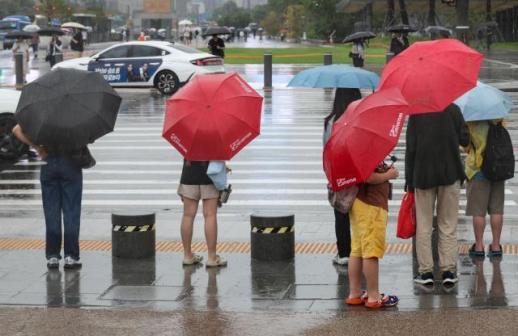 Rain eases South Gyeongsang drought but triggers landslide alerts SEOUL, August 16 (AJP) - South Gyeongsang province saw as much as 114.5 millimeters of rain on Sunday, easing a punishing stretch of heat and drought, even as torrential downpours in mountainous areas prompted heightened landslide warnings and scattered flooding. The Korea Meteorological Administration said the heaviest accumulation as of 3 p.m. was recorded at Geumnam in Hadong at 114.5 mm, followed by 99.5 mm on Mount Jiri in Sancheong and 92.5 mm in Hadong, with most key sites logging about 40 to 100 mm. A heavy rain warning was in effect for Namhae, Sacheon, Goseong, Geoje and Tongyeong, with a lesser advisory covering the rest of the province. Farms and reservoirs strained by falling water levels and stunted crops were expected to gain substantial relief from the rain. With more than 250 mm forecast for parts of Mount Jiri, the Korea Forest Service raised its landslide alert for the province, and disaster response headquarters shifted to emergency operations, tightening patrols of steep slopes and mountain valleys and clearing out campers. The Gyeongsangnam-do Provincial Fire Headquarters said 13 incidents were reported across the province. A pile of rocks collapsed behind a temple in Hadong at 8:44 a.m., a utility pole toppled in Uiryeong at 9:05 a.m., and a basement flooded at a supermarket in Gimhae around 12:22 p.m., prompting drainage crews to respond. The weather agency forecast a further 150 to 250 mm or more through Sunday, concentrated along the southern coast and near Mount Jiri. No casualties were reported. AJP Takeaways • South Gyeongsang province recorded as much as 114.5 mm of rain on Saturday, easing weeks of heat and drought that had strained farms and reservoirs. • The Korea Forest Service raised its landslide alert to "caution" as more than 250 mm was forecast for parts of Mount Jiri. • The provincial fire service reported 13 weather-related incidents, including a rockslide and a toppled utility pole, but no casualties. 2026-08-16 15:54:38
-
 Chey seeks stock-cash mix in $666 million divorce, ex-wife holds out for cash SEOUL, August 16 (AJP) - SK Group Chairman Chey Tae-won balked at a court order to hand his former wife 944 billion won ($666.3 million) in cash because the two sides could not agree on how the record divorce settlement should be paid. Chey, 65, proposed settling part of the award with SK shares alongside cash, but Roh Soh-yeong, 65, the director of the Art Center Nabi and daughter of a former South Korean president, insisted on the full amount in cash, the legal sources said Sunday. The impasse pushed the chairman of the country's second-largest conglomerate to lodge a fresh appeal with the Supreme Court on Aug. 14, one minute before the midnight deadline. Chey had been prepared to accept the July 24 remand ruling and close a legal battle that has dragged on for more than nine years, according to sources. But he ran into trouble raising nearly 1 trillion won within about three weeks. He weighed selling part of his SK holdings, yet feared that a controlling shareholder dumping a large block of shares would rattle the stock price and the group's governance structure. To bridge the gap, Chey offered to blend cash with stock, pledging to cover any shortfall should the share price fall while waiving any claim to gains if it rose. Roh's side rejected the offer and demanded strict compliance with the ruling. Facing 5 percent annual interest from the day after the judgment became final — about 130 million won a day — Chey used the re-appeal to stave off the mounting charge while he hunts for a workable payment plan, analysts said. The court filing fee alone for contesting the full sum is estimated in the tens of billions of won. Chey's lawyers are expected to argue that the appellate court misapplied the law in fixing both the division ratio and the size of the award. The court valued his SK shares as of April 16, 2024, the close of arguments in the divorce trial, yet still factored in a subsequent surge — from 160,000 won to 858,000 won — in setting Roh's share at one-third, a point his side calls contradictory. SK stock has since slid more than 30 percent to around 500,000 won. AJP Takeaways • The dispute between SK Group Chairman Chey Tae-won and Art Center Nabi Director Roh Soh-yeong is no longer over the size of the 944 billion won ($680 million) divorce award but over its form of payment, with Chey resisting a full cash settlement over concerns about liquidity and his grip on holding company SK Inc. • Chey filed his appeal with the Supreme Court of Korea one minute before the midnight deadline on Aug. 14, 2026, staving off 5 percent annual interest of about 130 million won a day while he seeks a workable payment plan; the filing fee alone for contesting the full sum is estimated in the tens of billions of won. • Chey's lawyers are expected to argue that the Seoul High Court, in its July 24, 2026 remand ruling, misapplied the law by valuing his SK Inc. shares as of April 16, 2024, yet still factoring a later price surge into Roh Soh-yeong's one-third share — a share price that has since fallen more than 30 percent to around 500,000 won. 2026-08-16 14:04:34
-
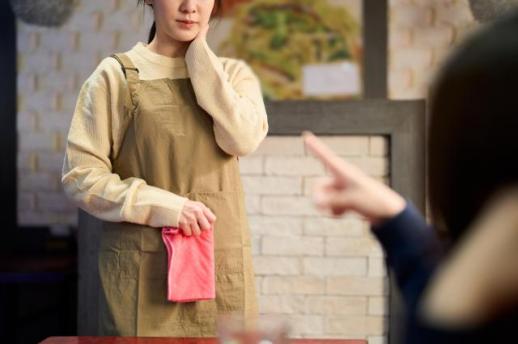 Most workers see bias against fixed-term staff, survey finds SEOUL, August 16 (AJP) - About 80 percent of South Korean workers believe discrimination exists between fixed-term and permanent employees, according to a survey released on Sunday, underscoring persistent tensions in the country's labor market as the government weighs loosening rules on non-regular hiring. The civic group Gabjil 119 said 80.4 percent of respondents to a poll conducted between June 1 and 7 said such discrimination was present. The survey, carried out by Global Research, canvassed 1,000 workers nationwide aged 19 and older. Temporary workers, at 84.6 percent, and those in their 50s, at 86.5 percent, were the most likely to perceive bias. Awareness of discrimination climbed steadily with age, rising from 72.1 percent among workers in their 20s to 79.8 percent for those in their 40s, suggesting the perception sharpens as careers lengthen. Nearly half of respondents, or 48.4 percent, doubted that a government "fairness allowance" could close the wage gap. About two-thirds, or 65.6 percent, said fixed-term workers could not freely exercise legal entitlements such as maternity and parental leave or the reporting of workplace harassment, while 64.2 percent said they could not join or form a union without repercussions. Gabjil 119 said its counseling hotline had fielded numerous complaints, including verbal abuse over a worker's appearance or alma mater, threats not to renew contracts, and denials of maternity leave. "Discrimination against fixed-term workers is not merely a wage-gap issue but a structural problem that makes it hard for workers to assert their rights," the group said. The organization urged the government to scrap a proposed special act on so-called mega special zones that would extend the maximum period for hiring fixed-term workers to four years from the current two, a measure it argued would entrench precarious employment. AJP Takeaways • In a survey of 1,000 South Korean workers conducted in June 2026, 80.4 percent said discrimination exists between fixed-term and permanent employees, with temporary workers and those in their 50s reporting the highest awareness. • About two-thirds of respondents said fixed-term workers cannot freely exercise legal rights such as maternity leave, parental leave, or union membership, which Gabjil 119 described as a structural barrier rather than a simple wage gap. • Gabjil 119 called on the government to withdraw the proposed Special Act on the Designation and Management of Mega Special Zones, which would extend the maximum fixed-term employment period to four years from two — a measure the Labor Ministry outlined to ruling-party lawmakers in late July 2026 but has not yet finalized as legislation. 2026-08-16 13:05:29
-
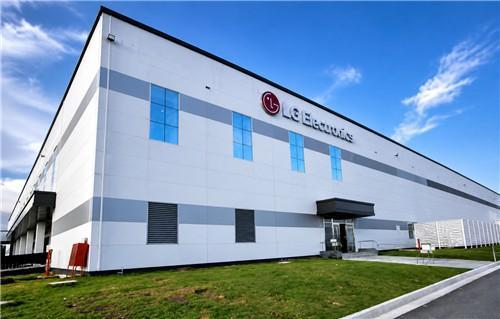 LG Electronics opens second Brazil plant to press Global South push SEOUL, August 16 (AJP) - LG Electronics has begun production at a new home-appliance plant in Brazil, deepening its drive into the Global South as the South Korean group leans on emerging markets to offset softening demand in the developed world. The factory in Parana state started operations on Thursday, the company said Sunday, becoming its second production base in Brazil after the Manaus plant established in the Amazonas state in 1996. The site can turn out about 600,000 refrigerators a year. The plant runs on a smart-factory system built around artificial intelligence and industrial robots, using vision-AI inspection and digital-twin technology to detect faults on the line before they arise, while multi-joint robots cut manufacturing costs and improve worker safety. The refrigerators are tailored to Brazilian homes, carrying a dual-voltage function suited to a grid that runs at 127 volts in some regions and 220 volts in others, along with sterilization and rapid-cooling features aimed at the country's hot, humid climate and home-party culture. LG plans to use Parana as an export hub reaching Argentina, Uruguay and other South American markets. "Building on the expanded capacity from the new Parana plant, we will secure stable supply and offer locally tailored appliances to raise our standing in Brazil and across Latin America," said Baek Seung-tae, head of LG's HS division. AJP Takeaways • LG Electronics has brought its second Brazilian plant online, shifting refrigerators for the region from imports to local assembly and shortening its supply lines into Latin America. • The Parana site anchors a "Global South" strategy — premium goods for developed markets, volume-zone products for emerging ones — after revenue across India, Brazil and Saudi Arabia rose more than 20 percent last year. • For Korea's flagship appliance maker, the plant is as much a hedge against saturated Western demand as a beachhead for exports to Argentina, Uruguay and beyond. 2026-08-16 10:37:47