

Journalist
Kim Dong-young김동영
davekim0807@ajupress.com
ReporterSamsung Biologics, CJ CheilJedang, LG Chem, Celltrion, Naver, Krafton, Nexon, Hyundai Mobis etc. & energy, game, food, bio, petrochemical, AI
Kim Dong-young is a bilingual journalist at AJU Press (AJP), covering Korean tech, energy, and bio/pharma.
He reports from the field at events like CES and APEC, runs AJP's YouTube channels,
and is pursuing a master's at Sogang's MOT program. "I try everything in this AI era that can improve yet preserve the facts. Journalism still serves as my core."
He reports from the field at events like CES and APEC, runs AJP's YouTube channels,
and is pursuing a master's at Sogang's MOT program. "I try everything in this AI era that can improve yet preserve the facts. Journalism still serves as my core."
Latest by Kim Dong-young
-
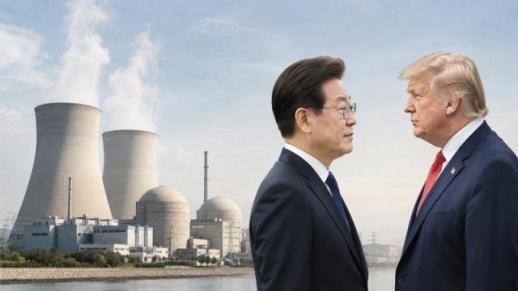 Westinghouse stake report exposes US-Korea nuclear divide SEOUL, August 26 (AJP) - U.S. President Donald Trump has hardly been shy about expressing displeasure over the slow progress in Seoul's execution of its pledged $350 billion investment commitment, and the latest pressure involves the nuclear reactor business. Seoul has denied a report that Washington proposed jointly acquiring an equity stake in Westinghouse Electric, even as the Trump administration presses to draw Korean capital and construction muscle into a sweeping revival of American nuclear power. The Ministry of Trade, Industry and Energy said Tuesday that the claim that the two countries would co-invest to buy into the U.S. reactor maker "is not true." It pushed back against reports that the Pennsylvania-based company could become part of the allies' strategic investment program. State nuclear operator Korea Hydro & Nuclear Power (KHNP) also kept its distance. "We have nothing to say about this matter," a company spokesperson said. Even if Korea were to participate in such a venture, the spokesperson said, it would not necessarily mean abandoning the homegrown APR1400 reactor model used at the Barakah nuclear power plant in the United Arab Emirates, South Korea's first nuclear export project. "It would be a structure where KEPCO leads and KHNP takes part," the spokesperson added, referring to Korea Electric Power Corp. (KEPCO), the state utility and KHNP's parent company. KEPCO separately declined to comment. Investors nevertheless welcomed the prospect of deeper Korean participation in America's nuclear expansion, sending shares of nuclear-related companies sharply higher. Shares of Korea Electrical Power Industrial Development ended Wednesday 12.72 percent higher at 13,270 won ($9). KEPCO E&C rose 13.63 percent to 123,400 won and KEPCO gained 6.42 percent to 34,800 won, well above the main KOSPI's gain of 0.97 percent. Business dailies in Seoul reported this week that the ministry and KEPCO had received a U.S. proposal and were weighing possible investment structures and financing, with part of South Korea's pledged U.S. investment cited as a potential source of funds. The reports come as Washington seeks to revive a domestic nuclear industry that has struggled to build large reactors at scale even as electricity demand surges from artificial intelligence data centers and advanced manufacturing. Westinghouse is controlled by Brookfield alongside Canadian uranium producer Cameco, which owns 49 percent. The U.S. government struck a strategic partnership with Brookfield and Cameco last October aimed at supporting at least $80 billion in new Westinghouse reactor construction in the United States. The arrangement gives Washington a path to a substantial financial interest in Westinghouse if the reactor program proceeds. Once specified investment conditions are met, the U.S. government would receive a participation interest tied to Westinghouse cash distributions. Washington could also require an initial public offering if the interest has vested and Westinghouse is expected to command a valuation of at least $30 billion by January 2029, with the participation interest convertible into a warrant under the agreement's formula. The structure gives the Trump administration a direct financial incentive to accelerate Westinghouse reactor deployment. Korea could supply something Washington has found harder to reproduce – the capacity to build large nuclear plants at scale. One industry insider who asked not to be named said U.S. utilities remain reluctant to shoulder the financing and construction risks of a new wave of large reactors, giving Washington an incentive to bring Korean capital into the equation. "The utilities find it burdensome to launch new projects, so the idea is that we put up the seed money," the insider said. Under such a structure, Korean companies could help finance and build the reactors and, depending on the equity terms, secure a lasting share of the returns generated by the projects. Whether that pays off for Seoul would depend heavily on the size of Korea's stake and how deeply Korean suppliers are allowed into the supply chain. Some industry experts argue that an equity investment would give Korea little strategic value that it does not already possess. Westinghouse absorbed Combustion Engineering, the U.S. company whose pressurized-water technology Korea licensed decades ago as it developed its own nuclear reactor program. One expert argued that decades of technology transfer and domestic development mean an equity investment would offer Korea relatively little additional technical know-how. "We already received all the technical data — we simply don't hold the property rights to it," the expert said. "There is nothing new to gain." The concern is that Korea could provide capital and construction expertise without gaining corresponding control over intellectual property or project leadership. If Washington also acquires a financial interest in Westinghouse, the expert said, U.S. influence over the company could further complicate Korea's ability to use and export its own technology freely, potentially leaving Seoul "to put up the money and end up subordinate to the United States." A Westinghouse stake would not necessarily open the overseas nuclear markets Korea most wants to penetrate. KEPCO, KHNP and Westinghouse reached a global settlement in January 2025 ending a bruising intellectual-property dispute over Korean reactor exports. The detailed terms remain confidential. Korean media have reported that the agreement restricts KEPCO and KHNP from independently pursuing certain projects in North America and Europe. Neither side has publicly disclosed the detailed geographic or commercial restrictions. Experts said buying into Westinghouse would not automatically remove obligations contained in the existing settlement. That uncertainty sits at the heart of Seoul's calculation. Westinghouse has formidable strength in reactor design, licensing and intellectual property, but the United States has struggled to reproduce the construction capacity needed to deliver large nuclear projects on time and at predictable cost. Korea's record runs in the opposite direction. KEPCO and KHNP delivered the four-reactor Barakah project in the United Arab Emirates, establishing South Korea as one of the few democratic countries with recent experience building a large nuclear complex from the ground up. Korea's flagship APR1400 also received U.S. Nuclear Regulatory Commission design certification in 2019. Washington therefore has reason to court both Korean money and Korean execution. The U.S. Commerce Department, which helped broker the broader Westinghouse framework, said it "continues to progress the President's agenda of promoting new Nuclear Power projects, including through the Japanese and Korean trade deals," adding that it was "in discussions with all relevant parties." Even if discussions advance, the two sides could remain divided over who leads the projects and which reactor is built. Washington's nuclear expansion is centered on Westinghouse's 1.1-gigawatt AP1000, including reactors aimed at meeting rising electricity demand from AI data centers and other power-intensive industries. Seoul has its own interest in expanding the global footprint of the larger APR1400 and preserving a leading role for KHNP and the Korean nuclear supply chain. Korea's misgiving is that a U.S.-designed and U.S.-led structure could leave it shouldering a significant share of the financing and construction risk while Westinghouse retains control over reactor technology and project leadership. The potential upside is access to what could become one of the world's largest nuclear construction markets and a long pipeline of orders for Korean engineering, equipment and construction companies. The trade-off therefore goes well beyond the price of a Westinghouse stake. Washington needs capital and construction capacity to turn its nuclear revival from policy into actual reactors. Seoul must decide how much of both it is willing to commit if Korean companies remain supporting players rather than equal partners. AJP Takeaways • South Korea denied reports that Washington proposed a joint investment in Westinghouse, but the controversy exposes deeper differences over financing, reactor technology and project leadership. • The United States needs Korean capital and construction expertise to accelerate its nuclear revival, while Seoul wants sufficient control and commercial returns before taking on large financing and execution risks. • A Westinghouse stake would not automatically expand KEPCO and KHNP's freedom in overseas markets because the detailed terms of their confidential 2025 settlement with Westinghouse remain in force. 2026-08-26 15:05:57
 -
 Seoul to cut power bills for chip and datacenter host regions SEOUL, August 26 (AJP) - South Korea's industrial users will pay electricity rates that differ by region, with bills in the southern provinces tapped to host data centers and chip clusters falling by as much as 10 percent under a plan to draw advanced manufacturing away from the overcrowded capital area. The Ministry of Climate, Energy and Environment and Korea Electric Power Corporation (KEPCO) presented the regional pricing scheme at a Wednesday public hearing in western Seoul, dividing the country into four broad zones with a new "regional adjustment charge" folded into industrial tariffs. Under the plan, southern regions would see industrial rates fall by 13 to 18 won ($0.009 to $0.013) per kilowatt-hour, or about 7 to 10 percent against last year's average industrial selling price of 181.9 won. The central zone of Chungcheong and Gangwon would drop 5 to 8 percent, and the northern capital area 3 to 8 percent. The power differentiation comes as Seoul presses aggressively with its so-called Three Megaprojects envisioning to create chip, physical AI and datacenter belt beyond the capital region. Honam and the southwest are being positioned as Korea’s second memory semiconductor production base. Chungcheong is being developed as a hub for HBM, advanced packaging, displays, batteries, and bio manufacturing. Yeongnam and Daegyeong are being assigned to host bases for physical AI, robotics, materials, components, equipment, power semiconductors, and manufacturing conversion. AI data centers are intended to connect these regional clusters into a national compute network. Rates in the southern capital area, including southern Seoul and southern Gyeonggi, would stay essentially unchanged, with the adjustment charge set between zero and a one-won cut. The government aims to break a one-directional structure in which power generated outside the capital is funneled through the grid into Seoul and its surroundings. About 40 percent of the electricity produced in South Korea is consumed in the capital area, which drew 40.6 percent of national power sales last year. That strain is set to deepen as a semiconductor cluster rises in Yongin, south of Seoul, where Samsung Electronics and SK hynix fabrication plants are expected to require 14 gigawatts by 2041, roughly the output of 10 large nuclear reactors. Currently, the capital area's power self-sufficiency stands at about 66 percent. The plan has drawn concern that rates could differ across a single road, stoking friction between neighboring districts, and that basing cuts on self-sufficiency rewards areas already benefiting from nearby plants. Officials in cities such as Daegu warned that lowering rates for power-rich regions "could amount to double benefits that undermine fairness between regions," according to a March review report to the National Assembly. Even the deepest discounts would leave industrial rates above China's, raising doubts about the plan's effectiveness while adding to the burden on KEPCO, which forecasts about 2.8 trillion won in forgone revenue. To offset that, the government will introduce location based marginal pricing on wholesale power, buying more cheaply from generators outside the capital. The government and KEPCO plan to complete the procedures for the regional pricing scheme within the year. AJP Takeaways • South Korea's Ministry of Climate, Energy and Environment and Korea Electric Power Corportaion unveiled a regional electricity pricing plan that would cut industrial power rates by up to about 10 percent in southern regions while leaving the southern capital area essentially unchanged. • Southern industrial rates would fall 13 to 18 won per kilowatt-hour, measured against an average industrial selling price of 181.9 won per kilowatt-hour. • The plan aims to ease the capital area's concentration of power demand, which accounted for 40.6 percent of national electricity sales last year, though even discounted rates would remain above China's and cost KEPCO about 2.8 trillion won ($2.02 billion) in forgone revenue. 2026-08-26 14:45:55
 -
 Rebellions supplies AI chip racks to UK cluster SEOUL, August 26 (AJP) - Rebellions' neural processing units will power part of a UK government-backed AI research cluster, the South Korean chip maker's first entry into Europe's sovereign AI infrastructure market, under a supply deal for more than 100 computing racks disclosed Wednesday. The racks will run through a partnership with Callosum, a London-based AI compute startup that last week raised about $100 million in seed funding led by Atomico, with backing from the UK's Sovereign AI Fund. "The partnership with Callosum allows our chips to work alongside other specialized hardware, with different components handling different parts of an AI workload," said Rebellions Chief Executive Park Sung-hyun. Callosum was the fund's first disclosed equity investment. Founded in 2025 by two Cambridge University neuroscientists, Callosum develops software that routes AI workloads to the chips and models best suited to each task. Rebellions will join as Callosum's lead partner in Asia. The two companies are jointly designing a reference architecture that positions Rebellions' NPUs as inference-only hardware within Callosum's heterogeneous computing platform, allowing customers to deploy NPU-based infrastructure without separate optimization work. Rebellions said the initial supply of more than 100 racks would mark the first phase of the project, with further shipments expected in later stages as it seeks to accelerate its push into sovereign AI markets across Britain and Europe. The European breakthrough comes at a pivotal time for Rebellions, one of South Korea's most closely watched unlisted semiconductor companies. Founded in 2020 and based in Bundang, south of Seoul, Rebellions develops data-center AI accelerators designed primarily for inference, the process of running trained AI models to generate answers and other outputs. The company has raised roughly $850 million from investors including SK hynix, Samsung Ventures and Arm, as well as the South Korean government, and was most recently valued at around $2.3 billion. Rebellions has been preparing for an eventual stock-market listing rather than publicly pursuing a sale. Chief Financial Officer Shin Sung-kyue said last year that an initial public offering remained the company's "master plan." The company raised more than $400 million in a pre-IPO financing round in March, when it also introduced two rack-scale AI infrastructure products, RebelRack and RebelPod. It confirmed its CEO Park has met with Nvidia Chief Executive Jensen Huang at Nvidia's Santa Clara headquarters last week without disclosing the details. AJP Takeaways • Rebellions will supply more than 100 NPU computing racks to a UK government-backed AI research cluster, its first entry into Europe's sovereign AI infrastructure market. • The racks run through Callosum, a London startup that raised about $100 million led by Atomico and was the first disclosed investment of the UK's Sovereign AI Fund. • Rebellions' ATOM NPUs pair with Callosum's vendor-neutral routing layer, positioning the Korean chipmaker against Nvidia's dominance in inference hardware. 2026-08-26 11:54:28
 -
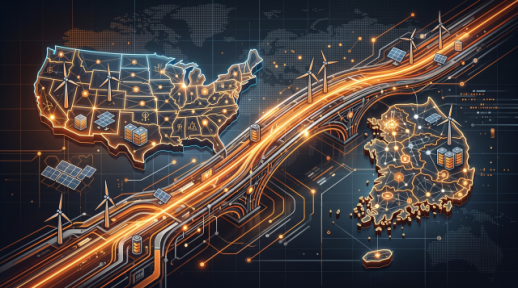 South Korea offered 10 energy infrastructure projects by US SEOUL, August 26 (AJP) - The United States has invited South Korean companies to join a range of investment-development projects to build energy infrastructure and fertilizer plants on American soil, South Korea's transport ministry said. The Ministry of Land, Infrastructure and Transport said Wednesday it would host about 40 executives from construction firms and trading houses on Thursday at a briefing to showcase the opportunities and gauge each company's appetite for taking part. The U.S. Department of Energy first floated the proposal in January, during a visit to Washington by Minister of Land, Infrastructure and Transport Kim Yun-duk. One project, a lithium and boron plant in Nevada, has since taken concrete shape, with First Vice Minister Kim Yi-tak signing a memorandum of understanding on participation during a July trip to the United States. The ministry said it would present about 10 projects proposed by Washington through high-level talks between the two governments. All are large-scale, long-running ventures drawing in a mix of stakeholders under an investment-development model. Rather than a central government awarding contracts to firms, the arrangement sees the two states jointly source projects and match companies to them — a novel form of government-to-government cooperation, the ministry said. The proposals include a $1.9 billion potassium chloride plant in Michigan and a $2 billion compressed-air energy storage facility in California. Seoul plans to link interested firms with lead developers, financial institutions and public agencies, marshalling a "Team Korea" to press their case abroad. In June, the ministry and its partners, alongside Samsung Heavy Industries, clinched a 4 trillion won ($2.89 billion) floating LNG plant project in Louisiana under the same banner. "Swiftly connecting cooperative projects unearthed through inter-governmental diplomacy to our companies is the key to translating our support missions into visible results," said Kim Seok-ki, director general for construction policy at the ministry, pledging to weave in strategic financing to sharpen firms' chances of winning orders. AJP Takeaways • The U.S. has invited South Korean firms to join about 10 energy infrastructure and fertilizer projects on American soil, South Korea's transport ministry said on August 26, 2026. • The projects, sourced government-to-government rather than through tenders, include a $1.9 billion potassium chloride plant in Michigan and a $2 billion compressed-air energy storage facility in California. • A Nevada lithium-boron plant reached a memorandum of understanding in July 2026, the first of the projects to do so. 2026-08-26 11:31:25
 -
 LG CNS, Naver Cloud to cool Korea's biggest AI factory SEOUL, August 26 (AJP) - LG CNS announced Wednesday that it will build next-generation liquid-cooling infrastructure with Naver Cloud at its Samsong data center, moving to capture an early lead in the fast-emerging market for AI-ready computing facilities. The rollout comes as generative AI drives surging power draw and heat from high-performance graphics processing units, straining the conventional air-cooling systems that have long kept server rooms in check. To answer that, LG CNS will deploy direct-to-chip (DTC) cooling — a method that fastens coolant-fed plates onto GPU chips to draw heat away far more efficiently than air. The infrastructure is designed to run Nvidia's forthcoming Vera Rubin GPUs, owned by the state-backed National IT Industry Promotion Agency, which Naver Cloud will operate. Vera Rubin racks are expected to deliver about 3.3 times the inference performance of Nvidia's current Blackwell Ultra generation. With a total power capacity of 80 megawatts, the Samsong facility is poised to become one of the country's largest AI factories. The technology addresses a hard physical limit as air cooling typically tops out at 20 to 30 kilowatts per rack, yet high-density GPU server racks now exceed 200 kilowatts, making liquid cooling a prerequisite rather than a luxury. "Data center cooling technology is becoming a core competitive edge in AI service quality and operational efficiency," said Cho Heon-hyeock, an executive at LG CNS' data center business division, adding the company would keep building infrastructure to underpin the growth of Korea's AI ecosystem. AJP Takeaways • LG CNS said on Aug. 26, 2026, that it will build direct-to-chip liquid-cooling infrastructure with Naver Cloud at its Samsong data center, an 80-megawatt facility set to rank among South Korea's largest AI factories. •The system is designed to run Nvidia's next-generation Vera Rubin GPUs, owned by the state-backed National IT Industry Promotion Agency and operated by Naver Cloud, with construction and testing targeted for completion in 2027. •Liquid cooling is becoming essential as high-density GPU racks now exceed 200 kilowatts, far beyond the 20-to-30-kilowatt ceiling of air cooling. 2026-08-26 10:41:22
 -
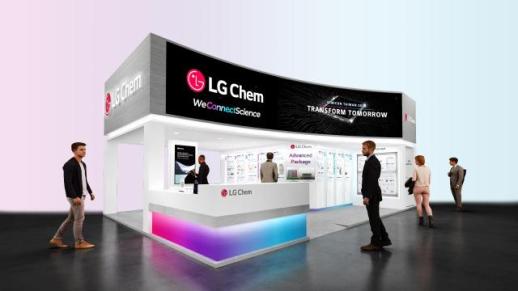 LG Chem targets AI chips at Taiwan expo SEOUL, August 26 (AJP) - LG Chem will bring a lineup of advanced packaging and power semiconductor materials for artificial intelligence chips to SEMICON Taiwan 2026, positioning its materials business for a market that AI demand is expanding rapidly. The company said Wednesday it will exhibit solutions for high-bandwidth memory (HBM) and other AI chips at the three-day show, which runs from Sept. 2 to 4 at the Taipei Nangang Exhibition Center. SEMICON Taiwan is one of the world's leading trade fairs for semiconductor technology, drawing chipmakers, outsourced assembly and test firms, and substrate and packaging players. LG Chem will display materials targeting the expansion of the AI chip and high-performance computing markets. Its Advanced Package Zone will feature copper clad laminate, glass core solutions, build-up film and dry film solder resist, among other materials used in cutting-edge packaging processes. A separate Power Package Zone will highlight conductive sintering paste, thermal interface materials and copper metal foam-based thermal management devices, which the company said help boost chip performance by improving heat control in power semiconductors for AI data centers. Through the exhibition, LG Chem aims to deepen ties with major chipmakers and forge new projects, accelerating growth in its semiconductor materials business as demand for high-performance materials climbs. "Customer demand for high-performance materials is rising as the AI chip and advanced packaging markets expand," LG Chem Chief Executive Kim Dong-choon said. "We will broaden cooperation with semiconductor clients on the strength of a differentiated materials portfolio and actively seize growth opportunities in the future chip market." AJP Takeaways • LG Chem is pushing deeper into semiconductor materials, using SEMICON Taiwan to court chipmakers, OSAT firms and packaging players for its AI-chip and advanced-packaging portfolio. • The lineup spans HBM-related advanced packaging (copper clad laminate, glass core, build-up film, dry film solder resist) and power-chip materials (sintering paste, thermal interface materials, copper metal foam), targeting the AI and HPC buildout at data centers. • The move fits a broader race among Korean chemical makers to convert materials expertise into higher-margin chip-supply-chain revenue as AI demand reshapes the market. 2026-08-26 08:33:01
 -
 S. Korea to launch national humanoid robot challenge SEOUL, August 25 (AJP) - South Korea will select a flagship humanoid robot platform through a national competition as it seeks a foothold in a field increasingly seen as AI's next frontier, the science ministry said. The Ministry of Science and ICT unveiled Tuesday the "Next-X Humanoid Challenge" at a meeting held to gather feedback on its AI humanoid roadmap at the Korea Institute of Science and Technology in Seoul. Domestic robots will compete through a public call and evaluation to win designation as a national-champion platform. The initiative falls under K-Moonshot, the government's program to accelerate science and technology through AI, and aims to secure a world-class Korean humanoid platform within three years. At the meeting, program director Yeo Jun-gu presented the draft roadmap and oversaw the appointment of a steering committee. Participants discussed developing core humanoid technologies and securing data, building cooperation among industry, universities and research institutes, and linking research outcomes to commercialization and overseas expansion. "The next big wave after AI will be physical intelligence that judges and moves on its own in the physical world, and the humanoid is its core platform," Yeo said. He added that Korea must nurture a technologically sovereign humanoid as a national strategic asset to counter the crisis of a shrinking population and safeguard future competitiveness. The ministry said it would refine the roadmap based on the feedback and present it as an agenda item at a ministerial science and technology meeting next month. AJP Takeaways • South Korea's science ministry will launch the "Next-X Humanoid Challenge" in 2027, a competition to select a national flagship humanoid robot platform through a public call and evaluation. • The challenge is part of K-Moonshot, the government's AI-driven research acceleration program, which targets a world-class Korean humanoid platform within three years. • The Ministry of Science and ICT plans to refine its AI humanoid roadmap and submit it to a ministerial science and technology meeting in September. 2026-08-25 14:44:30
 -
 Korean games chase first Gamescom win since 2022 SEOUL, August 25 (AJP) - South Korea heads into Gamescom 2026 with two award contenders and its biggest industry push in years, seeking to end a four-year trophy drought since Neowiz's "Lies of P" swept the show in 2022. Pearl Abyss's open-world action title "Crimson Desert" is nominated for Most Epic and Best PC Game, while "Age Twisters," a two-player adventure developed by Krafton subsidiary Piccolo Studio, is competing for Most Wholesome. The nominations give Korean developers another shot at a Gamescom award after several years of near misses. "Lies of P" became the first Korean game to win three Gamescom awards in 2022, taking Best Action Adventure Game, Best Role Playing Game and Most Wanted Sony PlayStation Game. No Korean title has won since. "Crimson Desert" came close in each of the past two years. It received two nominations in 2024 and four in 2025 but failed to take home a trophy. Competition is stiff again this year. "METRO 2039," from 4A Games and Deep Silver, leads the field with five nominations. "Alien: Isolation 2" and "Denshattack!" have four each, while Sega titles collected eight nominations in total. Fans and visitors can vote for nominees in the Arts and Platform categories from Wednesday through Thursday. Winners will be announced Friday at the Gamescom award show. The awards race comes as Korean game companies expand their presence at Gamescom beyond their traditional strength in online and mobile gaming and push more heavily into PC and console titles for global markets. Krafton is bringing five playable titles to its own booth, including "Age Twisters," "NO LAW," "Project ZETA" and "TARAE: The Unbound." The company will also unveil an unreleased title from PUBG Studios based on the PUBG intellectual property. NC is using Gamescom's Opening Night Live to showcase "AION 2," open-world shooter "CINDER CITY" and a new title under the working name "Project Bonfire." The company plans to reveal the official title of Project Bonfire during the event. "AION 2" is scheduled to begin global early access on Sept. 30, while ArenaNet's "Guild Wars 3" will be presented in the business-to-business exhibition area. Pearl Abyss is putting "Crimson Desert" in front of visitors at Samsung Electronics' booth, where the game will run on the Odyssey G8. Samsung describes the 32-inch display as the world's first 6K gaming monitor. Smaller Korean developers are also seeking a foothold overseas through a national pavilion backed by the Korea Creative Content Agency (KOCCA), giving independent and mid-sized studios access to buyers and publishers at the show. The bigger Korean presence comes as Gamescom itself heads for another record year. More than 1,600 companies from 67 countries are participating in the 2026 event, while its 233,000 square meters of exhibition space have been fully booked for the first time. About 70 percent of exhibitors are based outside Germany. Last year's Gamescom drew 357,000 visitors from 128 countries. Artificial intelligence is also taking a more prominent place in the industry's discussions this year. Gamescom dev introduced dedicated tracks for AI in Gameplay and AI in Production, covering uses of artificial intelligence inside games as well as during development. The focus comes as adoption of generative AI spreads even while resistance among game developers grows. The 2026 State of the Game Industry survey found that 36 percent of industry professionals use generative AI in their work. But 52 percent said the technology is having a negative impact on the industry, up from 30 percent a year earlier. Concerns have also spread to digital storefronts. An analysis of more than 53,000 Steam releases found that 30.8 percent of new games released so far this year carried disclosures indicating the use of artificial intelligence, adding to concerns that low-cost AI production could make it harder for smaller studios to stand out. For Korean publishers, however, the immediate test in Cologne is more conventional: whether their expanding global push can finally produce another Gamescom trophy. The main exhibition runs from Aug. 26 to 30 at Koelnmesse in Cologne. The answer to Korea's four-year awards drought comes Friday. AJP Takeaways • South Korea is seeking its first Gamescom award since Neowiz's "Lies of P" won three trophies in 2022, with "Crimson Desert" and "Age Twisters" nominated this year. • Krafton, NC and Pearl Abyss are bringing a broader lineup of PC and console titles to Gamescom 2026 as Korean game makers accelerate their push into global markets. • Gamescom 2026 will draw more than 1,600 exhibitors from 67 countries, while artificial intelligence is emerging as a major industry theme amid growing developer resistance to generative AI. 2026-08-25 14:03:40
 -
 Heat wave fuels Korea food delivery apps to record SEOUL, August 25 (AJP) - Payments on South Korea's four leading food delivery apps climbed to an all-time monthly high in July as a punishing heat wave kept consumers indoors. According to Tuesday data from market tracker WiseApp Retail, combined estimated payments on Baemin, Coupang Eats, Yogiyo and Ttaenggyeoyo reached 3.28 trillion won ($2.37 billion) last month, up 18 percent from 2.79 trillion won a year earlier. The figure eclipsed the previous record of 3.20 trillion won, set only in May. Some 24.41 million people ordered through the platforms in July, spending an average of 134,747 won each across 5.8 transactions, WiseApp said. The average single order came to 23,203 won. The tracker attributed the growth to sweltering temperatures reinforcing a seasonal surge in dining-out and holiday demand, driving shoppers to their phones rather than to grocery aisles or restaurants. Aggressive free-delivery offers, discount coupons and membership perks further lowered the cost of ordering in. Baemin remained the most-used app, with 23.02 million monthly active users, followed by Coupang Eats at 13.13 million, Yogiyo at 3.55 million and Ttaenggyeoyo at 2.49 million. Coupang Eats posted record highs in both payments and users, sharpening a price war fought largely over shipping fees. The survey draws on a sample of Koreans' credit and debit card spending and app usage across Android and iOS devices. It excludes bank transfers, cash and gift-certificate payments, so the estimates may differ from companies' actual sales. AJP Takeaways • South Korea's four main delivery apps — Baemin, Coupang Eats, Yogiyo and Ttaenggyeoyo — took a combined 3.28 trillion won ($2.37 billion) in estimated July payments, an all-time monthly high, according to WiseApp Retail. • The total rose 18 percent from 2.79 trillion won a year earlier and topped the prior record of 3.20 trillion won set in May, with 24.41 million people ordering at an average of 134,747 won each. • Coupang Eats set record highs in both payments and users, reaching 13.13 million monthly active users against market leader Baemin's 23.02 million, as free-delivery competition intensified. 2026-08-25 13:21:11
 -
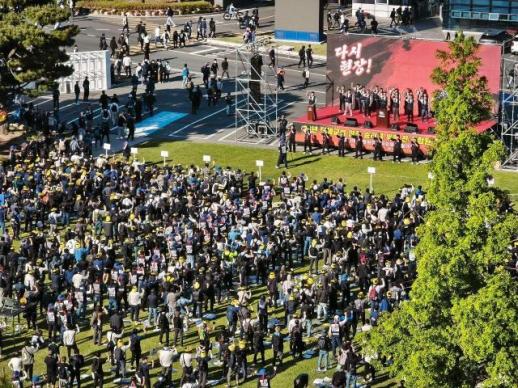 Hyundai Motor reaches tentative wage deal after 60 hours of strikes SEOUL, August 25 (AJP) - Hyundai Motor and its labor union reached a tentative wage agreement, granting workers bonuses of more than 400 percent of monthly pay plus 12.7 million won ($9,189), ending a two-year run of strikes at South Korea's largest carmaker. The deal, reached after a two-day on Tuesday, 17th round of bargaining at the company's Ulsan plant, also lifts base monthly wages by 100,000 won and awards each worker 15 company shares, 500,000 won in welfare points and higher summer holiday allowances. It goes to a union vote on Aug. 31. Hyundai will hire 500 production workers, adding 200 in the second half of next year and 300 in 2028. The company agreed to withdraw all 10 damage claims and asset seizures it had filed against union members over past labor actions. Both sides deferred a contested demand to raise regular bonuses to next year's collective bargaining. They also agreed that any extension of the retirement age would take effect only if the law changes, without widening the wage-peak system that trims pay for older employees. The accord followed a bruising campaign of walkouts. The union struck repeatedly from July 13, beginning with daily two-hour stoppages, and staged an eight-hour full walkout on Aug. 21, its first company-wide strike in a decade. Cumulative strike time reached 60 hours. Because morning and afternoon shifts each walked out, production lines sat idle for 120 hours, disrupting output of 55,200 vehicles and causing accumulated revenue losses the industry estimates at more than 2.3 trillion won, based on average selling prices per car. "We have agreed to devote our full efforts to production and new vehicle launches in the second half, to swiftly contain the fallout from the strikes and resolve internal and external uncertainties to create an opportunity for a greater leap forward," the company and union said in a joint statement, 111 days after talks began on May 6. AJP Takeaways • Hyundai Motor and its union reached a tentative wage deal on Aug. 25 that includes performance bonuses of more than 400 percent of monthly pay plus 12.7 million won in cash, a 100,000-won base wage increase and 500 new production hires; union members vote on the agreement on Aug. 31. • The 2026 negotiations triggered 60 hours of cumulative strikes, including Hyundai Motor's first company-wide walkout in a decade on Aug. 21, idling production lines for 120 hours and disrupting output of 55,200 vehicles with estimated revenue losses above 2.3 trillion won. • Hyundai Motor agreed to drop all 10 damage claims against union members and deferred a disputed regular-bonus increase to 2027 bargaining, while both sides pledged joint responses to the shift toward physical AI and robotics in manufacturing. 2026-08-25 09:01:21