

Journalist
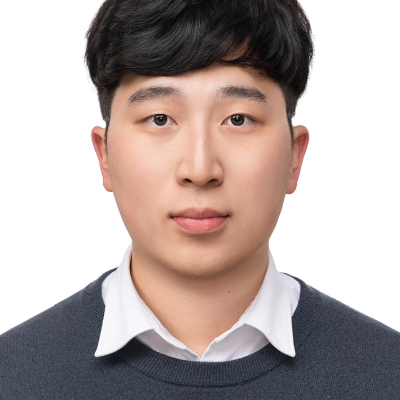
Kim Dong-young김동영
davekim0807@ajupress.com
ReporterSamsung Biologics, CJ CheilJedang, LG Chem, Celltrion, Naver, Krafton, Nexon, Hyundai Mobis etc. & energy, game, food, bio, petrochemical, AI
Kim Dong-young is a bilingual journalist at AJU Press (AJP), covering Korean tech, energy, and bio/pharma.
He reports from the field at events like CES and APEC, runs AJP's YouTube channels,
and is pursuing a master's at Sogang's MOT program. "I try everything in this AI era that can improve yet preserve the facts. Journalism still serves as my core."
He reports from the field at events like CES and APEC, runs AJP's YouTube channels,
and is pursuing a master's at Sogang's MOT program. "I try everything in this AI era that can improve yet preserve the facts. Journalism still serves as my core."
Latest by Kim Dong-young
-
 U.S. EV plants may lay "golden eggs" for Korean battery makers SEOUL, September 01 (AJP) - South Korea's battery industry, groomed to build on the EV boom, is hurriedly moving to ride a new power "golden goose" — data centers — anchored in the United States' drive to catch up with China in AI infrastructure. "Let data reign," U.S. President Donald Trump proclaimed Monday. "The only reason that communities throughout the U.S.A. should not want Data Centers is if they want to end up being backwards and poor," Trump wrote on Truth Social amid community opposition to power-hungry data centers. "If we kill the Golden Goose, you will only have yourselves to blame," he added. "China could not be happier with this anti Data Center movement." Washington has now made the infrastructure supporting that expansion a security asset, moving to screen foreign-made storage equipment from the U.S. grid. That gives South Korean battery makers an unusually strong opening. LG Energy Solution, Samsung SDI and SK On are among a relatively small group of non-Chinese producers combining global manufacturing scale, increasingly competitive lithium iron phosphate, or LFP, technology and, crucially, factories already operating in the United States. Those plants were largely built for an EV market that has lost momentum, leaving production capacity that can be redirected toward stationary storage just as AI data centers drive a surge in electricity demand. The U.S. factories also give Korean suppliers a potential advantage over Chinese rivals as Washington tightens scrutiny of foreign-made batteries and other equipment connected to critical power infrastructure. Trump signed Executive Order 14420 on Aug. 26, declaring a national emergency over the foreign supply of bulk-power equipment and naming battery energy storage systems, grid-connected inverters and transformers among the covered goods. Such equipment could carry "digital backdoors built into their systems" that would allow a foreign country to access them remotely, the order said, citing the mounting strain that data centers, artificial intelligence and defense production are placing on America's electricity supply. The administration intends to restrict new purchases of suspect foreign-made transformers, storage batteries, inverters and grid control systems and establish procedures for replacing equipment already installed. The direction poses a particular challenge for China, whose suppliers dominate the global LFP storage-cell market largely on cost. The One Big Beautiful Bill Act, enacted last year, also ties access to storage investment tax credits to reducing content linked to prohibited foreign entities, adding another incentive for U.S. developers to diversify their supply chains. "The U.S. government sees batteries for AI data centers and military drones as a core national security industry and will widen its support for critical mineral and battery supply chains," said Kim Hyun-soo, an analyst at Hana Securities. "Korean battery makers with U.S. production bases are expected to benefit." Their advantage is particularly significant because the pivot comes just as the market Korean battery makers originally built those factories to serve has slowed. Global electric-vehicle sales reached 11.5 million units in the first seven months of this year, up 4 percent from a year earlier, according to Benchmark Mineral Intelligence. North American sales fell 18 percent over the same period to 900,000 units, while China slipped 12 percent, leaving Europe as the only major market still expanding. Energy storage is moving in the opposite direction. SNE Research expects global demand for ESS batteries to expand from about 353 gigawatt-hours in 2024 to around 1,870 GWh in 2035, driven by renewable-energy deployment, grid stabilization and increasingly the enormous electricity requirements of AI data centers. For Korean battery makers, that creates a rare convergence: weaker EV demand is freeing capacity just as U.S. energy storage demand accelerates and Washington is making Chinese dependence increasingly difficult. EV plants find a second life SK On moved quickly. The company signed a contract with U.S.-based NeoVolta Power on Aug. 27, a day after Trump's executive order, covering 9 GWh of LFP pouch cells to be supplied between 2027 and 2031. The cells will be produced at SK On's Georgia plant and are worth about 1.5 trillion won ($1.09 billion) by industry estimates, equivalent to nearly half of the company's 20 GWh ESS order target for the year. LG Energy Solution entered this year with about 140 GWh of cumulative storage orders and booked more than 3 trillion won in new contracts during the first half, led by a 6 GWh deal with Michigan utility DTE Energy. The company said Monday it had also signed a 10-year binding offtake agreement with Smackover Lithium for 8,000 metric tons a year of battery-grade lithium carbonate from an Arkansas project. "By bringing both battery production and sourcing to the U.S., we will deliver competitive and sustainable products to our customers driving the global energy storage and EV markets," said Lee Kang-yeol, procurement center leader at LG Energy Solution. The local sourcing adds another layer to the company's positioning as Washington increasingly scrutinizes not only where batteries are manufactured but where their critical materials originate. LG Energy Solution has already accelerated the shift in its business mix. ESS accounted for about 10 percent of revenue last year but rose to 25 percent in the first half. The company is targeting 35 percent by December. Its Lansing, Michigan, plant began full operations in August as the company's seventh North American production site, putting more than 50 GWh of LFP capacity within reach by year-end. Samsung SDI is making a similar move. After signing U.S. ESS contracts worth more than 2 trillion won in December and about 1.5 trillion won in March, the company is converting part of its StarPlus Energy joint venture plant in Indiana and plans to begin LFP production there in the fourth quarter. The Korean companies therefore enter the storage boom with something difficult to replicate quickly: large battery plants already sitting on U.S. soil that can be repurposed from EV production toward ESS. Investors price in the pivot Investors have already begun pricing in the shift. Samsung SDI shares surged 48.13 percent in August and LG Energy Solution gained 19.62 percent, while SK Innovation, SK On's parent, rose 16.2 percent. The benchmark KOSPI increased 8.9 percent over the same period. Domestic demand could provide another outlet. The Korea Power Exchange is weighing a third centrally contracted storage auction that industry officials say could exceed 1 gigawatt, compared with about 560 megawatts in each of the first two rounds. Most capacity in the earlier auctions was awarded in South Jeolla Province. But the United States remains the bigger prize. AI data-center construction is creating enormous demand for generation, transmission and storage infrastructure just as Washington is seeking greater control over the equipment connected to the grid. For LG Energy Solution, Samsung SDI and SK On, that convergence provides a new home for capacity built during the EV investment boom while placing them among the few large-scale alternatives available as the United States tries to reduce Chinese exposure in critical power infrastructure. The next test comes from the U.S. Energy Department. Rules due Dec. 24 will define covered foreign entities, establish licensing procedures and set pre-qualified vendor lists that could ultimately determine which suppliers clear Washington's security screen. For Korean battery makers, the details will determine how far an EV-era manufacturing buildout can be turned into an advantage in the AI power race. AJP Takeaways • South Korean battery makers stand to benefit from tighter U.S. scrutiny of foreign grid equipment because LG Energy Solution, Samsung SDI and SK On already operate large-scale battery manufacturing bases in the United States. • Slowing EV demand is freeing capacity that Korean producers can convert to LFP energy-storage batteries just as AI data centers drive rapidly rising demand for electricity and grid storage. • Global ESS battery demand is projected to expand from about 353 GWh in 2024 to around 1,870 GWh in 2035, while Korean battery makers are already securing multibillion-dollar U.S. storage orders. • U.S. Energy Department rules due Dec. 24 will define how the new foreign-supplier restrictions are implemented and could further shape competition between Korean and Chinese battery makers in the U.S. ESS market. 2026-09-01 15:13:36
-
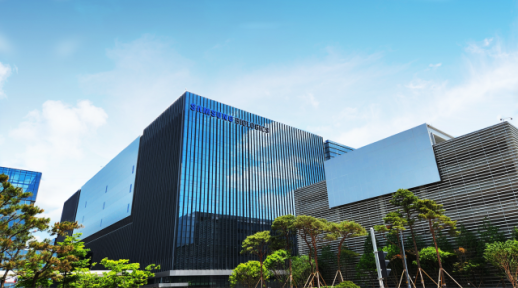 Samsung Biologics, union to resume mediation SEOUL, September 01 (AJP) - Samsung Biologics and its labor union will resume mediation as early as Sept. 8 in a fresh attempt to settle a wage dispute that prompted the first strike in the South Korean contract drug manufacturer's history. The union said Tuesday it expected the talks to "pick up speed" once mediation opens, as the company has agreed to submit its own proposal after the process begins. The Incheon Regional Labor Relations Commission has agreed to bring the schedule forward, the union said, following a meeting a day earlier between management and the Jungbu regional employment and labor office. The date remains provisional while the panel's members are confirmed. Under South Korean labor law, post-mediation lets a labor board step back in after a formal mediation has ended, provided both sides consent. The two sides applied for the procedure on Aug. 14, about a month before the talks are due to begin. The dispute centers on pay increases and changes to the company's personnel system. After mediation collapsed on March 23, the union staged a partial strike in late April and a full walkout from May 1 to 5. The union has since waged a work-to-rule campaign, refusing overtime and holiday shifts, and has kept it up in the months since. AJP Takeaways • Samsung Biologics and its labor union will resume mediation on Sept. 8, 2026, seeking to resolve a wage and personnel dispute at the South Korean contract drug manufacturer. • The two sides applied for the renewed mediation on Aug. 14, 2026, after an earlier round collapsed on March 23 and led to the company's first-ever strike, a full walkout from May 1 to 5. • The union has maintained a work-to-rule campaign refusing overtime and holiday work, while the company has agreed to submit a proposal once the Sept. 8 mediation begins. 2026-09-01 14:28:55
-
 AI expert advises Korea against copying US, China on physical AI SEOUL, September 01 (AJP) - South Korea should not chase the United States and China in the race to build humanoid robots but instead exploit its manufacturing strength to carve out a distinct path in physical AI, a leading roboticist said. Dennis Hong, a professor of mechanical and aerospace engineering at the University of California, Los Angeles, and director of its Robotics & Mechanisms Laboratory, told Aju Business Daily on Aug. 29 that Korea would lose if it mimicked the two powers. "Going forward, it will become harder to neatly divide this into American AI and Chinese hardware," Hong said. He argued that success in physical AI hinges on the speed at which companies build robots, deploy them, gather data and train the next, better generation. Korea's edge lies in its industrial base spanning semiconductors, automobiles, batteries, electronics and precision manufacturing, Hong said, warning against a numbers race to churn out the same humanoids as rivals. The country should instead link physical AI to industries where it already leads. The professor pointed to the field data held by conglomerates such as Samsung Electronics, Hyundai Motor Company and LG Electronics, arguing that the decisive resource in the physical AI era sits on factory floors rather than on the internet that fed the generative AI boom. Firms with products, plants and supply chains, he said, should deploy robots where work is needed and build a cycle of gathering, learning and refining. Fusing that data with physical AI will demand social trust, Hong cautioned, citing workers' fears of losing jobs after teaching their skills to machines and looming disputes over who owns the data. Rules on consent and on sharing the value the data creates are needed, he said. Hong, sometimes called robotics' Leonardo da Vinci, dismissed inflated hype around the technology and said a robot's worth lies not in working cheaper than a person but in taking on danger. "What must be warm is not the robot's chest but the heart of the person who builds it," he said. AJP Takeaways • Dennis Hong, a UCLA professor and director of its Robotics and Mechanisms Laboratory, urged South Korea in an Aug. 29 interview with Aju Business Daily to avoid imitating the United States and China in physical AI and to build a strategy around its own manufacturing strengths. • Hong identified South Korea's base in semiconductors, automobiles, batteries, electronics and precision manufacturing, along with the factory-floor data held by conglomerates such as Samsung, Hyundai Motor and LG, as the country's decisive advantage over rivals racing to mass-produce humanoids. • Hong warned that combining industrial data with physical AI will require resolving workers' job-loss fears and data-ownership disputes, and cautioned that hype obscures the gap between one-off demonstrations and reliable, daily deployment. 2026-09-01 12:41:31
-
 Seoul toughens crackdown on overcharging eateries SEOUL, September 01 (AJP) - South Korea will suspend restaurants and other food businesses on their first overcharging offense, moving to curb the price-gouging scandals that have battered the reputation of traditional markets such as Seoul's Gwangjang Market. The Ministry of Food and Drug Safety said Tuesday it had revised and promulgated the enforcement decree of the Food Sanitation Act, replacing a corrective order for a first violation with a five-day suspension effective immediately. Under the revised rules, an establishment that fails to post a price list or charges more than the displayed price will face a five-day suspension on first detection, 10 days on a second and 20 days on a third. The previous decree imposed suspensions of seven and 15 days for repeat offenders and let first-time violators off with a warning. "Existing administrative sanctions stopped at corrective orders, which had limits in preventing consumer harm," a ministry official said. The measure is a follow-up to the anti-price-gouging package that nine ministries unveiled jointly on Feb. 25 at a presidential tourism strategy meeting. The revision also streamlines administrative procedures for food business operators, scrapping the requirement to attach original documents when changing licensing or registration details and removing the obligation to retain a business registration certificate. Special facility standards allowing producer groups to sell food made from domestic farm produce were extended to fisheries groups. Fish products, vinegar and starch were added to the list of foods that instant-sale processors may sell by the portion, while the ministry clarified fee-reduction criteria for electronic civil applications and standards for temporary business filings. The revision follows viral videos and news reports of traditional markets, including Gwangjang Market, mired with vendors padding orders, urging authorities to take measures against overcharging. AJP Takeaways • South Korea's Ministry of Food and Drug Safety revised the Food Sanitation Act enforcement decree on Sept. 1, imposing a business suspension on the first instance of restaurant overcharging, replacing the previous corrective order. • First-time violators who fail to post prices or charge above the displayed amount now face a five-day suspension, rising to 10 days for a second offense and 20 days for a third, up from seven and 15 days previously. • The revision follows the anti-price-gouging package nine ministries announced on Feb. 25 and a series of overcharging scandals at Seoul's Gwangjang Market that damaged the reputation of traditional markets. 2026-09-01 11:16:40
-
 G-Star 2026 launches promotional push with first pop-up store SEOUL, August 31 (AJP) - South Korea's largest gaming exhibition, G-Star 2026, has begun a pre-opening marketing campaign, unveiling a new "Special Pass" bundle and its first-ever pop-up store, as the country's game industry seeks to broaden its appeal beyond core players. The committee announced Monday that it will open the pop-up store from Sept. 1 to 6 at the Hyundai Department Store's Pangyo branch, south of Seoul, marking the first time the annual show has staged such an offline event ahead of the main exhibition. This year's show is scheduled for Nov. 19 to 22 at BEXCO in the port city of Busan. The Special Pass, developed in partnership with resale platform KREAM, bundles a business-to-consumer admission ticket, a collaboration keyring and promotional cards featuring the popular webtoon "Yumi's Cells," and a KREAM voucher. Visitors to the pop-up store can buy the pass at an early-bird rate discounted by up to 33 percent. The venue will also host a Hyundai Motor Company sim-racing experience zone, allowing visitors to sample the intensity of mobility e-sports in a blend of the gaming and automotive industries. Following the pop-up, the pass will go on sale through the KREAM platform starting Sept. 7, while general admission tickets will be sold from Sept. 29 via the official website under a fully advance-booking system. AJP Takeaways • Gstar 2026 organizing committee on Aug. 31 unveiled a new KREAM-partnered "Special Pass" bundle and said it would open the show's first pre-event pop-up store from Sept. 1 to 6 at Hyundai Department Store's Pangyo branch, south of Seoul. • The Special Pass, bundling a business-to-consumer ticket, "Yumi's Cells" webtoon merchandise and a KREAM voucher, sells at an early-bird rate discounted up to 33 percent. • The pop-up, featuring a Hyundai Motor Company sim-racing zone, marks the marketing lead-up to Gstar 2026, South Korea's largest gaming exhibition, running Nov. 19 to 22 at BEXCO in Busan. 2026-08-31 17:05:09
-
 Humanoids can beat Bolt. The harder race starts on the factory floor SEOUL, August 31 (AJP) - A humanoid robot ran 100 meters in 8.64 seconds at Beijing's World Humanoid Robot Games last week, nearly a full second faster than Usain Bolt's world record. Except that it kept going. Tiangong Ultra hurtled past the finish line, slammed into a padded barrier and crashed to the floor in a shower of sparks, leaving staff to rush in with fire extinguishers before the machine was carried away. Impressive as the machines are, much of humanoid robotics still ends where the crowd begins - in spectacle. The crashes are beside the point, said Park Dong-il, director of the Advanced Robotics Research Center at the Korea Institute of Machinery & Materials. "What China is showing is a process, not a result," Park said. "That is exactly why the games matter." China's lead in the hardware is already difficult to dispute. Of 666 teams competing in Beijing this year, 641 were Chinese. "In football terms, China is Messi, and there is no second place," Park said. "No other country can imitate this, which makes the whole thing very hard to measure against anything." Yet one of the industry's most candid assessments came from a company with every reason to sell optimism. Unitree Robotics founder Wang Xingxing, speaking at the World Robot Conference in Beijing shortly after his company's stock-market debut, said embodied intelligence could reach its "ChatGPT moment" in two to three years at the earliest — or take as long as a decade. His benchmark is not running, boxing or backflips. It is a robot dropped into an unfamiliar environment and able to carry out about 80 percent of instructions across 80 percent of situations using little more than spoken or written commands. Today's machines can approach perfect success rates after extensive training in controlled environments, Wang said. Shift an object or alter the surroundings slightly and those rates can fall sharply. Zhao Tongyang, founder of EngineAI, put the industrial threshold much higher at the same conference: 99.99 percent. Factories already have machines that clear it, but the difference lies in specialization. Humanoids are being built as generalists, while industrial robots have spent decades mastering tightly defined tasks, Park said. On a production line, 99.99 percent is not an aspiration but a baseline because a machine that repeatedly stops the line can be worse than having no machine at all. A general-purpose robot that succeeds 60 or 70 percent of the time can draw applause at a demonstration. It cannot run a factory. Industrial robots spent 30 or 40 years grinding their reliability upward, Park said, often one percentage point at a time. "A lot of what we see is dancing disguised as working," Tang Wenbin, co-founder and chief executive of AI robotics venture Yuanli Lingji, said in remarks reported by Reuters. Chinese humanoid makers have made striking advances in movement and hardware, but conventional industrial robots still outperform them on many of the precise, repetitive tasks factories require. The industry's answer is increasingly to buy a better brain. Nvidia in June unveiled an open humanoid reference design aimed primarily at researchers, combining China's Unitree H2 Plus body, five-fingered hands from Singapore's Sharpa and a Jetson AGX Thor computing module capable of 2,070 FP4 teraflops. The design runs on Nvidia's Isaac GR00T robotics platform, putting the U.S. chipmaker at the center of another emerging computing ecosystem. "Humanoid robots will bring physical AI to the world's largest industries, opening a multitrillion-dollar economic opportunity," Nvidia CEO Jensen Huang said. South Korea is joining the race with 2.3 trillion won ($1.66 billion) in planned government spending on humanoids through 2030. LG Group signed an agreement with Nvidia at the chipmaker's Santa Clara headquarters on Aug. 13 to develop a bipedal humanoid built around Nvidia's Jetson Thor and Isaac GR00T technologies, with an unveiling scheduled for the first quarter of 2027. Before the humanoid arrives, LG plans to put its wheeled CLOiD robot onto a washing-machine production line at its Tennessee factory this year, testing what happens when a robot leaves the demonstration floor for an actual plant. Hyundai Motor Group is taking a similarly gradual route. Its Robot Metaplant Application Center in the United States is scheduled to open this year, preparing Boston Dynamics' Atlas humanoids first for repetitive sequencing work in 2028 and then more complicated assembly tasks from 2030. Behind them will be an Nvidia-powered AI factory using 50,000 Blackwell GPUs under a wider physical-AI partnership involving Hyundai, Nvidia and South Korea's Ministry of Science and ICT. Seoul wants more of the machine itself to be Korean. The Ministry of Planning and Budget said Aug. 27 that the government will buy 250 domestically made humanoids next year and 1,080 by 2030, while seeking to raise localization of key components including actuators, robotic hands and sensors to 80 percent from about 45 percent now. The scale of China's hardware lead can already be seen at international competitions. Teams competing at RoboCup 2026 in Incheon in July once arrived with machines they had built themselves, said Kim Ho-joung, a manager at Korean robot maker Aei Robot. Almost all now field Chinese ones. AgiBot topped the Beijing Games with 46 medals — 18 gold, 16 silver and 12 bronze — across dexterous manipulation, scenario-based tasks, martial arts, dance and obstacle events. Many of the tasks being performed would have been difficult to stage convincingly only a year ago. Galbot is already using robots to pick stock in pharmacies across more than two dozen Chinese cities, filling orders in roughly a minute with a success rate the company puts above 95 percent. Carrying objects demands relatively little precision compared with assembly, Park said, making logistics one of the most likely areas for early commercialization. Wheels are faster, cheaper and more stable for much of that work. Humanoid legs solve a real problem where machines must operate in spaces designed entirely around the human body. Those places, Park said, may simply be fewer than the industry assumes. AJP Takeaways • China dominates humanoid robot hardware, supplying 641 of the 666 teams at the 2026 World Humanoid Robot Games in Beijing as machines set new speed and dexterity records. • Reliability remains the biggest barrier to humanoid commercialization, with factory applications demanding success rates near 99.99 percent while general-purpose robots can still struggle when objects or environments change. • Nvidia is emerging as a key supplier of the AI "brain" for humanoid robots, powering reference platforms as well as new projects from South Korea's LG and Hyundai Motor Group. • South Korea plans to invest 2.3 trillion won in humanoids through 2030, buy 1,080 domestic machines and raise localization of critical robot components to 80 percent. 2026-08-31 15:57:39
-
 Lawyers top list of jobs most exposed to AI in Korea SEOUL, August 31 (AJP) - Legal clerks, lawyers and journalists rank among the South Korean occupations most exposed to artificial intelligence as the technology increasingly encroaches on white-collar work built around reading, writing and analyzing information, a government study showed. The finding came in a report by Yoon Jeong-hye, head of the employment trends analysis team at the Korea Employment Information Service, published in the institute's quarterly journal released Monday. Researchers combined a 2025 survey of Korean workers, employment insurance records and overseas studies to gauge each occupation's exposure. Legal support clerks topped the ranking, followed by patent and legal professionals, with reporters and press professionals placing a striking third. Government administration specialists, telemarketers, accountants and tax appraisers rounded out a high-exposure tier dominated by desk-bound roles centered on interpreting text or crunching quantitative data. At the other end, jobs demanding physical presence such as platers, butchers and other hands-on production, construction and face-to-face service workers clustered in the low- or no-exposure bands, largely insulated from the technology's reach. Of the 15.28 million people enrolled in employment insurance last year, about 2.92 million, or 19.1 percent, worked in highly exposed occupations, the report found. Accountants and bookkeeping clerks in that tier have already seen their ranks shrink steadily in recent months. The exposure skews young as the average age in the high-exposure group was 40.2, below the overall average of 45.7. More than half of insured workers in their 30s, 53.1 percent, held jobs in the medium- or high-exposure categories. "We need to keep a close watch on the employment structure of young people, where the impact of AI's spread is likely to be concentrated, and of customer-guidance and counseling roles where generative AI and large language models are being rapidly adopted," Yoon said. AJP Takeaways • Legal support clerks ranked as the South Korean occupation most exposed to artificial intelligence, followed by lawyers, with reporters and press professionals third, in an analysis by the Korea Employment Information Service published in its quarterly journal in 2026. • About 2.92 million people, or 19.1 percent of South Korea's 15.28 million employment insurance subscribers, worked in highly AI-exposed occupations in 2025, and the average age in that group was 40.2 years, below the overall average of 45.7. • More than half of insured South Korean workers in their 30s, or 53.1 percent, held jobs classified as medium- or high-exposure to AI, concentrating the technology's potential impact on younger cohorts. 2026-08-31 13:26:45
-
 Korea opens Boston sci-tech hub to sell homegrown biotech SEOUL, August 31 (AJP) - South Korea launched its first government-backed science and technology hub in Boston, planting a beachhead in the world's largest biotech cluster to carry research from its state-funded institutes into global markets. The National Research Council of Science & Technology (NST) and the Korea Institute of Science and Technology (KIST) announced Monday that it officially opened the G-KIC-NST center in Cambridge, Massachusetts on Aug. 28 (local time), designated by the science ministry as its strategic anchor for the region. The hub aims to bridge what officials call the "valley of death," the stretch after a technology transfer where promising research stalls before it reaches products, clinical trials or investors. Experts say Boston's dense web of drugmakers, hospitals, universities and specialist funds offer proving ground. Registered as a Massachusetts nonprofit on July 8, the center operates from the Cambridge Innovation Center and will run with about six staff, alongside an advisory panel of local experts in regulation, markets and investment. At an accompanying seminar, KIST, Huons BioPharma and Huons USA signed a letter of intent on advanced bio cooperation, an early sign of the partnerships the hub hopes to seed. "Securing a technology matters, but so does proving it in world markets and turning it into a business," said Koo Hyuk-chae, first vice minister of science and ICT, pledging policy and institutional backing for the venture. AJP Takeaways • The National Research Council of Science and Technology and the Korea Institute of Science and Technology opened G-KIC-NST, South Korea's first government-backed science and technology hub, in Cambridge, Massachusetts, on Aug. 28, 2026. • The center, registered as a Massachusetts nonprofit on July 8, 2026, operates from the Cambridge Innovation Center with about six staff and targets the commercialization gap between technology transfer and market entry. • KIST, Huons BioPharma and Huons USA signed a letter of intent on advanced bio cooperation at a launch seminar, and the science ministry pledged continued policy and institutional support. 2026-08-31 11:18:12
-
 Bibigo takes Korean seaweed snacks to U.S. sports crowds SEOUL, August 31 (AJP) - CJ CheilJedang has pushed its flagship Korean-food brand Bibigo into American stadiums, sampling roasted seaweed to tens of thousands of baseball and soccer fans in a campaign to make "gim" a mainstream Western snack. The food giant said Monday it had wrapped up seaweed-sampling events at the home grounds of Major League Soccer's Los Angeles FC and Major League Baseball's San Francisco Giants, distributing around 2,000 packs of Bibigo seaweed across the two dates. The events form part of the Sea-Sports project, a new initiative this year under South Korea's oceans ministry, through which the National Federation of Fisheries Cooperatives is pitching Korean seaweed to American fans as a healthy, convenient snack. CJ CheilJedang served as a core partner in the federation's "GIM" global branding push, running two of the seven planned events. The first sampling took place on Aug. 15 at Los Angeles' BMO Stadium during an LAFC match, timed to coincide with the company's KCON LA culture festival. The second, on Aug. 29 at Oracle Park, was tied to a bobblehead giveaway for South Korean outfielder Lee Jung-hoo as the Giants hosted the Arizona Diamondbacks. "Working with the fisheries federation gave us a meaningful chance to introduce the distinctive taste of bibigo seaweed to American sports fans," a CJ CheilJedang official said, adding that the firm would work to bring Korean seaweed into consumers' daily lives worldwide. AJP Takeaways • CJ CheilJedang sampled about 2,000 packs of bibigo roasted seaweed at Los Angeles FC and San Francisco Giants home games, targeting mainstream U.S. sports crowds rather than Korean-diaspora consumers. • The push is part of the oceans ministry's new Sea-Sports project, with CJ acting as a core partner in the fisheries federation's "GIM" global branding campaign, handling two of seven planned events. • The campaign signals a broader industry bid to reframe Korean seaweed ("gim") as an everyday Western snack, extending the K-food wave beyond restaurants and specialty aisles. 2026-08-31 10:15:16
-
 Nexon extends MapleStory into Busan theme park SEOUL, August 31 (AJP) - MapleStory joins the Lotte World Adventure Busan to deepen the all-time favorite game outreach beyond the screen and into physical spaces in the port city of South Korea that has become one of the fastest-growing attractions for foreign visitors, according to Nexon. The autumn-season event opened Aug. 29, titled "MapleStory in Lotteworld Busan," runs across the entire Busan park through Nov. 22, spanning 86 days. At the heart of the event sits "Create Your Own Character," an interactive attraction where visitors scan a QR code, choose a hairstyle and outfit, and watch their creation appear on a digital stage panel. MapleStory players can summon the characters they have raised in-game. The feature drew more than 130,000 participants during the Jamsil run. The park has been dressed to mirror the game's world, with a six-meter-tall inflatable Orange Mushroom trailing soap bubbles, recreated portals and a rendering of Henesys, one of MapleStory's signature towns. A new parade, live busking sets and a photo session with the character Pink Bean round out the lineup, alongside limited merchandise and themed potion drinks. The Busan expansion builds on a spring collaboration at Lotte World Adventure in Jamsil, Seoul, which ran from March to June and performed strongly enough to convince Nexon to take the format to a second park. The company now operates a permanent MapleStory theme zone, Maple Island, at the Jamsil site. The move mirrors a wider bet by Korean game makers on offline intellectual-property expansion, echoing the strategy Nintendo of Japan has pursued through theme-park attractions to stretch its franchises well beyond gaming. AJP Takeaways • Nexon opened its "MapleStory in Lotteworld Busan" collaboration at Lotte World Adventure Busan on Aug. 29, running 86 days through Nov. 22, its first MapleStory theme event outside the Seoul metropolitan area. • The event's flagship "Create Your Own Character" attraction drew more than 130,000 participants during Nexon's earlier spring collaboration at Lotte World Adventure in Jamsil, Seoul, which ran from March to June 2026. • Nexon operates a permanent MapleStory theme zone, Maple Island, at its Jamsil park, part of a broader move by Korean game makers to extend gaming IP into physical attractions, mirroring Nintendo Co.'s theme-park strategy in Japan. 2026-08-31 10:14:41