

Journalist
Kim Dong-young김동영
davekim0807@ajupress.com
ReporterSamsung Biologics, CJ CheilJedang, LG Chem, Celltrion, Naver, Krafton, Nexon, Hyundai Mobis etc. & energy, game, food, bio, petrochemical, AI
Kim Dong-young is a bilingual journalist at AJU Press (AJP), covering Korean tech, energy, and bio/pharma.
He reports from the field at events like CES and APEC, runs AJP's YouTube channels,
and is pursuing a master's at Sogang's MOT program. "I try everything in this AI era that can improve yet preserve the facts. Journalism still serves as my core."
He reports from the field at events like CES and APEC, runs AJP's YouTube channels,
and is pursuing a master's at Sogang's MOT program. "I try everything in this AI era that can improve yet preserve the facts. Journalism still serves as my core."
Latest by Kim Dong-young
-
 Nvidia steps up Korea push with AI Seoul Day SEOUL, September 30 (AJP) - Nvidia will bring its AI Day back to Seoul in November with physical AI at the center, as the U.S. chip giant deepens ties with South Korea's largest conglomerates, the company said Wednesday. The announcement came days after Nvidia CEO Jensen Huang received the Korea Society's Van Fleet Award in New York for promoting U.S.-Korea ties. SK Group Chairman Chey Tae-won toasted Huang at the gala, saying Nvidia designs the brain and SK makes the memory. "Robotics is going to be the next major sector here in Korea — this is a great opportunity for Korea to invest in artificial intelligence," Huang told reporters on June, arriving in Seoul. AI Day Seoul 2026 will run from Nov. 9 to 10 at COEX, pairing a conference on physical AI, agentic AI and AI infrastructure with paid workshops from Nvidia's Deep Learning Institute. Nvidia expects about 2,000 attendees, roughly double last year. Twenty partners will take part, including Samsung Electronics, SK hynix, SK Telecom, LG Electronics, Naver Cloud and Hyundai Engineering & Construction, alongside Dell Technologies and Deloitte. AJP Takeaways - Nvidia will hold AI Day Seoul 2026 at COEX in Seoul on Nov. 9-10, 2026, centered on physical AI, agentic AI and AI infrastructure, with 20 partners including Samsung Electronics, SK hynix and LG Electronics. - The announcement followed Nvidia CEO Jensen Huang receiving the Korea Society's Van Fleet Award in New York on Sept. 28, 2026, where SK Group Chairman Chey Tae-won toasted him. - Huang visited Seoul for four days in June 2026, expanding Nvidia's partnerships with SK, LG, Hyundai Motor, Naver and Doosan across AI factories, memory and robotics. 2026-09-30 11:09:12
 -
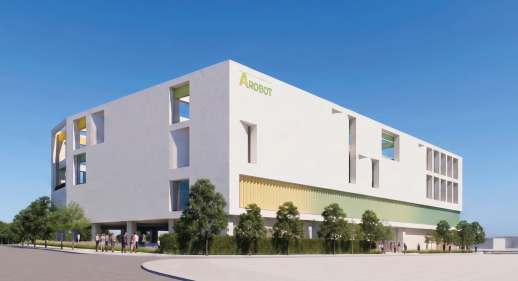 Humanoid maker Aei Robot moves to mass production SEOUL, September 30 (AJP) - Aei Robot will spend 40 billion won ($29.5 million) on its first plant for mass-producing humanoid robots, the Ansan city government said. The company signs the agreement Wednesday at Hanyang University's ERICA campus in Ansan, south of Seoul, with the Gyeonggi Free Economic Zone Authority, the university and the city government. Construction of the three-story building, which will span about 10,000 square meters, begins in November and is due to finish in October 2027. It is the first large corporate commitment to the Ansan Science Valley district since the industry ministry designated it a free economic zone in January, a project the province expects to draw 2.2 trillion won in production by 2032. Founded in 2018 inside ERICA's startup incubator, Aei Robot machines the frames, actuators and linear drives of its Alice humanoids itself, a rare degree of self-reliance in an industry that leans heavily on Japanese reducers and Chinese magnets. Its Alice 5 took the Best Custom Humanoid Robot Award at RoboCup 2026 in Incheon in July, and the line surfaced in Nvidia chief executive Jensen Huang's opening video at CES 2026. "This investment concentrates our research and mass-production functions in one place," Chief Executive Eom Youn-seal said. "We will grow into the humanoid robot company that represents South Korea." The plant will sit beside the Banwol and Sihwa industrial complexes, where about 20,000 manufacturers will supply components and, the company said, eventually take delivery of the finished machines. AJP Takeaways - Aei Robot will spend 40 billion won ($29.5 million) on a research and manufacturing headquarters at Hanyang University ERICA's innovation park in Ansan, breaking ground in November 2026 and targeting completion in October 2027. - The deal is the first large corporate investment in the Ansan Science Valley district since the Ministry of Trade, Industry and Energy designated it a Gyeonggi free economic zone on Jan. 15, 2026. - Aei Robot, a 2018 spin-off from Hanyang University ERICA, builds its own actuators and won the Best Custom Humanoid Robot Award at RoboCup 2026 Incheon in July 2026 with its 170-centimeter Alice 5. 2026-09-30 08:45:29
 -
 MBK chairman to repay Homeplus rescue loan in full SEOUL, September 29 (AJP) - MBK Partners Chairman Kim Byung-ju will repay in full the 66.4 billion won ($48.9 million) emergency loan he personally guaranteed for Homeplus, the buyout firm said Tuesday. Kim settled 34.2 billion won earlier this month and will cover the remaining 32.2 billion won from his own funds by early next week, MBK said, clearing the debtor-in-possession loan extended by Curious Partners in full. Curious Partners lent Homeplus 60 billion won in May last year to keep the chain trading, with Kim among the guarantors. The lender declared an event of default after the Seoul Bankruptcy Court briefly scrapped the rehabilitation in July, triggering his obligation. Kim will not seek reimbursement from Homeplus, and none of the retailer's operating cash or funds set aside for its rehabilitation plan was used, MBK said. A further 10 billion won of a 50 billion won loan raised against his personal assets was repaid late last month. "Combining the earlier personal contributions and MBK Partners' support, the cash directly borne by Chairman Kim and MBK Partners since Homeplus entered rehabilitation in March last year comes to 240 billion won," MBK said. The figure excludes guarantees that have yet to be called. The court approved Homeplus's rehabilitation plan on Sept. 2, 18 months after the once second-largest hypermarket chain filed for protection and weeks after its remaining stores shut for a month for lack of cash. MBK puts the combined burden, including guarantees, at about 600 billion won, of which about 400 billion won is yet to be called. AJP Takeaways - MBK Partners Chairman Kim Byung-ju will repay the full 66.4 billion won of principal and interest on a debtor-in-possession loan he personally guaranteed for Homeplus, with the balance due by early October 2026. - Curious Partners extended the 60 billion won loan in May 2025 and called it in July 2026, when the Seoul Bankruptcy Court briefly terminated Homeplus's rehabilitation before reversing itself on July 21, 2026. - The Seoul Bankruptcy Court approved Homeplus's rehabilitation plan on Sept. 2, 2026; MBK says its total exposure runs to about 600 billion won, including guarantees not yet called. 2026-09-29 17:12:02
 -
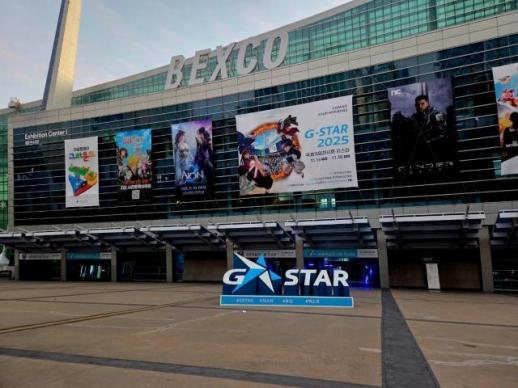 Foreign publishers fill G-Star 2026 as Korean majors stay away SEOUL, September 29 (AJP) - Foreign publishers will occupy most of the main exhibition hall at G-Star, South Korea's largest game convention, when it opens in Busan in November, according to floor plans the organizing committee released Wednesday. Six spaces of more than 100 booths each, the maximum the hall's structure permits, have gone to Crack, Krafton, HoYoverse, Google Play, Webzen and Team42. Krafton and Webzen are the only major Korean publishers among them. Nexon, NC, Netmarble and Smilegate, which built the show's largest pavilions in past years, are absent. Crack, an AI storytelling platform run by Wrtn Technologies, is the first non-game main sponsor in G-Star's 22-year history. Koei Tecmo Games, Sega, NetEase Games and CD Projekt Red will run demonstrations in the Global Game Showcase, a section debuting on the second hall's ground floor, where Sega gives "Total War: Warhammer 40,000" its first Korean airing. The Overwatch Champions Series Asia Stage 3 Grand Finals will run Nov. 20-22 at the BEXCO Auditorium. G-CON, the show's conference, convenes Nov. 19 to 20 on the theme of narrative, with "Macross" director Shoji Kawamori among the speakers. AJP Takeaways - The G-Star Organizing Committee released the Busan BEXCO floor plans for G-Star 2026 on Sept. 29, 2026, showing six large booths of more than 100 booths each taken by Crack, Krafton, HoYoverse, Google Play, Webzen and Team42. - Krafton and Webzen are the only major South Korean publishers in the main hall, with Nexon, NCSoft, Netmarble and Smilegate absent, while Crack, operated by Wrtn Technologies, becomes the first non-game main sponsor in the show's 22-year history. - G-Star 2026 runs Nov. 19-22, 2026, at BEXCO in Busan, with the Overwatch Champions Series Asia Stage 3 Grand Finals on Nov. 20-22 and an online showcase, G-Star Premiere, on Nov. 18. 2026-09-29 15:01:37
 -
 Naver pitches AI infrastructure to Mexico SEOUL, September 29 (AJP) - Naver has offered to help Mexico build a national artificial intelligence ecosystem, South Korea's largest internet company said Tuesday, after its executives met two cabinet ministers in the country. Chief Executive Choi Soo-yeon spent two days in Mexico from Sept. 24 with finance chief Kim Hee-cheol and data chief Kim Kwang-hyun, traveling with President Lee Jae Myung's business delegation. They met Economy Minister Marcelo Ebrard Casaubon and Science Minister Rosaura Ruiz Gutiérrez. Choi walked the ministers through Naver's public-sector AI work, its sovereign AI strategy of building systems on a country's own data and infrastructure, and the AI factory it is constructing with Nvidia and Brookfield Asset Management. Ebrard said Mexico was widening its dealings with global AI firms and hoped Naver would contribute to that build-out. Talks with Ruiz Gutiérrez turned on a national high-performance computing and AI cluster now under way. Naver is separately weighing a digital twin pilot covering two cities in Querétaro state, which holds more than 70 percent of Mexico's data center infrastructure. Choi made a similar overture in Paris three weeks earlier, at a Korea-France business roundtable staged during Lee's state visit on Sept. 8. She proposed pairing "France's stable energy base and Naver's experience in the AI ecosystem" to build a factory European companies and startups could draw on, a pitch anchored in the one gigawatt plus AI factory plan the company unveiled with Nvidia and Brookfield. Kim Kwang-hyun told a Korea-Mexico business forum on Sept. 25 that Korean AI expertise could sharpen competitiveness in a manufacturing economy such as Mexico's, and the executives also met the head of Mexican IT services firm Softtek. It was the first time Naver executives had visited Mexico to court officials and companies, following Choi's August meetings with Brazilian data center operators Scala and Tecto and Chile's largest carrier, Entel. AJP Takeaways - Naver proposed cooperation on public-sector AI transformation and AI infrastructure to Mexico's economy and science ministries on Sept. 24-25, 2026, its first business approach to the Mexican market, while travelling with President Lee Jae Myung's economic delegation. - The company is discussing a digital twin pilot in two cities in Querétaro state, which accounts for more than 70 percent of Mexico's data center infrastructure, and cooperation on a national high-performance computing and AI cluster. - Naver Chief Executive Choi Soo-yeon made a comparable AI factory proposal at the Korea-France business roundtable in Paris on Sept. 8, 2026, and met Brazilian and Chilean infrastructure executives in August 2026, marking a widening overseas push. 2026-09-29 11:01:13
 -
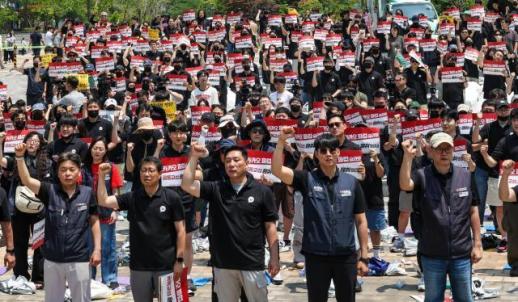 Kakao union pickets founder's appeal hearing SEOUL, September 23 (AJP) - Kakao's labor union picketed outside the Seoul High Court on Wednesday, carrying its protest against the company's planned split to the appeals hearing of founder Kim Beom-su. Prosecutors at the closing hearing asked the court to sentence Kim to 15 years in prison on stock manipulation charges, the same term they sought before a lower court acquitted him in October 2025. They argued the acquittal overlooked clear evidence and misread the law. Kakao's board approved a plan on Aug. 21 to split the company in two. Kakao AI will run KakaoTalk along with the AI, advertising and commerce businesses. Kakao X will hold the group's affiliates and manage its investments. The split is set to take effect Jan. 1, 2027, if shareholders approve it on Dec. 17. A bid by the union and some minority shareholders to block Kakao's merger with Kakao Investment fell short. Dissenting shareholders held about 2 percent of issued shares when the objection period closed on Sept. 21. At least 20 percent was needed to force a shareholder vote. The board is set to vote on the merger on Nov. 6. Kakao Investment's assets will pass to Kakao X after the split. The union, which has also protested the planned exit of executives at Kakao Entertainment's North American webtoon platform Tapas, says the split lacks firm guarantees on job succession and working conditions. "We can no longer leave our jobs, our working conditions and Kakao's future to management's judgment alone," Seo Seung-wook, head of the union's Kakao chapter, said at an Aug. 26 rally. Meanwhile, Kim was indicted in August 2024 on charges of conspiring to hold SM Entertainment's share price above rival HYBE's 120,000 won ($88.5) tender offer in February 2023, as Kakao battled for control of the K-pop agency. The Seoul Southern District Court cleared him, finding the prosecution's key witness testimony unreliable. AJP Takeaways - Kakao's labor union picketed outside the Seoul High Court on Sept. 23, 2026, as prosecutors sought a 15-year prison term for founder Kim Beom-su in his appeal over alleged manipulation of SM Entertainment shares. - Shareholders opposing Kakao X's absorption of Kakao Investment held about 2 percent of Kakao's issued shares, short of the 20 percent threshold needed to force a shareholder vote, leaving the merger to a board vote scheduled for Nov. 6, 2026. - Kakao plans to split into Kakao AI and Kakao X on Jan. 1, 2027, subject to shareholder approval on Dec. 17, 2026, while the union demands job guarantees and a fuller explanation of the restructuring. 2026-09-23 15:22:34
 -
 AJP Factbox: When and where for fall foliage in S.Korea SEOUL, September 23 (AJP) - South Korea's autumn foliage will start turning in the northern Gangwon mountains in early October and reach its nationwide peak later that month, the Korea Forest Service said Wednesday. Peak dates, defined as half a forest changing color, are forecast for Oct. 20 at Seoraksan, Oct. 28 at Songnisan, Nov. 4 at Naejangsan and Nov. 6 at Hallasan, about 0.8 day later than the average of the past five years. 2026-09-23 11:04:44
 -
 Naver Cloud begins building Korea's security AI SEOUL, September 22 (AJP) - Naver Cloud has started developing an artificial intelligence model built to shield South Korea's critical infrastructure and industrial sites from cyberattacks, the Ministry of Science and ICT said Tuesday. "As whether a nation holds frontier AI capabilities will determine its future, we must keep taking bold challenges rather than slowing down, even amid the recent debate over slowing AI," said Deputy Prime Minister and Science Minister Bae Kyung-hoon at the project's launch meeting in Seoul. Bae's remarks brushed aside a slowdown debate that flared after Anthropic CEO Dario Amodei urged a deliberate pause in the pace of frontier model development, a call some U.S. tech leaders backed and Nvidia CEO Jensen Huang rejected. The consortium plans a model of about 700 billion parameters built on Naver's HyperCLOVA X and LG's Exaone, trained on about 830 terabytes of real-world security data. Participants include more than 30 companies, universities and public institutions including LG CNS and KAIST. The ministry will provide 256 Nvidia B200 graphics processing units for up to 10 months, with the second half subject to a midterm review. Naver Cloud has already put 4,000 of its own B200 chips into pretraining the model, the company said. Bae pledged support spanning infrastructure, competitiveness and deployment. The model will be field-tested in seven sectors, including power, finance, semiconductors and defense, and engineered to run on closed networks sealed off from the internet. The consortium plans to release it as open source available for commercial use. AJP Takeaways - A Naver Cloud-led consortium formally launched development of a cybersecurity-specialized AI model for South Korea's critical infrastructure on Sept. 22, 2026, at a meeting hosted by the Ministry of Science and ICT. - The planned model of about 700 billion parameters combines Naver's HyperCLOVA X and LG's Exaone, backed by 256 government-supplied Nvidia B200 GPUs and 4,000 B200 chips from Naver Cloud. - Deputy Prime Minister Bae Kyung-hoon said on Sept. 22, 2026, that South Korea would press ahead with frontier AI despite the global debate over slowing AI development. 2026-09-22 16:29:32
 -
 Uber's Baemin bid goes under Korean antitrust review SEOUL, September 22 (AJP) - Uber’s bid to take control of Baemin, South Korea’s largest food delivery platform, for around $15 billion faces the first regulatory test with the Fair Trade Commission (FTC) launching a preliminary antitrust review of the proposed combination of taxi-hailing and delivery services. The regulator said Tuesday it had received Uber’s application for a review of its planned acquisition of Germany’s Delivery Hero, which indirectly controls Baemin operator Woowa Brothers through its subsidiary Woowa DH Asia. The transaction would bring South Korea’s leading delivery app under the ownership of Uber, which operates the country’s second-largest taxi-hailing platform by monthly active users. The FTC said it would examine the effects on competition in both markets, rival businesses and the choices available to consumers and merchants. The regulator classified the deal primarily as a conglomerate merger between businesses operating in different markets. It said Uber’s control of Baemin could lead to links between taxi-hailing and delivery services through memberships, advertising and promotions. Uber has also identified increased use across its mobility and delivery platforms and expanded advertising and promotional services for merchants as key expected benefits of the takeover, the commission said. The two businesses occupy markedly different positions in South Korea. Uber Taxi had 650,000 monthly active users in February, ranking second behind Kakao Mobility’s 13.58 million, according to figures cited by the FTC. Baemin had 23.4 million monthly active users in April, ahead of Coupang Eats with 13.15 million and Yogiyo with 4.21 million. Uber is seeking to acquire Delivery Hero through a cash tender offer of 41.50 euros per share, valuing the German company’s entire equity at about $14.8 billion. The acceptance period ends Nov. 5. The offer requires Uber to secure at least 50 percent plus one share. The FTC said completion is expected in the second half of 2027 after approvals from competition authorities in relevant jurisdictions. Under the proposed transaction, Uber would retain Delivery Hero’s operations in 50 markets, including South Korea. Businesses in 14 other markets would be sold separately to U.S. investment firm SSW Partners in a transaction conditional on the takeover closing. Naver said Sept. 17 that it had decided against pursuing a stake in Baemin, citing changes in the business environment. For Uber, the acquisition would open another route into a Korean market where earlier expansion efforts encountered setbacks. The company withdrew its UberX service in 2015 after regulatory opposition. Uber Eats entered South Korea in 2017 but pulled out in 2019 amid competition from established local delivery platforms. Uber subsequently returned to taxi-hailing through a joint venture with T Map Mobility in 2021. Its global app gives overseas visitors a familiar way to book rides in South Korea, although its domestic user base remains far smaller than Kakao’s. Buying Baemin would give Uber an established delivery business alongside its taxi service, creating opportunities to connect the two platforms that now form part of the FTC’s scrutiny. Baemin’s previous change of ownership also required Korean antitrust approval. When Delivery Hero acquired the company, the FTC required the German group to sell its existing Korean delivery platform, Yogiyo. The current preliminary review is a voluntary process allowing companies to seek an assessment before the formal merger notification period. Acquisitions through tender offers are generally subject to notification after the shares are acquired, the FTC said. The commission said it would closely examine the transaction under the standards and procedures set out in South Korea’s competition law. 2026-09-22 14:42:34
 -
 Humanoids show their moves — and limits — at first Seoul summit SEOUL, September 22 (AJP) - Two small wheeled robots zipped across the floor of COEX in southern Seoul on Tuesday until one rammed into the back of the other. The pair locked together like a Transformer, reared up and trotted off on four legs. A Unitree R1 humanoid glided forward and held out its hand to an AJP reporter. The grip was stiff and dry, and far stronger than it looked. The scenes played out at Humanoids Summit Seoul, where Korean companies presented robots as platforms whose promise rests on the software brains inside them. Across the exhibition floor, demonstrations offered glimpses of that promise — and the human help still needed to deliver it. At the booth of Rlwrld, a Seoul-based robotics AI startup, a humanoid stood over a short conveyor belt running at top speed. Assorted objects rolled toward it, and the robot plucked each one cleanly off the belt. It then handed each item to a person standing opposite. A half-deflated football, a small Bosch power tool and a wooden block calendar still sealed in slippery plastic wrap all made it across. "We are a company that builds the robot's brain, so it can do work that demands delicate hand movements," said Kim Joon-soo, head of robotics deployment at Rlwrld. "We build robotics foundation models." The company is training its AI through pilot projects with corporate partners including Lotte Hotel and CJ Logistics, Kim said. Preparing guest rooms and setting up banquets involve the varied, demanding tasks that make hotels useful grounds for collecting training data. Founded by Ryu Jung-hee, Rlwrld LWRLD has raised about $41 million in seed funding from investors including CJ Logistics, Lotte Ventures and Hanwha Asset Management. "The longer robots train at industrial sites, the more data they gather and the more tasks they can take on," he said. "We are doing that through government projects, but hardware is expensive and few companies get support." "Our goal is to build a state-of-the-art open model and run a business on it," Kim said. "Hardly any company actually releases its model, and in Korea or Japan there are virtually none." Rlwrld released its first model, RLDX-1, in May, along with a technical report, a GitHub repository and model checkpoints on Hugging Face. Built on Nvidia's Isaac GR00T infrastructure, the model achieved an 86.8 percent success rate on humanoid manipulation tasks in the company's tests, compared with about 40 percent for rival models from Physical Intelligence and Nvidia, according to Rlwrld. Humanoids Summit launched in Silicon Valley in 2024 and has since held editions in London and Tokyo. Its Seoul debut runs Tuesday and Wednesday with backing from the Ministry of Science and ICT and Rlwrld as its exclusive technology partner. For Robotis founder and chief executive Kim Byoung-soo, the machines' capabilities depend on what people teach them. "You've probably seen the flashy moves of Chinese robots. We only provide the hardware, and university club students train them on open source themselves, and that makes those moves possible," Kim said in a talk at the summit. "It all depends on how you train them." Robotis, founded by Kim in 1999 and listed on the tech-heavy KOSDAQ in 2018, built its name on Dynamixel, a modular actuator that combines a motor, reducer, sensor and controller in a single unit. In April, it unveiled AI Sapiens, a humanoid powered by 23 in-house actuators, and opened its hardware and software designs to the public. "I think humanoids will settle in as platforms with many apps on them, much like smartphones did," Kim said. Dynamixel units have been used in physical AI research by Google DeepMind and MIT. A data factory Robotis is building in Uzbekistan will collect action data to train robots, Kim has said. Yet a human form is not necessarily an advantage for every job. "It will be hard to use humanoids by building each detailed function one at a time. In factories, robots can do the job, and dedicated robots show better results," Kim said. Amazon now operates more than 1 million robots across its operations network, most of them purpose-built machines. Humanoids are better suited to everyday life, Kim said. On the exhibition floor, even an everyday object could prove a challenge. The Rlwrld humanoid that had deftly handled the football and calendar later reached for a smartphone lying nearly flat on the belt and came up empty. The phone skidded toward the edge, sending the startled demonstrator scrambling to catch it before it fell. Behind the Unitree R1 that had offered the handshake stood an engineer with sensors strapped to both ankles, a remote controller in hand and a Pico VR headset over the eyes. "Unitree has now started saying VR integration is officially supported, but fully autonomous humanoids practically don't exist yet," said Park Ji-hyeon, head of sales at Roas, Unitree's official distributor in South Korea. "There is nothing beyond this kind of teleoperation or robots that follow preset commands. Unitree is no exception," Park said. The firm grip, it turned out, had come from the person behind the robot. AJP Takeaways - Korean robotics companies at Humanoids Summit Seoul, held Sept. 22–23, 2026, at COEX, pitched humanoid robots as future platforms, with Robotis founder Kim Byoung-soo comparing them to smartphones. - Rlwrld, a Seoul-based startup that has raised about $41 million in seed funding, demonstrated a humanoid picking objects off a fast conveyor belt and said it aims to build an open robotics foundation model. - Robotis, founded in 1999, makes Dynamixel actuators and has opened the hardware and software of its AI Sapiens humanoid, arguing open-source training lets university students produce complex robot motions. - Demonstrations at the summit still relied on human operators or preset commands, and a Roas sales executive said fully autonomous humanoids practically do not exist yet. 2026-09-22 14:12:18