

Journalist
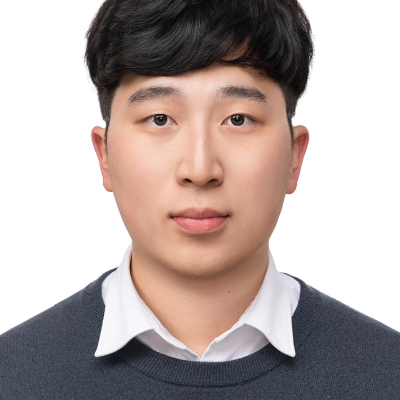
Kim Dong-young김동영
davekim0807@ajupress.com
ReporterSamsung Biologics, CJ CheilJedang, LG Chem, Celltrion, Naver, Krafton, Nexon, Hyundai Mobis etc. & energy, game, food, bio, petrochemical, AI
Kim Dong-young is a bilingual journalist at AJU Press (AJP), covering Korean tech, energy, and bio/pharma.
He reports from the field at events like CES and APEC, runs AJP's YouTube channels,
and is pursuing a master's at Sogang's MOT program. "I try everything in this AI era that can improve yet preserve the facts. Journalism still serves as my core."
He reports from the field at events like CES and APEC, runs AJP's YouTube channels,
and is pursuing a master's at Sogang's MOT program. "I try everything in this AI era that can improve yet preserve the facts. Journalism still serves as my core."
Latest by Kim Dong-young
-
 LG CNS, Doosan forge sweeping AI and robotics alliance SEOUL, June 19 (AJP) - LG CNS announced it has agreed to a broad business partnership with Doosan spanning artificial intelligence, robotics, data centers and cloud computing, as South Korea's industrial giants race to commercialize so-called physical AI. The two firms signed a memorandum of understanding on Thursday at LG Science Park in Seoul's Magok district, with LG CNS CEO Hyun Shin-kyun and Doosan President Yoo Seung-woo among the executives present. Under the deal, the partners will set up a joint task force within a month of signing to combine their core strengths and draw up detailed operating plans, LG CNS said. The AI tie-up will build on AgenticWorks, LG CNS's enterprise agentic-AI platform, to bolster Doosan's own capabilities and map out a business roadmap, the company said. Cooperation in robotics is also under review, while the two sides will explore introducing hydrogen fuel cells into LG CNS data centers and weaving digital-twin technology into manufacturing to extend equipment lifecycles. The agreement deepens ties forged earlier this month, when Nvidia CEO Jensen Huang's Seoul visit yielded physical-AI partnerships with both groups. LG CNS was tapped to upgrade robot platforms for LG's manufacturing and logistics sites, while Doosan agreed to expand cooperation with Nvidia across energy, electronic materials and robotics. "We will combine LG CNS's unmatched AX and RX capabilities with the technological strength of a powerful partner in Doosan to generate synergy," Hyun said, vowing to move quickly from AI-driven equipment forecasting on factory floors to robot-led industrial innovation. 2026-06-19 09:09:47
-
 Hormuz to reopen, but the war has redrawn Asia's energy map for good SEOUL, June 18 (AJP) - The Strait of Hormuz may reopen within the next 60 days under a U.S.-Iran deal, and oil prices have already retreated close to prewar levels. But Asia's energy order will not return to what it was. The war taught the region a costly lesson: dependence on a single supplier and a single shipping lane is no longer a risk worth taking. Brent crude fell below $79 a barrel on Thursday, its lowest level since early March and nearly 40 percent below its wartime peak, as traders priced in the return of more than 100 stranded tankers and the gradual resumption of Iranian exports. Cheaper oil, however, is not the same as restored confidence. The blockade of Hormuz — which the International Energy Agency (IEA) described as the largest supply disruption in the history of the global oil market — showed how easily a single chokepoint could be weaponized. That realization may prove the war's most enduring legacy. The IEA this week cut its 2026 oil demand growth forecast by 700,000 barrels per day to 1.1 million barrels per day after deliveries plunged by 5 million barrels per day during the second quarter. Global inventories also fell sharply, shedding 143 million barrels in May after a 74 million barrel decline in April. "Despite the significant reductions in demand for crude oil and refined products, the buffers in the system continue to erode at a record pace," the agency said. Yet the most striking lesson was how resilient the global economy proved. The pain never approached the scale of the 1973 oil embargo, the 1980 Iran-Iraq war or even the disruption that followed Russia's invasion of Ukraine in 2022. Many Asian and European importers entered the crisis with unusually high inventories after stockpiling fuel throughout 2025. Gulf producers also adapted faster than expected. Saudi Arabia rapidly rerouted exports through its Red Sea port of Yanbu, boosting shipments to roughly 4 million barrels a day from less than 1 million before the war. Meanwhile, producers in the United States, Brazil and Venezuela increased output to offset shortages. Global oil demand fell by an estimated 5 percent in the second quarter, according to the IEA, roughly half the declines recorded during previous major oil shocks. Another powerful buffer emerged from an unlikely source: artificial intelligence. The global race to build data centers fueled investment, trade and stock market gains, cushioning export-driven Asian economies that dominate the semiconductor supply chain. But that protection was distributed unevenly. The war carved a K-shaped divide across Asia. Technology-heavy economies such as South Korea and Taiwan rode record market rallies even as manufacturing-intensive, fuel-importing countries struggled under surging energy costs. Taiwan's economy expanded 13.69 percent in the first quarter, its fastest pace in 39 years, while South Korea's KOSPI surged past the stock markets of London and Toronto by market capitalization. Poorer importers suffered a harsher reality. Bangladesh and Sri Lanka imposed fuel rationing, several governments shut schools and restricted air conditioning, and the United Nations Development Programme estimated that about 8.8 million people across Asia and the Pacific were pushed closer to poverty. China demonstrated another model altogether. Despite cutting imports by roughly 3 million barrels a day, Beijing absorbed the shock by drawing on strategic reserves and relying more heavily on coal and renewable energy without major disruption to industrial activity. Those divergent responses are now hardening into long-term strategy. The IEA said this week the war had permanently changed how governments assess energy security, accelerating a diversification drive that began after Russia's invasion of Ukraine. Solar investment alone is projected to reach $365 billion this year, while global coal investment will climb to a 14-year high of $180 billion, nearly 70 percent of it in China. "Diversification of energy sources and supply routes is now a central priority," IEA Executive Director Fatih Birol said while releasing the agency's Southeast Asia Energy Outlook. Southeast Asia, he noted, will account for about one-fifth of global energy demand growth over the next decade, second only to India. That instinct to hedge has already become policy. South Korea and Japan, the world's third- and second-largest LNG importers, have agreed to coordinate purchases and strategic stockpiles. Seoul and Taipei are accelerating nuclear restarts, Tokyo is expanding its own nuclear program, and South Korea is pressing Washington to broaden its rights to enrich uranium for civilian purposes. The physical damage may also outlast the ceasefire. The IEA estimates the conflict has delayed a long-awaited wave of global liquefied natural gas supply by at least two years. Repairing Qatar's Ras Laffan complex, the world's largest LNG export facility, could take three to five years, according to the Institute for Energy Economics and Financial Analysis. But the deepest scar is one of trust. After watching the world's most important energy artery throttled at will, importers are no longer willing to rely on a single guarantor. Instead, they are building capacity at home while diversifying suppliers abroad. Birol summarized the new reality in a warning delivered in Washington earlier this year. "We are dealing with one Hormuz now," he said. "There may be several Hormuz waiting if we fail to diversify." For South Korea, where roughly 99 percent of Middle Eastern crude normally passes through Hormuz, the ceasefire is a relief, not a return to normal. During the war, Seoul accelerated purchases from North America, Australia and Africa while unveiling plans to nearly triple renewable generation capacity to 100 gigawatts by 2030. Hormuz will reopen. The certainty it once carried will not. 2026-06-18 16:01:40
-
 Celltrion to court global partners at BIO 2026 SEOUL, June 18 (AJP) - South Korea's Celltrion will join the BIO International Convention in San Diego from June 22 to 25, where it aims to recast itself as a global drug developer and broaden partnerships built on artificial intelligence, antibody-drug conjugates and multispecific antibodies. The annual gathering, the world's largest biotech business event, draws more than 1,500 companies, investors and research bodies and over 20,000 participants. Celltrion plans to use the convention less as a showcase than as a platform to firm up its growth strategy, leaning on the research, manufacturing and commercialization muscle it accumulated in biosimilars to chase deals in next-generation fields. At its booth, Celltrion will present AI tools for discovering new targets, designing multispecific antibodies, assessing developability in silico and integrating research data through a platform it calls the Healthcare Intelligence Bank. The systems predict an antibody candidate's properties, manufacturability and immunogenicity to weed out weak prospects early and shorten development timelines. The firm will also spotlight its ADC and multispecific antibody pipelines, pitching the technologies to global pharmaceutical companies, biotech firms and investors while pursuing in-licensing, co-development and supply-chain meetings to sharpen its competitive edge. "BIO is the largest global business stage where biotech companies, investors and technology partners from around the world come together," said a Celltrion spokesperson, adding that the event would help the company press its ambition to grow beyond biosimilars into a global drug developer. 2026-06-18 10:42:29
-
 Anthropic lands in Seoul as US export curbs cloud its top AI models SEOUL, June 18 (AJP) - Anthropic opened its first office in South Korea, pressing ahead with global expansion even as Washington's export controls on its most advanced artificial intelligence models cast a shadow over the launch. The U.S. company unveiled a partnership strategy spanning major firms such as Naver and Nexon on its Wednesday Korean office launch day, alongside research institutions and startups, signaling a determined push into a market it called one of its fastest-growing worldwide. The move comes barely a week after the U.S. government issued an export control directive restricting foreign nationals' access to Anthropic's newest models, Mythos 5 and Fable 5, citing national security concerns. Chris Ciauri, head of Anthropic International, voiced confidence that the disruption would prove short-lived. "I'm confident access to the suspended Mythos model will resume within days," he told reporters at a briefing in Seoul, adding that he did not expect the current controls to last long. The directive, handed down on June 12, followed claims that the safeguards on the models could be bypassed. Ciauri dismissed the jailbreak concern as a narrow scenario seen in nearly every major model released over the past six months, and defended the firm's guardrails as robust. Pressed for further detail on the negotiations with Washington, both Ciauri and director of Anthropic's Seoul office Choi Ki-young declined to elaborate, repeatedly pointing to the company's official blog for updates. Reports say Anthropic has dispatched a delegation of senior technical staff to Washington to thrash out a solution with the administration. Industry watchers caution that restrictions could stretch on for weeks until additional safeguards and security reviews are completed. The export controls have also stalled the participation of Korean firms in Project Glasswing, the company's global security consortium that grants vetted partners early access to its models to probe for vulnerabilities. Samsung Electronics, SK hynix and SK Telecom were among those reported to have joined before access was effectively frozen. 2026-06-18 09:43:11
-
 Pulmuone's US tofu sales climb 17% as plant expansion lifts output SEOUL, June 18 (AJP) - Pulmuone announced its US tofu sales rose 16.8 percent from a year earlier to 107.8 billion won ($70.5 million) in the first five months of 2026, extending a streak of double-digit growth in the world's largest market for the soy product. The South Korean food maker said Thursday the gains held up even as stubborn inflation curbed consumer spending in the United States, helped by wider distribution and steady investment in production. Its tofu now reaches about 15,000 stores across retailers including Walmart, Whole Foods Market, and Target. The company explained that the advance was driven by water-pack tofu, which accounts for about 70 percent of tofu revenue. Sales of the line surged about 24 percent to 79.9 billion won through May, lifted by a large new account secured last September and brisk demand at discount chains. High-protein and seasoned processed varieties also gained ground, rising more than 13 percent and 9 percent respectively, as American shoppers shifted toward plant-based protein. Pulmuone doubled capacity in March by completing an expansion of its Ayer plant in Massachusetts, which can now produce 9,000 blocks of tofu an hour. "Tofu is rapidly taking root as a food culture embraced by American consumers as the trend of eating less meat and choosing healthier protein spreads," said Cho Gil-soo, head of Pulmuone's US unit, adding the company aimed to cement its lead through channel diversification and supply capacity. Tofu makes up about half of the US unit's revenue, and Pulmuone has held the top share in the American market for 11 straight years since acquiring the Nasoya brand in 2016. 2026-06-18 08:35:36
-
 In "short-form" Korean economy, media empire is latest casualty SEOUL, June 17 (AJP) - South Korea is becoming a "short-form" society, where consumers increasingly favor quick commerce, short visits and low-friction experiences. As those habits harden, a growing list of institutions once considered too big to fail is discovering that their traditional business models no longer justify a physical trip. The latest casualty is JoongAng Group, one of South Korea's largest media empires, whose holdings include the 61-year-old JoongAng Ilbo newspaper, broadcaster JTBC and cinema chain Megabox. After JTBC defaulted on 20.6 billion won ($13.6 million) of debt this month, the group's holding company and five affiliates sought court-led rehabilitation. The shock then spread further on Tuesday when JoongAng Ilbo disclosed an event of default on 137 billion won ($90 million) worth of corporate bonds, underscoring how quickly strains in one business line can ricochet across a conglomerate built for a pre-digital era. The collapse echoes Homeplus' downfall a year earlier and points to a deeper restructuring underway: South Koreans increasingly buy the ordinary online and reserve offline trips only for the exceptional. Yet the bigger question is whether these collapses signal a wholesale flight from physical stores, or something more selective: a market where consumers purchase commodities online and venture out only for experiences worth leaving home for. The hard numbers point to stagnation rather than freefall. Sales growth at large retailers, including hypermarkets and department stores, has flattened sharply, according to Korean Statistical Information Service data. Year-on-year growth slowed from 11.5 percent in 2021 to 6.3 percent in 2022 and 6.4 percent in 2023, before collapsing to 0.69 percent in 2024 and a near-frozen 0.01 percent in 2025. Once inflation is stripped out, that flat line arguably masks a real-terms contraction in revenue and margins — a slow bleed rather than a sudden wound. Still, the downfall of Homeplus and Megabox owes as much to financial engineering and missed investment as to vanishing customers. In Homeplus' case, labor unions and critics have pointed to MBK Partners' heavily leveraged 2015 buyout and a strategy of selling off prime stores to service debt, arguing that the chain missed its window to build online logistics while rivals such as Coupang poured in capital. MBK has firmly rejected that account, saying it took no dividends from Homeplus after the acquisition and that buyout-related borrowing amounted to about 2.7 trillion won. It attributes the losses instead to regulatory restrictions on hypermarkets and the lingering impact of the pandemic. Megabox, meanwhile, lagged rivals CJ CGV and Lotte Cinema in core investment and lacked an in-house food-and-beverage affiliate to bolster concession margins, leaving it exposed as streaming platforms such as Netflix siphoned audiences away. Its long-discussed merger with Lotte Cinema effectively collapsed once rehabilitation proceedings began. The crisis has also widened beyond cinemas. JoongAng Ilbo said its corporate bonds became subject to early repayment after credit-rating downgrades triggered cross-default clauses tied to JTBC's debt default. Under South Korean regulations, an event of default allows creditors to demand immediate repayment of principal and interest before maturity. The newspaper, which is pursuing a workout process, is expected to negotiate maturity extensions with creditors. Industry analysts argue the shakeout reflects a deeper restructuring of what physical retail is for. At a retail outlook seminar hosted by the Korea Chamber of Commerce and Industry in November, Ahn Tae-hee, managing director and partner at BCG Korea, described a sharp polarization of offline formats, with experience and price emerging as the only two viable poles. "Only experiential stores that offer differentiated content or service, or transactional stores armed with overwhelming price competitiveness and high-turnover efficiency, are being chosen by consumers," Ahn said, adding that retailers stuck in between are "being pushed out of the market and facing restructuring pressure." For hypermarkets, even their final stronghold is under siege. "Fresh food, which had been the strength of large-format marts, is now shifting online," said Lee Chang-yeol, head of E-Mart's distribution research institute, at the same seminar. He predicted the industry would concentrate even more heavily on delivery competitiveness, particularly quick commerce, in 2026. Cinemas have absorbed a steady blow of their own. "The shift of audiences to OTT is a stage we passed some time ago," a spokesperson for the Korean Film Council said, noting that even blockbuster hits can no longer reliably pull crowds back into theaters. The council said it is working to have films released on streaming platforms formally recognized as films in their own right, while the three major theater chains, short of new hits, have increasingly leaned on re-releases of past blockbusters to entice viewers back. The flip side of the story is a boom in experience-led retail, as consumers increasingly buy commodities online and venture out only for what a screen cannot replicate. Pop-up stores have exploded as a result. The Popga platform logged 3,077 pop-ups between January and November 2025, up 79.6 percent from a year earlier. Short-burst formats are driving the surge, with pop-ups lasting seven days or less gaining share as brands capitalize on fear-of-missing-out impulses rather than signing long-term leases. Venues such as The Hyundai Seoul and Seoul's Seongsu-dong district have recast the store as a content space — built around AI-driven personalization and intellectual-property immersion — rather than a place merely to move boxes off shelves. The crisis at South Korea's big-box retailers and multiplexes is therefore a twin failure: a distribution channel squeezed by online migration, compounded by managements that failed to invest in reinvention. Offline retail has not died so much as changed its purpose. South Korea is becoming an early test case for a post-destination economy, where consumers no longer leave home to buy things, but only to do something worth leaving home for. 2026-06-17 14:47:48
-
 Korea joins OpenAI on AI safety, fourth nation to do so SEOUL, June 17 (AJP) - South Korea has become the fourth country to forge a formal artificial-intelligence safety partnership with OpenAI, joining the United States, Britain and Japan in a widening network aimed at scrutinizing the risks of frontier AI. The Ministry of Science and ICT said Wednesday its AI Safety Institute and OpenAI signed a memorandum of understanding to deepen cooperation on safety assessments in high-risk domains. Under the pact, the two sides will share methodologies, benchmarks and best practices for evaluating high-risk AI applications. They will also exchange technical information to build assessment frameworks tailored to the Korean language and local social context. The MOU broadens an October 2025 cooperation agreement between the ministry and OpenAI, extending it into the safety arena. Officials said the deal grew out of two rounds of talks this year between the ministry's second vice minister and senior OpenAI figures. "As AI's impact on national core infrastructure and security grows, rigorous safety evaluation in high-risk areas is becoming not a choice but a necessity," said Kim Myung-joo, head of the AI Safety Institute. The institute, he added, would work with OpenAI to verify frontier-AI risks scientifically and help shape internationally accepted evaluation standards. Lee Sang-hyun, OpenAI's Asia-Pacific policy lead, said Korea was a pivotal market where AI adoption and innovation were advancing at pace. The institute and OpenAI plan to firm up specific tasks and timelines through working-level consultations, the ministry said. 2026-06-17 11:03:55
-
 Korean researchers develop AI-driven process for next-gen 2D chips SEOUL, June 17 (AJP) - South Korean researchers have developed a system that lets artificial intelligence diagnose and control the manufacturing of next-generation two-dimensional semiconductors as thin as a single atomic layer, a breakthrough that could ease one of the industry's persistent production hurdles. The Korea Institute of Machinery and Materials (KIMM) said Wednesday that a team led by senior researcher Kim Hyeong-woo had combined low-temperature plasma processing with machine-learning analysis to synthesize and etch six-inch wafers of 2D semiconductors such as molybdenum disulfide and tungsten disulfide. Conventional 2D chip fabrication relies on high-temperature methods that strain substrates, limit compatibility with existing production lines and make uniform large-area output difficult. KIMM's approach operates at about 150 degrees Celsius, minimizing thermal damage while enabling single-step, atomic-layer etching that lifts both efficiency and yield. The team captured real-time optical and gas-mass data using diagnostic tools including optical emission spectroscopy and time-of-flight mass spectrometry, then fed the readings into machine-learning models to predict film thickness down to the atomic layer. The sensors tap into existing equipment view ports, allowing the technology to be deployed without modifying production machinery. "This research is meaningful in that it implemented a six-inch wafer-scale 2D semiconductor process at the atomic-layer level in a low-temperature environment," Kim said, adding that the data-driven method had markedly improved process reproducibility and productivity. The institute said the technology could be applied across AI chips, next-generation electronic devices and displays, and may evolve into a core tool for autonomous, intelligent semiconductor manufacturing as process data accumulates. 2026-06-17 10:26:00
-
 Krafton unveils 'PUBG Ally' AI mode in two-week beta SEOUL, June 16 (AJP) - Krafton announced it will launch a beta of "Ally Duo," a new game mode built on its PUBG Ally artificial intelligence technology, opening a two-week test that lets players team up with an AI partner in the flagship battle royale title PUBG: Battlegrounds. Starting Wednesday and running through July 1, the beta pairs each player with an AI character named Ella for two-person matches on the Sanhok map, where users issue voice commands to move, gather items and plot tactics alongside the bot. The mode supports Korean, Chinese and English voice interaction and is open to players worldwide. Ella runs on PUBG Ally, a system Krafton describes as a Co-Playable Character, distinct from conventional scripted NPCs. Powered by an on-device small language model based on Nvidia's ACE technology, the character interprets spoken orders and shifting in-game conditions, drawing on speech-to-text and text-to-speech tools to respond in real time rather than reacting to fixed triggers. The company said the AI moves swiftly in moments demanding instant reaction, such as repositioning or grabbing loot, while weighing context and conversation when tactics call for judgment. "Through this beta service, we are presenting a new form of play that Ella and users create together," said Lee Kang-wook, Krafton's chief AI officer, adding the firm would press ahead with innovation in AI-driven game experiences based on user feedback. Krafton, which unveiled four versions of its multimodal AI model "Raon" in April, said it plans to fine-tune those models for individual titles, sharpening its push to fold AI into gameplay across its lineup. 2026-06-16 15:33:30
-
 SK AX kicks off 'agentic enterprise' era at Seoul conference SEOUL, June 16 (AJP) - SK AX declared an "agentic enterprise" era in which corporate operations are wholly redesigned around artificial intelligence, as the company sought to position itself at the forefront of South Korea's enterprise AI race. At its "IMAGINE AX 2026" conference, held under the theme "Beyond AI: The Agentic Enterprise", the SK Group IT services arm showcased its in-house transformation experience and gathered executives from manufacturing, finance, telecom and retail to swap stories of AI-driven reinvention. "A company's competitiveness lies not in adopting better AI, but in creating new growth value through enterprise-wide optimization powered by AI," Chief Executive Kim Wan-jong said in a keynote address. He warned that the gap between firms that have achieved AI augmentation and those that have not is already showing up in earnings, and will only widen. Kim said companies hoping to stay ahead must move beyond mere adoption to master core capabilities spanning strategy, technology, data, operating systems, talent and change management. Partners echoed the pitch. Firms including OpenAI, SK hynix, and Mercer have each teamed with SK AX on projects ranging from autonomous semiconductor fabs to "one employee, one financial agent" workflows, weaving AI agents into real operations. "The yardstick for technology choices is shifting from adoption itself to the question of how to make AI actually work," said Cha Ji-won, SK AX's chief AI innovation officer, adding that genuine business results demand a precise meshing of internal data, systems, processes and industry-specific domain knowledge. 2026-06-16 11:44:04