

Journalist
Kim Dong-young김동영
davekim0807@ajupress.com
ReporterSamsung Biologics, CJ CheilJedang, LG Chem, Celltrion, Naver, Krafton, Nexon, Hyundai Mobis etc. & energy, game, food, bio, petrochemical, AI
Kim Dong-young is a bilingual journalist at AJU Press (AJP), covering Korean tech, energy, and bio/pharma.
He reports from the field at events like CES and APEC, runs AJP's YouTube channels,
and is pursuing a master's at Sogang's MOT program. "I try everything in this AI era that can improve yet preserve the facts. Journalism still serves as my core."
He reports from the field at events like CES and APEC, runs AJP's YouTube channels,
and is pursuing a master's at Sogang's MOT program. "I try everything in this AI era that can improve yet preserve the facts. Journalism still serves as my core."
Latest by Kim Dong-young
-
 AI won't change the game dynamics: Nexon's gaming chief SEOUL, June 16 (AJP) - As artificial intelligence makes building games faster and cheaper, the edge will lie in the depth of context that no prompt can generate, the head of Nexon Korea. Kang Dae-hyun, co-chief executive of Nexon Korea, made the remarks Tuesday in the opening keynote of the Nexon Developers Conference (NDC), the country's largest game knowledge-sharing event, which returned to Nexon's Pangyo campus for a three-day run. "Implementation is getting easier, but it is not only getting easier for us — it is getting easier for everyone," Kang said. "A user's day is still 24 hours." He argued that as AI writes more of the code, human judgment matters more, not less. The depth of context, he said, is the one thing a prompt cannot produce. Kang pointed to a crowded market as the backdrop. About 2,800 games launched on Steam in 2015, a figure that swelled to some 20,000 in 2025, he said, yet only 608 of last year's titles drew more than 1,000 reviews. He drew a parallel with an earlier shift, when commercial engines replaced in-house ones and freed studios to pour resources into art and content. Wider digital distribution, he added, then made being chosen among thousands of titles the real contest. Now in its 19th year, NDC has expanded its AI sessions this year to spotlight how the technology is reshaping content creation across the games industry. 2026-06-16 10:45:03
-
 Samsung Biologics, union to resume talks next week SEOUL, June 12 (AJP) - Samsung Biologics and its labor union will resume negotiations next week in a bid to narrow differences over wage increases and personnel system reforms that have strained relations at the South Korean contract drugmaker for months. The two sides agreed to meet on June 16, industry sources said Friday, after the union pressed management to return to the bargaining table and the company responded earlier in the day. Management has proposed first holding working-level discussions on the collective agreement to close gaps on contentious issues, before chief negotiators take up wages and benefits in separate talks. The company also suggested the two sides jointly devise measures to restore customer trust and repair its external image. Tensions escalated after talks collapsed, prompting about 60 workers to stage a partial walkout in late April. A full strike followed from May 1 to 5, drawing about 2,800 participants, and workers have since waged a work-to-rule campaign by refusing overtime and holiday shifts since May 6. The union also plans to hold a vote among members late this month on whether to withdraw from Samsung Group's supra-enterprise union and revise its bylaws. A proposed amendment that would place decisions on the scope and disbursement of "living cost support" under the executive committee has stirred internal criticism that leaders are seeking to manage finances arbitrarily without a full membership vote. 2026-06-12 15:36:56
-
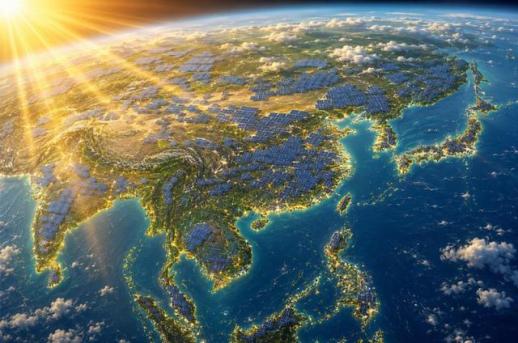 Asia races toward solar as energy security trumps fuel imports SEOUL, June 12 (AJP) - From rooftops in Manila to industrial parks outside Seoul, Asia is rapidly turning to solar power as Middle East instability and soaring AI-driven electricity demand force governments to rethink energy security. The blockade of the Strait of Hormuz earlier this year exposed the vulnerability of fuel-importing economies across Asia, accelerating what analysts describe as a race to generate more power at home. For many governments, renewable energy is increasingly viewed not only as a climate solution but as a strategic asset. Indonesia has elevated solar development to a national priority, while the Philippines recorded a surge in imports of Chinese solar equipment in the weeks following the conflict. Similar shifts are emerging across the region as policymakers seek to reduce exposure to volatile fuel markets and geopolitical disruptions. The trend is becoming visible in global electricity markets. Natural gas accounted for 21.8 percent of global power generation in 2025, down from 23.9 percent in 2020, according to energy think tank Ember. Solar generation expanded by 636 terawatt-hours last year — roughly 17 times the growth contributed by gas — and supplied about three-quarters of new global electricity demand. China remains the dominant force behind the expansion. Chinese solar cell and panel exports to Southeast Asia jumped 75 percent from a year earlier in April, while shipments to Africa climbed 83 percent, customs data showed. The gains came even after Beijing ended export tax rebates that had helped keep global solar prices exceptionally low. The flood of low-cost Chinese equipment has accelerated deployment across emerging markets while simultaneously putting pressure on manufacturers in Europe, North America and parts of Asia. Yet governments appear increasingly willing to tolerate dependence on Chinese hardware if it allows them to build domestic power capacity more quickly. The urgency is being amplified by a second force: artificial intelligence. Across Asia, governments and utilities are preparing for a surge in electricity demand from data centers, cloud computing facilities and semiconductor manufacturing complexes. Industry forecasts suggest AI-related power consumption could become one of the largest drivers of electricity demand growth over the next decade. South Korea offers perhaps the clearest example. Despite being one of the world's leading technology exporters, South Korea remains a laggard in renewable energy adoption. Its share of renewable electricity generation remains among the lowest in the OECD, reflecting decades of reliance on imported fossil fuels and nuclear power. Now, policymakers are attempting to reverse that trend. Under its first renewable energy master plan unveiled in May, Seoul aims to nearly triple renewable power capacity to 100 gigawatts by 2030 from about 37 GW today. Solar power is expected to account for 57 GW of that total, requiring the installation of roughly 11 GW of new solar capacity annually. The government also plans to expand domestic solar module production capacity beyond 10 GW per year, develop more than 10 gigawatt-scale solar projects in central regions including the capital area, and strengthen transmission infrastructure needed to integrate new renewable generation. Lawmakers are simultaneously moving to ease setback regulations that have constrained solar development for years and are advancing legislation that would allow wider deployment of agrivoltaic projects combining agriculture and solar generation. Additional support may arrive through the tax system. A production tax credit modeled in part on the U.S. Inflation Reduction Act is currently under review, with a tax code revision expected in July viewed by analysts as one of the most important policy catalysts for the sector this year. "The renewable energy master plan and the power supply plan are the two pillars for resolving the national tasks of realizing carbon neutrality and securing a stable energy supply," Minister of Climate, Energy and Environment Kim Sung-hwan said during a recent Energy Committee meeting in Seoul. Financial markets have already begun positioning for the shift. DS Investment & Securities this week identified HD Hyundai Energy Solution and SK Eternix among its preferred renewable-energy plays, forecasting annual energy-storage demand of 4-6 GW by 2030 and approximately 72.8 trillion won ($48 billion) in grid investment through 2038. Much of that spending is expected to be driven by AI infrastructure projects, including hyperscale data centers and the massive semiconductor manufacturing cluster under construction in Yongin, south of Seoul. "Given the policy direction and timing, solar companies stand to gain considerably," said Ahn Joo-won, an analyst at DS Investment & Securities. "What is needed are incentive programs with clearly defined timelines that can support investment visibility for at least five to 10 years." Opportunities may also be emerging beyond Asia. The European Union last month restricted public funding for solar inverters sourced from what it classified as high-risk countries, including China. The decision affects a market representing more than 14 GW of annual installations and potentially creates openings for suppliers from South Korea, Japan and the United States. Korean electrical equipment makers such as LS Electric and Hyosung Heavy Industries are viewed as potential beneficiaries, although analysts caution that inverter-specific manufacturing capacity and European certification requirements could limit near-term gains. Competition from low-cost Chinese producers is unlikely to disappear. Chinese manufacturers continue to dominate global solar supply chains, from polysilicon and wafers to cells and finished modules, allowing them to undercut rivals on price even as governments diversify procurement. Yet the direction of travel is becoming increasingly clear. As countries from Indonesia and the Philippines to South Korea and members of the European Union seek to reduce dependence on imported fuels and diversify critical supply chains, solar power is evolving from an environmental policy objective into a strategic component of national security. For South Korea, the challenge is no longer whether the solar transition is coming. The question is whether the country can move fast enough to secure a meaningful position in one of the fastest-growing energy markets in the world. 2026-06-12 13:51:38
-
 World Cup 26: Scenes from first World Cup SEOUL, June 12 (AJP) -South Koreans were united at lunchtime Friday, erupting in cheers, gasps and sighs of relief as they gathered at Gwanghwamun Square, offices, restaurants and homes nationwide to watch the national team's opening match at the 2026 FIFA World Cup. 2026-06-12 12:32:35
-
 Homeplus asks Meritz to double emergency loan SEOUL, June 12 (AJP) - Embattled hypermarket chain Homeplus asked its largest creditor, Meritz Financial Group, to extend 200 billion won ($131.4 million) in emergency operating funds, saying the 100 billion won loan currently under review falls short of what it needs to survive court-led rehabilitation. Meritz, which had long balked at the retailer's loan requests, signaled a day earlier that it could lend up to 100 billion won — the amount jointly guaranteed by Homeplus' private equity owner MBK Partners. "If only 100 billion won, half the required amount, is provided, we cannot complete the store closures currently under way, and resuming product supply will also become difficult," Homeplus said in a statement. The company said securing the full amount would allow it to streamline stores, normalize product supply and restore supplier confidence, laying the groundwork to implement its rehabilitation plan. Time is running short. The deadline for creditors to approve the rehabilitation plan is July 3, and even with a one-time extension, proceedings must conclude before Sept. 3. The plea comes after Homeplus permanently closed 37 underperforming outlets — about a third of its 104 hypermarkets — that had been suspended since May 10, a move that put about 3,500 jobs at risk. Homeplus has been bleeding cash since filing for court receivership in March last year, the first of South Korea's big three hypermarket operators to do so. Even the roughly 120 billion won expected from the sale of Homeplus Express to a Harim Group affiliate is dwarfed by supplier arrears estimated at about 200 billion won. 2026-06-12 10:53:33
-
 Jensen Huang Discovers 'AI Cake' in South Korea, A Nation with All Five Layers Artificial intelligence (AI) is likened to a five-layer cake, a metaphor frequently emphasized by Jensen Huang, CEO of NVIDIA. During his four-day visit to South Korea, he appeared to discover this 'completed cake' in the country. NVIDIA views AI not as a single product but as a complex structure. The foundation consists of energy, followed by semiconductors, infrastructure that supports and drives the AI models, and finally, the application stage where economic value is generated. Huang believes that the demand across all application stages ultimately reaches the power plants. He asserts that the competition for supremacy in the AI era will hinge on the competitiveness of all five layers. Countries that possess all these layers are rare. China has vertically integrated energy, infrastructure, and applications, while the United States leads in advanced semiconductors and models. In contrast, Huang assesses that South Korea has the potential to fill all five layers. His enthusiasm throughout the tightly packed schedule supports this view. As he concluded his visit on June 10, Huang stated, "Now is your time. You must seize this opportunity." He added, "South Korea is in a very special moment, in a unique position." Building the Foundation with Energy and Infrastructure for AI Huang's agenda began at the bottom layer, focusing on energy and the physical infrastructure above it. However, the core emphasis was on 'cloud' services that provide computational power. SK Telecom plans to build a gigawatt-level AI cloud based on NVIDIA's DSX platform. The first AI factory is set to launch in 2027, providing sovereign and physical AI services domestically. Naver is also embarking on a similar phased expansion, starting with 55 megawatts in the first half of 2027, scaling to 100 megawatts that same year, and reaching 200 megawatts by 2028, ultimately aiming for gigawatt capacity. LG has joined the competition through LG Uplus, which will establish a large-scale AI data center based on NVIDIA DSX to accommodate the latest GPUs and support future AI cloud and GPU services. Its affiliate, LG Energy Solution, is developing an 800V direct current power system to power this initiative. These facilities are not traditional data centers but are referred to by NVIDIA as 'AI factories,' transforming power and data into tokens, the fundamental outputs of modern intelligence. This construction trend extends to the west coast. Huang expressed NVIDIA's willingness to participate in the AI data center project that Hyundai Motor Group is pursuing in Saemangeum. This marks a concrete manifestation of the infrastructure layer, with land, power, and cooling being realized in concrete, forming the physical foundation for the cloud services that SK Telecom, Naver, and LG will sell. Semiconductors: South Korea's Strongest Asset South Korea's position in semiconductors, one layer above, is the most solid. NVIDIA and SK Hynix have established a long-term technological partnership to jointly develop memory across four NVIDIA platforms encompassing AI infrastructure, personal AI, and physical AI. This memory is designed to align with NVIDIA's computational roadmap rather than simply purchasing off-the-shelf products. After meeting with SK Group executives, Huang told reporters, "SK is our largest memory partner," and added, "We are expanding this collaboration into several new markets." Samsung Electronics marked the other end of his schedule. On the evening of June 9, Huang concluded his visit with a private meeting with Jeon Young-hyun, Vice Chairman of Samsung Electronics' Device Solutions Division. The two sides reportedly discussed broad cooperation encompassing next-generation high-bandwidth memory (HBM), advanced packaging, and foundry manufacturing. After the meeting, Huang returned to a recurring theme throughout his visit. He stated, "The next wave of AI is physical AI, where AI interacts with the physical world." He praised South Korea as a very unique country due to its social and cultural cohesion, noting, "Today, South Korea is a global leader in heavy industry and manufacturing." He added, "South Korea is also world-class in electronics, and interestingly, it ranks among the top in software and AI as well." He emphasized, "Countries excelling in manufacturing and heavy industry tend to be weak in software, and those strong in software often lag in heavy industry, but South Korea excels in all areas. It is a unique situation." AI Models: Homegrown Innovations The next layer, AI models, is often perceived as an area where South Korea relies on imports. However, this visit painted a different picture. NVIDIA and LG AI Research are collaborating to enhance EXAONE, one of South Korea's representative sovereign AI models. LG is training this model using NVIDIA's Blackwell GPU and NeMo framework, showcasing a homegrown model refined on Korean infrastructure. EXAONE is not alone. Naver possesses HyperCLOVA X, deeply rooted in the Korean language, while NC, highlighted by Huang for its technological prowess in gaming, has developed its own VARCO model series. Although many of the accelerators powering these major Korean AI models are foreign, there is a gradual shift toward domestic solutions. Applications: A Passion for Physical AI Above all these layers lies the application stage, which Huang sees as the realm where true economic value is generated and where his enthusiasm was most palpable. Huang stated, "South Korea excels in manufacturing, mechatronics, and AI, and the fusion of these strengths will make robotics and physical AI a major growth driver for the country." NVIDIA's concept of physical AI, particularly in robotics, led to the broadest collaborations during this visit. LG Electronics is considering applying NVIDIA's Isaac GR00T inference model to future home robots, while LG CNS is integrating NVIDIA technology into industrial automation and logistics systems. Doosan emerged as an unexpected beneficiary of this visit. The industrial group supplies advanced electronic materials used in AI accelerators and has established a reciprocal relationship by adopting NVIDIA's platform to develop and train its own robotic systems. Huang highlighted this relationship by throwing the first pitch for the Doosan Bears at Jamsil Baseball Stadium. From Samgyeopsal to Shilla Hotel: A Journey Through the Ecosystem This tour itself reflected the breadth of the ecosystem NVIDIA perceives in South Korea. The itinerary began with a gathering over samgyeopsal and soju in Hongdae, attended by Chey Tae-won, Chairman of SK Group, Koo Kwang-mo, Chairman of LG Group, and Lee Hae-jin, founder of Naver. It continued with discussions on autonomous driving with Chung Eui-sun, Chairman of Hyundai Motor Group, memory negotiations at SK Hynix, and concluded with a meeting with Samsung Electronics' semiconductor division at the Shilla Hotel. As Huang prepared to leave Seoul, the 'five-layer cake' had evolved beyond a mere presentation slide. Energy was represented by South Korea's nuclear capabilities and the construction of AI factories, while semiconductors were embodied by SK Hynix and Samsung Electronics. Infrastructure was provided by SK Telecom, Naver, and LG, while models were represented by sovereign AIs like EXAONE and HyperCLOVA X. Applications were evident in various sectors, from autonomous vehicles to factory robots. Huang remarked, "South Korea is collaborating with NVIDIA across all layers of the AI ecosystem, from energy to semiconductors, infrastructure, robotics, and applications." His message to a country long identified solely as a semiconductor powerhouse was broader. South Korea's strength lies not in any single layer of the AI stack but in its rare ability to build nearly every layer independently.* This article has been translated by AI. 2026-06-12 09:03:00
-
 Buried beneath Korea's chip boom, refiners fight for survival SEOUL, June 11 (AJP) - Buried beneath South Korea's semiconductor boom is a quieter survival story unfolding in the country's refineries and petrochemical plants. South Korea's economic narrative has been dictated by silicon in recent years. Memory giants have propelled the KOSPI past stock markets in cities such as London and Toronto while joining the exclusive trillion-dollar market-capitalization club. In contrast, some of the country's oldest industrial pillars have been quietly fighting for survival. Korea's refiners and petrochemical producers remain among the world's most sophisticated operators, supplying everything from jet fuel to high-value industrial materials. Yet they have found themselves squeezed between two forces beyond their control: a prolonged Middle East crisis that disrupted their feedstock lifeline and a flood of low-cost Chinese supply that has upended the naphtha-based business model on which the industry was built. It is a reckoning for an industry that has long punched far above its weight. South Korea hosts three of the world's ten largest refineries by single-site capacity, anchored by SK Energy's 840,000-barrel-per-day Ulsan complex and GS Caltex's 800,000-barrel-per-day Yeosu plant. Their facilities boast some of Asia's highest Nelson Complexity ratings, a measure of how much premium product a refinery can extract from each barrel of crude. That engineering prowess, however, has been largely overshadowed by the country's semiconductor euphoria. While chipmakers basked in trillion-dollar valuations, refiners and petrochemical firms endured one of the harshest downturns in decades, exposing the vulnerability of a business model built on scale and commodity production. At the center of the strain sits naphtha, the feedstock so essential to the sector that industry executives often call it their "rice." South Korea imported 237.5 million barrels of naphtha in 2025, more than any other country in Asia. That dependence left the industry acutely exposed when disruptions in the Strait of Hormuz squeezed supplies of the medium and heavy crude grades that generate the richest refining margins. The shock rippled quickly through the market. Daily vessel transits through the strait fell to around 10 from a prewar average of 135, while Brent crude surged toward $94 a barrel. For refiners that import nearly all of their feedstock and sell into an increasingly saturated market, every dollar increase in crude prices became harder to pass on to customers. Then came the second blow. Chinese producers, backed by an aggressive state-supported expansion expected to continue through at least 2028, flooded regional markets with low-cost ethylene and polymers. The result has been a structural glut that hollowed out margins on the very commodity-grade products Korean petrochemical companies were designed to mass-produce. Ethylene, the bellwether of the chemicals industry, tells the story. Prices that once approached $1,400 a ton have fallen below $1,000, erasing the cushion that had long kept aging crackers profitable. Industry analysts expect Chinese capacity growth to outpace demand expansion for years to come. "Without a normalization of the Strait of Hormuz, a sharp rebound in oil prices must be kept in mind at any moment. It may prove temporary, but in petrochemicals, where inventories were relatively thin, a belated rebound began to surface from late May," said Chun Woo-je, an analyst at KB Securities. "Margins long mired in chronic oversupply are now at their highest in four years." Seoul has responded with one of the industry's most sweeping restructuring efforts in decades. The government has urged the country's 10 largest petrochemical companies to reduce naphtha-cracking capacity by between 2.7 million and 3.7 million tons, equivalent to roughly 18 to 28 percent of national capacity. It has also approved a support package worth more than $1.46 billion to help offset electricity, steam and feedstock costs, including preferential power rates below those charged by the state utility. "Unless the war ends on reasonable and viable terms sufficient to reassure shipowners and insurers, it may be extremely difficult for oil prices to return to prewar levels even in the long run," said Chung Tae-hun, an associate research fellow at the Korea Energy Economics Institute. For many companies, the clearest path out of the squeeze runs straight into the sky. Refiners are betting heavily on sustainable aviation fuel, or SAF, a low-carbon alternative capable of reducing lifecycle emissions by up to 80 percent while commanding premium pricing under increasingly stringent global decarbonization mandates. SK Energy has installed co-processing facilities at its Ulsan refinery and plans to expand its SAF supply network across the Asia-Pacific this year. GS Caltex is building a 500,000-ton annual SAF supply chain centered on an Indonesian biodiesel project, while S-Oil is refining its production processes to secure global certification. The shift is spreading beyond refiners to chemical companies once thought immune to such transformations. LG Chem, crossing from chemicals into fuel production, is constructing a 300,000-ton SAF plant in Daesan scheduled for completion in 2027 — a move that would have seemed unthinkable for a company built on plastics. Diversification extends well beyond aviation. LG Chem is steering toward advanced materials, battery cathodes and environmentally friendly products. Lotte Chemical is investing in super-engineering plastics used in robots and electric vehicles. Hanwha Solutions is expanding into insulation materials and specialty products for the power grids feeding AI data centers. In a twist of industrial fate, many of these companies are now seeking to profit from the same AI-driven boom that eclipsed them. The pressure facing Korea is hardly unique. Across Asia, manufacturing-heavy economies that never enjoyed a semiconductor windfall are struggling with the consequences of higher energy costs and structural oversupply. Japan, once a petrochemical powerhouse, is preparing to retire more than a quarter of its ethylene capacity by 2030. The center of gravity in Asian petrochemicals is visibly shifting. For Korean firms, the calculation is stark. They cannot win a price war fought on volume, nor can they insulate themselves from geopolitical shocks. Their future lies in doing what they have always done best: turning engineering expertise into higher-value chemistry. In an industry increasingly shaped by Chinese overcapacity and Middle East instability, the next chapter will be defined not by scale, but by sophistication. 2026-06-11 15:40:55
-
 Coupang fined record $409 million over massive data breach SEOUL, June 11 (AJP) - South Korea's privacy watchdog slapped e-commerce giant Coupang with a record 624.7 billion won (US$409.3 million) in fines over a data breach that exposed the personal information of about 37.5 million people, a penalty roughly equal to the company's 2025 operating income. The Personal Information Protection Commission (PIPC) imposed 423.6 billion won for the breach itself — the largest fine ever levied in the country for a single data leak — and a further 201.1 billion won for collecting the online activity records of about 11.17 million users without legal grounds. The combined penalty dwarfs the previous record of 134.8 billion won imposed on wireless carrier SK Telecom last year, and effectively wipes out the 679 billion won in operating income that New York-listed parent Coupang posted in 2025. The commission concluded that inadequate basic safeguards, including poor management of authentication signing keys and lax access controls, allowed a hacker — a former Coupang employee — to siphon off data from about 33.22 million member accounts and at least 4.33 million non-members. The tally exceeds by nearly 4 million the 33.67 million figure announced in February by a government-led joint investigation team, after the watchdog counted non-member individuals whose details were swept up through members' address books. The stolen data included the names and email addresses of about 33.05 million members, as well as 63.98 million delivery records belonging to at least 22.37 million members, containing names, phone numbers, home addresses and building entrance passcodes. Order histories of about 58,000 members were also leaked. The regulator additionally imposed a 16.8 million won administrative fine for delayed breach notification and decided to refer the company to investigative authorities, saying Coupang had hindered its probe. It ordered the company to strengthen safeguards, notify affected non-members and guarantee the independence of its chief privacy officer within three months. Coupang apologized for the incident but said it would challenge the decision in court once it receives the commission's written ruling. "We regret that proactive measures taken to prevent secondary damage and explanations based on clear facts regarding last year's data breach were not sufficiently reflected in the commission's decision," the company said in a statement, adding that it expects the facts to be clearly established through legal proceedings. PIPC chairperson Song Kyung-hee said at a briefing that the commission would respond aggressively to any litigation, calling the decision a reasonable one reached after thorough review based on law and principle. The breach, disclosed in late November, triggered an exodus of customers and a political firestorm in South Korea, prompting an emergency ministerial meeting and months of parliamentary scrutiny of the country's largest online retailer. Coupang has already set aside 1.69 trillion won in compensation vouchers for affected customers, a charge that pushed the company to a 354.5 billion won operating loss in the first quarter — its first quarterly loss since turning profitable in late 2022. The fine, which must be booked in the quarter it is imposed, makes a second consecutive quarterly loss all but inevitable. The penalty's scale stems from South Korea's revenue-linked fine system, under which the regulator can impose up to 3 percent of related sales depending on the gravity of violations. Coupang's Korean unit generated about 45.5 trillion won in revenue last year, far above SK Telecom's 17 trillion won. 2026-06-11 14:07:15
-
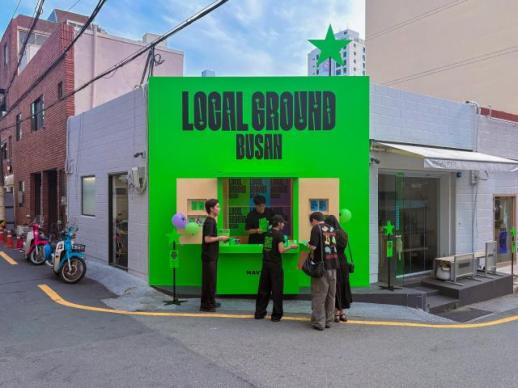 Naver launches local merchant AI campaign in Busan, timed to BTS concert SEOUL, June 11 (AJP) - Naver began rolling out its first "Local Ground" campaign in the southern port city of Busan, extending the AI-driven growth tools it built online to brick-and-mortar merchants in regional commercial districts. The inaugural campaign runs from Tuesday to Saturday and draws in 104 small and mid-sized stores across busy quarters including Jeonpo-dong, Yeongdo and the Bosu-dong secondhand bookstore alley, the company said. Naver is helping the shops adopt AI-based ordering and payment tools, among them QR ordering and an integrated offline terminal called Npay Connect, while also producing short-form video to showcase the merchants to visitors. The timing is deliberate. With BTS staging global concerts in Busan on June 12 and 13, Naver is sharpening features for foreign users, who can verify their identity with a passport to access its maps, reservation, ordering and payment services and translate storefront signs and menus through its Papago app. The company also held a "Local Meetup" on Wednesday, gathering about 200 staff and local business owners to discuss the role of regional diversity in the AI ecosystem and to share growth cases and AX strategies through its Place, shopping and advertising teams. "Busan is a dynamic city where its own character and culture breathe vividly through every neighborhood and alley," said Hwang Soon-bae, who leads Naver's Impact Synergy group, adding that it was all the more meaningful to launch Local Ground there. 2026-06-11 11:11:33
-
 LG CNS, LX Pantos to deploy humanoid robots at logistics hub SEOUL, June 11 (AJP) - LG CNS and logistics firm LX Pantos have signed a memorandum of understanding to introduce humanoid and shuttle robots at a major distribution center, as South Korea's IT services industry accelerates its push into physical artificial intelligence. Under the agreement announced Thursday, the two companies will deploy an integrated robot automation system at LX Pantos' MegaWise Cheongna center. The setup envisions shuttle robots retrieving outbound goods from warehouse shelves while wheeled humanoid robots receive and load items onto automated sorting equipment before dispatch. LG CNS will train the robots using LX Pantos' logistics operation data, leveraging its PhysicalWorks Forge platform for robot learning and PhysicalWorks Baton for integrated fleet management. The humanoid hardware will draw on robots built by Dexmate — a Silicon Valley startup LG CNS invested in this past March. Park Sang-kyun, senior vice president and head of LG CNS's telecommunications and distribution services division, said the collaboration was "a proof-of-concept project applying diverse robots and learning and operations platforms to logistics environments," adding the company aims to raise productivity and operational efficiency at the site alongside LX Pantos. The two companies plan to open a tech driven logistics lab — a dedicated demonstration space for the automated workflow — in the second half of this year. They also intend to commercialize logistics robot solutions for external clients once the pilot matures. 2026-06-11 10:33:35