

Journalist
Kim Dong-young김동영
davekim0807@ajupress.com
ReporterSamsung Biologics, CJ CheilJedang, LG Chem, Celltrion, Naver, Krafton, Nexon, Hyundai Mobis etc. & energy, game, food, bio, petrochemical, AI
Kim Dong-young is a bilingual journalist at AJU Press (AJP), covering Korean tech, energy, and bio/pharma.
He reports from the field at events like CES and APEC, runs AJP's YouTube channels,
and is pursuing a master's at Sogang's MOT program. "I try everything in this AI era that can improve yet preserve the facts. Journalism still serves as my core."
He reports from the field at events like CES and APEC, runs AJP's YouTube channels,
and is pursuing a master's at Sogang's MOT program. "I try everything in this AI era that can improve yet preserve the facts. Journalism still serves as my core."
Latest by Kim Dong-young
-
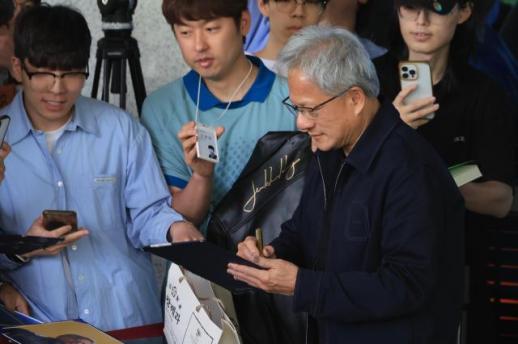 Hyundai Chair to skip Huang's Seoul 'samso' dinner, plans separate meeting SEOUL, June 05 (AJP) - Hyundai Motor Group Chairman Chung Eui-sun will not attend a dinner with Nvidia CEO Jensen Huang and other Korean conglomerate heads held Friday, opting instead for a separate encounter with the chip leader next week, industry sources said. Chung withdrew from the so-called "samso" gathering — named for the samgyeopsal grilled pork belly and soju on the menu — citing a scheduling conflict, the sources said. The dinner, at a restaurant near Hongdae in western Seoul, marks Huang's first such gathering since his October visit. Huang, who arrived Friday for a four-day trip, was expected to dine with SK Group Chair Chey Tae-won, LG Group Chair Koo Kwang-mo and Naver founder Lee Hae-jin. Samsung Electronics Chair Lee Jae-yong who hosted Huang at a Seoul fried-chicken restaurant in October in a meeting dubbed the "kkanbu gathering," is also absent this time owing to overseas commitments. Chung instead plans to receive Huang on June 8 at Hyundai's headquarters in Yangjae, southern Seoul, the sources said. Huang's wider itinerary includes stops at LG Twin Towers, Seoul National University and Naver's offices. Hyundai and Nvidia have deepened ties since the October meeting, when they signed a memorandum to advance physical AI in Korea and pledged about $3 billion to build an Nvidia technology center and a Hyundai application hub. The companies are also collaborating to upgrade Boston Dynamics' Atlas humanoid robot. 2026-06-05 14:41:40
-
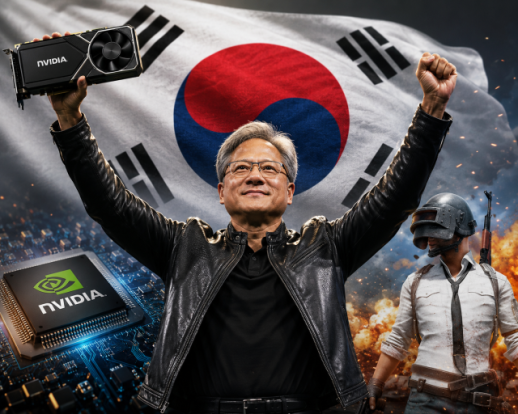 Nvidia CEO's Seoul trip signals shift from chip buyer to physical-AI partner SEOUL, June 5 (AJP) - When Nvidia's CEO Jensen Huang stepped off his plane at Gimpo International Airport on Friday and made an esports cafe his first stop, the image was familiar: the chip merchant returning to the gaming culture that built him. The substance of this visit, however, points somewhere far off. This trip is less about who buys Nvidia's graphics cards than about who can help the company teach machines to act in the physical world. South Korea, a manufacturing power with chips, robots and factories in equal measure, is being recast from customer to co-developer. The pivot has a clear starting line. At the APEC summit in the southeastern city of Gyeongju last October, Huang unveiled a plan to deploy more than 260,000 Nvidia GPUs across South Korea, with Samsung, SK Group, Hyundai Motor Group and Naver each building artificial intelligence (AI)-dedicated factories to anchor the rollout. That announcement seeded the infrastructure. The current visit is about putting it to work, turning raw computing capacity into trained systems that can drive cars, run assembly lines and move robots through real space. The distinction matters because physical AI is where the next phase of the industry is being fought. Cloud-based chatbots run on data centers alone, but robots and self-driving cars must perceive, decide and act in a messy physical world, and the companies that can supply both the hardware and the real-world testing grounds stand to capture the value. Few countries pair those strengths as tightly as Korea. "Hyundai Motor has already said it would put Atlas to work on its factory floors. Korean firms are increasingly stressing automation through physical AI, embedding it in cars and then in humanoids," said Dr. Bum-jae You, principal research scientist and former head of humanoid development at the Korea Institute of Science and Technology. Nowhere is that clearer than at LG. Huang is expected to meet LG Group Chairman Koo Kwang-mo today, in talks centered squarely on physical AI, and the market has taken notice: shares of LG Electronics have more than tripled this year, hitting their daily limit twice on hopes of a deeper Nvidia tie-up. "LG isn't widely known for this outside the company, but internally it has been working on a mobile-controlled, two-armed home robot," said You. "Because it is a machine that could work in both factories and homes, it could stand out all the more as physical AI." LG Electronics has spent the past year pushing aggressively into the field, anchoring its effort on the AI home robot it calls CLOiD while developing actuators, robot sensing and smart-factory systems. It already runs Nvidia's Omniverse platform to build digital simulations of its own production lines. Those simulations are the heart of physical AI. Before a robot lifts a part or a car merges into traffic, it rehearses inside a lifelike digital twin, repeating the task through reinforcement learning across millions of virtual trials until the behavior holds up in reality. The conversation reaches well beyond a single company. Analysts expect cooperation to broaden across LG affiliates, drawing in the EXAONE generative model from LG AI Research, the semiconductor substrates and sensing technology of LG Innotek, and the AI cloud business of LG Uplus. The visit also lands as Nvidia pushes into telecommunications, an arena some see as the connective tissue of physical AI. The chipmaker has been expanding an artificial intelligence—radio access network (AI-RAN) alliance with Nokia, a move expected to weigh on the choice of suppliers in Korea. "With Huang's visit, interest in AI-RAN is rising, as Nvidia focuses on expanding the business alongside data centers," said Kim Hong-sik, an analyst at Hana Securities. "The likely shape is a contest between a GPU-based Nvidia-Nokia camp and an Ericsson-Samsung approach built on CPUs with network solutions. More than market share, investors will watch how AI-RAN reshapes the equipment ecosystem, since it is likely to expand alongside the move to 5G standalone and 6G, completing the picture of physical AI." South Korea's other giants slot into the same logic. SK Group and Samsung Electronics supply the high-bandwidth memory that feeds AI accelerators and are building digital twins of their own chip lines, while Naver is converting a GPU supply deal into a deeper technology alliance. That last shift is telling. Naver Cloud said this week it would broaden its Nvidia relationship into a strategic alliance spanning AI infrastructure, models, services and physical AI, moving beyond a simple procurement arrangement. "Our partnership with Nvidia goes beyond a simple GPU supplier-and-customer relationship," Naver Cloud CEO Kim Yu-won said. "It is a strategic decision to develop AI technology together and expand the global AI ecosystem." Yet experts say Naver may be looking further ahead than simply becoming one of the country's top AI service providers. "Naver doesn't build physical robots, but its framework technology for orchestrating and operating fleets of robots is said to be quite advanced," said You. "Beyond AI data centers, there could well be talk of expanding into robot-framework services." Even the gaming meetings that frame the trip belong to this thread rather than to nostalgia. Game studios have spent two decades building convincing virtual worlds, exactly the synthetic environments now prized as training grounds for physical AI. Krafton this year launched Ludo Robotics, a humanoid venture, and has woven Nvidia's ACE character technology into its PUBG and inZOI titles. NC, long a gaming partner of Nvidia, now develops a "world model" through its NC AI unit that teaches robots the laws of physics. The esports stop fits too. Korea turned competitive gaming into a national spectacle from the StarCraft era onward, an appetite that drove demand for graphics hardware and helped seed the computing culture Nvidia rode to dominance, and whose data-rich virtual arenas echo the simulations AI now learns from. In the evening, Huang is set to share grilled pork belly and soju with corporate heads including SK, LG and Naver at a restaurant near Hongik University, a sequel to last year's "chimaek" gathering over chicken and beer. The menu invites easy comparison with that earlier dinner, where the agenda does not: the chicken-and-beer night sealed Korea's role as a supplier of chips and memory, today’s is meant to bind the country into the harder, more lucrative business of making machines that think and move. 2026-06-05 14:33:36
-
 Krafton's Subnautica 2 unveils update roadmap shaped by player feedback SEOUL, June 05 (AJP) - Krafton's creative studio Unknown Worlds released its eighth developer vlog for "Subnautica 2," outlining short- and long-term update plans drawn from global player feedback after the underwater survival sequel's early-access launch on May 14. In the video, lead designer Anthony Gallegos detailed recent hotfix results and a roadmap that promises richer resource deposits and rebalanced predator attacks, changes aimed at sharpening the game's exploration and survival experience in response to community input. The studio said upcoming smaller updates will expand the Biomods adaptation system with additional passive slots and new early-game survival options, while proximity voice chat, emotes and character customization are in development for multiplayer. A larger content drop will open a new region inhabited by the towering Collector Leviathan and introduce fresh vehicles. "Player feedback and voices are the most important signpost showing the direction Subnautica 2 should take," said Fernando Melo, executive producer, adding that the studio would continue an open-development approach that places user opinion first. Developed by Unknown Worlds, founded by Charlie Cleveland and Max McGuire, "Subnautica 2" is the direct successor to the genre-defining "Subnautica" series, built on Unreal Engine 5 and offering up to four-player co-op for the first time across Steam, the Epic Games Store and Xbox Series X|S. 2026-06-05 10:09:20
-
 Samyang's Buldak tops 10 billion units, unveils new mascot Peppo SEOUL, June 05 (AJP) - South Korea's Samyang Foods announced that cumulative sales of its Buldak instant noodle brand had surpassed 10 billion units, a milestone the company is marking by rolling out a next-generation character, Peppo, to anchor an aggressive push into licensing and digital content. The fiery brand, which turns 14 this year, crossed the threshold at the end of May after generating about 7 trillion won ($4.54 billion) in cumulative revenue, the company said Friday. Buldak now sells in some 100 countries, churning out 2 billion units a year, or roughly 63 packets every second worldwide. Growth has accelerated sharply since the brand passed 1 billion units in 2017, hitting 4 billion in 2022 and 9 billion in 2025 before vaulting past 10 billion in barely half a year. Buoyed by the surge, Samyang became the first Korean food maker to top $900 million in exports last year and now accounts for more than 60 percent of the country's ramen shipments abroad. To capitalize on the momentum, Samyang is making Peppo, a chick hatched from an egg laid by predecessor mascot Hochi, the new face of the Buldak universe. Developed by affiliate Samyang Anni, the digital-native character has drawn 1.06 million subscribers on YouTube since its 2024 debut and has already featured on packaging for products such as Buldak Mac & Cheese in North America. "In the food industry a character usually serves as a tool to promote a product's flavor, but we questioned that formula and decided to raise ours as a global brand with a life of its own," said a Samyang Anni spokesperson. New domestic packaging featuring Peppo begins rolling out this month, starting with Buldak sauce, while branded merchandise and an official website are slated to follow, part of what Samyang calls its "eatertainment" vision first unveiled in 2023. 2026-06-05 09:42:08
-
 Homeplus to permanently close 37 suspended stores, putting 3,500 jobs at risk SEOUL, June 04 (AJP) - Homeplus, South Korea's second-largest hypermarket chain, will permanently shut 37 stores it had temporarily closed last month, a move that threatens the jobs of about 3,500 workers, the company told its labour unions. According to industry sources on Thursday, the retailer sent a a notice to the Korea Mart Labor Union's Homeplus branch and a separate general union that it had decided to close the stores, which had been suspended since May 10 due to their low contribution to earnings. The 37 outlets are among 104 hypermarkets operated by Homeplus, which is undergoing court-led rehabilitation after years of mounting debt under private equity owner MBK Partners. Homeplus said it would apply an asset-securitisation support scheme to affected staff and offer voluntary redundancy to employees at managerial level and above, excluding those with less than six months until retirement. But the company cautioned that the payouts hinge on its survival. "The support scheme and voluntary redundancy can only be applied if creditors agree to emergency operating loans and an extension of the rehabilitation process," Homeplus said in the notice. According to the union, about 3,500 people work at the 37 stores, of whom about 1,500 managerial staff are eligible for voluntary redundancy. The unions have warned the closures could trigger a domino effect across the remaining 67 outlets. Homeplus filed in for court receivership in March last year, becoming the first of South Korea's big three hypermarket operators to enter rehabilitation. The crisis traces back to MBK's 2015 leveraged buyout, which saddled the chain with heavy lease and rental burdens that critics say hollowed out its finances. 2026-06-04 17:26:54
-
 Starbucks Korea card spending drops after 'Tank Day' backlash SEOUL, June 04 (AJP) - Estimated credit and debit card spending at Starbucks Korea fell by more than 10 billion won ($6.53 million) last month from April, data showed, as a marketing controversy weighed on the coffee chain. Estimated card spending at Starbucks reached 121.19 billion won in May, down about 13.1 billion won from 134.32 billion won in April, according to Mobile Index on Thursday. The decline deepened in the latter half of the month. Weekly spending slipped from 32.16 billion won during May 11 to 17 to 23.69 billion won during May 18 to 24, when the "Tank Day" controversy erupted, before falling again to 21.46 billion won during May 25-31, the second consecutive weekly drop. The figures cover only estimated domestic card payments and exclude corporate bank transfers, cash, gift certificates, simple payments and in-app transactions, the company said. Demand still held firmer on other channels. As of 4 p.m. on Thursday, Starbucks vouchers ranked first and second in the cafe category on the KakaoTalk Gift platform, led by a 50,000-won e-card voucher. Starbucks Korea triggered the backlash on May 18, the anniversary of the Gwangju Democratic Uprising, by using the term "Tank Day" to promote a tumbler discount event. As criticism spread online, Shinsegae Group dismissed Starbucks Korea's chief executive and issued a public apology. 2026-06-04 16:15:29
-
 Eggs hit by buying limits as South Korean retailers ration supply SEOUL, June 04 (AJP) - South Korea's leading hypermarket chains have capped egg purchases at one carton per customer as prices climb on the back of an avian influenza outbreak, with retailers now weighing the sale of imported eggs for the first time. Emart and Lotte Mart are limiting shoppers to a single 30-egg carton of discounted product through June 10, the retail industry said on Thursday. Both chains are selling their trays as premium domestic grade for about 6,000 won per tray. The promotions are jointly subsidized by the Ministry of Agriculture, Food and Rural Affairs to ease pressure on household grocery bills. Warehouse chain Traders Wholesale Club normally imposes no cap but has begun restricting customers to two cartons depending on store stock. The price surge has been driven by tightening supply in the wake of a highly pathogenic avian influenza outbreak. The national average retail price for 30 premium domestic eggs reached 7,472 won the previous day, up 4.1 percent from a month earlier, according to the Korea Agro-Fisheries & Food Trade Corporation. Brisk demand for cheaper eggs has left Emart's online stock temporarily sold out. Emart and Lotte Mart are now considering selling fresh eggs imported from Thailand under a government scheme to stabilize prices — a first for both chains, which have sold only domestic eggs until now. Rival Homeplus began offering Thai and US eggs in April, while Lotte Super introduced US eggs last month. The government, meanwhile, plans to import a total of 31.23 million fresh eggs this year and will for the first time bring in Brazilian eggs to diversify its sourcing, with domestic production expected to recover from July as laying-hen flocks rebuild. 2026-06-04 14:37:35
-
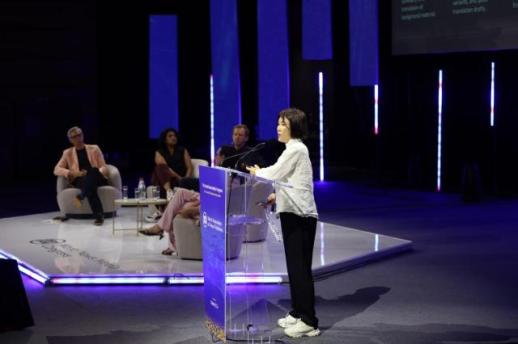 WNMC 26: AI reshapes how news is experienced, not just made, media leaders say in Marseille MARSEILLE, June 03 (AJP) - Artificial intelligence is no longer merely changing how journalism is produced but is rewiring how audiences encounter the news itself, a panel of global media leaders said at the World News Media Congress. South Korea's AJP, an AI-native news agency built for that shift, took its place alongside publishers from India and Germany to argue that the technology is dissolving the old path of search, click and read, replacing it with content that anticipates what readers want before they ask. The session, titled "How AI Is Transforming the News Experience," was moderated by Dmitry Shishkin, a former BBC World Service digital editor and now an independent media adviser, whose long-championed "user needs" model framed much of the discussion. The 77th congress, organized by the World Association of News Publishers and held at the Palais du Pharo from June 1 to 3, drew about 1,000 participants from more than 60 countries, representing over 450 news publishers. Seo Hye-seung, managing editor of AJP and part of the Aju Media Group, opened with a personal story about her 83-year-old mother, who now relies on her smartphone to take her medication and book restaurants. "This is the most ordinary thing that's happening in Korea," Seo said, noting that the country had absorbed broadband, smartphones and now AI faster than almost anywhere. She cited a study finding that more than half of office work in Korea passes through an AI tool at some point each day. Because AJP entered the crowded English-language agency market late, Seo said, it was built to its advantage. "We were built AI-native from the first line of code," she said, adding that reporters with less than two years of experience now produce 5,000-word features and analyses. The group publishes in five languages, she said, filtering selected stories from its Korean flagship through a system called AI Pick that translates them automatically. The automation lifted output in four additional languages tenfold and raised English traffic by about 30%, according to the company. Seo said the shift had freed journalists to seek out audiences rather than wait for them, pointing to the group's saturation coverage of a BTS concert in central Seoul earlier this year. "The new question is who offers the best experience," she said, "because users know best." Sannuta Raghu, executive producer and head of the AI lab at India's Scroll.in, said AI was becoming core infrastructure for what she called "personal, machine-mediated sense-making." Her newsroom, she said, employs about 20 people in a country of 1.4 billion. Five years ago it abandoned the chase for breaking news to focus on context and depth, finding its paying readers among academics and researchers studying South Asia. Rather than compete with chatbots that aggregate answers from many sources, Raghu said, Scroll.in was turning its platform into a "trusted workspace" offering what she termed auditable comprehensiveness. "We are very open about the comprehensiveness gap," she said, describing a system that maps what the newsroom can cover and transparently fills the rest from verified sources such as datasets and government bodies. Markus Knall, chief editor and director of content at Germany's Ippen Digital, struck an optimistic note for community journalism. "This may be the best time for local publishers in the last few years, and AI is the reason," Knall said. He argued that small audiences and high costs, once crippling constraints, had become the sector's biggest opportunity. Ippen runs about 170 local news websites in Germany, he said. On a recent election night, the group published more than 4,000 articles covering some 20,000 communities, output he said no human staff could ever match. But Knall warned against treating AI purely as an efficiency tool, urging newsrooms to chase genuine new scale while reserving human reporters for the trust that underpins democratic life. Astrid Maier, chief deputy editor and head of strategy at German news agency dpa, said the industry was facing not an efficiency story but a wholesale platform shift. "If there weren't any independent news agencies right now in the age of AI, they should be invented right now," Maier said, arguing that verified, fact-committed information was more vital than ever as machines learn to read the structured data inside each news article. She presented DPA-IQ, a trusted information layer launched as a minimum viable product two weeks ago, which lets clients' AI agents pull verified text, images and soon video on demand rather than receiving a constant push down the wire. Maier cautioned that if publishers did not set shared standards for how facts are attributed within such systems, the large technology platforms would set them instead. "Otherwise facts won't matter anymore," she said. The discussion echoed a session a day earlier on the evolution from search optimization toward answer- and generative-engine optimization, where panelists stressed that audiences increasingly meet the news through AI rather than the open web. Across both sessions the underlying message was consistent: while algorithms and platforms keep shifting, the direct relationship between a publisher and its readers remains the enduring source of value. 2026-06-03 18:09:06
-
 [[WNMC 2026]] AJP Director Seo Hye-seung: 'AI Native News Agency is the Answer' – Korean Model Unveiled in Marseille Seo Hye-seung, the editor-in-chief of Aju Media Group (AJP), participated as a panelist in the session titled "How AI Is Transforming the News Experience" at the 77th World News Media Congress (WNMC) held on June 3 in Marseille, France. The session was moderated by Dmitry Shishkin, a former BBC World Service journalist, and featured media leaders from Germany's Ippen Digital, dpa, and India's Scroll.in. During the discussion, Seo highlighted AJP's strength as a latecomer in the English news agency market, emphasizing that it was designed from the ground up with AI in mind. She explained that Aju Economy produces around 300 articles daily, some of which are selected by their in-house system, 'AI Pick,' for automatic distribution in Chinese, Japanese, Vietnamese, and English. This automation has resulted in a tenfold increase in publication volume for those languages and a 30% rise in English traffic. Seo defined AJP's identity as conveying "Asian substance in English," noting that while language has traditionally been tied to regions, the advent of AI is reversing that trend. "AI is changing not only how news is created but also how readers experience it," she emphasized, stating that readers are the best judges of this transformation. Aju Media Group operates as a multilingual, AI-native media organization, centered around its Korean-language Aju Economy, the English news agency AJP, and the AI Business Channel (ABC), offering international editions in five languages. 2026-06-03 16:18:00
-
 [[WNMC 2026]] How AI is Transforming News Consumption Artificial intelligence is not only changing how news is produced but also how readers experience it. The era of searching for keywords and clicking links is fading, giving way to a time when content is delivered based on predictions of what readers want, even before they ask. On June 3, during the 77th World News Media Congress held at the Palais du Pharo in Marseille, discussions took place in a session titled "How AI Is Transforming the News Experience." The congress, which ran from June 1 to 3, attracted around 1,000 participants representing over 450 media organizations from more than 60 countries. The session was moderated by Dmitry Shishkin, a former digital development editor at BBC World Service and now an independent media consultant. Panelists included Markus Knall, Chief Content Officer and Editor-in-Chief at Ippen Digital in Germany; Astrid Maier, Deputy Editor and Strategy Head at dpa in Germany; Sannuta Raghu, Executive Producer at Scroll.in in India; and Seo Hye-seung, Editor-in-Chief of AJP at Ajou Media Group in South Korea. The central theme of the session was "liquid content," which refers to the concept that a single piece of reporting can change its form based on the context of the reader, reaching them in the appropriate format at the right moment. This contrasts sharply with the traditional model that waits for readers to visit the media outlet. Shishkin's "user needs" model provided the theoretical foundation for this discussion. It starts from the premise that readers do not consume news solely for information. Instead, it categorizes their different intents into four areas: "to know," "to understand," "to feel," and "to do." He emphasized, "Tell the story you want to tell, but frame it from the perspective that adds value for the reader." AI takes this model a step further by analyzing data to determine which readers currently seek understanding or emotional resonance, automatically generating content in the appropriate form. The session also posed the fundamental question: What does it mean to be a news agency in the age of AI? Traditionally, news agencies have acted as wholesalers, producing articles to supply to other media. However, as AI automates translation, curation, and distribution, the boundaries of what agencies can deliver are expanding. In this context, Seo Hye-seung's AJP model stands out. Ajou Media Group publishes content in five languages, including Korean, English, and Chinese, as well as Japanese and Vietnamese editions, all driven by AI. Seo identifies AJP's identity not in the search era but in the AI era. He stated, "In the search era, language was tied to regions, but in the AI era, that formula is flipped. All major language models are fundamentally built around English, and Asia is increasingly described by AI trained on Western data. We have found our role as an Asian English news agency, writing in the language that AI can best understand. This is the 'Asian substance in English.'" Seo explained the paradox of being a latecomer designed as an AI-native. Although AJP is a newcomer in the English news agency market, its foundation built on AI from the start has offset the disadvantages of being late to the game. He shared that the 72-year-old founder of Ajou Media Group, Kwak Young-gil, adopted the principles "AI or Die" and "Start now, perfect later" after attending AI lectures at KAIST during the pandemic. Seo emphasized that while AI serves as an auxiliary tool, the role of journalists has become even more crucial. He said, "Our motto is clear: to become journalists that AI can learn from and keep up with. Currently, at AJP, reporters with less than two years of experience are producing in-depth features, interviews, and analytical articles of 5,000 words." In practice, AJP selects a portion of the approximately 300 articles produced daily by Ajou Economic Daily through a system called "AI Pick" for automatic distribution in four additional languages. This automation has increased the publication volume in those four languages tenfold, and English traffic has reportedly risen by 30%. This session naturally connected with the previous day's discussion on "Discovery: How to Rethink Search in the AI Era." While the June 2 session addressed the evolution of search strategies from SEO to AEO (Answer Engine Optimization) and GEO (Generative Engine Optimization), the June 3 session looked ahead to a stage where readers experience news even before searching for it. This shift suggests that the long-standing questions in the media industry are changing. Where publishers once asked, "What is the best journalism?" the new question is, "What is the best experience?" However, both sessions emphasized a common message: the fundamentals remain more important than technology. Algorithms and platforms may constantly change, but the direct relationship with readers endures. The third key point was how AI is rapidly expanding the reporting scope of local publishers. Sannuta Raghu from Scroll.in in India has led experiments using AI to cover broader communities with limited resources, demonstrating the significant benefits of automation for resource-constrained local media. AJP shares a similar discovery. A small AI video and essay contest conducted last year in collaboration with the Indian Embassy in South Korea started with a mere $220 marketing budget but garnered about one million impressions, laying the groundwork for building India-focused content. Seo illustrated how the time freed up by AI translates into enhanced reader experiences by referencing the recent BTS concert in Gwanghwamun, which was live-streamed 24/7 for two months, transforming into a platform for the global fanbase 'ARMY' in five languages. He stated, "We cannot wait for readers to come to us. We must seek them out and understand what they want to experience." Ultimately, the session converged on a single conclusion: while AI is shaking up the production, distribution, and consumption of news, the reader remains at the center. Technology is merely a tool, and the goal of 'predictive journalism' is to create content that finds its audience. The panelists, including Seo, shared a vision that regardless of where readers are or what format they desire, stories will be delivered at the right moment, emphasizing that the competitive edge for media in the AI era lies in creating reasons for readers to return. 2026-06-03 16:09:00