

Journalist
Kim Dong-young김동영
davekim0807@ajupress.com
ReporterSamsung Biologics, CJ CheilJedang, LG Chem, Celltrion, Naver, Krafton, Nexon, Hyundai Mobis etc. & energy, game, food, bio, petrochemical, AI
Kim Dong-young is a bilingual journalist at AJU Press (AJP), covering Korean tech, energy, and bio/pharma.
He reports from the field at events like CES and APEC, runs AJP's YouTube channels,
and is pursuing a master's at Sogang's MOT program. "I try everything in this AI era that can improve yet preserve the facts. Journalism still serves as my core."
He reports from the field at events like CES and APEC, runs AJP's YouTube channels,
and is pursuing a master's at Sogang's MOT program. "I try everything in this AI era that can improve yet preserve the facts. Journalism still serves as my core."
Latest by Kim Dong-young
-
 WNMC 26: No map in AI age. Newsrooms must chart their own course MARSEILLE, June 03 (AJP) - If there was one message that echoed through the halls on the second day of the World News Media Congress on Tuesday, it was that nobody knows exactly where artificial intelligence is taking journalism. "There is no map," WAN-IFRA AI in Media Lead Ezra Eeman told editors, publishers and newsroom leaders gathered in Marseille. For an industry accustomed to navigating disruption, the statement was both unsettling and liberating. The internet had a roadmap. Mobile had a roadmap. Social media eventually had a roadmap. But artificial intelligence is creating a fundamentally different environment—one in which technology increasingly mediates the relationship between publishers and audiences, while the rules of value creation, distribution and discovery are being rewritten in real time. "That is not how the new world works. The map does not fully explain what's happening now," Eeman said. The challenge facing publishers, he argued, is not simply adopting AI tools. It is learning how journalism survives and thrives when AI becomes the primary interface through which people access information. Charting a Course Without a Map Rather than offering a blueprint, Eeman outlined the choices publishers are already making as they attempt to navigate the uncertainty. Some are taking a defensive approach. According to data he shared, 56 percent of publishers have blocked AI bots from accessing their content. Others are pursuing engagement. Another 31 percent are actively negotiating or striking licensing agreements with AI companies. Neither approach is universally right, Eeman suggested. "It depends on your setup and size." The larger point is that publishers must make deliberate choices about how they participate in the emerging AI ecosystem. Because in a world where AI systems increasingly summarize, interpret and distribute information, ownership and control matter more than ever. "Without control, no market. No ability to capture value," Eeman warned. For decades, publishers competed for audience attention. Today they are also competing for their place within AI systems that may become the dominant gateway to information. From Ingredient to Destination Eeman argued that one of the greatest dangers facing publishers is becoming accessory. The challenge is not to fall into an ingredient, but survive as the destination. As AI systems generate answers, summaries and recommendations, journalism risks being reduced to an ingredient inside someone else's product. If publishers merely supply content to AI systems, they risk losing audience relationships, subscription opportunities and revenue streams. If they create distinctive experiences, services and products that users actively seek out, they remain relevant regardless of how information is distributed. The future, Eeman argued, will favor organizations that understand emerging AI behaviors and adapt accordingly. "Understand AI habits, avoid commodity, master scarcity, grow your own intelligence, serve the agents." The message reflected a growing consensus that abundance makes uniqueness more valuable. "Market favors exclusive, specific and authenticity." In a world flooded with AI-generated content, original reporting, trusted brands, expertise and human judgment become strategic advantages. Learning While Moving What made the discussion notable was that no speaker claimed to have solved the problem. Instead, leaders from some of the world's largest news organizations described their own efforts to navigate uncertainty. Fabrice Bakhouche, chief executive of SIPA Ouest-France Group, acknowledged that publishers are still trying to understand what AI will mean for their organizations. "The impact on roles, processes and management is only beginning to emerge," he said. "There is no clear picture on impact." His response has been to encourage experimentation while avoiding paralysis. "Bottom-up approaches are relevant," he said, cautioning against becoming "too conservative." Rather than waiting for certainty, organizations must learn through action. Building the Aircraft While Flying At British 24-hour broadcaster Sky News, the challenge is equally complex. Managing Director Jonathan Levy described an industry facing "constant, simultaneous and accelerating" disruption. Quoting former Washington Post executive editor Marty Baron, Levy called this period "head-spinning change in media consumption." Sky's answer has been to embrace innovation while maintaining its core journalistic mission. "We must deliver trusted journalism and simultaneously build the aircraft while in flight," Levy said. The organization is pursuing a premium, video-first future while continuing to cover breaking news around the clock. For Levy, successful navigation depends on leadership that acknowledges uncertainty rather than pretending certainty exists. "Honesty, leadership in transition, not pretending to have answers." The objective is not to eliminate uncertainty but to create enough confidence for organizations to move forward. Building the Scaffolding At Reuters, AI strategy leader Jane Barrett described a different approach to charting a course. Rather than focusing primarily on technology, Reuters has concentrated on building structures that allow experimentation without sacrificing trust. She outlined three layers of what she called "scaffolding." The first is editorial: governance committees, updated guidelines and clear rules governing AI use. The second is technological: approved tools, data security protections and content safeguards. The third is psychological: creating a culture where experimentation is encouraged and failure is accepted as part of learning. "Failure is learning," Barrett said. Her observation that "10 percent is about AI, 20 percent about technology, 70 percent about people and processes" captured a theme repeated throughout the day. The challenge is not simply deploying AI. It is helping organizations adapt to a new reality. Following Signals, Sharing Failures Perhaps the most revealing part of Eeman's presentation was his acknowledgment that the industry remains in the early stages of transformation. "No publisher has a map," he said. Instead, organizations are navigating through experimentation, observation and collaboration. The goal is not to discover a single correct route but to learn from one another's successes and mistakes. "Sharing signals, failures." 2026-06-03 09:58:25
-
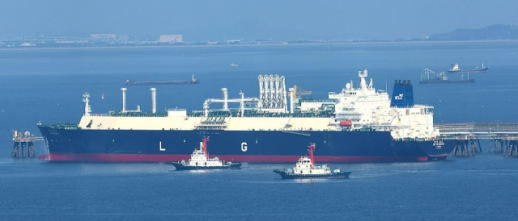 Korea sees 80% of summer crude secured as Mideast war strains supply SEOUL, June 02 (AJP) - South Korea expects to secure most of the crude oil it needs for August by next month, the energy minister said, seeking to quell fears of a supply crunch as the Middle East war drags into its fourth month. Industry Minister Kim Jung-kwan told a cabinet meeting chaired by President Lee Jae Myung that projected August crude volumes were climbing steadily and would reach the mid-80 percent range of normal levels during July, the 95th day of the conflict. From May to July, the country secured 86 percent of its usual crude and 83 percent of its naphtha, holding a stable course, the minister said. Naphtha plant utilization stood at about 75 percent as of late May, close to the prewar level of 80 percent. "We have already secured replacement volumes to last through the end of this year," Kim said of natural gas supplies, after Qatar's recent declaration of force majeure on liquefied natural gas shipments stirred concern. The government turned to the United States and Southeast Asia to plug the gap. Markets had feared an August squeeze should the blockade of the Strait of Hormuz, a chokehold on Korea's Middle East crude, persist into the peak summer demand season. The International Energy Agency had also warned that supply disruptions and seasonal demand could push the oil market into a danger zone in July and August. With no clear date for safe passage through the strait, the ministry extended its strategic stockpile swap scheme through this month from an earlier April-to-May window. Under the scheme, the government lends out reserve crude once a refiner proves it has sourced oil abroad, then recoups the barrels when replacement cargoes arrive. About 21 million barrels have been swapped and are now being repaid in stages. Supplies of medical materials such as intravenous-fluid packaging, syringes and surgical gloves remained at normal levels, the ministry said, while helium, hydrogen bromide and aluminum wheels feeding the semiconductor, auto and shipbuilding industries showed no signs of disruption. 2026-06-02 16:10:59
-
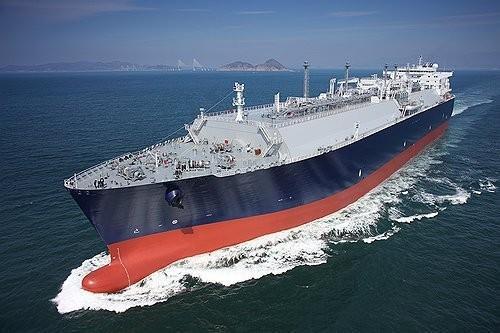 Samsung Heavy wins $2.8 billion FLNG order in North America SEOUL, June 02 (AJP) - Samsung Heavy Industries announced it has won an order to build one floating liquefied natural gas (FLNG) production unit for a North American client, in a deal worth 4.33 trillion won ($2.85 billion). The South Korean shipbuilder said Tuesday through regulatory filings that construction will begin once the client issues a notice to proceed, with delivery scheduled for July 2030. It did not name the buyer. FLNG units are vast offshore vessels that extract, chill and store natural gas at sea, freeing producers from the cost and delay of building pipelines and onshore export terminals to reach remote gas fields. Demand has firmed as buyers in Asia and Europe hunt for supply to bridge the shift away from coal. Samsung Heavy is a dominant player in the niche, having built Royal Dutch Shell's Prelude, the world's largest FLNG facility. The company said it has secured seven of the 11 FLNG units ordered worldwide to date, giving it a 64 percent share of the global market. The contract lifts Samsung Heavy's order tally this year to 28 vessels worth $8.3 billion, or about 60 percent of its $13.9 billion annual target, the company said. Its commercial vessel arm has booked $5.0 billion, 88 percent of target, on the back of 13 LNG carriers, two very large ethane carriers, four very large gas carriers, two container ships and six crude tankers. The offshore division, including the latest FLNG award, has won $3.3 billion in orders, or 40 percent of its $8.2 billion goal for the year. Shares of Samsung Heavy Industries traded at 27,800 per stock at 3:08 p.m., 0.91 percent higher than the day before. 2026-06-02 15:11:06
-
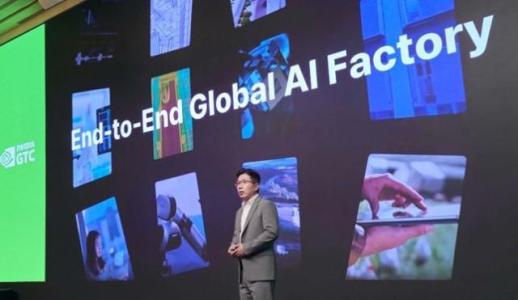 Naver Cloud, Nvidia expand alliance to build global AI factories SEOUL, June 02 (AJP) - Naver Cloud is teaming up with Nvidia to build artificial intelligence factories around the world, deepening a relationship that until now centered largely on the supply of graphics processing units. The South Korean cloud unit said on Tuesday it would broaden the partnership into a strategic technology alliance spanning AI infrastructure, models, services and physical AI, moving well beyond a conventional buyer-supplier arrangement. Naver Cloud Chief Executive Kim Yu-won outlined the plan at Nvidia's cloud partner summit in Taiwan, where he positioned the company as a full-stack player covering everything from infrastructure to applications. "Our partnership with Nvidia goes beyond a simple GPU supplier-and-customer relationship," Kim said. "It is a strategic decision to develop AI technology together and expand the global AI ecosystem." Under the deal, Naver Cloud will draw on Nvidia's open Nemotron 3 large language model to sharpen its own HyperCLOVA X model, while the two firms jointly research model optimization and core technologies. They also plan to help governments and local companies build sovereign AI models tailored to individual markets. The tie-up surfaces ahead of a meeting in South Korea between senior Naver and Nvidia executives, at which the companies are expected to disclose a concrete execution plan for the AI factory venture. Raj Mirpuri, vice president for Nvidia's global AI cloud and infrastructure, said the collaboration would let customers across Asia and beyond tap the chipmaker's integrated platform to build sovereign, industrial and enterprise AI. 2026-06-02 11:03:36
-
 WNMC 26: AI dominates day one as annual World News Media Congress opens in Marseille SEOUL, June 1 (AJP) - The annual gathering of the World Association of Newspapers and News Publishers (WAN-IFRA) opened at the Palais du Pharo in Marseille, southern France, with artificial intelligence (AI) shaping every major session on the first day of the three-day event. About 1,000 publishers, editors and chief executives from more than 60 countries packed the venue at the global news media association's 77th congress on Monday. The program moved through pre-Congress Deep Dives, partner showcases, a press freedom prize ceremony and the formal Congress opening, capped by an evening welcome reception. The day's most urgent strand was the disruption of search. A Deep Dive titled "Discovery: How to Rethink Search in the AI Era" examined the impact of Google's AI Overviews, AI Mode and chatbot-driven discovery on publisher traffic and audience behavior. Recent announcements from Google I/O 2026 were also dissected. Speakers said publisher business models built on search were now in structural transition, not merely facing another search-engine optimization tweak. The crisis is backed by hard numbers. A Pew Research Center study tracked 68,879 searches by 900 US adults. When an AI Overview appeared, the click-through rate on regular search results dropped to 8 percent, half the 15 percent recorded without one. Clicks on the source links inside the AI summary itself ran at just 1 percent. Chartbeat data covering more than 2,500 global news sites also showed Google search referrals down 33 percent last year. In September, US media group Penske Media filed an antitrust lawsuit against Google, arguing that AI Search has broken the reciprocal relationship between publishers and the search engine. Equally pressing is the wave of disinformation generated by AI itself. According to a European Parliamentary Research Service briefing, deepfake videos shared online surged from about 500,000 in 2023 to about 8 million in 2025 — a 16-fold rise. Europol estimates that up to 90 percent of online content could be synthetically generated by 2026. Running in parallel was a session on the emerging market for licensing news content to AI companies. "What Publishers Must Do to Take Advantage of the AI Content Market" walked publishers through bot management, content enhancement and monetization, drawing on WAN-IFRA's own market guidance. The association brought together vendors active in each area, framing the AI content market as both threat and opportunity for newsrooms trying to protect content and capture new revenue at the same time. The newsroom's own response took center stage in "AI: What the Latest Developments Mean for Publishers and Newsrooms", a 90-minute session that worked through technical developments, accelerator lessons, governance and practical tools. Florent Daudens, co-founder of Mizal AI and a former press lead at Hugging Face, opened the slot alongside OK Lab founder Christophe Israël with a survey of the latest AI technical developments. The session closed with a demonstration of Sourcebase.ai, the US AI investigations and reporting platform led by CEO Ron Suskind, a Pulitzer Prize-winning journalist. Three back-to-back Partner Showcase sessions translated those themes into concrete tools. DeeperDive opened the slot, demonstrating a generative AI answer engine for the open web designed to convert trusted publisher content into personalized conversations and lift user retention. A subsequent session showcased how French newsrooms are deploying AI-driven semantic analysis combined with dynamic templates and auto-layout tools, with concrete return-on-investment data on both productivity and subscriber retention. Google closed the slot with a session on NotebookLM, led by Google News Initiative trainer Luisa Fernau. The tone then shifted with the Reporters Without Borders Press Freedom Prize ceremony, held in English. Awarded annually since 1992, the prize this year recognized 24 journalists and outlets across five categories. These were the Courage, Impact and Independence prizes, alongside the Mohamed Maïga Prize for African Investigative Journalism and the Lucas Dolega-SAIF Photo Prize. The international jury included Washington Post columnist Rana Ayyub, Pakistani editor-in-chief Hamid Mir and Syrian Center for Media and Freedom of Expression president Mazen Darwish, among others. Closing remarks came from Henna Virkkunen, the European Commission's Executive Vice-President for Tech Sovereignty, Security and Democracy. Virkkunen oversees the bloc's AI policy and the enforcement of the Digital Services Act and Digital Markets Act. Her appearance pulled the morning's threads — search disruption, content licensing and platform power — onto regulatory ground. The Congress formally opened with welcome remarks from Ros Atkins, BBC News Analysis Editor and Presenter; Catherine Pégard, France's Minister of Culture; and Ladina Heimgartner, President of WAN-IFRA. The opening leaned into the symbolism of France's first WNMC host turn in about three decades, since Paris in 1995. The first Congress Keynote was titled "AI, Journalism and the Uncertain Future of the Public Square." It was delivered by The New York Times Chairman and Publisher A.G. Sulzberger. The substance of his remarks will be covered in a separate article. The "Plenary: In Conversation" that followed was hosted by Atkins and revisited the day's main threads in interview format. The Golden Pen of Freedom Awarding Ceremony then took the stage, preceded by a keynote from Mariya Gabriel, UNESCO Assistant Director-General. Established in 1961, the Golden Pen has on several occasions been credited with securing the release of imprisoned journalists, and remains WAN-IFRA's highest press freedom honor. The formal day-one program closed with a Welcome Reception at R2:Reverso, a venue overlooking Marseille's Old Port. The setting framed the first evening of informal networking against the Mediterranean. 2026-06-01 17:16:06
-
 Korea, China ease food trade rules, opening wider door for K-food exports SEOUL, June 01 (AJP) - South Korea and China have agreed to streamline registration procedures for Korean food exporters and to permit shipments of meat-based instant noodles, widening the export channel for the country's increasingly popular K-food, Seoul's food safety regulator said. The Ministry of Food and Drug Safety said Monday it held its 16th Korea-China food safety cooperation meeting in Qingdao, China, and the 17th Korea-China Food Standards Expert Council in Jeju, both on May 28. Under the new arrangement, Korean firms seeking to ship food to China had previously been required to file registrations with Chinese authorities themselves, but the ministry will now handle bulk registration for all categories except livestock products. The change is expected to slash the registration period to about 10 days from roughly three months, the ministry said, with the revised rules likely to take effect in August. The National Food Safety Information Service plans to publish a report dissecting the detailed amendments to China's General Administration of Customs notice issued in March. The talks also cleared meat-based instant noodles for export, a category long barred from the Chinese market. Such products may now enter China provided they use meat from approved countries and undergo proper heat treatment. The agreement comes as K-food rides record momentum, with the country's food exports reaching $10.41 billion in 2025 and ramen alone topping $1.5 billion for the first time, up 21.9 percent on the year, the agriculture ministry said. Shipments to China, K-food's second-largest market, rose 5.1 percent to about $1.59 billion as spicy Korean varieties win shelf space. 2026-06-01 15:48:45
-
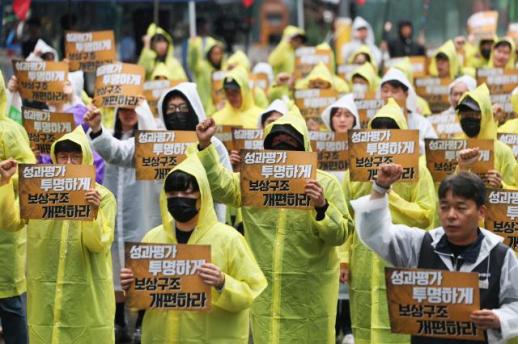 Kakao union sets June 10 partial strike as labor standoff sharpens SEOUL, June 01 (AJP) - Kakao's union announced it would stage a four-hour partial strike on June 10, escalating a deepening standoff with management over job security and the company's executive pay structure. The Kakao branch of the Korean Chemical, Textile & Food Workers’ Union laid out its demands and walkout schedule in a statement on Monday, marking the latest step toward the messaging giant's first-ever headquarters strike. The union said its core demand was to halt the sales, spin-offs and restructuring it blames on years of management missteps, and to secure stable employment. It also called for an overhaul of a pay system it said rewards executives lavishly even as their decisions fuel worker insecurity. "We are well aware of deep concern over possible disruptions or problems with KakaoTalk and other services so closely woven into daily life," the union said, adding it would hold the four-hour stoppage and a rally in Pangyo on Wednesday, June 10. The union signaled it could sharpen its action, saying it had opted for a limited walkout rather than an immediate all-out strike and would ratchet up pressure depending on the course of further talks. The move follows the collapse of a second mediation session at the Gyeonggi National Labor Relations Commission on May 27, which handed the union the legal right to strike. Industry officials see little chance of an extreme outage such as a KakaoTalk blackout even if the union escalates, noting that most platform systems are automated and that non-union and standby staff can keep maintenance and operations running. The standoff comes amid a swell of labor unrest across South Korea's tech and chip sectors, where workers are pressing for a bigger share of profits. Samsung Electronics' union has sought 15 percent of chip-division operating profit, while Hyundai Motor's union has demanded 30 percent of net profit in its 2026 wage talks. 2026-06-01 10:36:41
-
 Samyang Foods wraps up THAIFEX-ANUGA 2026 with record booth traffic SEOUL, June 01 (AJP) - South Korean instant noodle maker Samyang Foods drew about 48,000 visitors to its booth at THAIFEX-ANUGA 2026, Asia's largest food trade fair, as the company pressed its push into Southeast Asian markets. The five-day event ran from May 26 to 30 in Bangkok, where Samyang staged an experiential showcase under the "Samyang Crave Lab" concept, dividing its booth into dedicated zones — or "brand labs" — for its three key labels: Buldak, MEP, and Tangle. Visitors sampled flagship products including Buldak and Carbonara Buldak, alongside locally tailored offerings from the MEP and Tangle lines. Southeast Asia currently accounts for about 20 percent of Samyang's total export revenue, with Thailand, Indonesia and Vietnam serving as the primary growth markets. The company said it plans to deepen its local consumer base through a broader product portfolio and stronger brand communication. "Through this THAIFEX, we were once again able to confirm global consumers' interest not only in Buldak, but also in our diverse brands such as MEP and Tangle," said a Samyang Foods spokesperson. "We will continue to bring differentiated products and brand experiences that reflect the needs of local consumers to the global market." 2026-06-01 09:27:01
-
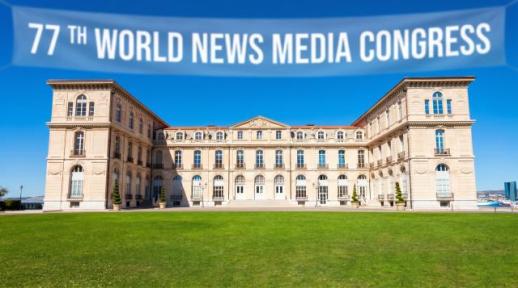 World News Media Congress Returns to France After 30 Years, AI Takes Center Stage Marseille—The 77th World News Media Congress (WNMC26), organized by the World Association of News Publishers (WAN-IFRA), will kick off on June 1 in Marseille, France, marking the event's return to the country after nearly 30 years since it was last held in Paris in 1995. This year’s congress is particularly notable as artificial intelligence (AI) has emerged as a central theme in the news industry. Over the course of three days, more than 1,000 publishers, editors, and CEOs from over 60 countries are expected to attend. Following last year’s congress in Krakow, this event is anticipated to be a major international platform for discussing strategies, technologies, and revenue models that will shape the future of the global media industry. This year, AI has been elevated to a central focus of the event. For the first time, WAN-IFRA has organized an independent track titled "AI in Media," positioning it alongside two other key themes: "Future of Journalism" and "Revenue & Growth." Industry experts believe that generative AI has progressed beyond a mere productivity tool, now reshaping the entire landscape of news production, content distribution, revenue generation, and audience engagement. The rise of AI as a pivotal topic in the news industry can be traced back to the launch of OpenAI's ChatGPT in late 2022, which marked a significant turning point. Since then, generative AI has rapidly become a disruptive force across the entire media ecosystem, influencing everything from news production to search and consumption environments. One of the most immediate impacts has been a decline in search traffic. According to digital analytics firm Similarweb, global traffic to major news websites dropped by approximately 26% in the year following Google's introduction of its AI search summary feature, "AI Overviews." Some media outlets have reported search traffic declines of over 90%, shaking the digital advertising revenue models that heavily rely on search. The conflict between media companies and big tech over content acquisition has also intensified. In December 2023, The New York Times filed a copyright infringement lawsuit against OpenAI and Microsoft, prompting similar legal disputes in Canada, India, and Denmark. Conversely, organizations like the Associated Press, Axel Springer, and News Corp have opted for collaborative models by signing content licensing agreements with OpenAI. In its recent annual report, WAN-IFRA defined AI as a "defining pillar" of its activities. The "Newsroom AI Catalyst" program, co-managed with OpenAI, currently includes participation from 145 newsrooms worldwide. This shift marks a departure from previous congress themes. Last year’s Krakow congress focused on "Mastering Media's New Playbook," addressing AI as part of discussions on data strategy, trust restoration, and digital transformation. The 2024 congress in Copenhagen will also emphasize "Building the Future of News Media in the AI Era," but will approach AI as one element of digital innovation. In contrast, this year’s congress highlights AI as an independent strategic agenda, indicating that the news industry is entering a significant transitional phase in the generative AI era. At the congress, Ajou Media will showcase examples of newsroom innovation and global expansion utilizing AI. The company is redesigning the entire news production process, including article generation, translation, video production, and multilingual platform operations, based on AI. They plan to share strategies for newsroom innovation and revenue growth, drawing on their experience in providing services in five languages, including Korean and English. The congress theme is "Rising Voices, Emerging Risks, Inspiring Futures." WAN-IFRA explained that this reflects the search for new opportunities and a sustainable future amid a transformative industry landscape characterized by the spread of AI, increasing platform dependence, declining news credibility, and changes in business models. The choice of Marseille as the host city is also significant. Founded around 600 B.C., Marseille is France's oldest city and the largest port city in the Mediterranean, serving as a gateway connecting Europe, Africa, and the Middle East. WAN-IFRA described the selection of Marseille as a choice to highlight "new voices emerging from traditional centers of power." The congress will take place at the Palais du Pharo, a 19th-century palace built by Napoleon III. Co-hosts include BFM TV, RMC Radio, and the regional daily newspaper La Provence, all part of the French media group CMA Media. The World News Media Congress, which began in 1948, originated from the founding congress of FIEJ, WAN-IFRA's predecessor. At that time, the delegation was invited to the Élysée Palace in Paris, and the congress has since been held in major cities around the world, including Seoul, Cape Town, Taipei, Istanbul, Moscow, and Hong Kong. Currently, WAN-IFRA represents over 3,000 news companies and 60 publisher associations across 120 countries, making it the largest organization of news publishers globally, representing approximately 18,000 media outlets. In addition to the main sessions, the congress will feature pre-congress deep dives on technology, business, content, and innovation, as well as table talks on media sustainability, revenue diversification, the future of print newspapers, and the news creator ecosystem. All sessions will be conducted in English, with real-time translation services available in over 50 languages powered by AI. During the event, WAN-IFRA will also hold the prestigious "Golden Pen of Freedom" award ceremony and the "Digital Media Awards Worldwide." Notably, the Digital Media Awards have recently introduced categories for "Best Use of AI in Newsrooms" and "Best Use of AI in Revenue Strategies," reflecting the growing importance of AI competitiveness as a key evaluation criterion. Following the congress, a post-training program will be held on June 4-5, allowing participants to visit major media outlets in Paris.* This article has been translated by AI. 2026-05-31 17:51:00
-
World News Media Congress Returns to France After 30 Years, AI Takes Center Stage Marseille—The 77th World News Media Congress (WNMC26), organized by the World Association of News Publishers (WAN-IFRA), opened on June 1 in Marseille, France, marking the event's return to the country after nearly 30 years. This year's congress is notable for placing artificial intelligence (AI) at the forefront of discussions in the news industry. Over three days, more than 1,000 publishers, editors, and CEOs from over 60 countries are expected to attend. Following last year's congress in Krakow, Poland, this event is anticipated to be a major international platform for discussing strategies, technologies, and revenue models that will shape the future of the global media industry. This year, AI has been elevated to a central theme of the event. For the first time, WAN-IFRA has organized an independent track titled "AI in Media," positioning it alongside two other key topics: "Future of Journalism" and "Revenue & Growth." Industry experts believe that generative AI has moved beyond being a mere productivity tool and is now reshaping the entire news production process, from content creation and distribution to revenue generation and audience engagement. The rise of AI as a focal point in the news industry can be traced back to the release of OpenAI's ChatGPT in late 2022, which marked a turning point. Since then, generative AI has quickly become a disruptive force across the entire media ecosystem, affecting everything from news production to search and consumption environments. One of the most immediate impacts has been a decline in search traffic. According to digital analytics firm Similarweb, global traffic to major news sites dropped by approximately 26% in the year following Google's introduction of its AI search summary feature, "AI Overviews." Some media outlets have reported search traffic declines of over 90%, shaking the digital advertising revenue models that heavily rely on search. The conflict between media companies and big tech over content acquisition has also intensified. In December 2023, The New York Times filed a copyright infringement lawsuit against OpenAI and Microsoft, prompting similar legal disputes in Canada, India, and Denmark. Conversely, organizations like the Associated Press, Axel Springer, and News Corp have opted for collaborative models by signing content licensing agreements with OpenAI. In its recent annual report, WAN-IFRA defined AI as a "defining pillar" of its activities. The "Newsroom AI Catalyst" program, co-managed with OpenAI, currently involves 145 newsrooms worldwide. This shift in focus marks a departure from previous congress themes. Last year's Krakow congress addressed AI as part of broader discussions on data strategy, trust restoration, and digital transformation under the theme "Mastering Media's New Playbook." The upcoming 2024 congress in Copenhagen will also focus on the future of news media in the AI era but will approach AI as one element of digital innovation. In contrast, this year's congress emphasizes AI as an independent strategic agenda, signaling a significant transition for the news industry into the generative AI era. At this congress, Aju Media will showcase innovations in newsrooms and global expansion strategies utilizing AI. The company is redesigning the entire news production process, including article generation, translation, video production, and multilingual platform management, based on AI. Drawing from its experience in providing services in five languages, including Korean and English, Aju Media plans to share its strategies for newsroom innovation and revenue growth in the AI era. The congress theme is "Rising Voices, Emerging Risks, Inspiring Futures." WAN-IFRA explained that this reflects the search for new opportunities and a sustainable future amid simultaneous industry transformations, including the spread of AI, increasing platform dependency, declining news credibility, and changes in business models. The choice of Marseille as the host city also carries symbolic significance. Founded around 600 B.C., Marseille is France's oldest city and the largest port city in the Mediterranean, serving as a gateway connecting Europe, Africa, and the Middle East. WAN-IFRA described the selection of Marseille as a choice to highlight new voices emerging outside traditional centers of power. The congress is being held at the Palais du Pharo, a 19th-century palace built by Napoleon III. Co-hosts include BFM TV, RMC Radio, and the regional daily newspaper La Provence, all part of the French media group CMA Media. The World News Media Congress, which began in 1948, originated from the founding congress of FIEJ, WAN-IFRA's predecessor. The delegation was invited to the Élysée Palace in Paris and has since been held in major cities worldwide, including Seoul, Cape Town, Taipei, Istanbul, Moscow, and Hong Kong. Currently, WAN-IFRA represents over 3,000 news organizations and 60 publisher associations across 120 countries, making it the largest association of news publishers globally, representing approximately 18,000 media outlets. In addition to the main sessions, the congress will feature pre-congress deep dives into technology, business, content, and innovation, as well as table talks on media sustainability, revenue diversification, the future of print newspapers, and the news creator ecosystem. All sessions will be conducted in English, with real-time translation services available in over 50 languages powered by AI. During the event, WAN-IFRA will also hold the prestigious "Golden Pen of Freedom" awards ceremony and the "Digital Media Awards Worldwide." Notably, the Digital Media Awards have recently introduced categories for "Best Use of AI in Newsrooms" and "Best Use of AI in Revenue Strategies," reflecting the growing importance of AI competitiveness as a key evaluation criterion. Following the congress, a post-training program will be offered on June 4-5, allowing participants to visit major media outlets in Paris. 2026-05-31 17:51:00