

Journalist
Park Sae-jin박세진
swatchsjp@ajupress.com
Assistant EditorForeign embassies in Seoul & Geopolitics, Diplomacy, Policy
Experienced journalist and editor at AJU PRESS specializing in multilingual news. I cover international diplomacy, geolpolitics, and policy, consistently delivering highly accurate, compelling reporting for a worldwide audience.
"Reporting the facts. Shaping the narrative. Every second counts."
Latest by Park Sae-jin
-
 Kookmin students win prize for vehicle solar standard SEOUL, August 06 (AJP) - Five undergraduates from Kookmin University's School of Materials Science and Engineering won the grand prize at a national standardization competition on July 24, taking the award given in the name of the Ministry of Trade, Industry and Resources for a proposed durability test covering solar panels built into vehicle bodies. No existing test protocol subjects such panels to light, heat and vibration at the same time, the combination a panel mounted on a moving vehicle meets in service. The team, competing as Hot Potato, submitted a draft evaluation standard that reproduces all three stresses together, and Kookmin said a judging panel drawn from industry and the standards field rated the work the strongest entry. The technology at issue is vehicle-integrated photovoltaics, in which solar cells are fixed to the body of a car or other vehicle and generate electricity while it is being driven. Perovskite is the material widely expected to succeed silicon in solar cells, and it is more fragile under combined environmental stress, which is the problem the students set out to address. The team consisted of Choi Jun-hyuk, Yang Seo-yun, Seo Han-i, Sung Yeon-seung and Han Seon-gu. Their proposal grew out of the department's Engineering Design course, taught by Hong Seung-hyun, who advised the team. The Korean Agency for Technology and Standards and the Korean Standards Association co-hosted the contest at SKY31 Convention in Songpa-gu, Seoul. Ten teams from five universities entered, drawn from Gachon University, Kongju National University, Kookmin, Sejong University and Far East University. Seven of the 10 took prizes across the grand, top excellence, excellence and special categories. Rival entries covered 3D printing construction processes and evaluation criteria for self-healing concrete. Each team was asked to take a technology from its own field of study and work through the process of turning it into a standard. The competition sits inside a government program that trains engineering students to write technical standards rather than only build to them, part of a broader push to place Korean rules at the center of emerging industries. The Ministry of Trade, Industry and Resources (MOTIR) funds the program, and the five universities in the field are the institutions carrying it out. Kookmin has now won the top award at both editions of the contest. Materials science students from the university took the same ministerial grand prize at the first competition, held at the same venue on Nov. 21, 2025, along with awards from the Korean Standards Association and the Korea Institute for Advancement of Technology. The Hot Potato team receives an overseas exchange program as its prize. --- AJP Takeaways ● The Ministry of Trade, Industry and Resources awarded its top prize at the second Advanced Industry Standardization Competition to five Kookmin University materials science undergraduates on July 24 for a draft test standard covering solar panels built into vehicle bodies. ● The Korean Agency for Technology and Standards and the Korean Standards Association drew 10 teams from five universities to the contest, with seven taking prizes. The field and the competing entries, including 3D printing construction processes and self-healing concrete criteria, were not in the university announcement. ● Kookmin has taken the ministerial grand prize at both editions of the contest, having won the first on Nov. 21, 2025. ● The Hot Potato team proposed reproducing light, heat and vibration stress at the same time, a combination no existing protocol applies to perovskite panels mounted on moving vehicles. 2026-08-06 09:56:18
-
 Kazakhstan opens AI olympiad as digital push accelerates SEOUL, August 05 (AJP) - More than 500 high school students from 106 countries began competing in Astana this week at the world's newest international science olympiad, hosted by a government that has spent the past year signing $10 billion in data center agreements and writing Central Asia's first artificial intelligence law. The third International Olympiad in Artificial Intelligence runs through August 8. The second edition, held in Beijing last year, drew 300 students from 61 countries. The first was staged in Burgas, Bulgaria, in 2024. President Kassym-Jomart Tokayev opened the competition on August 3 and used his remarks to link it to a target he set in his address to the nation last year, converting Kazakhstan into a fully digital state within three years. "We are creating a unified innovation ecosystem in which artificial intelligence serves as an important tool for managing the state, the economy, and business, permeating all spheres of public life," Tokayev said. "But this is only the beginning of all processes." He cited Kazakhstan's ranking of 24th out of 193 countries on the United Nations E-Government Development Index, a biennial assessment of how governments deliver services online. That placement comes from the survey published in 2024, built on data collected in 2022 and 2023, and the next edition has not been released. Kazakhstan also sits in the top 10 of the survey's online services measure, alongside South Korea, Denmark and Estonia. Tokayev declared 2026 the Year of Digitalization and Artificial Intelligence. In September 2025, the government created a Ministry of Artificial Intelligence and Digital Development, pulling AI out of a sub-portfolio and giving it cabinet rank. Two months later, he signed a law on artificial intelligence that took force on January 18, making Kazakhstan the first country in Central Asia with a comprehensive AI statute. It sets obligations for developers, owners and users, and hands the ministry authority over a state-run National AI Platform that routes computing power to approved sectors of the economy. The compute came online first. The Alem.Cloud supercomputer in Astana, commissioned in July 2025, runs on 512 Nvidia H200 graphics processors and ranks 86th on the TOP500 list of the world's most powerful machines. It is the largest in the region, and it trains the country's own large language models in Kazakh and Russian. In June, Kazakhstan signed agreements worth $10 billion with Nvidia and the developer Firebird to build a data center campus near Ekibastuz, targeting a cluster of 100,000 graphics processors. Freedom Holding Corp. has separately agreed to develop a $2 billion sovereign AI hub using Nvidia infrastructure. In January, Kazakhstan joined an OpenAI program that supplies 165,000 free ChatGPT Edu licenses to schoolteachers, university faculty and staff at the Astana Hub technology park. The government has set a goal of training one million people in AI skills over five years, covering students, civil servants and the existing workforce. Tokayev framed the agenda as constitutionally anchored. The country's new constitution took effect on July 1, replacing the 1995 document after a referendum in March, and Tokayev said the development course built on innovation is written into it. Kazakhstan votes on August 23 for the Kurultai, the single-chamber parliament that the constitution created. Speakers at the opening ceremony included Kai-Fu Lee, who runs the venture firm Sinovation Ventures and the model developer 01.AI, and Elena Marinova, who chairs the olympiad's international council. Kaspi.kz co-founder Mikhail Lomtadze and Freedom Holding chief executive Timur Turlov also spoke, as did Bagdat Mussin, who heads the Competitive Programming Federation of Kazakhstan and chairs Kazakhtelecom. Tokayev was walked through the competition structure and the tasks students face, and was shown an autonomous robot in operation. Contestants compete in two areas, building AI models and programming autonomous robots, with medals awarded on individual scores across two days of six-hour sessions. He closed by thanking the teachers who prepare the country's competitors. "Last year, at the Artificial Intelligence Olympiad in Beijing, Kazakhstani schoolchildren won three gold, one silver, and three bronze medals," Tokayev said. "This is an achievement of which our country is rightfully proud, and it once again confirms the enormous intellectual and creative potential of our youth." ---- AJP Takeaways ● Kassym-Jomart Tokayev opened the third International Olympiad in Artificial Intelligence in Astana on August 3, where more than 500 students from 106 countries are competing through August 8. He tied the event to his target of turning Kazakhstan into a fully digital state within three years. ● Nvidia and the developer Firebird signed agreements worth $10 billion with Kazakhstan in June to build a data center campus near Ekibastuz, targeting a cluster of 100,000 graphics processors. That deal, along with the July 2025 launch of the Alem.Cloud supercomputer, did not appear in the presidential press release on the olympiad. ● The Ministry of Artificial Intelligence and Digital Development was created in September 2025, and a law on artificial intelligence took force on January 18, making Kazakhstan the first country in Central Asia with a comprehensive AI statute. ● The United Nations ranked Kazakhstan 24th out of 193 countries on its E-Government Development Index, the figure Tokayev cited in his remarks. That placement comes from the survey published in 2024 and built on data collected in 2022 and 2023. 2026-08-05 17:36:58
-
 Seoul plans fall push despite North Korea silence SEOUL, August 05 (AJP) - South Korea will spend the fall looking for a way to talk to North Korea and does not expect to get one, Foreign Minister Cho Hyun said Wednesday, hours after the president told the officials who run the policy that the work will feel like shouting and hearing no echo. Asked whether the two governments might meet face to face at the United Nations General Assembly in September, Cho said the chance remains uncertain and that the North's conduct points one way. "Judging by North Korea's attitude so far, I think it will probably avoid such an opportunity," he said. "But the government is doing everything it can to break the current deadlock, so we will not miss occasions such as the General Assembly, or APEC in the fall." No official channel has opened between the two governments since President Lee Jae Myung took office in June 2025. The Ministry of Foreign Affairs, in the written report it submitted to the president the same day, lists North Korea's refusal to talk or exchange as the first obstacle to its own Korean Peninsula policy. Cho spoke at a post-briefing session at Government Complex Seoul at 3 p.m., after the ministry delivered its half-year report at the presidential Blue House alongside the ministries handling unification, defense and veterans affairs. The report set out where Seoul has been knocking. Through the first half of the year, the ministry worked with third countries and international bodies to reach Pyongyang, naming Singapore, Viet Nam and Sweden along with the United Nations. It also pressed Beijing on peninsula stability at the January summit and during the prime minister's visit in June, and secured a Security Council sanctions exemption for humanitarian aid to the North. For the second half, it plans to keep working multilateral meetings that North Korea actually attends, including UN settings and unofficial dialogues that mix government officials with academics, while pulling China and Russia toward what it calls a constructive role. The substance on offer is a denuclearization sequence that begins with a freeze. The ministry describes it as halt, then reduce, then dismantle, and says progress on the first step is what it will pursue in talks with Washington. Pyongyang has been moving the other way. It claims status as a nuclear weapons state, continues to build out its nuclear and missile programs, and has drawn closer to Moscow while repairing ties with Beijing, according to the ministry's assessment. It has also widened its own diplomacy, hosting the Vietnamese and Singaporean foreign ministers in May and naming new ambassadors to posts including Indonesia and Sweden, while keeping open the possibility of conditional talks with the United States. Chinese Foreign Minister Wang Yi is expected in Seoul later this month, and Cho said North Korea will be at the front of that conversation. "This is an important issue for settling peace on the Korean Peninsula, so I will take it up with Wang Yi as the top priority," he said. He added that he does not expect Beijing to arrive holding a card it intends to reveal. On reports that North Korea is sending additional troops to Russia, Cho said the matter needs further confirmation and that Seoul is watching closely. "We are looking at how the situation develops with concern, and with a very grave view given the seriousness of this matter," he said. The rest of the report was an accounting of a year the ministry believes went well. Diplomacy ranked first among the areas the public rates positively in the president's performance, according to a Gallup Korea survey released on July 24. A separate evaluation published on June 7 by the Public Policy Evaluation Association and the Segye Times placed national-interest-centered foreign and security policy first among the administration's governing goals. Since the government took office, it has held more than 100 leader-level engagements with over 50 countries, producing roughly 700 follow-up items the ministry is now tracking. Thirty-two foreign ministers had visited South Korea as of July 16. When war broke out in the Middle East, the ministry helped about 1,500 South Koreans get out by land, charter flight, military transport and commercial aircraft, and its missions in the region stayed open through the fighting. Of 26 South Korean vessels caught in the Strait of Hormuz, 24 got clear by July 16. Confinement cases involving South Koreans caught in scam operations in Cambodia fell from 225 in the first half of last year to 14 in the same period this year, a drop of 94 percent, after the ministry adjusted travel advisories, built a standing channel with local police and pushed for the repatriation of suspects. The ministry also ran the first comprehensive survey of grievances from Korean communities abroad, collecting about 2,800 submissions across two rounds through all 173 overseas missions. Of the 1,438 received in the first round, 989 have been resolved. Cho relayed one instruction from the president that came without numbers attached. Lee told the room that foreign policy becoming a target of domestic politics is not desirable, and that it is heading that way regardless. "Rather than any argument, he spoke about practice," Cho said. "My own reading is that it was a remark reflecting deep insight into the fact that diplomacy is reality, and that it happens inside that reality." --- AJP Takeaways ● Foreign Minister Cho Hyun said North Korea will probably avoid a face-to-face opportunity at the United Nations General Assembly in September, while committing to work that occasion and APEC in the fall regardless. ● The Ministry of Foreign Affairs named Singapore, Viet Nam, Sweden and the United Nations as the channels it used to reach Pyongyang in the first half of the year, and listed the North's refusal to talk or exchange as the first obstacle to its own peninsula policy. ● Cho said North Korea will be his top priority when Chinese Foreign Minister Wang Yi visits Seoul later this month, and that he does not expect Beijing to arrive holding a card it intends to reveal. ● The Ministry of Foreign Affairs disclosed a denuclearization sequence of halt, then reduce, then dismantle, and said it will pursue progress on the first step in talks with Washington. The sequence appears in the written report and slide deck submitted to the president, not in the briefing. 2026-08-05 16:51:17
-
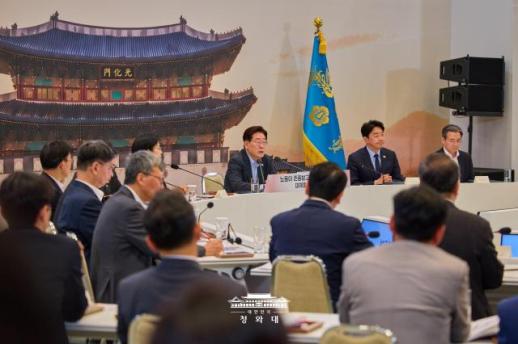 Lee commands Seoul to continue Pyongyang outreach SEOUL, August 05 (AJP) - South Korea will keep pursuing peaceful coexistence with North Korea even if Pyongyang refuses to respond, President Lee Jae Myung said Wednesday, likening the government's engagement efforts to "shouting with no echo." Speaking at an expanded government briefing on security, diplomacy, and North Korean issues, Lee acknowledged that officials responsible for inter-Korean affairs had little to show for more than a year of outreach since he took office in June 2025. "You may feel like you are shouting with no echo," Lee told officials from the Ministry of Unification. "There is no response, and sometimes the response that comes is a bad one. But they are next to us regardless." "Even if it is difficult, we have to keep going with a policy of peace and coexistence," he said. The remarks amounted to Lee's clearest public acknowledgment yet that his signature North Korea policy has failed to reopen official dialogue. He framed the stalemate as the product of decades of accumulated hostility rather than a dispute that could be resolved quickly. "We fought a war, and we are also blood relations," he said. "Relations between governments build up over time, the same way relations between people do. You could call it karma. We have lived a long time with hostility, dismissal and confrontation as our strategy, so it is hard to make it better." He warned against abandoning engagement altogether. "If we approach this as 'I go my way and you go yours,' it ends up doing harm to the national community," Lee said. The appeal stands in stark contrast to Pyongyang's increasingly institutionalized rejection of reconciliation. In December 2023, Kim Jong-un abandoned the decades-old concept of eventual reunification, declaring the two Koreas to be separate hostile states rather than one nation temporarily divided. His government dismantled Pyongyang's Arch of Reunification, abolished agencies responsible for inter-Korean affairs and removed references to shared nationhood from official language. That shift became official doctrine at the Workers' Party's Ninth Congress in February, where references to peaceful reunification were removed from the party charter. Kim described South Korea as the country's "most hostile enemy" and said North Korea could destroy it, according to the Korean Central News Agency. Pyongyang has also dismissed Lee's conciliatory gestures as meaningless. In July 2025, Kim Jong-un's sister, Kim Yo-jong, said North Korea had not even assessed the outcome of South Korea's presidential election because the result made no difference. Whatever policy Seoul adopted, she said, there was "no reason to meet and nothing to discuss." She also brushed aside Lee's suspension of anti-North loudspeaker broadcasts and efforts to curb activists sending propaganda leaflets across the border, calling the measures easily reversible. The skepticism reflects three decades of policy reversals in Seoul, where presidents serve a single five-year term and engagement has repeatedly swung with changes in government. Liberal administrations under Kim Dae-jung, Roh Moo-hyun and Moon Jae-in pursued dialogue through summits, the Kaesong Industrial Complex and military confidence-building measures. Conservative governments under Lee Myung-bak, Park Geun-hye and Yoon Suk-yeol dismantled or suspended many of those initiatives following North Korean military provocations and nuclear weapons development. North Korea, meanwhile, has steadily deepened the rupture. It sank the South Korean naval corvette Cheonan in 2010, according to an international investigation that Pyongyang denies, shelled Yeonpyeong Island later that year, demolished the joint inter-Korean liaison office in Kaesong in 2020 and formally scrapped inter-Korean economic cooperation agreements in early 2024. Lee concluded with a warning that North Korea policy itself has become a casualty of South Korea's domestic political cycle. "This gets exploited politically and for partisan gain, so you have to be very careful," he said. "A single word ends up becoming a target in political fights without anyone intending it." Kim offered a similarly dismissive assessment at the Workers' Party Congress in February, calling the conciliatory posture of Lee's government "clumsily deceptive and crude." AJP Takeaways ● Lee Jae Myung told the Ministry of Unification on Wednesday to continue a policy of peace and coexistence with North Korea despite receiving no response from Pyongyang, saying officials may feel they are shouting with no echo. No official channel between the two governments has opened since he took office in June 2025. ● Kim Jong-un wrote the "two hostile states" doctrine into the charter of the Workers' Party of Korea at its Ninth Party Congress in February, removing references to peaceful reunification and calling South Korea the "most hostile enemy," the Korean Central News Agency reported. ● Kim Yo-jong said in a statement carried by North Korean state media in July 2025 that Pyongyang had made no assessment of who won the South Korean election because it made no difference, and that there was no reason to meet and nothing to discuss. She called Seoul's halt to border loudspeaker broadcasts reversible. 2026-08-05 14:05:23
-
 Kookmin University wins 9-year Seoul AI mobility grant SEOUL, August 05 (AJP) - Seoul will bankroll a Kookmin University plan to knit self-driving cars, delivery robots and air taxis into a single artificial intelligence system for the capital, committing up to 8 billion won, about $5.6 million at current exchange rates, over as long as nine years. Kookmin University said Tuesday that its Automotive Convergence College had been selected for the Seoul Anchor 10 Challenge, one of the funding tracks in the city's 2026 regional talent development system. The system, known by the English acronym ANCHOR, is the Ministry of Education's rebranded version of RISE, the framework that hands central government money for university funding to provincial and metropolitan governments to spend on their own priorities. The ministry announced the reorganization in April, saying the earlier version had produced regionally tailored projects without results that students could feel. The Anchor 10 Challenge is the long-horizon research piece of that structure. Universities pick their own target rather than answering a government-written brief, and the money is meant to run through to patents and commercial licensing rather than stopping at published papers. Nine years of funding is not guaranteed at the outset. Seoul's public notice for the program set an initial phase running to February 2028, with the extension going to the top half of participating universities at a mid-term review. Kookmin University will run the work through a unit it calls the AI-SAT Mobility Project Group, led by Shin Sung-hwan, a professor in the Automotive Convergence College. The acronym stands for sense, act and trust, covering a system that reads the city's traffic environment, decides how to move through it, and does so in a way residents are willing to accept. The technical goal is a platform the university has named AI-Defined Mobility, or ADM, which would place autonomous vehicles, mobile robots and urban air mobility aircraft under one decision-making layer instead of leaving each to operate on its own logic. Urban air mobility refers to the small electric aircraft, often described as air taxis, that South Korean transport planners expect to begin carrying passengers over cities within the next several years. Researchers plan to use the platform to work through five problems the city has flagged: traffic congestion, accident risk, urban noise, restricted movement for elderly and disabled residents, and public distrust of autonomous systems. Testing will happen on Seoul streets rather than in a laboratory. The university said it would gather data with the metropolitan government and district offices in congested areas, accident hotspots and neighborhoods that generate frequent noise complaints. Among the technologies to be validated is vehicle-to-everything communication, or V2X, the system that lets cars exchange information directly with traffic signals, road sensors and one another. The project also covers communication security for urban air mobility aircraft and robots, along with a testing environment designed to track public willingness to use the technologies over an extended period. Joining Shin on the research team are professors Yang Ji-hyun, Kim Jong-chan, Lim Se-jun, Song Kyo-won, Jeon Sang-hoon, Lee Seung-mok and Kim San-min. For Kookmin University, the award lands in its 80th anniversary year and slots into KMU VISION 2035: EDGE, the mid-to-long-term strategy the school proclaimed last October. Mobility is one of eight fields the university has designated for concentrated investment, alongside automotive engineering, software and autonomous driving research. Other Seoul universities picked for the same track this year are pursuing sharply different targets. Dongguk University is working on optical semiconductors for AI applications, while Sookmyung Women's University is pursuing anti-aging therapies aimed at extending healthy lifespan by a decade. "This selection came on the strength of the convergence research capacity Kookmin University has built up in automotive and mobility engineering and artificial intelligence," Shin said. "We will carry out the project so the results connect to patents and technology commercialization, and contribute to the growth of Seoul's future mobility industry." --- AJP Takeaways: ● Kookmin University said Tuesday its Automotive Convergence College was selected for the Seoul Anchor 10 Challenge, a city research track funding up to 8 billion won, about $5.6 million, over as long as nine years. ● The AI-SAT Mobility Project Group, led by Kookmin University professor Shin Sung-hwan, will build a platform called AI-Defined Mobility that places autonomous vehicles, mobile robots and urban air mobility aircraft under a single decision-making layer. ● Field testing will run on Seoul streets with the metropolitan government and district offices, covering congested areas, accident hotspots and neighborhoods with frequent noise complaints, and validating vehicle-to-everything communication and communication security for aircraft and robots. ● Funding is not guaranteed for the full term. Seoul's public notice set an initial phase running to February 2028, with the extension going to the top half of participating universities at a mid-term review. 2026-08-05 11:06:54
-
 Seoul targets Central Asia minerals at first summit SEOUL, August 04 (AJP) - South Korea is within 40 days of hosting the leaders of all five Central Asian states for the first time, and the government spent Tuesday afternoon checking whether the deliverables it wants on energy and critical minerals will actually be ready. The region matters to Seoul mostly because of what is under it. Kazakhstan produced 25,839 tonnes of uranium in 2025, roughly 40 percent of world output, and has been the largest producer since 2009, according to the World Nuclear Association. It also holds 14 percent of global uranium resources. South Korea, which runs 26 nuclear reactors, is one of the main Asian buyers alongside China and India. The five countries also sit on oil, natural gas and rare earths. Kazakhstan ranked third among South Korea's titanium suppliers and tenth for chromium as of 2022, with smaller shares of vanadium and nickel imports. Foreign Minister Cho Hyun chaired the second meeting of the preparatory committee for the summit at the Government Complex Seoul, and framed the timing in terms of supply disruption. "With the Russia-Ukraine war and instability in the Middle East deepening uncertainty in the international order and in energy supply chains, and with the strategic value of Central Asia growing given its abundant energy and critical minerals and its geopolitical weight, this is a very important summit for us," he said. He listed the commercial target directly. "We will strengthen cooperation on supply chains, customs and regulation to expand trade and investment, and promote mutually beneficial practical cooperation in energy, critical minerals and infrastructure," Cho said. That is one of five outcomes the ministry wants from September. The others cover institutionalizing the summit itself, securing Central Asian backing on the Korean Peninsula, opening cooperation on terrorism, transnational crime, narcotics and cyber threats, and expanding into artificial intelligence, digital, intellectual property and climate response. The fifth is people, and Cho spent more time on it than on any other single item. "In particular, we will support the community of roughly 320,000 Koryoin in Central Asia so that they can serve as a bridge linking the two regions," he said, "and, marking the 90th anniversary in 2027 of Koryoin settlement in Central Asia, we will pursue cooperation projects that shed new light on the diaspora community's historical contribution." Koryoin, or Koryo-saram, are the descendants of Koreans who moved into the Russian Far East from the late 19th century and were deported to Central Asia by Soviet authorities in 1937. Roughly 172,000 people were loaded onto trains and sent to Kazakhstan and Uzbekistan over several weeks, and thousands died in transit or during the first winter. The 2027 anniversary marks 90 years since that deportation. Their descendants now form the largest Korean diaspora community in the region, and the ministry has treated them as a diplomatic asset. Cho also promised support on education, culture, Korean language teaching and exchanges of students and industrial workers. South Korea is the last significant player to build this format. The Central Asian five began holding their own regular leaders' meetings in 2018, and have since sat down at summit level with the United States, China, Japan, Russia and the European Union. "Central Asian countries have regularized their regional summits since 2018 and have held summits with major countries including the United States, China, Japan, Russia and the European Union," Cho said. "This time our government too, with Korea-centered pragmatic diplomacy and diversification of diplomacy as its keynote, seeks through this summit to inherit and develop the New Northern Policy and to build a new strategic partnership with Central Asia." The New Northern Policy dates to the Moon Jae-in administration, which used it to push economic engagement with Russia, Central Asia and Mongolia. Cho's phrasing keeps the label while attaching it to the Lee Jae Myung government's stated line on diversification. Seoul does have a track record to build on. The Korea-Central Asia Cooperation Forum has met at the foreign minister level every year since 2007. "We must now raise this ministerial-level basis for cooperation to the leaders' level and make it regular, developing Korea-Central Asia relations into a more strategic and future-oriented cooperation framework," Cho said. Tuesday's meeting was the last of its kind before the summit. "Today's meeting has the character of what is effectively the final preparatory meeting for the summit that opens on Sept. 16," Cho said at the outset, adding that remaining problems would be worked out at staff level from here. President Lee called each of the five leaders after taking office to explain the plan and issue the invitation, and all five confirmed attendance in December. About 600 delegates are expected, including ministers, business executives and press. Since the first preparatory committee meeting in February, a senior officials' meeting at vice-minister level has convened three times, in Seoul, Uzbekistan and Kazakhstan. Joint economic committees, policy consultations and consular talks have run with each country, and a private advisory committee supplied sector expertise. Not everything is settled. Cho told the ministries around the table that negotiations on deliverable projects remain open with barely six weeks left. "I ask each ministry to take an interest and see it through to the end, so that the deliverable projects under negotiation are concluded quickly and the side events are prepared without disruption," he said. 2026-08-04 17:13:33
-
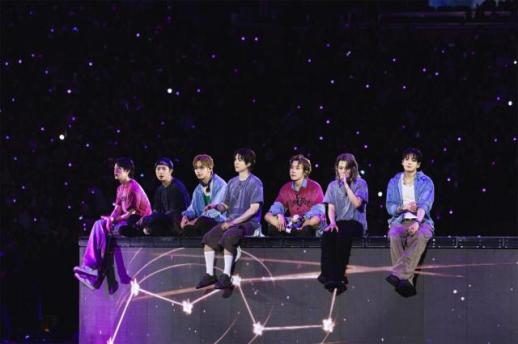 ARMY answers Grammys as BTS lets music speak Two sold-out nights at MetLife Stadium passed without a word from the stage about the group's Grammy withdrawal. The jumbotron told a different story. For two and a half hours at MetLife Stadium in East Rutherford, New Jersey, on Saturday night, the biggest band in the world played 23 songs and said nothing at all about the Grammy Awards. This was three days after the group had announced it would not submit its music to the 69th ceremony. The omission was noticeable enough that Billboard's reviewer flagged it, reporting that no direct extension of the statement came from the stage, and that RM instead told the crowd he wanted to stay positive and would never take their love for granted. The statement itself, posted on July 29 to all seven members' Instagram accounts, ran to three sentences. "We have decided not to submit to the Grammys this year," it read. "We hope that music can be heard and loved as music itself, rather than being divided by region or language. We thank ARMY and everyone who is always with us." No grievance was named, no condition set for returning, and no mention made of the new category that had prompted the decision. Whatever the group had to say on the subject, it had said, and evidently considered the matter closed. The audience did not consider it closed. Before the encore, when personalized signs from the floor went up on the stadium screens, the cameras lingered on messages that had nothing to do with love or gratitude. Fans held up placards and cardboards with messages written on them: "BTS Are Bigger Than the Grammys," "Who Needs a Grammy When You Have an ARMY?" and "ARMY's Winner Album of the Year, BTS, ARIRANG." One sign read, "Beyond categories, the music is ours." That last one is a more precise statement of the argument than anything produced by the institution it criticizes, and it was written by hand, on cardboard, by someone who paid for a ticket. Recording Academy CEO Harvey Mason Jr. needed considerably more words to make his case, and made a weaker one. Responding on July 29 to the group's withdrawal, he said he was saddened but understood and respected the decision, then moved to correct what he saw as a misreading of the new Best Asian Pop Music Performance category. It was created to celebrate the depth and diversity of Asian pop, he said, and more categories mean more artists recognized, never to divide but to expand who is recognized by the Recording Academy's 15,000 voters. He added that submitting in a genre category does not exclude an artist from the General Field, and that recognition in one and recognition in the other are not mutually exclusive. He was defending the rulebook against an objection that was never about the rulebook. Nobody has claimed the Recording Academy formally bars Asian artists from Record, Song, or Album of the Year. The claim is that those 15,000 voters considered BTS five times between 2021 and 2023, during the group's commercial peak, and declined five times, and that the sorting has already been happening without any rule requiring it. A homemade sign got to the heart of this in six words. The chief executive took several paragraphs and arrived somewhere adjacent. This is what has changed in the week since the announcement, and it is why the story has not settled. The refusal is no longer in the group's hands, and the argument is being carried by people who did not clear it with anyone. That distinction matters because of the criticism the withdrawal drew in Seoul. Korean commentators noted quickly that this might be strategy rather than principle, pointing out that most of ARIRANG is in English and would not have qualified for the Asian pop category anyway, and that the General Field was never a realistic prospect. The reasoning is sound and worth taking seriously. HYBE has a communications department, and communications departments do not issue statements from seven accounts simultaneously by accident. What HYBE does not have is control over what people write on cardboard. Nobody approved "Who Needs a Grammy When You Have an ARMY?" and the camera operator who put it on a screen the size of a house was making an editorial choice in real time. A corporate statement can be walked back, clarified, softened in a follow-up interview. A stadium cannot. The venue itself supplied the rest of the argument without anyone needing to make it. BTS had already played MetLife once this year before Saturday, performing "Dynamite" at the first World Cup final halftime show on July 19 alongside Madonna, Shakira, Coldplay and Justin Bieber, in front of the largest television audience available on the planet. "Dynamite" is the song that earned the group its first Grammy nomination in 2021, and it is performed entirely in English, meaning it would not qualify for the Asian pop category the Recording Academy has now built for artists like them. The song that opened the door in 2021 would be turned away at the new one. The show that followed was not the work of a group seeking anyone's approval. Reviewing Saturday night, NJ Arts described members who looked visibly older and harder, dressed in black behind dark sunglasses, with tattoos and weathered faces visible on the overhead screens. The famous precision had loosened into something easier, the members lingering with one another and wandering the stage rather than holding formation. Thirteen of the 23 songs came from ARIRANG, an album built around Korean culture, and at one point the stage was ringed in light arranged to evoke the taegeuk at the center of the South Korean flag. Six weeks after the Recording Academy announced a category for music that makes meaningful use of an Asian language, BTS filled an American football stadium twice with a show that centers Korea and asked nothing of anyone. Submissions for the 69th Grammy Awards close on August 28, and nominations arrive in November. Whoever is named in the Best Asian Pop Music Performance category will be named without the participation of the largest act the category was designed to attract, and the Recording Academy will have to explain the absence to an audience that has already stated its position in marker on cardboard. BTS plays Gillette Stadium in Foxborough on Wednesday and Thursday, then Baltimore, Arlington, Chicago, and four nights in the Los Angeles area in September, where the ceremony itself will be held in February. 2026-08-04 16:36:43
-
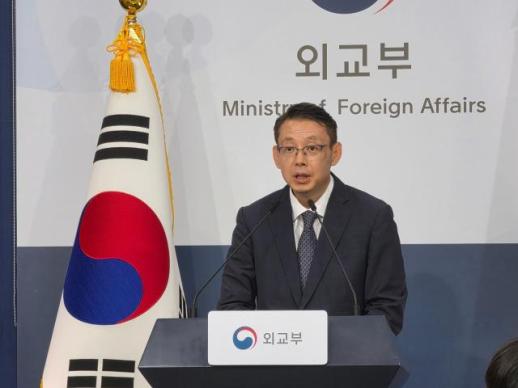 Japan calls South Korea partner, claims Dokdo again SEOUL, August 04 (AJP) - Japan's annual defense white paper describes South Korea as an important neighbor and a partner it should work with on shared international challenges. The same document, published Tuesday, again calls Dokdo, an islet located in the East Sea, Japanese territory. The government lodged a formal protest and demanded immediate withdrawal of the claim, which has appeared in the white paper every year since 2005, now 22 years running. Dokdo consists of two main islets, Dongdo and Seodo, and 89 smaller rocks, covering roughly 187,554 square meters in the East Sea. It sits 87.4 kilometers (54.3 miles) from Ulleungdo and 157.5 kilometers from Japan's Oki Islands. On a clear day, it is visible from Ulleungdo. It is not visible from Oki. The islets carry a South Korean address, Dokdo-ri, Ulleung-eup, Ulleung County, North Gyeongsang Province. A police detachment has been stationed there since 1954, when a lighthouse also began operating, and a small number of civilians are registered as residents. The Foreign Ministry issued a spokesperson's commentary saying the government strongly protests the repetition of an unjust territorial claim over what it called historically, geographically and legally South Korean territory. "The government makes clear once again that Japan's unjust claim has no effect whatsoever on our sovereignty over Dokdo," foreign ministry spokesperson park Doo-soon said. He added that South Korea will respond firmly to any Japanese provocation regarding Dokdo. Japan's cabinet approved the 2026 white paper earlier the same day. The text says territorial issues remain unresolved over what it calls Japan's inherent territory in the Northern Territories, meaning the four southernmost Kuril Islands held by Russia, and Takeshima, the Japanese name for Dokdo. The wording matched previous editions. So did the maps. A chart of the security environment around Japan again marked the islets as a territorial dispute, a surveillance map drew the surrounding waters as Japanese territorial sea, and a diagram explaining South Korea's air defense identification zone labeled the islets Takeshima. The partner language has now run for three years. Material on South Korea took up less space than last year. This was the first defense white paper issued under Prime Minister Takaichi Sanae. The Dokdo passage survived the change of government intact. Japan's Foreign Ministry made the same claim in its diplomatic bluebook on April 10, prompting the ministry to summon Matsuo Hirotaka, the Japanese Embassy's minister-counselor, to hear a protest in person. In July last year, deputy chief of mission Iseki Yoshiyasu was called in over the previous defense white paper. That difference in sight lines between Ulleungdo and Oki runs through the historical record. The earliest reference appears in the Samguk Sagi, the 12th-century history of the Three Kingdoms, which records that the Silla general Isabu subjugated the island polity of Usan-guk in 512. Usan-guk was centered on Ulleungdo and its territory included the smaller islets to the southeast. The Sejong Sillok Jiriji, a geographical survey completed in 1454, states that Usan and Mureung lie in the sea due east of Uljin County, and that the two are close enough for one to be seen from the other when the weather is clear. Mureung is Ulleungdo. Usan is Dokdo. Only Dokdo satisfies the visibility condition. The Sinjeung Dongguk Yeoji Seungnam, an expanded national gazetteer published in 1531, repeated the description and included Usando on its maps. Japan's own records point in the same direction. In 1877, the Meiji government's Grand Council of State, the Dajokan, responded to an inquiry from the Home Ministry about whether Ulleungdo and one other island should be entered into Shimane Prefecture's land registry. The directive instructed officials to bear in mind that Ulleungdo and the other island had nothing to do with Japan. The Dajokan was the highest organ of state at the time, with authority over legislation, administration and the judiciary. Its ruling on a question of territorial extent bound the entire government, not just the ministry that asked. An attached map, the Gijukdo Yakdo, identifies the second island as Dokdo. That directive followed decades of earlier settlement. After the Joseon fisherman An Yong-bok crossed to Ulleungdo and was seized by Japanese fishermen in 1693, the two governments spent three years arguing over access. In 1696 the Tokugawa shogunate banned Japanese vessels from sailing to Ulleungdo, closing the dispute. In October 1900, the Korean Empire issued Imperial Decree No. 41, elevating Ulleungdo to Uldo County and defining the county magistrate's jurisdiction as Ulleungdo, Jukdo and Seokdo. Seokdo means rocky island, a rendering of the local name for Dokdo. The decree was promulgated in the official gazette on Oct. 27, five years before Japan acted. Japan's incorporation came on Feb. 22, 1905, through Shimane Prefecture Public Notice No. 40. It was issued during the Russo-Japanese War, was never published in Japan's national gazette, and was not communicated to the Korean government. By then Korea's capacity to object had already been cut away. The Japan-Korea Protocol of February 1904 permitted Japanese forces to use Korean territory for military purposes, and the first Japan-Korea Agreement of August 1904 installed Japanese advisers inside the Korean government. Japan built a naval watchtower on the islets in 1905 to track the Russian fleet. Uldo County magistrate Sim Heung-taek learned of the incorporation only in March 1906, from a Shimane survey party that landed on Ulleungdo. He reported to his superiors that an island belonging to his county had been declared Japanese. The State Council responded through Directive No. 3 that the claim was entirely without foundation and ordered a further investigation. After Japan's defeat in World War II, the Allied powers took the islets out of Japanese hands. Supreme Commander for the Allied Powers Instruction No. 677, issued on Jan. 29, 1946, suspended Japanese administrative authority over Ulleungdo, Dokdo and Jeju Island. A follow-up instruction that June placed Dokdo outside the area open to Japanese fishing. Japan rests its modern case on the 1951 Treaty of San Francisco. Article 2 names Jeju, Geomundo and Ulleungdo among the territories Japan renounced, and does not name Dokdo. Tokyo reads that omission as recognition of Japanese title. Seoul reads the list as illustrative rather than exhaustive, covering three of the roughly 3,000 islands surrounding the peninsula, and argues that the treaty did not reverse SCAPIN 677 or the Cairo Declaration of 1943, which committed the Allies to stripping Japan of territory taken by violence and greed. Japan also argues that its sovereignty was established in the 17th century, when the Oya and Murakawa merchant houses of Yonago received shogunal licenses to sail to Ulleungdo and used Dokdo as a waypoint. South Korea points out that the same shogunate banned those voyages in 1696, and that a navigation license is not a claim of title. South Korea declared sovereignty over the adjacent seas including Dokdo in January 1952, in what became known as the Peace Line. Japan protested that month. In 1954, Tokyo proposed taking the question to the International Court of Justice, and Seoul refused. Japan renewed the proposal in 1962 and again in 2012, and was refused both times. The South Korean position has not moved since. There is no territorial dispute to adjudicate, because the islets are South Korean territory under effective administration. 2026-08-04 16:21:27
-
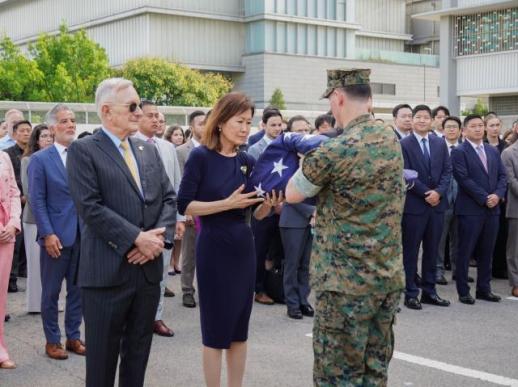 US Ambassador Steel presents credentials, formally begins mission in Seoul SEOUL, August 04 (AJP) - The United States Embassy in Seoul has a full ambassador again for the first time in a year and a half after the new envoy Michelle Steel submitted a copy of her credentials to the Ministry of Foreign Affairs on Tuesday afternoon and paid a courtesy call on Foreign Minister Cho Hyun. The post had run on a chargé d'affaires since last ambassador Philip Goldberg appointed under President Joe Biden, left Seoul in January 2025. Steel is the first ambassador to South Korea named by President Donald Trump in his second term and the second Korean American to hold the job, after Sung Kim. She landed at Incheon International Airport on July 30. An incoming envoy cannot start official work here until a copy of the credentials issued by their head of state reaches the ministry's chief of protocol, a position held by Kim Tae-jin. The original goes to the president later, in a separate ceremony that completes the accreditation. Ministry spokesperson Park Doo-soon said the call on Cho was arranged as an introductory meeting, with the two sides planning to exchange views on ways to advance the alliance. The ceremony with President Lee Jae Myung has no date yet, according to Park adding the timing would follow a review of the presidential office's schedule. "Ambassador Steel has a great deal of understanding and insight into the alliance and the bilateral relationship, we expect her to contribute to strengthening that relationship and to deepening friendship between the two peoples," she said. Steel, arriving with her husband-attorney Shawn, did not share what she would raise with Cho. The couple enjoyed a day-out at Namdaemun and attended a service at Yeongnak Church in central Seoul during their first weekend in Seoul. 2026-08-04 15:34:34
-
 Kookmin University, KOICA train 30 Palestinian AI researchers SEOUL, August 04 (AJP) - A new fellowship program will bring 30 Palestinian researchers to Seoul for doctoral study in artificial intelligence, with the entire course built around what they do after they go home. Kookmin University's Industry-Academic Cooperation Foundation and its Global Development Cooperation Institute said Monday that they would run the AI Ph.D. Fellowship Program together with the Korea International Cooperation Agency. Fellows will enroll in doctoral courses at the university's AI and Software Graduate School, studying core AI technology alongside applications in industry and the public sector. The program is the talent component of a $15 million South Korean aid project to strengthen research and development capacity for digital transformation in Palestine. Palestinian news agency Sada News reported that the project agreement was signed in August 2025 by the Palestinian ministries of planning and international cooperation and of education and higher education, and that the project runs through 2031. The Korea International Cooperation Agency (KOICA) is the grant aid arm of South Korea's foreign ministry. It has run education and vocational training programs in Palestine since 2009 and said in 2023 that it had spent $33.6 million on youth education there. Research topics will be selected in connection with problems Palestine currently faces, so that findings can be applied to local problem-solving rather than sitting in a journal. KOICA and the university will manage the teaching and research process with that outcome in mind. Fellows will take AI coursework, run joint research with South Korean teams, work on industry-academic projects, take internships, present at international conferences and go through technology commercialization programs. Kookmin University said the goal is to send them home with research ability, practical problem-solving skills, project planning and management experience, and a working international network. The design is what separates the program from a standard scholarship, the university said. Most degree support ends at graduation. This one treats graduation as the midpoint. Fellows are expected to return to Palestine and work as the connective tissue between universities, research institutes and industry, pushing research results toward products, services and new companies. "The AI Ph.D. Fellowship does not stop at giving talented Palestinians a chance to earn a degree," said Cho Hyun-kyu, who heads KOICA's Palestine office. "It lays the ground for them to lead research and development and digital transformation at home after they return. I hope South Korea's experience in AI research and education primes the pump for sustainable digital innovation in Palestine." The program also feeds into Kookmin University's medium- and long-term plan, KMU VISION 2035: EDGE, adopted as the school marks its 80th anniversary. The university, founded in 1946, has named AI+X one of eight priority fields and is expanding teaching and research that combine AI with industry, health care, education and public services. "The greatest strength of our AI and Software Graduate School is a curriculum centered on AX, or AI transformation, which does not confine AI to research or software implementation but extends it into real systems and industrial settings such as industrial innovation, health care, education and public services," said Lee Sang-hwan, a professor in Kookmin University's School of Software who is serving as project manager. "We will work to make sure the results of this program translate into better public services in Palestine, jobs for young people, industrial innovation and digital transformation." A KOICA notice recruiting consultants for the parent project, posted in March 2025, listed analysis of plans to establish an AI research institute in Palestine among the assigned tasks. Kookmin University did not say when selection of the 30 fellows would begin. 2026-08-04 11:10:49