


Latest by
-
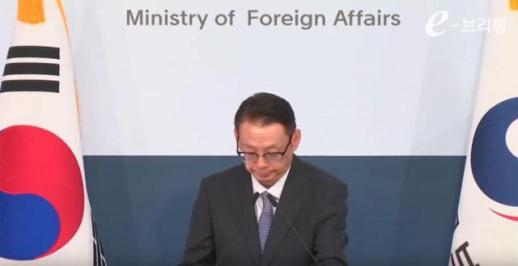 Recovery workers leave for Nepal to replace search-and-rescue team SEOUL, September 11 (AJP) - A new group of South Korean relief workers left for Nepal on Friday to support recovery efforts following devastating floods and landslides that struck late last month, killing more than 1,400 people and leaving thousands still missing, according to the Ministry of Foreign Affairs here. The eight-member team including ministry officials and other personnel from the National Fire Agency, the Korea International Cooperation Agency (KOICA) and the National Medical Center, departed in the early hours aboard a KC-330 military transport aircraft. They will focus on reconstruction and recovery efforts for a week, with a small number of search-and-rescue personnel also joining the team to support ongoing operations. The aircraft is carrying about 4 tons of emergency relief supplies worth approximately 180 million won (US$134,000) including tents, blankets and other necessities. The previous team of 44 rescue workers, dispatched to Nepal on Sept. 2, will return home on Saturday after wrapping up their 10-day search-and-rescue mission. They conducted extensive searches with Nepalese authorities using drones, helicopters and other equipment, but were unable to find the missing South Koreans due to difficult terrain, unstable weather conditions and the risk of additional landslides. Nine South Koreans including six employees of Doosan Enerbility and three from Korea South-East Power, went missing on Aug. 26 after floods and landslides struck Nepal's north-central Himalayan region near the border with Tibet while they were working at a hydropower plant construction site. As rescue workers shift their focus from search-and-rescue operations to reconstruction efforts, families of the missing workers are expressing frustration and urging authorities to continue ground searches in areas where they believe their family members may still be alive. Government authorities here vowed to continue efforts to find the missing workers in cooperation with the South Korean Embassy in Nepal, adding that more personnel could be sent to Nepal or existing team members replaced if needed. President Lee Jae Myung, who returned home from a trip to France the previous day, also instructed officials to listen carefully to the families and review measures to reflect their wishes as much as possible. AJP Takeaways - South Korea sent an eight-member recovery and reconstruction team to Nepal on Sept. 11, 2026, replacing the main search-and-rescue contingent and focusing on recovery efforts during a seven-day mission. - The KC-330 military transport aircraft carried about 4 tons of emergency relief supplies worth approximately 180 million won (US$134,000), including tents, blankets and other necessities, to support communities affected by the floods and landslides. - Nine South Koreans remain missing after floods and landslides struck Nepal on August 26, 2026. Families are urging authorities to continue ground searches, while the South Korean government has pledged to maintain efforts to locate the missing workers in cooperation with Nepalese authorities. 2026-09-11 09:22:05
 -
 The Lifespan of Chips and the Enduring Nature of Art The lifespan of semiconductors is measured by performance metrics, while the lifespan of culture is gauged by human memory. Today’s fastest chips will soon give way to the next generation. However, the stories of Homer from thousands of years ago have found new audiences through Christopher Nolan's film Odyssey. While old technologies may be replaced, the human experiences of love, loss, and the longing for return remain eternal. This raises a crucial question for South Korea in the age of AI: What will we create better? And what will we leave behind in the hearts of people around the world?Semiconductors represent a monumental achievement for South Korea, underpinning its economy and security while serving as the foundation for AI competition. However, while semiconductors make South Korea a necessary player on the global stage, culture fosters a nation that is loved and trusted. The next successful strategy for South Korea must begin with a dual focus on technology and culture.The Lumiere Summit, co-hosted by President Lee Jae-myung and French President Emmanuel Macron on September 7 in Saint-Paul-de-Vence, showcased this potential. The two countries announced the 'Lumiere Partnership,' pledging to invest 500 million euros each over five years, totaling 1.6 trillion won, into the film and video industry. They also adopted the 'Lumiere Declaration,' which emphasizes the protection of diversity in works and the prevention of piracy. Discussions included support for independent films, human-centered creation in the AI era, and the global expansion of local content. This focus on the future of culture in diplomatic relations deserves recognition. Now, we must ask a more important question than the amount of investment: Whose imagination will that investment nurture, and what kind of creative environment will it leave behind?The power of culture extends beyond box office revenues. Interest generated by a single work can spill over into food, tourism, fashion, and the learning of the Korean language. Most importantly, it transforms a foreign country into a familiar one, allowing people to understand the hopes and concerns of its citizens. This accumulated familiarity and trust also strengthen diplomacy and the economy. This is why cultural policy should not be evaluated solely on short-term sales and export figures.So why has the world listened to Korean stories? The underground setting of Parasite and the dalgona of Squid Game are distinctly Korean. Yet, the inequalities and survival struggles depicted resonate with global audiences. BTS has crossed borders by singing about youth anxiety and self-esteem in Korean. The success of Hallyu demonstrates that the most localized stories can garner universal empathy.The success of Hallyu cannot be attributed solely to a single national character or the efforts of any one government. It is infused with history, tradition, the scars of war and division, and the aspirations of rapid growth. The persistence of creators, combined with corporate planning and investment, has led to public selection of these works. International fans have voluntarily translated, shared, and distributed them, breaking down barriers in distribution. Hallyu has become a global shared culture nurtured by Korea and the world.What has enabled this growth? The answer lies in democracy. The freedom to challenge authority and expose society's darker sides has deepened storytelling. Works that do not shy away from issues like wealth disparity, social violence, and youth despair have fostered a deeper understanding of Korea. Trust has also been built in a society that allows criticism. Freedom of expression is not merely an ornament of culture; it is a protective barrier for the imagination of creators and a source of competitiveness for the cultural industry.Kim Dae-jung expanded that freedom and supported openness through policy. Even during the economic crisis, he viewed culture as a key industry for the 21st century. In 1999, he enacted the Cultural Industry Promotion Act and established the Korean Film Council. By 2000, the cultural budget exceeded 1% of the total government budget for the first time since the establishment of the government. His judgment was that the more difficult the situation, the more investment was needed for the next era beyond mere survival.The opening of Japanese popular culture exemplifies Kim Dae-jung's cultural confidence. At the time, there were significant concerns that an influx of Japanese culture would undermine Korean culture. However, Kim Dae-jung believed in the ability of Koreans to adapt and transform foreign cultures into their own. Following the joint declaration of the Korea-Japan partnership in October 1998, a phased opening began. Instead of locking the doors, he chose a path of becoming stronger through exchange and competition. The fears proved unfounded, as Korean popular culture expanded into the Japanese market. Openness became a catalyst for leapfrogging rather than dependency.The digital infrastructure also expanded during this time. While the ultra-high-speed information and communication network project began under previous administrations, the Kim Dae-jung government accelerated the second phase in 1998 and rapidly expanded internet access. By 1999, the number of internet users surpassed 10 million, and by 2002, households with high-speed internet exceeded 10 million. This environment fostered the growth of gaming and digital content, as the public began creating, evaluating, and disseminating works online. The intersection of cultural policy and information policy created fertile ground for the growth of Hallyu.At the center of this was the principle of 'support without interference.' I had the privilege of closely assisting President Kim Dae-jung during this period. I remember the day in 2003 at the Chunsa Film Festival when filmmakers presented him with a lifetime achievement award, and I witnessed him tear up. Looking back, his greatest contribution was not in selecting successful works but in broadening the conditions for creators to challenge freely. The protagonists of Hallyu have always been the creators and the public. The government's role is to believe in their potential and provide a foundation that can withstand failure.AI makes this principle even more critical. AI assists in video and music production and reduces costs for translation and editing. Small production companies and emerging creators can now attempt expressions that were previously unaffordable. As language barriers diminish, the chances for Korean regional stories and independent works to reach global audiences increase. When used correctly, AI can become a tool that broadens the doors to creation.However, risks are evident. If existing works are used for training without permission, and creators' names, styles, and voices are easily imitated, the benefits of technology will concentrate on platforms, leaving creators without a place. If recommendation algorithms only repeat familiar formulas for success, cultural diversity will diminish. Rapid and inexpensive production does not necessarily lead to quality culture. The questions of what life to capture, what to inquire about, and how to take responsibility for the results of expression remain human responsibilities.The Lee Jae-myung administration's cultural policy must establish four conditions. First, it must guarantee freedom of creation through the system. To ensure that works uncomfortable for the government do not face disadvantages in support, the independence of support organizations and transparency in evaluations are essential. Selection should be based on the originality of the work and the capabilities of the creator, not proximity to the regime, and the selection process should be made public, with no interference in the content of supported works. This will allow creators to question societal taboos without fear.Second, it must expand the foundation for independent films, basic arts, and young and regional creators to fail and try again. What seems unfamiliar and lacking marketability today may become tomorrow's new trend.Third, it must establish fair contracts and transparent settlements among platforms, production companies, and creators. Even if industry revenues increase, if creators' lives remain barren, success will not last long. Fourth, it must ensure that it is possible to verify what works AI has used for learning and creation, and establish principles of consent and fair compensation for rights holders. There is no reason to force a choice between technological innovation and copyright protection. Predictable rules are necessary for both creators and tech companies to invest sustainably.Cooperation with France should also lead to achievements in co-production, talent exchange, and cultural diversity. It should create pathways for not only large-scale works but also independent films, animation, and regionally based content to meet each other's markets. The combination of Korea's production capabilities and France's cultural policy experience can lead to collaborations that expand options in the global market.A nation's cultural appeal does not emerge overnight. It requires a long accumulation of free creation and fair compensation to build a culture that the world trusts.The government cannot designate the next story that will captivate the hearts of people worldwide. However, it can ensure that those who create that story can speak without fear and rise again. The path of freedom and openness that Kim Dae-jung opened must be further expanded in the AI era. A country that possesses both the most advanced semiconductors and the most enduring stories. The lifespan of chips may be a few years, but the stories etched in the hearts of people can last for thousands of years across generations. That is South Korea's greater success strategy.* This article has been translated by AI. 2026-09-11 09:16:20
 -
Deficit Reaches 64.8 Trillion Won by July as Revenue Increases As of July this year, South Korea's national deficit has reached 64.8 trillion won. The deficit has decreased by 22 trillion won compared to the same period last year, largely due to an increase in revenue. However, expenditures also rose by 33.7 trillion won, and the central government's debt has increased to 1,354.2 trillion won.According to the 'September Monthly Fiscal Trends' report released by the Ministry of Economy and Finance on September 11, total revenue for the year up to July amounted to 456.1 trillion won, an increase of 71.1 trillion won compared to the same period last year. The budget execution rate was recorded at 65.1%.The increase in total revenue was driven by national tax revenue. By July, national tax collections reached 274 trillion won, up 41.4 trillion won from the previous year, with an execution rate of 66.0%.Breaking down the tax categories, income tax totaled 89.3 trillion won, reflecting an increase of 12.2 trillion won. This rise was influenced by higher labor income tax due to increased performance bonuses and a surge in capital gains tax from rising real estate transactions. Corporate tax revenue improved to 51.8 trillion won, up 4.4 trillion won, thanks to better corporate performance.Value-added tax revenue reached 69.4 trillion won, an increase of 8.1 trillion won, driven by rising private consumption and import volumes. Securities transaction tax also rose to 8.2 trillion won due to increased trading volumes and the return of tax rates. Additionally, the special tax for rural areas increased by 8.5 trillion won, influenced by higher trading volumes on the KOSPI.Non-tax revenue was recorded at 30.1 trillion won, up 9 trillion won from the same period last year, while fund revenue increased to 152 trillion won, up 20.7 trillion won. Consequently, the overall increase in total revenue was significantly larger than last year.Expenditures also rose. Total expenditures by July reached 476.2 trillion won, an increase of 33.7 trillion won compared to the same period last year, with an execution rate of 63.2%. Budget expenditures rose by 27.1 trillion won to 342.3 trillion won, while fund expenditures increased by 6.5 trillion won to 133.8 trillion won.As revenue grew at a faster pace than expenditures, the fiscal balance improved. The cumulative consolidated fiscal balance recorded a deficit of 20.1 trillion won by July. Excluding the surplus of 44.7 trillion won from social security funds, the management fiscal balance showed a deficit of 64.8 trillion won, which is an improvement of 22 trillion won compared to the same period last year.However, despite the improvement in the fiscal balance, national debt continued to rise. By the end of July, the central government's debt increased by 15.7 trillion won from the previous month to 1,354.2 trillion won, marking an increase of 86.1 trillion won compared to the end of last year.As of the end of July, the government's state-owned assets amounted to 1,410.4 trillion won, an increase of 1.5 trillion won from the previous month. Administrative assets were recorded at 1,031.7 trillion won, while general assets totaled 378.7 trillion won.The balance of guaranteed debts stood at 20.6 trillion won at the end of July, up 1.3 trillion won from the previous month. This included 11.2 trillion won in Korea Student Aid Foundation bonds, 8.1 trillion won in supply chain stabilization fund bonds, and 1.3 trillion won in advanced strategic industry fund bonds.* This article has been translated by AI. 2026-09-11 09:16:00
-
Kia Supplies Customized PBVs to Postal Service Kia has announced that it will supply the customized PBV 'The Kia PV5' cargo model, designed to reflect the characteristics of postal collection and delivery work, to the Korea Post. Starting this month, a total of 200 units will be gradually deployed to post offices nationwide.The PV5 cargo model supplied to Korea Post is developed based on the dedicated electric platform E-GMP.S. Its low-floor design reduces physical strain during the frequent loading and unloading that occurs throughout the day. The vehicle is equipped with advanced driver-assistance systems (ADAS) to create a safer and more convenient working environment.Kia has implemented tailored loading solutions based on feedback from postal workers involved in the testing phase. These solutions include door damage prevention, an aluminum cargo floor, and a flatbed design to facilitate easier movement and loading of mail.Kia also plans to support the overall electric vehicle (EV) operating environment of Korea Post. This includes EV training for vehicle managers, customized charging solutions, and maintenance support to assist in the electrification transition across all areas of Korea Post.A representative from Kia's domestic business division stated, 'This supply reflects the voices from the actual postal delivery field, resulting in a PBV that is perfectly suited for their work. In the future, Kia will continue to support the improvement of working conditions and the electrification transition in public service environments with PBVs tailored to customer needs.'* This article has been translated by AI. 2026-09-11 09:12:00
-
Eastsoft Expands AI Avatar 'PersoAI' Business with K-Monster Group MOU Eastsoft is set to expand its AI avatar-based generation service, 'PersoAI,' both domestically and internationally. The company plans to collaborate with K-Monster Group to combine sales and marketing capabilities to discover new customers and business opportunities while broadening the application scope across various industries.On September 11, Eastsoft announced that it has signed a memorandum of understanding (MOU) with K-Monster Group to facilitate the expansion of the PersoAI business.Through this agreement, Eastsoft aims to leverage its AI technology, products, and brand associated with PersoAI, in conjunction with K-Monster Group's sales and marketing expertise, to drive business growth in both domestic and international markets.The signing ceremony took place at Eastsoft's headquarters in Seocho, attended by Eastsoft CEO Jung Sang-won and K-Monster Group CEO Lee Ji-heon, along with key representatives from both companies. The two parties plan to collaborate on discovering new customers and business opportunities for PersoAI, conducting sales and marketing targeted at potential clients, analyzing customer requirements and market information, and participating in exhibitions, seminars, and promotions.PersoAI is an AI avatar-based generation service that provides new experiences across various industries and daily life, built on Eastsoft's AI technology.The core services include three main offerings. 'Perso Interactive' provides AI avatars capable of real-time conversation across various devices, utilizing cloud and on-device environments. 'Perso Dubbing' is a global AI software-as-a-service (SaaS) that supports the localization of video content into multiple languages. 'Studio Perso' allows for the creation of videos featuring AI avatars speaking directly, applicable in various content production areas such as education and news.According to the company, PersoAI is currently being implemented in domestic and international projects, including collaborations with Olive Young and NTT for the Japanese mobility industry. It is also supporting initiatives like the 'K-FAST Expansion Support Project' to aid the overseas expansion of K-content.Jung Sang-won, CEO of Eastsoft, stated, "PersoAI, as an AI avatar-based generation service, is being integrated into various forms within industries, from communication environments to video generation. Through this agreement, we aim to identify diverse environments and demands in the global market to secure concrete business opportunities and strengthen PersoAI's global foundation."Since its official launch as a global AI SaaS in May 2024, PersoAI has been expanding its overseas business. Within a year of its launch, it surpassed 200,000 cumulative subscribers by May of last year. In 2024, it signed its first global corporate supply contract with Microsoft, and this year, it is broadening its business-to-business (B2B) applications by demonstrating real-time translation and tourism guidance services in local taxis with Japan's NTT and Nihon Kotsu.* This article has been translated by AI. 2026-09-11 09:12:00
-
Trinity Airlines Celebrates Two Years of Barcelona Route with Over 160,000 Passengers Trinity Airlines announced on September 11 that it has operated a total of 392 round-trip flights on the Incheon-Barcelona route in its two years of service, surpassing 160,000 cumulative passengers.The passenger demographics show that 78% are from South Korea, followed by 9% from Spain, 4% from Japan, 1% from China, and 8% from other countries. In terms of age, 25% are in their 20s and 29% in their 30s, making up more than half of the total. Passengers in their 50s account for 16%, while those in their 40s and 60s represent 11% and 10%, respectively.The route also plays a significant role in cargo transport, serving as a logistics hub for Southern Europe. Utilizing the lower cargo hold of large aircraft, Trinity Airlines has transported approximately 4,000 tons of import and export goods over the past two years. The airline has maintained stable profitability by shipping high-value consumer goods, such as K-beauty products, industrial equipment, and automotive parts.Currently, the Incheon-Barcelona route operates four times a week on Mondays, Wednesdays, Fridays, and Saturdays. Departures from Incheon International Airport are scheduled for 11:05 AM, arriving at Barcelona El Prat Airport at 7:00 PM local time. Return flights leave Barcelona at 9:00 PM, arriving back at Incheon International Airport at 4:25 PM the following day.Trinity Airlines plans to continue introducing next-generation aircraft, including the A330-900neo and B737-8, within the year. A company representative stated, "We will prioritize safe operations and work with the Sonotrinity Group to enhance customer convenience and provide a comfortable flying experience."* This article has been translated by AI. 2026-09-11 09:04:00
-
Mad Engine Named 'Top Job Creation Company' in South Korea for Two Consecutive Years Mad Engine, a subsidiary of Wemade Max, has been recognized as a 'Top Job Creation Company' in South Korea for the second consecutive year by the Ministry of Employment and Labor. This recognition comes as the company has expanded its workforce by approximately 150% over the past two years, particularly focusing on recruiting young talent.Wemade Max announced on September 11 that Mad Engine has received the '2026 Top Job Creation Company' certification for the second year in a row. Co-CEO Son Myun-seok was awarded a presidential citation at the '2026 Job Creation Support Awards.'The 'Top Job Creation Company' program annually certifies 100 companies that contribute to quality job creation through employment expansion, work-life balance, and human resource development. The 'Job Creation Support Awards' recognize individuals and companies that have contributed to job creation and employment advancement.Mad Engine has been acknowledged for its efforts in establishing a fair personnel system, flexible work environment, and systematic talent development, leading to its selection as a top job creation company for two years running.In fact, the company's workforce has significantly increased, with a 150% rise in employment over the last two years. More than half of its employees are young people, and the proportion of new hires from this demographic has also exceeded 50% in the past two years.This year marks the sixth anniversary of Mad Engine, which is accelerating the development of new projects. Following the success of its flagship title 'Knight Crow,' the company is pursuing new projects such as 'Project Tal,' 'Knight Crow W,' and 'Project MO,' while continuing to hire to secure development talent.Looking ahead, Mad Engine plans to maintain its recruitment efforts in line with the expansion of new projects, while strengthening its organizational culture based on a fair personnel system, systematic training programs, and a flexible work environment.Co-CEOs Son Myun-seok and Lee Jeong-wook stated, 'It is meaningful that the healthy organizational culture created by all members since our founding has led to such fruitful results. We will continue to create a work environment where talented individuals can thrive and invest in human resources to grow into a globally competitive development company.'* This article has been translated by AI. 2026-09-11 09:00:20
-
Xi Jinping and Narendra Modi to Discuss Key Issues During Upcoming Meeting Chinese President Xi Jinping will visit India on September 12-13. The Chinese Foreign Ministry announced on the 10th that Xi will attend the 18th BRICS summit in New Delhi at the invitation of Indian Prime Minister Narendra Modi. This marks Xi's first visit to India in seven years, and it is particularly significant as it is his first trip since the clash between Chinese and Indian troops in the Galwan Valley in 2020, raising questions about a potential turning point in bilateral relations.During the visit, Xi is expected to hold talks with Modi. The main topics of discussion will focus on four key areas. The first is the border issue. Relations between the two countries deteriorated sharply after the 2020 clash, but there have been efforts to reduce military tensions since last year. India and China have been negotiating to prevent troop clashes along the Line of Actual Control (LAC). Indian media anticipate that the summit will address recent developments in border negotiations, troop deployments, and border management systems.The second area of focus is the restoration of economic cooperation. While trade between the two nations is recovering, there remains significant distrust regarding investments and business operations due to India's security reviews of Chinese companies, delays in visa issuance, and regulatory issues. India may push for expanded market access for Chinese products and a reduction in trade deficits. Conversely, China is likely to request that India ease investment restrictions on Chinese firms and improve visa and customs processes. Indian media have suggested the possibility of launching a 'strategic economic dialogue' platform between the two countries.The third topic is enhancing cooperation as members of the Global South. Chinese state media highlighted Xi's visit as an opportunity to promote BRICS as a platform for joint development and reform of international governance. This includes discussions on IMF shareholding and World Bank governance reform, issues linked to global multipolarity. If the two leaders present a united front on these matters, it could signal a coordinated effort to counterbalance the United States. For Xi, who is set to visit the U.S. on the 24th, this could represent a significant political maneuver.The fourth area of discussion will be cooperation within BRICS, particularly regarding direct payment methods that exclude the dollar. India is expected to advocate for connecting central bank digital currencies (CBDCs) among member countries to facilitate cross-border payments during the summit. For China, which is promoting the expansion of the digital yuan, there is little reason to oppose this initiative. However, India remains cautious about a China-centric financial order and is believed to prefer cooperation at the level of payment system integration rather than a joint currency to replace the dollar.On the 10th, the second BRICS finance ministers and central bank governors meeting took place in Mumbai, where participants discussed various topics, including the global economic situation, international financial governance, the BRICS contingency reserve fund, cross-border payment systems, fintech, and sustainable finance.Additionally, global issues such as the situation in the Middle East and the war in Ukraine are expected to be on the agenda for the Xi-Modi summit. If the two leaders can reach concrete agreements on border stability, normalization of visas and flights, Chinese investment, and trade expansion, it could signal the most significant improvement in China-India relations since the 2020 Galwan clash. Furthermore, if they present a unified stance on direct currency payments and global multipolarity, it could enhance the significance of their cooperation.* This article has been translated by AI. 2026-09-11 09:00:00
-
Samsung Electronics Expands Reuse of Treated Wastewater for Semiconductor Production Samsung Electronics is taking steps to reduce water usage in semiconductor production and to enhance water resource management by reusing treated wastewater for industrial purposes.On September 11, Samsung Electronics announced its participation in the Korea International Water Week (KIWW) 2026, where it will showcase sustainable water resource management activities and related technologies in the semiconductor industry.The semiconductor sector is known for its significant water consumption during manufacturing processes, making the secure supply of water and management of wastewater increasingly important as production facilities expand. In response, Samsung is implementing a '3R' strategy: Reduce, Reuse, and Recycle water.The company is working to decrease water usage through process improvements and equipment efficiency while also purifying used water for reuse. Additionally, it is developing a project to treat wastewater discharged from public treatment facilities to a high standard for use as industrial water in semiconductor production.In collaboration with the Ministry of Climate, Energy, and Environment and local governments, Samsung is preparing to reuse approximately 120,000 tons of treated wastewater daily from Hwaseong and Osan cities. Plans are also in place to reuse about 210,000 tons of treated wastewater daily from Suwon. Once these projects are fully operational, Samsung will be able to utilize around 330,000 tons of treated wastewater as industrial water each day.The scope of water resource management is also expanding beyond the facilities to the surrounding ecosystems. Samsung is managing the quality of discharged water while also engaging in activities to preserve the aquatic ecosystems and natural environments near its facilities. There have been signs of ecological recovery, such as the reappearance of otters in the Osancheon stream near the semiconductor site.Outside of its facilities, Samsung is promoting 'Water Positive' and 'Nature Positive' initiatives. In partnership with the Ministry of Climate and the Korea Water Resources Corporation, it is working to enhance the functions of the Sinpung Wetland upstream of the Jangheung Dam, contributing to the restoration of water resources, water quality improvement, and biodiversity conservation.At the KIWW exhibition, Samsung will present technologies for water reduction and reuse, as well as public-private partnerships for wastewater reuse, water quality management, and ecosystem conservation activities. An event featuring augmented reality (AR) content inspired by the Osancheon ecosystem and otters will also be available for attendees.A Samsung representative stated, "We plan to strengthen our sustainable water resource management system by enhancing water use efficiency and expanding reuse through technological innovation and public-private collaboration, while also considering the nearby nature and ecosystems."* This article has been translated by AI. 2026-09-11 09:00:00
-
NH Nonghyup Life Launches Care Service for Monitoring Parents' Health NH Nonghyup Life is introducing a care service designed to monitor the daily health of parents. The company announced on September 11 that it will pilot the 'Safe Care Call' service for approximately three months starting on the 14th. Based on the results of the pilot program, NH Nonghyup Life plans to enhance the service and officially launch it through the NH Healthcare app in early 2027. The 'Safe Care Call' service is a non-medical health management initiative aimed at addressing the growing demand for family caregiving due to an aging population and increasing dementia cases. A professional nurse will make one-on-one calls to parents to check on their meals, sleep, medication adherence, and cognitive status. The results of these consultations will be communicated to the children. If further consultation is needed, assistance with scheduling appointments at advanced general hospitals or applying for health check-up services will also be provided. The official service will include additional care options such as accompanying nurses and vehicle escorts. A key feature of the service is the continuous monitoring of parents' cognitive health by analyzing voice data and response patterns collected during calls. This analysis will utilize artificial intelligence (AI) to assess cognitive health based on language indicators such as speech rate, vocabulary, tone, and recall. An NH Nonghyup Life representative stated, "Dementia is an issue that requires preparation not just from the individual but from the entire family. We aim to expand the role of insurance beyond just coverage to include daily care and preventive measures." * This article has been translated by AI. 2026-09-11 09:00:00