


Latest by
-
 KOSPI tops 7,100 as nuclear, construction stocks rally SEOUL, September 08 (AJP) - South Korean KOSPI climbed above 7,100 Tuesday morning as construction and nuclear power shares surged on expectations that Korea might invest in the United States' major power projects. The benchmark KOSPI stood at 7,112.63 as of 10:45 a.m., up 1.7 percent from the previous session. The index rose as high as 7,115.92 after touching an intraday low of 7,018.53. The move took the index firmly above both the 7,000 and 7,100 levels after it closed at 6,995.39 on Monday. Institutional investors bought 402.2 billion won ($300 million) worth of shares, as foreign investors followed with 78.7 billion won worth of purchase. However, the retail investors sold 947.9 billion won. Construction and power-related stocks were the heavy performers. The construction sector jumped 4.9 percent, while electric utilities gained 4.8 percent, both sharply outperforming the broader market. Daewoo Engineering & Construction surged 12.2 percent to 20,650 won. KEPCO Engineering & Construction climbed 11.5 percent, while Doosan Enerbility gained 4.2 percent to 91,600 won. Buying also spread across smaller nuclear-related shares. Orbitech jumped 21.9 percent and Woori Technology rose 6.96 percent. The rally followed reports that Korea and the United States are discussing power infrastructure projects as part of Seoul's $350 billion U.S. investment commitment. The discussions reportedly include the possible construction of up to eight large nuclear reactors in the United States. Reports have suggested that as much as $120 billion of the $200 billion investment pool excluding shipbuilding could eventually be directed toward nuclear projects. South Korea is also considering a large gas-fired power project in Encinal, Texas, to meet growing electricity demand from semiconductor plants and AI data centers. No final agreement on the nuclear projects has been announced, however, and key details including reactor types, project locations, construction schedules and participating companies remain unsettled. The uncertainty has not stopped investors from betting on Korean companies that could participate in U.S. power projects. Doosan Enerbility is considered a potential beneficiary because it can supply equipment for both Korea's APR1400 reactor and Westinghouse's AP1000 design. Construction companies could also benefit depending on how engineering, procurement and construction contracts are allocated. Semiconductor shares provided another pillar of support for the KOSPI. SK hynix rose 3.5 percent to 1,846,000 won, while Samsung Electronics gained 1.8 percent to 274,750 won. Chip stocks have extended gains following OpenAI's unveiling of its latest AI model Astra, which has strengthened expectations that increasingly computing-intensive AI services will drive further demand for high-bandwidth memory, DRAM and other memory products. Jusung Engineering also jumped 7.9 percent to 202,000 won. The tech-heavy KOSDAQ was more subdued, rising 0.45 percent to 825.90. It traded between 820.58 and 830.05. Retail investors bought 102.8 billion won on the junior market, while foreign investors sold 9 billion won and institutions followed with 94.3 billion won of sale. The Korean won strengthened alongside equities. The won traded at 1,339.1 against the U.S. dollar, up about 0.6 percent. Oil prices remained elevated amid renewed tensions between the United States and Iran around the Strait of Hormuz. U.S. crude traded around $92.30 a barrel and Brent crude at $97.05, keeping energy supply risks in focus. Meanwhile, Japan's Nikkei 225 rose 0.3 percent to 66,567.12 and China's Shanghai Composite gained 0.34 percent to 3,945.99. Hong Kong's Hang Seng Index fell 0.6 percent to 25,253.93. AJP Takeaways - KOSPI tops 7,100: The benchmark rose 1.7 percent to 7,112.63 as institutional and foreign buying outweighed heavy retail selling. - Nuclear, construction lead gains: Construction and electric utility shares jumped nearly 5 percent on expectations that Seoul's U.S. investment package could include large-scale nuclear and power projects. - Chips add support: SK hynix gained 3.5 percent and Samsung Electronics rose 1.8 percent as AI-driven memory demand optimism continued. 2026-09-08 11:15:23
 -
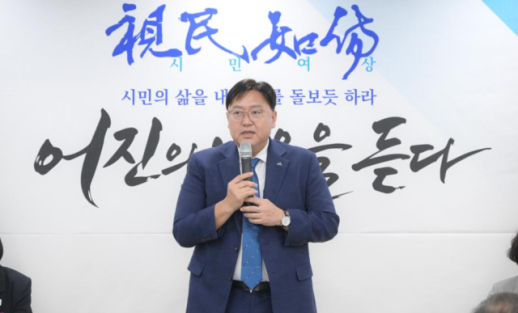 Sejong, Hanoi sign pact to deepen ties SEOUL, September 08 (AJP) - South Korea's administrative city and Vietnam's Hanoi agreed Tuesday to deepen ties in trade, talent and urban innovation, building on recent gains in business and digital cooperation. Sejong Mayor Cho Sang-ho and Vu Dai Thang, chairman of the Hanoi People's Committee signed a letter of intent (LOI) at Sejong City Hall. The document sets out a broader partnership between South Korea's administrative city and the Vietnamese capital. “We hope this agreement will build on the progress we have made and expand cooperation in the economy, public administration, culture and people-to-people exchanges,” Cho said. A nine-member delegation from Hanoi visited Sejong for the signing and talks on future cooperation. The two sides agreed to work more closely in trade and talent development, urban innovation and culture, as well as sports and people-to-people exchanges. The agreement also calls for regular visits, working-level meetings and seminars to develop new joint projects. The two cities began exchanges after their representatives met in April 2025 and have since widened their ties, particularly in digital technology and business. In the digital sector, 106 Vietnamese teams with 387 participants took part in the preliminary round of HackTheon Sejong, an international university cybersecurity competition, in July. Vietnam's CyberCh1ck team reached the finals and won the top prize in the beginner category. Business ties have also produced tangible results. Four Sejong-based companies that joined a business matching event in Hanoi in June signed export deals worth a combined $10.8 million with Vietnamese partners. The two sides plan to continue exchanges between their delegations and develop additional joint projects following the agreement. AJP Takeaways - Sejong City and Hanoi agreed on September 8, 2026, to deepen cooperation in trade, talent development, urban innovation, culture, sports and people-to-people exchanges. - Sejong Mayor Cho Sang-ho and Hanoi People's Committee Chairman Vu Dai Thang signed a letter of intent at Sejong City Hall to broaden ties between South Korea's administrative city and Vietnam's capital. - Digital cooperation has already produced results, with 106 Vietnamese teams and 387 participants joining the July 2026 HackTheon Sejong cybersecurity competition, where Vietnam's CyberCh1ck team won the beginner category. 2026-09-08 11:14:09
 -
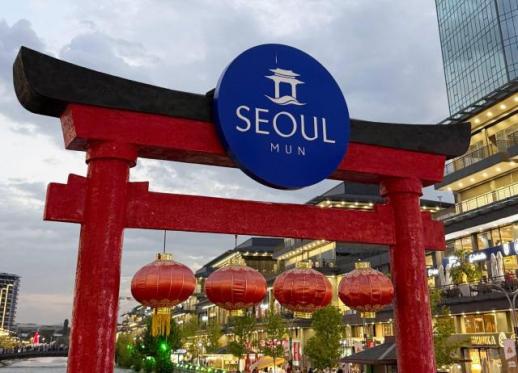 Japanese-style torii at Tashkent's Korea-themed landmark draws criticism SEOUL, September 08 (AJP) -Seoul Mun, a popular Korean Wave attraction in Uzbekistan's capital Tashkent, has come under scrutiny over a prominent structure resembling a Japanese shrine gate that critics say could confuse visitors about the site's Korean identity. Seo Kyoung-duk, a professor at Sungshin Women's University and a prominent campaigner for promoting Korean culture and history overseas, raised concerns Tuesday over the large structure resembling a Japanese torii, a traditional gate marking the entrance to a Shinto shrine. “I believe it is a serious mistake to have installed a large structure resembling a Japanese torii at Seoul Mun, a Korean Wave landmark in Uzbekistan, and even decorated it with Chinese-style red lanterns,” Seo told AJP. “The area has become a popular tourist attraction not only for Tashkent residents but also for many foreign visitors,” he said. “Above all, many foreign visitors regard the structure as a symbol of Seoul Mun and take photos and videos of it,” Seo said. “I believe it should be replaced immediately to avoid creating cultural confusion.” Seoul Mun has emerged as one of Tashkent’s most visible Korea-themed attractions and a symbol of growing cultural ties between South Korea and Uzbekistan. Built along a canal in the Uzbek capital, the sprawling commercial and cultural complex features architectural elements inspired by traditional Korean palace gates, tiled roofs and taegeuk motifs. The waterfront district is lined with restaurants, cafes and shops, including Korean restaurants, K-beauty stores and Korean-style dessert cafes. Its promenades, bridges and musical fountains draw crowds, particularly in the evening, with Korean pop music also featured in fountain performances. The popularity of Seoul Mun comes amid a broader rise of Korean culture in Uzbekistan, where K-pop, Korean dramas, cosmetics, food and the Korean language have developed a sizable following. A recent study of K-drama viewers in Uzbekistan found that viewers generally had favorable and familiar perceptions of Korean dramas and that such exposure contributed to a more positive image of South Korea and greater interest in visiting the country. The cultural connection is also underpinned by Uzbekistan’s large ethnic Korean community. The country is home to roughly 180,000 ethnic Koreans, known as Koryo-saram, one of the largest Korean diaspora communities in the former Soviet Union. Uzbekistan received about 11.7 million foreign visitors classified as tourists in 2025, up 46.8 percent from 2024, according to the country’s National Statistics Committee. Some 46,300 visitors came from South Korea. AJP Takeaways - Korean culture campaigner Seo Kyoung-duk criticized a torii-like structure decorated with Chinese-style lanterns at Seoul Mun, a Korea-themed landmark in Tashkent. - Seo told AJP the structure could confuse foreign visitors about Korean cultural identity and called for its immediate replacement. - The dispute comes as Korean culture gains popularity in Uzbekistan, home to roughly 180,000 Koryo-saram and a growing number of foreign tourists. 2026-09-08 11:13:33
 -
 Samsung board faces breach-of-trust complaint SEOUL, September 08 (AJP) - A shareholder group said it will file an additional criminal complaint against Samsung Electronics' entire board and executives of a company labor union over performance bonuses, widening a legal dispute over the chipmaker's profit-linked compensation scheme. The Korea Shareholders Alliance said it plans to submit the complaint to the National Office of Investigation on Wednesday at 10 a.m. outside the agency's headquarters in Seoul. The group plans to accuse all Samsung Electronics board members and executives of the Samsung Group Super Enterprise Union's Samsung Electronics branch of complicity in breach of trust under the Act on the Aggravated Punishment of Specific Economic Crimes. The latest action expands an earlier complaint filed against Samsung co-CEOs Jun Young-hyun and Roh Tae-moon over a wage agreement reached in May. That case has been assigned to the Gyeonggi Nambu Provincial Police Agency. The shareholder group argues that linking employee bonuses to a fixed percentage of operating profit amounts to a distribution of corporate profits that should require shareholder approval, rather than being determined through collective bargaining. It also claims union officials who helped design and implement the agreement should share responsibility with board members involved in subsequent decisions to use treasury shares for employee compensation. No court or investigative authority has determined that the wage agreement or Samsung's use of treasury shares violated the law. The dispute traces back to wage negotiations earlier this year involving several Samsung labor unions. Donghaeng Union, whose membership is concentrated in Samsung's Device eXperience (DX) division, withdrew from a joint bargaining group before a tentative agreement was reached, saying the interests of DX employees were not being adequately represented. Samsung and the remaining unions reached a tentative agreement on May 20, a day before a planned strike. Under the deal, employees in the Device Solutions (DS) division, which oversees Samsung's semiconductor business, became eligible for a new special performance bonus funded with 10.5 percent of the division's operating profit and paid entirely in Samsung shares after taxes. Employees in DX and other eligible divisions were instead offered Samsung shares worth 6 million won ($4,300) per person. The agreement was formally approved on May 27 following votes by members of the participating unions. The differing compensation schemes fueled discontent among DX employees and intensified divisions among Samsung's labor groups. Donghaeng held rallies at Samsung's Suwon campus in July and near its Seocho headquarters in Seoul in August, demanding additional compensation for DX employees and a company-wide performance bonus pool. Samsung, meanwhile, began implementing the May agreement. In July, the company approved the disposal of 1.08 million treasury shares to provide stock compensation to 49,345 employees in the DX division and its CSS business team. Samsung followed in August with a decision to acquire about 15 trillion won ($10.8 billion) worth of its own shares for employee stock compensation, including special performance bonuses for DS employees. The shareholder group argues that the May agreement and subsequent share transactions harmed Samsung and its shareholders, and is seeking to have the latest complaint investigated together with its earlier case. The group has also filed a separate complaint against Labor Minister Kim Young-hoon over his role in brokering the May wage agreement, arguing that performance bonuses should not have been treated as a subject of collective bargaining. It plans to call on investigative authorities on Wednesday to accelerate that investigation and to urge the Major Crimes Investigation Agency, scheduled to launch in October, to pursue alleged corporate breach-of-trust cases without political or external interference. The group also opposes moves to abolish or narrow the scope of the criminal breach-of-trust offense, arguing that it serves as an important safeguard for shareholders. 2026-09-08 11:07:09
 -
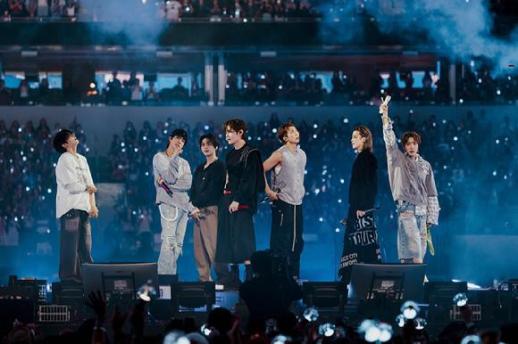 BTS draws 1.92 million on North American 'Arirang Tour' SEOUL, September 08 (AJP) - BTS drew about 1.92 million people across North America on its "ARIRANG" world tour with four sold-out shows at SoFi Stadium in Los Angeles, the group's agency BigHit Music said Tuesday. The North American leg covered 31 concerts in 12 cities and ended with performances in Los Angeles on Sept. 1, 2, 5 and 6. The four LA shows drew about 282,000 people, according to the agency. The concerts were also streamed live on fan platform Weverse and watched from 177 countries. With the latest run, BTS has now performed eight concerts at SoFi Stadium, including four shows from its 2021 "BTS Permission to Dance On Stage - LA" series. BigHit Music said BTS has become the act with the most concerts at the venue and the group with the largest cumulative audience there since the stadium opened, with the eight shows drawing about 496,000 people combined. The LA finale also highlighted the Korean roots running through the tour. During "Body to Body," a track from the group's fifth studio album, fans held up Korean flags and sang along to a section built around the traditional folk song "Arirang." The Los Angeles Times said BTS' return showed the continuing cultural reach of K-pop in the United States, noting how "Arirang" links the group's Korean roots with its global pop and hip-hop sound. Speaking to Forbes ahead of the final two LA shows, RM said "Returning to SoFi Stadium for the last North American stop was a joy and that the fans we met across the tour left a strong impression." The Los Angeles run also included fan celebrations tied to members' birthdays. Fans marked Jungkook's birthday on Sept. 1 with a gold-themed singalong and also celebrated RM ahead of his Sept. 12 birthday during the final show. BTS will begin the South American leg of the tour on Oct. 2 in Bogota, followed by shows in Lima, Santiago, Buenos Aires and Sao Paulo. AJP Takeaways - BTS drew about 1.92 million people across 31 North American concerts. - The group ended the leg with four sold-out shows at SoFi Stadium in Los Angeles. - BTS has now performed eight concerts at SoFi Stadium, drawing about 496,000 people there in total. 2026-09-08 11:06:17
 -
 Yong-cheol and Soon-ja from 'I Am Solo' Tie the Knot After Breakup and Reunion Yong-cheol and Soon-ja from the 23rd season of 'I Am Solo' have become a couple after overcoming a breakup. On September 6, Yong-cheol shared photos from their wedding on his social media account. In the photos, the couple gazes lovingly at each other in a venue overlooking the Han River. Friends from their season attended the wedding to celebrate the couple's future together. On the YouTube channel 'Chonjang Entertainment TV,' which is associated with ENA and SBS PLUS's 'I Am Solo,' they revealed behind-the-scenes stories from the wedding. Sang-cheol, who attended the ceremony, jokingly mentioned, "I will be getting married soon, so I received the bouquet at this event," while Yong-soo shared, "I am currently dating someone with marriage in mind." The couple initially did not choose each other on the show but developed a romantic relationship, experienced a breakup, and eventually reunited to get married. In July, Yong-cheol announced their wedding news on 'Chonjang Entertainment TV,' explaining the reason for their breakup: "I caused a lot of trouble. I enjoy socializing, and after the show, my network expanded, which was fun. I think I paid less attention to the relationship, and conflicts deepened, leading to our breakup." At that time, Soon-ja was preparing to appear on 'I Am Solo: Four Seasons.' Yong-cheol said, "When I heard about her participation in 'I Am Solo: Four Seasons,' I tried to convince her not to go. Soon-ja said she wanted to follow her own path. I didn't want to let her go. It had only been a month or two since we broke up, and I still had lingering feelings. I wanted to interfere somehow, but she wanted to confirm her own feelings." However, after Soon-ja appeared on 'I Am Solo: Four Seasons,' she faced a difficult time due to malicious messages and criticism, and Yong-cheol reportedly supported her during this period. He said, "Soon-ja went through a lot of emotional turmoil after filming 'I Am Solo: Four Seasons.' She received insults about her family through DMs and cried a lot. I followed her around during performances to comfort her." Soon-ja recalled, "He took leave from work to attend all my performances. The event staff thought he was my manager. He quietly supported me, taking time off to ensure nothing would happen to me." The couple's reunion stemmed from Yong-cheol's changes. Soon-ja said, "I told him that if he showed focused effort for three months, I would reconsider." Yong-cheol actually set a curfew for himself and tried to change his lifestyle. After reuniting, they continued their relationship with marriage in mind and finally tied the knot on September 5. The couple held their wedding in a venue with a view of the Han River. The rental fee for the wedding hall was reported to be 12 million won. In a YouTube video, Yong-cheol mentioned that the total cost varies depending on the number of guests, stating, "If there are 500 guests, the food expenses alone would be nearly 100 million won." Meanwhile, Soon-ja is known to be active as a cellist, while Yong-cheol is employed at an automobile company. The couple has been sharing their wedding preparation process since announcing their engagement in July, culminating in their wedding at a wedding hall near Han River Park on September 5.* This article has been translated by AI. 2026-09-08 11:04:20
 -
Bit & Electronics Soars 30% Amid AI Data Center and 6G Localization Projects Bit & Electronics recorded a significant surge in stock prices as it engages in major national projects related to artificial intelligence (AI) data centers and the localization of 6G optical communication technology.According to the Korea Exchange, as of 11:02 AM, Bit & Electronics' shares rose 30.00% to 3,640 won, reaching the upper limit.The stock's rise follows the announcement that Bit & Electronics has been selected as the implementing agency for the next-generation optical communication components localization project related to AI data centers.On the same day, Bit & Electronics announced that it has signed an agreement to serve as the implementing agency for the 'Commercialization Project for Optical Communication Components for Intelligent Information Networks,' overseen by the Ministry of Science and ICT and managed by the National Information Society Agency (NAI).* This article has been translated by AI. 2026-09-08 11:04:10
-
Government Identifies 26 Candidates for Future Key Technologies The government has identified 26 candidates for research and development (R&D) themes aimed at leading future industries, including nanorobots, neuromorphic semiconductors, self-healing intelligent materials, and ultra-low-power space computing. By the end of the year, three new themes for the 2027 'Future Key Technologies Project' will be selected from these candidates.On September 8, the Ministry of Trade, Industry and Energy held the launch ceremony for the 'Grand Challenge Committee' at the Seoul Chamber of Commerce and discussed the planning direction and candidate themes for the 2027 Future Key Technologies Project.The Grand Challenge Committee, chaired by Hong Soon-guk, Executive Vice President of the Korean Academy of Engineering, consists of 22 experts from academia, industry, and research in the fields of technology, economy, future studies, and policy.The Future Key Technologies Project is an R&D initiative that aims to tackle highly advanced technologies that could change the landscape of future industries, even if the risk of failure is high. A total budget of 302.6 billion won will be allocated from 2025 to 2035, with 272.6 billion won coming from the national government.Rather than pre-selecting specific technologies, the project will choose broad technology areas as 'themes' that allow various research teams to compete. Multiple research teams will compete within each theme, and promising research will receive focused support through staged evaluations.The project will not only focus on developing core technologies but will also link to demonstration, production processes, and the creation of initial markets. Support will also be provided for establishing intellectual property roadmaps, commercialization strategies, and private investment connections.The Ministry has analyzed domestic and international trends in future technologies, markets, and policies, considering changes in technology and markets over the next decade. They reviewed 67 promising technology areas and 925 core technology elements.Through technology demand surveys, interviews with experts from academia and industry, and analysis of over 600 domestic and international science fiction (SF) content, the committee identified 26 candidates, including nanorobots, X-Brain neuromorphic semiconductors, self-healing and adaptive intelligent materials, and ultra-low-power space computing.The Grand Challenge Committee will evaluate these candidates based on their potential to create new industries and markets and their likelihood of leading the global market, with three new themes to be finalized by the end of December.Last year, the committee selected three initial themes: artificial muscle full-body robots, PFAS-Free Transformation, and End-to-End 3D spatial intelligence, which began technology development this year.These projects include developing next-generation robots that move flexibly and precisely like humans using artificial muscles, materials and processes to replace harmful fluorinated substances (PFAS) used in advanced industries, and 3D spatial intelligence technology that allows AI to autonomously recognize, judge, and control spatial information.Lee Min-woo, head of the Ministry's Industrial Growth Office, stated, "The Future Key Technologies Project is not about technologies that are currently performing well, but rather about proactively identifying and challenging technologies that will determine our industrial competitiveness in ten years. We will boldly support the discovery of technologies that can change the landscape of global industries."* This article has been translated by AI. 2026-09-08 11:04:00
-
Korean Persimmons Expected to Make First Export to China This Year as Agricultural Cooperation Resumes Korean persimmons are expected to be exported to the Chinese market for the first time as early as this year. South Korea and China have resumed their agricultural cooperation committee after eight years and agreed to expand collaboration in areas such as smart agriculture and livestock disease control.The Ministry of Agriculture, Food and Rural Affairs announced that Vice Minister Kim Jong-goo visited Beijing from September 6 to 7 to participate in the 19th Korea-China Agricultural Cooperation Committee, hold high-level talks with the Ministry of Agriculture and Rural Affairs of China and the General Administration of Customs, and meet with K-food export companies.During the Korea-China Agricultural Cooperation Committee meeting on September 7, five key topics were discussed: agricultural innovation based on science and technology, climate change response, fostering young farmers, cross-border animal disease response, and the preservation of globally significant agricultural heritage. The two countries shared major policies and sought cooperative measures through joint responses.Cooperation in smart agriculture and livestock disease control will also be strengthened. Vice Minister Kim discussed enhancing exchanges between agricultural technology research institutes and companies with Zhang Zili, Vice Minister of the Ministry of Agriculture and Rural Affairs of China. The Chinese side responded positively to a proposal to establish a 'Korea-China Veterinary and Quarantine Regular Consultative Body' to regularly share information on cross-border livestock infectious diseases and quarantine policies.Negotiations for quarantine measures to expand K-food exports are also gaining momentum. The Ministry of Agriculture, Food and Rural Affairs has agreed with the General Administration of Customs of China to conduct a local inspection of Korean persimmon export farms in October. This follows the memorandum of understanding on the export of Korean persimmons signed during a summit in November last year. The ministry expects that once the local inspection and registration procedures for export farms are completed, the first export of Korean persimmons to China will be possible within this year.Quarantine negotiations for the export of Jeju beef to China are also underway. Vice Minister Kim has requested the Chinese side's interest and cooperation to ensure the smooth progress of the recently initiated quarantine negotiations for Jeju beef.Vice Minister Kim held a meeting with K-food export companies and related organizations in Beijing to listen to market trends and export challenges. Attendees included representatives from CJ, Pulmuone, Hite Jinro, KappaINT, the Korea Agro-Fisheries & Food Trade Corporation (aT), the Rural Development Administration, the National Agricultural Cooperative Federation, and the Korea Rural Economic Institute. He also visited the local distribution store, Hema Xiansheng, in Wangjing to check on K-food sales.Vice Minister Kim stated, “The successful hosting of the 19th Korea-China Agricultural Cooperation Committee has laid the groundwork for both countries to wisely overcome issues such as climate change and cross-border livestock disease response, while strengthening cooperation in smart agricultural technology.” He added, “As China is the second-largest market for K-food exports with significant growth potential, the government will do its utmost to ensure that progress in quarantine negotiations for promising fresh agricultural and livestock products leads to an expansion of K-FRESH exports.”* This article has been translated by AI. 2026-09-08 11:04:00
-
Local Governments to Establish Rural Space Plans Under New Law The revised Rural Space Restructuring Act will enable local governments to establish rural space plans, detailing procedures for the creation, modification, approval, and designation of rural specialized districts.On September 8, the Ministry of Agriculture, Food and Rural Affairs announced that it will begin a 40-day public comment period from September 9 to October 19 on the proposed amendments to the enforcement decree and rules of the 'Rural Space Restructuring and Regeneration Support Act,' set to take effect on December 17.This amendment follows the revision of the Rural Space Restructuring Act, which was announced on June 16, and aims to specify necessary details and delegated matters required by the revised law, including the establishment of rural space plans by local governments and the introduction of rural specialized district plans.The proposed enforcement decree grants local government heads authority related to rural space planning. With this change, local governments will be able to establish rural space plans, adding the local government heads to the list of entities responsible for designating rural specialized districts and processing resident proposals.New regulations will also be established for the creation, modification, and approval of rural specialized district plans, detailing the necessary documentation and methods for publicizing these plans.Procedures for the de-designation of rural specialized districts will also be introduced, requiring the announcement of the location, area, and reasons for de-designation.Regulations regarding the composition and operation of the Central Rural Space Policy Review Committee will be included in the enforcement decree, specifying the appointment methods for the chairperson and members, their terms, and the duration of the committee.The enforcement rules will change the name of existing 'Rural Hazard Facilities' to 'Rural Environmental Management Facilities.' New criteria will also be established to exclude facilities from this designation if they can demonstrate ongoing compliance with relevant legal standards.Provisions related to the inclusion of local governments in the establishment of rural space plans will be revised, adding regulations for the approval of resident council establishments and applications for the designation of rural space policy support agencies.Jeon Han-young, Director of the Rural Policy Bureau at the Ministry of Agriculture, Food and Rural Affairs, stated, "Through this legislative notice, we will gather opinions from local governments, related agencies, and the public, and ensure that the amendments to the subordinate laws are completed smoothly in time for the revised law's implementation on December 17."The legislative notice and procedures for submitting opinions can be found on the National Participation Legislative Center and the Ministry of Agriculture, Food and Rural Affairs website.* This article has been translated by AI. 2026-09-08 11:04:00