

SEOUL, September 18 (AJP) - North Korea has fired multiple short-range ballistic missiles (SRBMs) from a launch site near Kaechon City some 72 kilometers (45 miles) north of Pyongyang, five days after North Korean leader Kim Jong-un inspected a weapons-grade uranium enriching facility, South Korea's Joint Chiefs of Staff (JCS) said Wednesday.
According to the JCS, North Korea fired multiple SRBMs northeastwards from Kaechon at about 6:50 a.m. (2150 GMT) on Wednesday. The missiles flew about 400 kilometers. The South Korean military command said it is collaborating with the United States military intelligence body to investigate launch details.
On Jul. 1, North Korea conducted a fire drill for SRBMs and announced that it would conduct extra tests, claiming that two missiles carried 4.5-ton warheads. The JCS analyzed that a missile flew about 600 kilometers while another flew about 120 kilometers before crashing into the ground.
The JCS stated, "North Korea's missile launch is a clear act of provocation that seriously threatens peace and stability on the Korean Peninsula, and we strongly condemn it." It added, "Under the robust ROK-U.S. combined defense posture, we will closely monitor North Korea's various activities and maintain the capability and readiness to respond to any provocation overwhelmingly."

Park Sae-jin
Experienced journalist and editor at AJU PRESS specializing in multilingual news. I cover international diplomacy, geolpolitics, and policy, consistently delivering highly accurate, compelling reporting for a worldwide audience.
Copyright ⓒ Aju Press All rights reserved.
Related News
-
 Korea Investment & Securities to Raise 650 Billion Won in Capital Increase
Korea Investment & Securities will secure an additional 650 billion won (KRW) in capital. This move is aimed at expanding its business, leveraging its capital strength in areas such as integrated investment accounts (IMA) and corporate finance (IB).According to the Financial Supervisory Service's electronic disclosure system on the 18th, Korea Investment & Securities' board of directors decided to conduct a shareholder allocation capital increase of 650 billion won (KRW) on the same day. The funds raised through the issuance of new shares will be used entirely for operational purposes. The largest shareholder, Korea Financial Group, holds 100% of the shares and will bear the full cost of the capital increase.Korea Financial Group's financial support has been ongoing since last year. After contributing 900 billion won (KRW) in September last year, it injected an additional 1.5 trillion won (KRW) in February this year. Including this capital increase, the total funds supplied to its subsidiary over the past 14 months will reach approximately 3.05 trillion won (KRW).Once this capital increase is completed, Korea Investment & Securities' equity capital is expected to exceed 14 trillion won (KRW). As of the end of September, its standalone financial statements showed equity capital of 13.55 trillion won (KRW), the highest among domestic securities firms. With the capital increase amount factored in, this will rise to 14.2 trillion won (KRW).As the capital size increases, the company is expected to gain momentum in its business expansion. In particular, it will secure additional funding capacity in the issuance of notes, where the issuance limit is determined based on equity capital. There is also expected to be a broader scope for fund management in IMA operations and corporate finance investments.* This article has been translated by AI.
-
K-Content and Fandom Integrated into Tourism Policy: Joint Research by Korea Culture and Tourism Institute and Dongguk University
Research collaboration is being pursued to integrate K-content and fandom into tourism policy. This initiative aims to respond to the tourism demand for visiting related sites and experiencing culture, moving beyond just enjoying Korean Wave content.The Korea Culture and Tourism Institute announced that on November 18, it signed a memorandum of understanding to expand research collaboration with Dongguk University's Korean Wave Convergence Institute at the National Museum of Korea in Yongsan, Seoul.Through this agreement, the two institutions will promote joint research in the fields of culture, tourism, and content, and will co-host academic events such as forums and seminars. They will share academic information, research reports, and statistical data, while also involving researchers in advisory and review processes for research projects.Following the signing ceremony, the '2026 Second Half Conference' hosted by Dongguk University's Korean Wave Convergence Institute was held. This event, themed 'Exploring Tourism Policies Implemented through K-Content, Fandom, and Technology,' discussed changes in tourism demand due to the spread of the Korean Wave and policy response directions.Hwang Kyo-ik, president of the Korea Culture and Tourism Institute, stated, 'Connecting Korean Wave content with sophisticated tourism policies and infrastructure is of utmost importance,' expressing the intention to produce policy research outcomes by sharing the research resources and field experiences of both institutions.* This article has been translated by AI.
-
 AI ups exam-day tensions in Korea
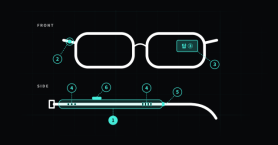
{y} CSAT First year recorded Unchanged from the previous year Up {n} cases from the previous year Year-on-year change: {n} cases Banned Allowed Allowed after inspection A prohibited device can invalidate your exam even if you never use it. Smart devices with payment or communication functions are not allowed. Smart glasses are a prohibited item. Merely carrying them, even without using them, voids the current exam. Using them during the exam also bars the test-taker from the following year’s CSAT. Electronic devices are not allowed. Earphones with Bluetooth communication functions are banned. Two cases involving Bluetooth earphones or mobile phones were detected in Gwangju during the CSAT for 2020 admissions. Electronic dictionaries with digital displays are prohibited. Electronic devices are not allowed. Electronic devices, including portable media players, are not allowed. Electronic devices are not allowed. Electronic devices are not allowed. Electronic devices are not allowed. Watches with LCD or LED displays, payment functions or communication capabilities are prohibited. Smart rings with communication or payment functions are prohibited. Listed as prohibited in the Ministry of Education's guidance for the 2027 CSAT, which also covers rechargeable devices. A rechargeable device listed as prohibited in the Ministry of Education's guidance for the 2027 CSAT. Even a drinks container with a digital display is prohibited. Allowed if it has traditional hands and no digital display, payment function or communication capability. From November 18, test-takers may not bring their own answer-sheet pens. Use the black answer-sheet pen provided at the test site to mark answers and copy the handwriting verification phrase. From November 18, black pencils are the only writing supplies test-takers may bring themselves. Use the answer-sheet pen provided at the test site to mark answers. From November 18, test-takers may not bring their own correction tape. Use the tape purchased centrally by education offices and supplied to test sites. From November 18, test-takers may not bring their own erasers. Use the erasers purchased centrally by education offices and supplied to test sites. From November 18, test-takers may not bring their own mechanical-pencil lead. Use the lead purchased centrally by education offices and supplied to test sites. Allowed after inspection by a proctor. Spare masks must also be checked. Allowed after inspection by a proctor. Items needed for physical or medical reasons require a proctor's inspection before each session. Subject to inspection by a proctor before each session. Subject to inspection by a proctor before each session. Continuous glucose monitors and insulin pumps may be restricted or require a separate exam room, depending on communication functions or noise. Ordinary glasses · Thin frames, no electronic components Smart glasses look much like ordinary glasses, but the frames hide a camera, a speaker and a microphone. First round · Second row, center seat from the podium Second round · First row, center seat from the podium Article link copied. Article link copied. Paste it into KakaoTalk. Could not copy the link. Copy the URL from your browser's address bar. Sharing options opened in a new window. KakaoTalk sharing opened. Shared successfully. Sharing canceled. Could not share the article. Please try again shortly. Your browser cannot play this video. Open the MP4 file PLAY THE SCENESmart glasses on an exam paper Testing fairness in the age of AI AI ups exam-day tensions in Korea AI-assisted cheating is seeping into everyday classrooms and looming over state-run tests, including this year’s College Scholastic Ability Test (CSAT), South Korea’s national college entrance exam. When devices hidden in everyday objects, some as small as an earpiece, can feed exam questions to AI, how can examiners be sure test-takers are showing their own ability? CSAT cheating CSAT cheating by the numbers Most cheating cases on the CSAT have nothing to do with large-scale copying. They involve bringing in a phone, marking answers after time is called, or breaking the rules for the social studies and science section. A good number of students have had their whole exam voided because they didn’t know a rule, even when they meant no harm. The figures below cover all cheating on the CSAT, not AI-related cases. Years refer to the academic year an exam serves. The 2025 CSAT, for example, was taken in November 2024. 2025 CSAT 262 cases Unchanged from the previous year 200 232 208 218 262 262 2021 2022 2023 2024 2025 Leading violations, 2021–2025 (out of 1,182 cases) Writing or changing answers after the end bell 427 This is the most common violation. Students must put down their pens as soon as the bell rings. Breaking the rules of the fourth-period social studies and science section 325 Opening the test booklet for the second elective subject during time allotted to the first, or keeping both booklets on the desk at once, counts as cheating. Carrying a phone or other electronic device 323 Simply having a banned item can count as cheating, even if it is never used. Keeping material that could be consulted during the exam within reach, such as books or notes in a desk drawer, can also count as cheating. Separately from these figures, cheating with smart glasses and tiny devices has come to light in other exams. Cases caught so far Not just the CSAT:cases caught so far Cheating with small electronic devices has turned up in university essay exams, professional licensing tests and language proficiency tests. Here are the cases that have come to light, and what they show about the limits of exam supervision. Exam · Date detectedDevices · Findings University essay exam Yonsei University essay exam Oct. 10, 2026 Smart glasses The applicant was failed and barred from applying in the 2028 early admissions round. University essay exam University of Seoul essay exam Oct. 3, 2026 Smart glasses The applicant was barred from university entrance exams for three years. Professional licensing test Certified tax accountant exam Nov. 15, 2026 · Admission Micro cameraGenerative AISmartphone The top scorer of the 63rd exam admitted to cheating in both the first and second rounds using a micro camera, a smartphone and generative AI. Language proficiency test Test of Proficiency in Korean (TOPIK) Police investigation · Organized ring uncovered Micro earpieceTransmitter Test-takers handed in their phones but still received answers from outside through separate devices. A proctor found a transmitter on the back of a test-taker’s neck. Police have booked 101 people who paid for cheating or for someone else to take the test. Case study · Certified tax accountant exam Cheating right in front of the proctors Podium Two proctors First round Second round First round · Second row, center seat from the podium In the first round, the cheating took place directly in front of the podium, where two proctors were watching. The case suggests that seating a test-taker close to the proctors is not enough to stop cheating. New rules for the 2027 CSAT AI How the CSAT is responding to smart glasses Starting with the 2027 CSAT, simply wearing smart glasses during the exam will be treated as using them. The test-taker’s exam will be voided, and they will be barred from the following year’s CSAT. These are the prevention rules and screening procedures for the exam: LV.1 Bringing in or merely carrying a device → The current exam is voided LV.2 Wearing or using a device → The current exam is voided, and the test-taker is barred from the following year’s CSAT LV.3 Refusing a proctor’s inspection → The case is reviewed and may be treated as serious misconduct LAW Using smart glasses to cheat → The government will pursue criminal complaints and request police investigations What screeners will look for How smart glasses differ from ordinary glasses Ordinary glasses Smart glasses Smart glasses look much like ordinary glasses, but the frames hide a camera, a speaker and a microphone. FRONT Ans. 3 SIDE 1 2 3 44 5 6 1Frame and temple thicknessBuilt-in components make the frames and arms thicker. 2Tiny camera lensA lens tucked into a corner of the frame. 3Display inside the lensA screen that can show answers and explanations. 4Speaker and microphone openingsFor audio playback and voice commands. 5Charging portOrdinary glasses don’t have one. 6Capture buttonTakes photos of the test paper and sends them to AI. This illustration is based on reported features taught to screening staff in their training. Shapes and component locations vary by product. Detailed screening techniques are not disclosed because they could help cheaters. Test sites nationwide 1312 sites The Ministry of Education will assign one staff member trained to detect smart glasses to each of the 1,312 test sites across the country, starting with the 2027 CSAT. It also plans legal action, including criminal complaints and requests for police investigations, against cheating with smart glasses and similar devices. How glasses will be checked Banned items must be handed to the proctor. Test-takers wearing suspicious glasses will be asked to remove them and place them on the desk, where the proctor and the screening staff member will inspect them. If they can’t tell, they will consult the exam control room. Glasses that raise suspicion during the exam will be checked after that period ends. The reality of supervision At the 2027 CSAT, smart glasses will be screened by proctors’ visual checks and one dedicated staff member per test site. Teachers’ groups point to the limits of visual inspection and a shortage of staff. Distributing radio-frequency detectors to test sites is under review starting next year. How the devices are changing Will taking off the glassesbe enough? The cases raise a question: Can cheating be stopped by judging devices on how they look? Video footage shows cameras disguised as ballpoint pens and erasers. The screenshots below come from sales and demonstration materials and are not evidence that these devices were used in real exams. Cameras that look like stationery Screenshot of a sales page A ballpoint pen camera listing, with some products marked “SOLD OUT.” The screenshot alone says nothing about sales volume, why items sold out, or whether they were used to cheat. Cameras made to look like erasers Screenshots of a device demonstration Front view of the eraser-shaped device. Camera lens on the eraser-shaped device. Another view of the eraser-shaped camera. As devices shrink, telling everyday objects from electronics by eye gets harder. But a device that can take pictures is not necessarily one that connects to AI or relays answers in real time. These screenshots cannot confirm a product’s full capabilities or its use in an actual exam. Note: Why AI answers in the video need checking An answer from AI is not a fact. Screenshots about receivers implanted under the skin show an exchange with an AI chatbot. They do not prove any real implant cases or show whether such devices can be detected. A photo of a medical cochlear implant is not evidence of a cheating device either. An AI chat about skin implants and whether they can be detected. The medical and technical claims on screen have not been verified, and this article does not rely on them as fact. Screenshot source: captures provided from the JoCoding YouTube channel. Sales and demonstration footage has been kept separate from confirmed cheating cases. The limits of enforcement How far canscreening go? After glasses, will exam sites have to check pens, and then ears? Expanding screening means not only finding devices but also taking on a heavier burden in running the exam. Telling devices apartDevices that resemble everyday objects are hard to spot by appearance alone. A procedure that catches one type of device is no guarantee it will catch other kinds. Time and staffingEach added check means planning for longer entry times, more staff and procedures for cases that are hard to call. Limits of physical inspectionIf inspections extend to ears or devices worn close to the body, how far should they be allowed to go, and how? Privacy and medically necessary devices also need to be considered. If these measures keep expanding, what will the entrance to a test site look like? Imagining the future What if exam sites somedaylooked like this? From metal detectors to ear and glasses inspections, we imagined a test site where anti-cheating procedures keep piling up. Illustration of a future test siteAI-generated scene This hypothetical image depicts metal, ear and glasses checks, along with facial recognition and AI behavior monitoring. The years, agency names and procedures shown are not actual plans. This is not a settled future. It is a thought experiment that asks how far screening should go in the name of preventing cheating, and how to protect test-takers’ comfort and privacy along the way. Appendix · What you can bring to the 2027 CSAT Check your items before the exam Select an item to check the rules. These rules apply to the 2027 CSAT. For other exams, check the guidance of the organization running them. From November 18, black pencils are the only writing supplies test-takers may bring themselves. Education offices will centrally purchase correction tape, erasers, mechanical-pencil lead and other affected supplies for distribution to test sites. The change aims to prevent cheating with miniature cameras hidden in writing supplies. All Banned Allowed Allowed after inspection Mobile phone Smartwatch Smart glasses Tablet Bluetooth earphones Electronic dictionary Digital camera MP3 player Calculator Camera pen Radio LCD or LED watch Smart ring E-cigarette Power bank Tumbler with a digital display Black answer-sheet pen White correction tape Eraser 0.5 mm pencil lead Analog watch Black pencil Face mask Seat cushion Hearing aid Magnifying glass Earplugs Glucose monitor or insulin pump Smart glasses Banned Smart glasses are a prohibited item. Merely carrying them, even without using them, voids the current exam. Using them during the exam also bars the test-taker from the following year’s CSAT. The safest choice is to leave all electronic devices at home. Anyone who has one with them must hand it to the proctor before the first period begins. Testing in the age of AI: Share your thoughts Reporting and writing Kang So-young Visuals Lim Hyun-hee Sources CSAT rules · Ministry of Education guidance · Korea Policy Briefing Cheating statistics · Ministry of Education data submitted to the National Assembly Education Committee in 2025 Additional screenshots · Captures provided from JoCoding · IT news coverage of AI cheating. School exam cases · Ministry of Education · Results of a nationwide survey on smart glasses cheating in school exams