

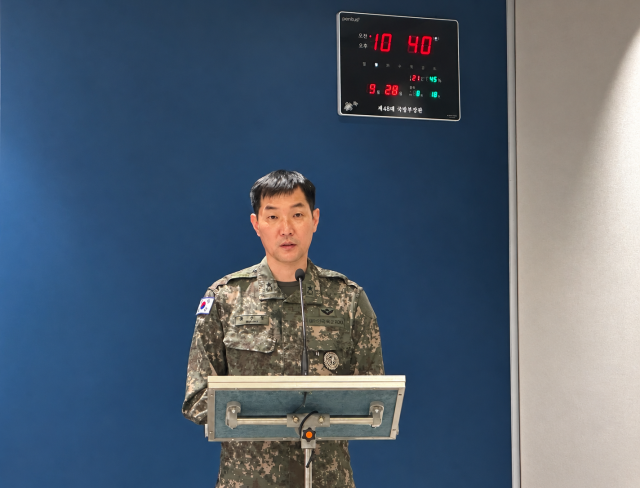
The Joint Chiefs of Staff said the assessment was based on accounts from multiple personnel who were at the scene when the explosion occurred.
Some described objects whose shape resembled a wooden-box mine, while other accounts suggested the material appeared largely plastic, the JCS said. The military said the differing descriptions would have to be checked against evidence from the site before any conclusion could be drawn.
The JCS also said it has not yet received an official forensic result from the National Forensic Service, despite media reports suggesting an initial analysis had identified characteristics linked to a North Korean mine.
"We have not officially received the result," a JCS official said, adding that the military would disclose its findings after combining the forensic analysis with the ongoing field investigation.
The investigation has been slowed by the difficulty of reaching the exact blast site.
A joint investigation team that entered the area Sunday was unable to reach the point of explosion, and another operation was underway Monday in an effort to advance the investigation.
"It was a new area with no existing search route," a JCS official said. "Because it had not been accessed for decades, we had no choice but to clear a route."
The official said the UNC had requested a direct inspection of the site, making access-route preparation necessary before the joint inspection.
"What the UNC requested was to go to the site and see it directly," the official said. "So clearing a search route had to come first."
Asked whether unmanned equipment or other alternatives had been considered instead of sending troops into the area, the official said, "We did not separately discuss the use of such equipment for this operation," adding that robotic systems are used in some other areas.
The JCS described the location as an "unverified mine area," saying it is a sector where South Korean troops have not operated regularly since the 1953 armistice.
The military said mines could have been laid there decades ago or introduced later, but stressed that the cause of the explosion and how the suspected mine came to be there remain under investigation.
The military also rejected suggestions that the field investigation had been deliberately delayed, saying safety conditions had to be secured before investigators could enter the area.
It said any changes to operational procedures or additional safety measures would be considered once the investigation is completed.
AJP Takeaways
- South Korean troops reported wooden-box mine-like objects near the DMZ blast site, but the JCS said the explosive’s type, origin and possible North Korean link have not yet been confirmed.
- The DMZ blast investigation has been delayed by difficult access to an unverified mine area, where troops have had to clear a new search route before the United Nations Command can inspect the site.
- The JCS is awaiting National Forensic Service findings and field evidence to determine whether the explosive was an older mine, a later emplacement or another device, while reviewing possible safety and operational changes.

Copyright ⓒ Aju Press All rights reserved.
![[PHOTO NEWS] Endangered Asiatic black bear found to be living in demilitarized zone](https://image.ajunews.com/content/image/2019/05/08/20190508182407633984_278_163.jpg)