

Away from the dispute, three South Korean servicemen remain hospitalized.
Officials are debating responsibility for the mines found south of the Military Demarcation Line separating the two Koreas, and Seoul’s defense chief has vowed to seek accountability for the soldiers’ injuries.
With or without an apology, the consequences for the injured servicemen will endure. For them, the longer ordeal lies at home.
All 18 personnel involved in the Sept. 21 operation were evacuated to the Armed Forces Capital Hospital after the explosions. Two seriously injured troops and one with minor injuries remained hospitalized.
In South Korea, treatment during military service and veterans benefits after discharge are handled through separate processes.
While personnel remain in service, injuries recognized as duty-related are covered under the Military Accident Compensation Act, including surgery, hospitalization and other medical care. Treatment is generally covered for up to two years, with extensions available when further care is medically necessary.
That coverage does not automatically confer recognition as a “person of national merit,” a legal designation that determines eligibility for a particular category of veterans benefits.
Recognition requires a separate review by the Ministry of Patriots and Veterans Affairs. Those injured during duties or training directly related to national defense or security may qualify if they meet the required disability threshold. Those injured during other official duties or training may qualify instead for a separate veterans compensation category.
For injured troops, the transition can involve gathering records, establishing how an injury relates to military duties and undergoing assessments that determine their longer-term support.
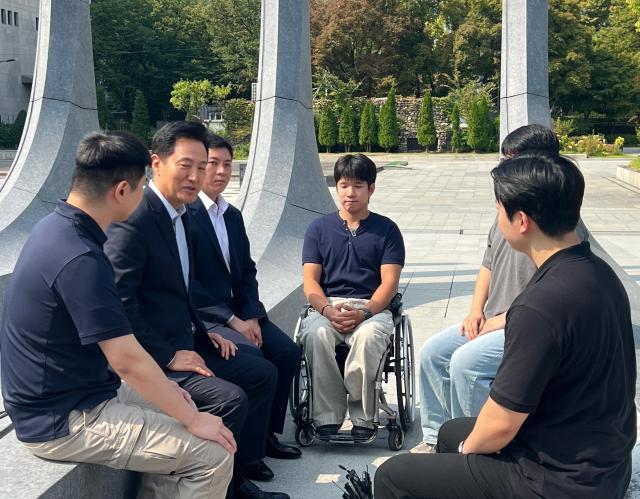
Young veterans who met Seoul Mayor Oh Se-hoon on Wednesday described the difficulties that can arise along the way.
The meeting at the Garden of Gratitude in central Seoul’s Gwanghwamun Square brought together veterans who have received legal, psychological or housing assistance from the Seoul Center for Young Injured Veterans.
“I had to find the evidence myself and prove it,” Jeon told AJP in a brief interview. “I went all the way to court, but in the end I was not recognized as a person of national merit.”
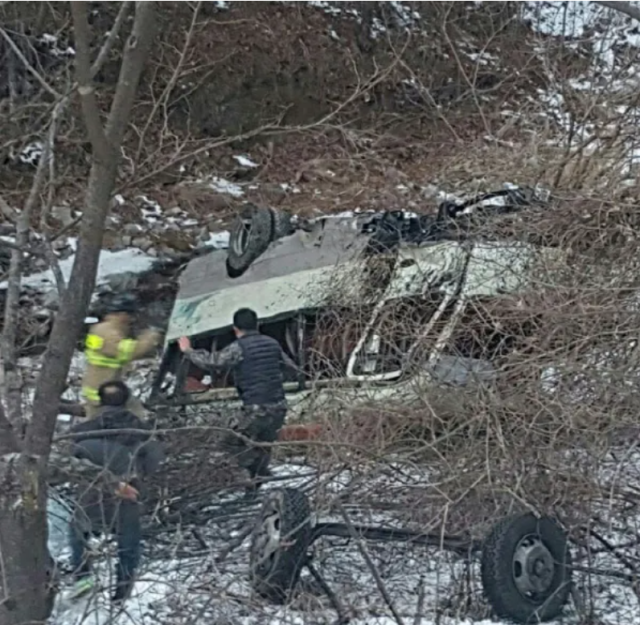
Jeon was a trainee when he was seriously injured in a military bus accident on Jan. 2, 2018.
He had received outpatient treatment for an ankle injury sustained during training and was returning to his unit when the bus crashed through a guardrail near Yanggu in northeastern Gangwon Province. It rolled about 20 meters down a slope, injuring all 22 service members aboard.
Jeon suffered severe spinal and neck injuries that left him paralyzed below the chest. More than a year later, he was still undergoing rehabilitation, having moved between seven hospitals. He postponed his discharge because the Defense Ministry was covering his treatment while he remained in service.
His application for national-merit status took about two years to review. He was ultimately classified as a veterans compensation beneficiary.
Although he was injured while returning from medical treatment during his military service, Jeon said the journey was not considered part of formal training.
“It was because it wasn’t during training hours,” he said, explaining his understanding of the decision.
A separate court ruling in January this year illustrated the distinction. A trainee injured when a military bus overturned while returning to his unit after medical isolation was denied national-merit status. The court found that returning to a unit was different from traveling as part of military training.
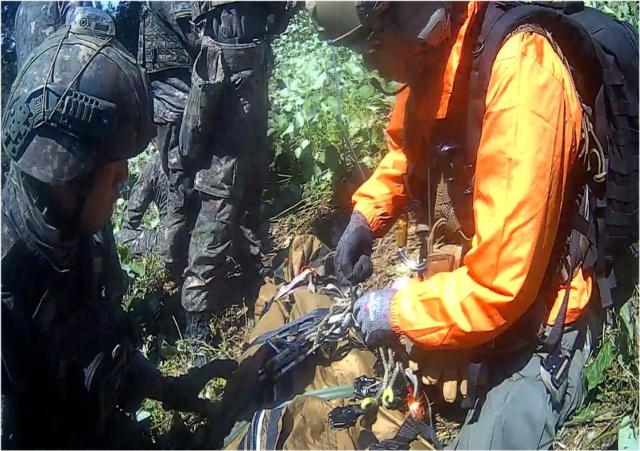
Jeon’s case does not establish how their applications would be assessed, but it illustrates the administrative and legal demands that can accompany recovery from a serious military injury.
Lee Han, a staff member at the Seoul center who is himself an injured veteran, said its four-person team handles roughly 1,000 consultations and cases a year.
Demand for legal assistance exhausted the center’s allocated budget in the first half of this year, he said, requiring staff to seek other ways to assist those still awaiting support.
Legal recognition is only one part of the transition to civilian life. Injured veterans may also need sustained rehabilitation, psychological care and assistance with housing and employment.
The center offers individual psychological counseling and monthly peer-support meetings where veterans can speak with others who have had similar experiences.
Around 10 people typically attend, with some participating regularly since 2023.
Access to rehabilitation remains a significant concern.
In a needs survey Lee cited at Wednesday’s meeting, around eight out of 10 injured veterans said they needed rehabilitation treatment or related support.
For people with serious leg injuries or limited mobility, repeated travel to hospitals can make that care difficult to obtain. Providing more rehabilitation services closer to their homes could help, Lee said.
Many people seeking the center’s assistance were injured in their early 20s, when they were beginning to plan their careers and adult lives. Some continue to pay for treatment or rehabilitation themselves because existing programs do not cover all their needs.
Nearly 185,000 South Korean men entered active-duty enlisted service in 2025, according to the Military Manpower Administration.
The Ministry of Patriots and Veterans Affairs recorded 48,386 registered service-injured veterans in its 2025 statistics. The figure is cumulative rather than an annual injury count and includes qualifying police officers and firefighters.
For the three troops hospitalized after the DMZ explosions, the immediate priority remains treatment. The experiences of other injured veterans show why access to rehabilitation and continuing support will matter long after the investigation ends.
AJP Takeaways
- Military medical coverage and post-discharge veterans benefits involve separate reviews in South Korea.
- The circumstances of an injury and the assessed disability level determine eligibility for different categories of support.
- Injured veterans describe continuing needs for legal assistance, rehabilitation, psychological care and help returning to civilian life.
- The Seoul Center for Young Injured Veterans says demand exhausted its legal-assistance budget in the first half of this year.

Copyright ⓒ Aju Press All rights reserved.
