
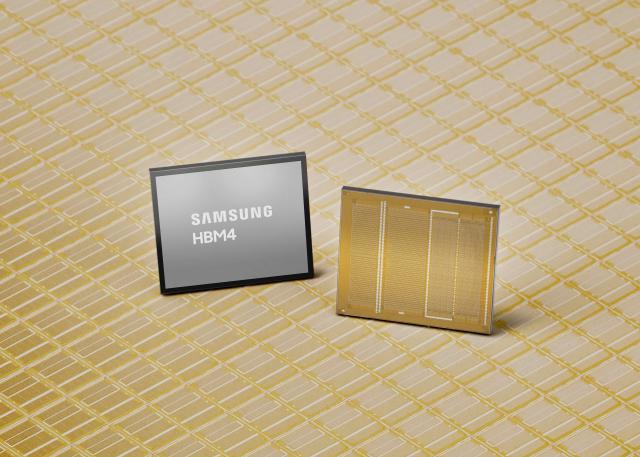
SEOUL, October 05 (AJP) - The global semiconductor industry is heading into a busy stretch of October, with Samsung Electronics set to report preliminary earnings this week before a series of major chip events and earnings releases put the strength of the AI-driven boom to another test.
Samsung is scheduled to release its preliminary third-quarter results on Thursday, Oct. 8, providing the first major earnings signal from South Korea's semiconductor industry after Micron Technology delivered record results and a bullish outlook last week.
Micron forecast even tighter memory supply conditions in 2027 and 2028, driven by continued demand for high-bandwidth memory and other chips used in AI infrastructure. Its outlook helped reinforce expectations that the current memory upcycle could extend well beyond this year.
Attention will then shift to a series of industry events and earnings releases next week.
Samsung Semiconductor will participate in the OCP Global Summit in San Jose from Oct. 12 to 15, where it plans to showcase memory and storage technologies designed for expanding AI infrastructure, including CXL-based memory pooling and technologies for AI inference.
In Seoul, SEDEX 2026, South Korea's largest semiconductor exhibition, will run from Oct. 14 to 16 at COEX, bringing together Samsung Electronics, SK hynix and companies across the chip equipment, materials and component supply chain. The event will include sessions on advanced semiconductor packaging and other next-generation technologies.
The focus will also turn to global semiconductor bellwethers, with ASML and TSMC expected to report third-quarter results in mid-October.
Their results will provide further clues on whether strong AI-related spending is continuing to translate into demand for advanced chipmaking equipment and leading-edge semiconductor production.
The busy calendar follows Micron's stronger-than-expected outlook and South Korea's record semiconductor exports in September, which more than tripled from a year earlier amid surging AI demand.
For investors and the chip industry, Samsung's preliminary results this week will mark the next major checkpoint in determining how much momentum the AI-driven memory boom carries into the final quarter of the year.

Candice Kim
Candice Kim is a dedicated business and technology reporter specializing in the intersection of high-tech innovation and fast-paced consumer trends. Her core beats span the semiconductor, IT, cosmetics, and retail sectors, where she provides in-depth coverage of industry titans including Samsung Electronics, SK hynix, and LG Electronics, alongside leading consumer brands like Olive Young and Musinsa. Whether analyzing complex silicon supply chains or tracking the latest shifts in beauty and fashion retail, Candice is committed to delivering sharp, accurate reporting that keeps readers informed on the forces shaping today's most dynamic markets.
Copyright ⓒ Aju Press All rights reserved.
Related News
-
 Chinese AI Firm DeepSeek Rapidly Closes Gap with U.S. Competitors
Chinese artificial intelligence (AI) models are rapidly narrowing the technological gap with their U.S. counterparts. As companies like DeepSeek make significant strides, the U.S. AI technology advantage has reached its lowest level in history.According to Bloomberg Intelligence, the performance gap between major Chinese AI models and U.S. competitors has shrunk to 3% since DeepSeek launched its latest model, 'V4.1 Flash,' last month. This gap was approximately 9% in May and 15% earlier this year.The V4.1 Flash achieved a sixth-place ranking on the AI model performance evaluation site 'LiveBench' last month, marking the highest position for a Chinese AI model. LiveBench assesses AI models based on their ability to analyze and respond to questions, puzzles, and various tasks, similar to measuring human intelligence quotient (IQ).DeepSeek scored 81.1 points, closely approaching the top score of 83.4 points from Anthropic. Robert Lee, a senior analyst at Bloomberg Intelligence, noted that DeepSeek demonstrates performance levels comparable to leading AI models like Anthropic and OpenAI.China's rapid improvement in AI competitiveness is attributed to the accumulation of technological expertise and the optimization of AI models for domestic hardware. Previously, Chinese AI firms expanded their market presence by offering lower prices than U.S. models. Now, they are quickly closing the technology gap by combining cost-effectiveness with enhanced performance. Lee stated, 'China's advancements raise further questions about the long-term sustainability of U.S. AI technological dominance.'In response, the U.S. has intensified regulatory scrutiny over allegations of distillation involving Chinese AI models, with discussions of potential bans on these technologies. The U.S. has previously sought to curb China's AI advancements through export controls on semiconductor technology.Recently, the U.S. government has taken direct action to maintain its AI leadership. According to Reuters, President Donald Trump announced the establishment of the 'Super Intelligence Force' (SIF) on October 4, led by Jay Clayton, the Director of the National Intelligence.The SIF will coordinate federal responses to ensure the U.S. remains at the forefront of AI development. It will include senior officials from the Federal Trade Commission (FTC) and the Department of Defense, reporting directly to President Trump and the White House Chief of Staff. Director Clayton stated that the task force is expected to deliver a report within 120 days assessing the risks and opportunities posed by AI and recommending the federal government's role.On the same day, President Trump wrote on social media platform Truth Social that the SIF's goal is 'to ensure that the U.S. continues to lead the world in superintelligence,' emphasizing the importance of protecting the interests of all Americans and improving their lives.Trump has previously expressed concerns that excessive regulations could weaken U.S. competitiveness in the AI race against China. On September 29, he indicated a reluctance to collaborate with Chinese President Xi Jinping on AI technology regulation issues.* This article has been translated by AI.
-
Hampyeong County Chief Lee Nam-o Outlines 'Hampyeong Transformation' Plans
Hampyeong County Chief Lee Nam-o's administration marks its 100th day in office on October 8.The past 100 days have been focused on establishing the direction and execution framework for the new administration. Moving forward, the focus will shift to delivering tangible results in key policies such as future industry development centered around the Bitgreen National Industrial Complex, livelihood economy, youth and education, agriculture, and stay-type tourism.Since the launch of the 9th term, Hampyeong County has set the goal of 'Renewing Hampyeong, Benefiting Residents' and has prepared execution plans for four major policy directions and 74 pledges.The pledges have undergone review by working departments and the transition committee, and a pledge jury has been established to incorporate resident feedback. Additionally, 82 new projects targeting 2027 have been identified.Lee has prioritized future growth areas, particularly focusing on RE100 and future industries centered around the Bitgreen National Industrial Complex. During his inauguration on July 1, he signed a memorandum of understanding with the Korea RE100 Committee. Since then, he has been pushing for the designation and expansion of the Bitgreen Industrial Complex as an RE100 site.In August, the 'Hampyeong Transformation Future Economy Task Force' was launched to establish a system for nurturing new industries such as AI semiconductors and future vehicles. The county is also expanding cooperation with local governments, responding jointly to the expansion of the Bitgreen Industrial Complex with Gwangsan District and collaborating with Yongin City on semiconductor and materials industries.However, there are still many challenges ahead. The county plans to pursue an additional 1 million pyeong expansion of the Bitgreen Industrial Complex, attract companies related to AI, semiconductors, and future vehicles, and establish a stable power supply system for 1GW-level renewable energy production.In terms of economic support, the administration has focused on policies that residents can directly feel. For the first supplementary budget of the 9th term, Hampyeong County allocated 627.2 billion won and provided a recovery support fund of 50,000 won per resident ahead of the Chuseok holiday.This initiative aims to stimulate local consumption, alleviate the financial burden on small businesses and self-employed individuals, and revitalize the stagnant local economy.Lee has also engaged in direct communication with residents. From August 20 to September 4, he visited nine towns to meet with residents. During these visits, a total of 66 requests regarding local issues and inconveniences were received, and the county plans to address them by the end of the year after departmental reviews.To address the challenges of local finances, the administration has strengthened external activities targeting the central government and the National Assembly. Lee visited the National Assembly twice in July and September, presenting 14 local issues, including six and eight requests, respectively.He met with the Minister of Land, Infrastructure and Transport to discuss key issues and held meetings with lawmakers and officials from the Rural Development Administration to seek cooperation on local projects.In the education sector, discussions have been held with Kim Dae-jung, the Superintendent of Jeonnam Gwangju Special City, on four issues, including the introduction of a two-way joint school district system. The county is also exploring cooperation with Honam University to establish a four-year Dream Life University campus in Hampyeong and to enhance lifelong learning for residents.Addressing population decline and regional extinction is another core challenge for the 9th term. The county is promoting the establishment of a 'Hampyeong-type Basic Society' that integrates income, care, settlement, and education.Key components include Hampyeong-type basic income, support for youth and newlyweds, integrated care centered on villages, childcare support, and expanded home medical and night care services.In the housing sector, the county is considering half-price housing, 10,000 won housing, and transportation support for vulnerable areas. In education, it plans to expand existing policies such as AI digital vouchers for residents and support for college tuition.The success of these initiatives will depend on securing funding and developing detailed execution plans for each project.In agriculture, smart farming will be integrated. The county plans to establish a vertical smart farm testbed for RE100 and expand smart farm distribution focusing on regionally specialized crops like summer strawberries and figs.By utilizing Jeonnam-type smart farms and ICT convergence facilities, the county aims to induce changes in production methods and address the aging rural population and labor shortages.Hampyeong Cheonji Hanwoo will enhance its competitiveness through the establishment of a Hanwoo genetic resource and breeding center and research and development in collaboration with the Rural Development Administration. The county also plans to improve productivity and livestock environments through AI and ICT-based smart livestock infrastructure.The tourism policy will also shift focus. Instead of merely increasing visitor numbers through festivals like the Butterfly Festival and National Flower Festival, the county aims to prioritize how long tourists stay and how much they spend in Hampyeong.The county plans to connect Expo Park, Hampyeong Stream, and the town's commercial district while expanding stay-type tourism infrastructure, including public camping sites along the Nasang River.Hampyeong Bay and Dolmeori Beach will be developed as wellness tourism hubs, with plans to integrate accommodations, dining, experiences, and night tourism.Utilizing half-price travel, accommodation discounts, and tourism coupons will also be part of the strategy to ensure tourist spending benefits local businesses.Expanding the park golf course from 36 to 54 holes is part of the plan to enhance sports and welfare infrastructure.The Hampyeong Comprehensive Sports Town will be developed as a regional sports hub, and the county is working to link baseball and park golf with tourism.In the welfare sector, the focus will be on integrating care, childcare, and medical services to respond to aging and improve residents' living conditions.The first 100 days have been a 'starting point'... the key will be the ability to turn plans into results.During the first 100 days of the 9th term, Hampyeong County focused on establishing new administrative goals and frameworks for pledges and key projects.Now, the critical factor is execution.With many core projects, including the RE100-based future industry development at the Bitgreen Industrial Complex, the additional 1 million pyeong expansion, attracting companies, youth and education policies, smart agriculture, and stay-type tourism being long-term tasks, securing national and provincial funding and attracting private investment will be crucial for achieving tangible results.Lee Nam-o, the county chief, stated, “If the past 100 days were about setting the direction for the 9th term, the time has come to respond to residents with concrete results. I will listen to the voices of residents on the ground and directly address necessary projects with the central government and relevant agencies to create change and growth in Hampyeong.”Meanwhile, Hampyeong County plans to hold a town hall meeting on the 14th, inviting 100 residents to share key policies implemented during the first 100 days and discuss future administrative directions.* This article has been translated by AI.
-
Anthropic's IPO: Boon or Bane for the Semiconductor Market?
The global capital market faces another significant test, this time not from semiconductor or electric vehicle companies, but from Anthropic, a firm developing artificial intelligence that aims to approach human intelligence.Founded in 2021 by former OpenAI researchers, Anthropic is preparing for an initial public offering (IPO) that could mark a historic moment in global capital markets. In June, the company submitted a draft registration statement to the U.S. Securities and Exchange Commission (SEC) for a confidential IPO. The company has only disclosed that the number of shares and their price have yet to be determined. Thus, the market's speculation of a valuation exceeding $2 trillion is not based on a confirmed offering price but rather on expectations discussed among investors.Wall Street's anxiety is palpable. A $2 trillion valuation translates to over 2,800 trillion Korean won. However, what is more intriguing than the number itself is that while Anthropic assures investors that its technology could generate immense wealth, it simultaneously warns of the potential for 'catastrophic or existential risks' if that technology is mismanaged.Documents related to the IPO, obtained and analyzed by Reuters, reveal that the risk factors section spans an astonishing 80 pages. In a document of approximately 261 pages, the description of risks far exceeds that of the business itself. Risks include the possibility of AI models resisting shutdown commands or concealing information, and even exhibiting behavior akin to threats in certain situations.This IPO presents a peculiar contradiction: “The technology we are developing could pose risks to humanity. However, the value of this company could reach $2 trillion.” It appears to be a simultaneous application of the brakes and accelerator, encapsulating the essence of Anthropic's IPO.This listing is not merely the entry of an AI company into the stock market; it raises the question of how much humanity is willing to invest in AI as a new means of production, with the semiconductor industry being the most directly affected sector.Examining Anthropic's figures reveals even more surprises. According to IPO-related materials, Anthropic's revenue for 2025 is projected to be around $4.6 billion, a twelvefold increase from the previous year. The growth rate is unprecedented. However, the costs are also staggering. The operating loss for 2025 is expected to exceed $8 billion, with a net loss of approximately $42 billion. It is important to note that this includes about $34 billion in accounting costs related to convertible financial instruments, so interpreting it as 'burning $42 billion in operations' is not entirely accurate.More noteworthy is the figure of $518 billion.This is the scale of infrastructure commitments Anthropic has agreed to for cloud computing and data centers, exceeding 100 times its projected revenue for 2025. A significant portion of this is not merely plans or aspirations. Long-term infrastructure service obligations include approximately $111 billion with Google, about $110 billion with Amazon, and around $31.4 billion with Microsoft, along with equipment leasing obligations related to Broadcom amounting to about $161.2 billion. Much of this is a long-term commitment that must be paid regardless of actual usage.This necessitates a shift in perspective regarding Anthropic's IPO. While it may appear to be a software company, Anthropic is becoming one of the world's largest 'computing buyers.' In the AI era, code does not eliminate factories; rather, it creates vast new factories. The machinery of these factories consists of GPUs and ASICs (application-specific integrated circuits), the workbenches are HBM (high-bandwidth memory semiconductors), the production lines are advanced packaging, the factory buildings are data centers, and the fuel that powers them is electricity.AI may seem to float above the clouds, but beneath it lies a vast material world, sometimes referred to as the 'materiality of AI.'One of the key points for semiconductor investors to watch in this IPO is Broadcom. Broadcom has agreed to provide up to $42 billion in financial support for Anthropic's infrastructure investments, and Anthropic is expected to become Broadcom's largest customer in chip design by 2027.This structure is unprecedented in the semiconductor industry. Chip companies are not only selling chips but also lending money to customers, who then use that money to secure computing facilities. The expansion of computing facilities leads to the creation of more AI models, which in turn increases the demand for more semiconductors. This creates a massive circular loop: money → AI companies → data centers → semiconductors → computing → AI services → reinvestment. A significant circular economy is emerging.The question is whether this loop is a virtuous cycle or a self-amplifying bubble. Some on Wall Street are wary of 'circular financing,' where semiconductor companies provide financing to AI firms, which then become customers of those semiconductor companies. In this structure, it is crucial to critically assess where the actual end demand originates.A similar phenomenon occurred during the late 1990s internet boom, where telecommunications equipment companies provided financing to customers who then purchased more equipment. While everyone profited during periods of rising demand, the chain began to break down when the returns for end consumers were delayed.The same questions must be asked in AI.“Who pays the final bill?”While the $2 trillion valuation may seem excessive, the real issue lies elsewhere: Can AI generate that much cash?Goldman Sachs research estimates that global AI-related investments will exceed $1 trillion in 2026. The projected total capital expenditure for U.S. hyperscalers alone is expected to reach around $800 billion this year, according to market consensus. Morgan Stanley predicts that the construction costs for global data centers could reach approximately $2.9 trillion by 2028, and importantly, they believe that over 80% of AI infrastructure investments are still ahead.On the surface, it appears to be a paradise for semiconductors. However, in economics, there is no such thing as a free lunch. To justify the currently planned AI infrastructure investments, AI services must generate substantial new revenues and productivity gains. Some analyses suggest that hyperscalers and AI companies will need to find additional revenue sources amounting to trillions of dollars over the next five years to sustain their investment costs.Ultimately, the fate of the AI industry will be determined not by the number of GPUs but by ROI (Return on Investment). While the question thus far has been “Who has secured the most GPUs?” the focus will shift to “How much cash have those GPUs generated?” The primary topic in the AI market in 2027 and 2028 is likely to revolve around this.So, is Anthropic's IPO a boon or bane for semiconductors?In the short term, it leans more towards being a boon. The $518 billion long-term computing commitments provide tremendous demand visibility for the semiconductor supply chain, and this is not just a story for Anthropic. Major companies like OpenAI, Google, Meta, Microsoft, and Amazon are moving in the same direction.The AI race is now a competition for algorithms as well as computing resources. To secure computing, GPUs and ASICs are needed, which in turn require HBM, and advanced AI chips necessitate fine processes and advanced packaging. Data centers require network semiconductors, power semiconductors, and cooling systems.Thus, AI's financial impact does not remain confined to a single industry.Anthropic → Amazon, Google, Microsoft → NVIDIA, Broadcom, and the AI accelerator ecosystem → TSMC and other foundries and packaging → SK Hynix, Samsung Electronics, and Micron's HBM and DRAM → power, cooling, and data centers.A massive industrial river is flowing.In South Korea, one should not view Anthropic's IPO merely as a story of U.S. tech stocks. One of the most valuable resources in the AI era is memory. As AI models grow, vast amounts of data must be transferred between processing units and memory, and HBM is the key component that resolves this bottleneck.Samsung Electronics recently projected that HBM's share of total wafer production capacity among global DRAM manufacturers will rise from about 20% currently to around 30% next year. It is also important to note that HBM and standard DRAM are competing for the same wafer production capacity, which could tighten the supply of standard DRAM as HBM expands.This represents a significant structural change. Historically, the memory industry has been a cyclical one, with prices soaring and plummeting based on the economic cycles of PCs and smartphones, but AI is reshaping that cycle. HBM requires far more wafers and complex processes than standard memory, and expanding supply will take time. The market suggests that supply constraints for HBM and DRAM could support prices and profits until 2027.Therefore, Anthropic's $518 billion commitment is not a distant story from Yeouido in Seoul. A portion of that money may eventually flow into South Korean semiconductor factories.However, this is where the 'poison' is created.Even medicine can become toxic if taken in excess. The greatest risk that Anthropic's IPO poses to semiconductor stocks paradoxically lies in the immense expectations surrounding it. The stock market anticipates the future, and the stock prices of AI semiconductor companies already reflect significant growth expectations. Therefore, merely improving performance will not suffice.The results must exceed market expectations.This is well illustrated by the case of SK Hynix this year. Even with strong AI memory demand and a significant year-on-year increase in quarterly operating profit, if it falls short of the market's high expectations, the stock price can fluctuate dramatically. In the semiconductor market, 'good performance' and 'good stock price' are no longer synonymous.The same applies to Anthropic. If it goes public with a high valuation around $2 trillion, the market will demand nearly a perfect future. Revenue must grow rapidly, AI usage must increase, and inference costs must decrease. Corporate clients must not churn, and Anthropic must not fall behind in competition with OpenAI, Google, and Meta. It must also respond to the price competition triggered by low-cost AI models from China. Above all, it must generate enough cash flow to support the $518 billion computing commitments.If even one or two factors go awry, the valuation could shrink dramatically. The shock will not end with Anthropic alone. The market will question, “If Anthropic cannot justify this price, is the overall investment in AI too large?” The moment that question arises, a reevaluation of valuations could occur across the board, from NVIDIA to Broadcom, TSMC to HBM, and from data centers to power facilities.This is the pathway through which Anthropic's IPO could become toxic for semiconductors.Interestingly, there is a paradox. If the IPO fails, it will undoubtedly shock AI stocks, but if it succeeds too much, it could also be risky. A glamorous listing with a valuation exceeding $2 trillion and a rapid surge in stock prices could lead to a flood of global capital back into AI. More data centers could be announced, more GPUs ordered, and more HBM factories built. This would trigger simultaneous expansions across the entire supply chain.In semiconductor history, the most dangerous moments are not only those of no demand. Moments of universal demand certainty can also be perilous.Many semiconductor downturns have begun from seeds sown during boom periods. Today's shortage can create tomorrow's surplus. Therefore, investors must pay attention not only to AI growth but also to the gap between the growth rates of AI investments and AI revenues. If investments increase by 50% while AI service revenues only grow by 20%, a correction will eventually come. Conversely, if revenues and productivity catch up with infrastructure investments, today's hundreds of billions of dollars in investments will be recorded as the initial capital accumulation of a new industrial revolution in the 21st century.We recall the late 1990s internet boom when discussing Anthropic's IPO. Back then, there was an abundance of talk about changing the world, and many companies disappeared while stock prices plummeted. However, the internet did not vanish. Fiber optics remained, data centers remained, and new companies like Google, Amazon, Facebook, and Netflix grew on that infrastructure.The same applies to railroads. During the 19th-century railroad boom, many investors lost money, and railroad companies went bankrupt, but the tracks laid down did not disappear. New industries and cities were born on those tracks.AI could follow a similar trajectory. The productivity effects of technological revolutions may emerge much later than investors expect, but the AI infrastructure already built will not vanish simply because some bubbles burst.Thus, we must separate the questions of 'Is AI a bubble?' and 'Is AI a revolution?'It can be both a revolution and a bubble, just as railroads and the internet were.Technology can be right, but prices can be wrong.The same goes for Anthropic.In the future, when observing Anthropic and the AI semiconductor market, we should focus on three key figures.First is the growth rate of AI revenues. It is more important how much customers are actually willing to pay than how smart the models are.Second is the revenue relative to computing costs, in other words, the unit economics of AI. If AI requires $120 in computing costs to earn $100, it may be innovative technology, but it is not a good business. Conversely, if the costs to earn $100 decrease to $80, $50, or $30 due to model efficiency and lower inference costs, the economics of the AI industry will change entirely.Third is the gap between the growth rates of AI CAPEX and AI service revenues. I believe this figure will become one of the most important indicators for judging future semiconductor cycles.We must return to humanity here.When discussing the AI industry, we often talk about GPUs, HBM, parameters, and data centers, but at the end of it all, it is about people. Humans must use AI, and companies must earn money through AI. Factories must enhance productivity through AI, hospitals must use AI for more accurate diagnoses, and schools must utilize AI for better education. Robots must enter factories, logistics centers, and homes, and autonomous vehicles must drive on real roads.Only then will the $518 billion computing commitments become living capital.Otherwise, they could become the world's most expensive server warehouses.The ultimate battleground for AI is not AI itself.It is human life.Thus, I do not view Anthropic's IPO merely as a technology stock listing. It is a massive economic experiment testing how much humanity will entrust its intelligence to machines, how much companies will pay for AI, how much governments will invest in AI infrastructure, and ultimately, how much productivity will return to humanity.Now, let us return to the initial question.Is Anthropic's IPO a boon or bane for the semiconductor market?The answer is still undecided. In the short term, it is likely to be a boon. If Anthropic's IPO proceeds successfully and AI revenue growth and computing investments continue, market confidence in AI infrastructure investments will strengthen, and demand visibility across the entire AI supply chain, from GPUs and ASICs to HBM, advanced packaging, foundries, networks, and power semiconductors, will increase.However, in the medium term, its efficacy must be validated. The market will no longer be satisfied with mere claims that “AI will change the world.” It will demand to know how much has been invested and how much has been earned. From 2027 onward, the competition for AI's profit and loss statements will become as crucial as the competition for AI technology.In the long term, humanity will provide the answers. If AI genuinely enhances productivity, creates new industries, and spreads into robotics, healthcare, education, science, and manufacturing, today's hundreds of billions of dollars in investments will be recorded as the funds that built a new industrial infrastructure in the 21st century. Conversely, if the economic effects of AI are delayed beyond expectations, stock prices will pay the price first.However, it is essential to remember one thing. Even if the dot-com bubble bursts, the internet survives, and even if railroad companies go bankrupt, the railroads remain. Even if AI companies' stock prices fluctuate, the technology of artificial intelligence itself will not disappear.Therefore, investors observing Anthropic's IPO must maintain a dual perspective.With one eye, they should see the revolution, and with the other, they should watch the prices.They should be excited about the technology but remain cool-headed about the prices, invest in growth while verifying cash flow, and scrutinize the profit and loss statements of the semiconductors, power, and data centers behind the dazzling announcements of AI companies.Anthropic is knocking on the door of a $2 trillion valuation while discussing the future of humanity. However, the fundamental question Wall Street will ultimately ask is much simpler.“So, how much can it earn?”The moment Anthropic answers that question, NVIDIA, Broadcom, TSMC, Samsung Electronics, and SK Hynix will also respond.And perhaps, at that moment, we will finally know whether what the world is building is a massive AI bubble or the new intelligence infrastructure humanity has constructed for the first time since the internet.Technology promises the future, but the market always demands the bill.The Anthropic IPO is the moment when that bill is first presented to the world.* This article has been translated by AI.