

SEOUL, October 06 (AJP) - A Yeungnam University professor who edits an international journal on research methods has won both of Springer Nature's 2026 Editor of Distinction Awards. The academic publisher gives the honors to editors who rank among its most active and fastest at handling submitted papers.
According to Springer Nature's award criteria, the Editorial Contribution Award goes to editors in the top 20 percent for the number of manuscripts sent to peer review. The Author Service Award goes to editors in the top 20 percent for how quickly authors receive a first decision on their submissions.
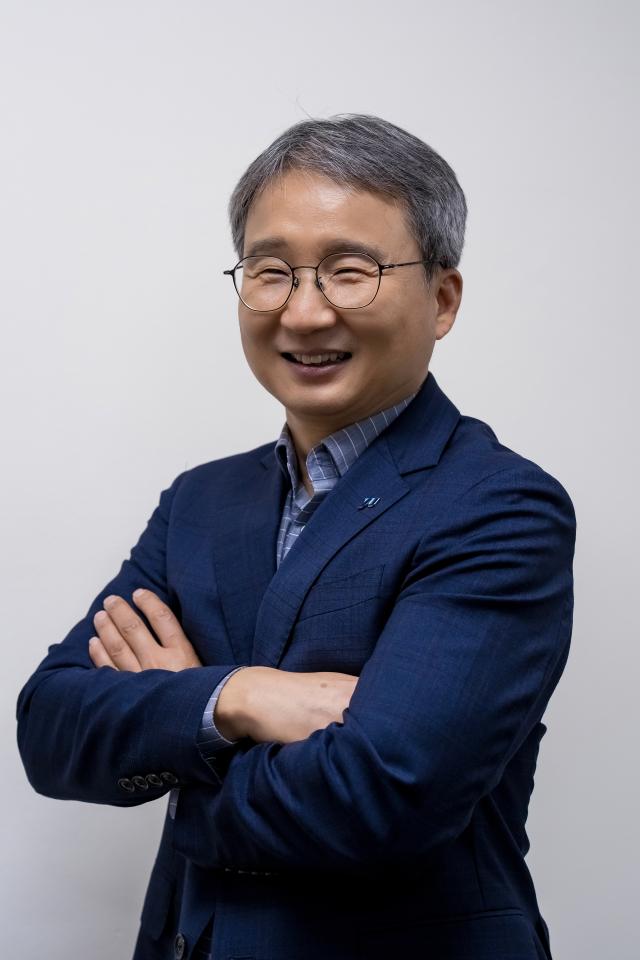
Park Han-woo, a professor of media and communication at Yeungnam University, received both awards for his work as editor-in-chief of Quality & Quantity, an international methodology journal published by Springer Nature.
Peer review is the process in which outside experts check a study before it is published. Journal editors decide which submissions go to reviewers and which are turned away at the outset. They also manage the exchange between authors and reviewers until a paper is accepted or rejected.
Springer Nature named six of the journal's editors for the Editorial Contribution Award and two for the Author Service Award. Park and Matthijs Den Besten were the only editors at Quality & Quantity to receive both, according to the announcement on the journal's website.
The journal publishes work on the tools social scientists use to collect and analyze data. Its articles span economics, psychology and sociology.
In its announcement, Springer Nature said the awards honor editors for their "dedication to their journals and research communities."
The publisher presents the awards each year across its journals. Editors at several other titles, including the Journal of Population Economics and Humanities and Social Sciences Communications, also received both honors this year.
Park has taught at Yeungnam University since 2003 and also serves as editor-in-chief of the Journal of Contemporary Eastern Asia. In the early 2000s he helped pioneer webometrics, a field that measures how information and hyperlinks spread across the internet.
The International Communication Association elected him a fellow in May 2023.
Park Sae-jin
Experienced journalist and editor at AJU PRESS specializing in multilingual news. I cover international diplomacy, geolpolitics, and policy, consistently delivering highly accurate, compelling reporting for a worldwide audience.
Copyright ⓒ Aju Press All rights reserved.
Related News
-
 President Yoon Calls for Upholding Trust and Fairness in Journalism
President Yoon Suk-yeol emphasized the importance of maintaining trust and fairness in journalism during a speech on August 13. He pledged government support to ensure that journalists can report freely and fairly.Speaking at the 62nd anniversary celebration of the Korean Journalists Association (KJA) held at the Korea Press Center in Seoul, Yoon, through a written message read by his Chief of Public Relations, Sung Ki-hong, stated, "Thanks to the courage, dedication, and passion of journalists, the principles of truthful reporting have taken root in our society."He noted that with the recent advancements in artificial intelligence and the emergence of new media, the value of trustworthy information has become increasingly important. Yoon assured that the government would spare no effort in supporting journalists to work in a free and fair environment.Yoon also expressed his commitment to listening to constructive criticism from the media, stating, "I will sincerely heed the affectionate critiques you provide with your sharp insights and respond with better policies."The event was attended by approximately 150 guests, including National Assembly Speaker Cho Jung-sik, interim leader of the Democratic Party Han Byeong-do, and People Power Party leader Jang Dong-hyuk, along with members of the press and the KJA.KJA President Park Jong-hyun highlighted that press freedom is a value that must be upheld through continuous effort and practice. He remarked, "Press freedom is not an unchanging right but a value that must be maintained through effort and action," adding that members should remain vigilant and active for the sake of press freedom and society.He also referenced the KJA's five guiding principles, which include safeguarding press freedom, promoting democracy, advocating for member rights, fostering peaceful reunification, and enhancing international exchanges. Park expressed gratitude for the resistance and achievements of senior journalists in the fight for press freedom.Speaker Cho stated, "The press freedom that the KJA has sought is the power to uphold the truth and the nourishment that has fostered democracy," asserting that even as technology advances, the quest for truth begins with journalists.He promised that the National Assembly would work to improve the media environment to enable journalists to continue their mission of truthful and fair reporting.Leaders from both ruling and opposition parties echoed the importance of press freedom and truthful reporting. One interim leader referenced the 130th anniversary of the Independent Newspaper and the opening of the Seo Jae-pil Room at the Press Center, stating, "We will work together to ensure that the truths the public needs to know are not obscured and to create a healthy media ecosystem."Jang emphasized that when the press questions power on behalf of the public, it compels humility from those in power and helps restore integrity in politics. He pledged to do his utmost to provide institutional support so that journalists can fulfill their mission of truthful reporting without succumbing to external pressures.During the event, the KJA presented awards to Kim Eun-kyung, head of the Korea Financial Services Agency, Shin Yong-hoon, chair of the Credit Recovery Commission, and Baek Jong-woo, head of the Central Mental Health Welfare Support Group. The KJA also held a poetry contest to commemorate its 62nd anniversary and the opening of the Seo Jae-pil Room, with awards going to reporters from the Dong-A Ilbo, Gyeongin Ilbo, and MBC.Founded on August 17, 1964, in response to the military regime's press ethics law, the KJA has since focused on safeguarding press freedom, enhancing journalistic quality, advocating for journalists' rights, promoting peaceful reunification, and strengthening international exchanges.* This article has been translated by AI.
-
 WNMC 26: NYT chair delivers a rallying cry for journalism in the AI age
Chairman of The New York Time Company Arthur Gregg Sulzberger gives a speech on AI and journalism on the opening day of the 77th World News Media Congress in Marseille, southern France on June 1, 2026. AFP-Yonhap MARSEILLE, June 02 (AJP) - For 40 minutes, A.G. Sulzberger stood before an audience of more than 1,300 editors, publishers and journalists from around the world and delivered what many attendees would later describe as one of the defining speeches of the World News Media Congress. The New York Times chairman and publisher did not simply warn about artificial intelligence. He mounted a sweeping defense of journalism itself — arguing that AI companies are building trillion-dollar businesses on the back of original reporting while simultaneously threatening the economic foundations that make that reporting possible. After Sulzberger concluded his keynote, the audience responded with sustained applause. Moments later, BBC journalist and conference moderator Ros Atkins offered his own assessment. "One of the most impressive addresses I've heard on journalism in the age of AI," Atkins told the audience. The reaction reflected the mood in the room. While many discussions at WNMC 2026 focused on how publishers can adapt to AI, Sulzberger focused on a more fundamental question: what happens if the institutions that produce reliable information are weakened in the process? 'Original reporting is how you know what you know' Speaking on the theme "AI Journalism and the Uncertain Future of the Public Square," Sulzberger made clear he was not arguing against artificial intelligence itself. "The New York Times has a long record of embracing technology to advance the mission of independent journalism," he said. "We had a history of respectful partnerships with tech companies." He noted that Times journalists are already using AI tools "responsibly, ethically and with humans making the decisions," adding that "holding a powerful new technology at arm's length is a recipe for failure." Yet the speech repeatedly returned to a central argument: AI systems ultimately depend on journalism. "AI models are made of four basic ingredients," Sulzberger said. "Talent, compute, energy and data." The first three, he noted, are paid for. "In contrast, AI companies take data without consent or compensation." What technology companies call "data," he argued, often means something far more specific: journalism, books, music, films and other copyrighted creative works. "What might more accurately be called copyrighted content." The heart of the speech came when Sulzberger described the unique role of journalists in creating information that does not previously exist. "Reporters are the ones enriching the public record with previously unknown information," he said. "That surprising fact, that telling detail, that quote from an eyewitness, that secret document." Then came a line that many attendees later cited as the keynote's defining message. "Original reporting is very often how you know what you know." The value behind the headlines To illustrate the scale of that work, Sulzberger pointed to The New York Times' own investment in journalism. Last year alone, he said, the Times produced nearly half a million pieces of journalism — articles, photographs, videos and podcasts — at a cost of more than $2 billion. The organization deployed journalists across all 50 U.S. states and in 155 countries. In Ukraine alone, more than 70 journalists and support staff worked on the ground during 2025. "This original work is valuable," Sulzberger said, "because it's been carefully written and edited, independently verified, held to the highest standards of fairness and accuracy." Yet, he argued, many AI companies have treated that work as a free resource. "OpenAI confessed that it would be impossible to train today's leading AI models without using copyrighted materials," he said. And while AI companies pay engineers, purchase chips and build massive data centers, "AI companies take data without consent or compensation." Chairman of The New York Time Company Arthur Gregg Sulzberger gives a speech on AI and journalism on the opening day of the 77th World News Media Congress in Marseille, southern France on June 1, 2026. AFP-Yonhap 'We cannot sit by' The most forceful portion of the address came when Sulzberger called on publishers to stop being passive. "Our profession has been too quiet, too passive and too fragmented in the face of abuses by the companies leading the AI revolution," he said. "We cannot allow AI cheerleaders to dominate the public conversation." Nor, he said, can publishers remain silent while their content is used to create products that compete directly with them. "We cannot sit by as this work is used to build replacement products that undermine our ability to earn the audience and revenue necessary to continue reporting the news." The audience responded with one of the keynote's strongest rounds of applause. A threat beyond journalism Sulzberger argued that the stakes extend far beyond the news industry. Creative industries worldwide employ millions of people and generate trillions of dollars in economic value annually. The erosion of intellectual property protections, he warned, would weaken not only journalism but books, film, music and research. But his deepest concern centered on public trust. As AI-generated content proliferates online, distinguishing truth from fiction becomes increasingly difficult. "It is becoming harder and harder to know where things came from and whether they are true," he said. This dynamic, he warned, risks producing a culture in which people no longer trust anything. "The effect isn't just that people believe untrue things." "It's that they no longer believe true things." According to Sulzberger, that loss of trust is already encouraging many people to disengage from public life altogether. Four calls to action Rather than ending with a warning, Sulzberger closed with a challenge to the industry. His first message was blunt. "Stand up for your rights." "Intellectual property rights must hold if our profession is to have a path forward." Second, he urged publishers to negotiate carefully with AI companies. Third, he called on news organizations to push lawmakers to strengthen protections for journalism and intellectual property. And fourth, he encouraged publishers to work together. "The news industry's only path to counteracting that influence is by working together." At the same time, he argued that newsrooms must embrace AI responsibly rather than reject it. "Use AI the right way." And perhaps most importantly, he urged publishers to build direct relationships with audiences rather than relying on platforms. "Be a destination first." Chairman of The New York Time Company Arthur Gregg Sulzberger gives a speech on AI and journalism on the opening day of the 77th World News Media Congress in Marseille, southern France on June 1, 2026. AJP Seo Hye-seung 'Information is valuable. Journalism is valuable.' As the address drew to a close, Sulzberger returned to a phrase that echoed throughout the hall. Decades ago, Silicon Valley popularized the idea that "information wants to be free." But, he said, many people forgot the second half of Stewart Brand's famous observation. "Information wants to be expensive because it's so valuable." Then came the line that served as both a warning and a defense of journalism's future. "Information is valuable. Journalism is valuable." In a digital environment increasingly crowded by bots, synthetic content and misinformation, Sulzberger argued that trusted journalism may become more important, not less. "News organizations should stand up as the reliable alternative to this mess." As delegates rose from their seats and applauded, the message appeared to resonate. For many in Marseille, the speech was not simply about AI. It was about whether journalism can preserve the economic and civic foundations necessary to continue producing the original reporting on which both democracy — and increasingly AI itself — depend.
-
 Korea Online Newspaper Association Names Winners of 3rd Digital Journalism Innovation Awards
The Korea Online Newspaper Association, led by President Park Hak Yong, announced Wednesday that it has selected three winners for its third Digital Journalism Innovation Awards. The grand prize in the digital content category went to The Dong-A Ilbo’s “Omission: Is Your Apartment Safe?” The award recognizes 10 people: reporters Gu Teuk Gyo, Kim Su Hyeon, Lee Mun Su, Ju Hyeon U and Wi Eun Ji; developers Lim Sang A and Lim Hui Rae; creative director Jeong Si Eun; photographer Hong Jin Hwan; and PD Kim Ji Hui. In the digital service and business category, the grand prize was shared by Seoul Economic Daily’s “AI LINK” and Maeil Business Newspaper’s affiliate Maekyung AX’s “AI HUB.” The “AI LINK” team includes Woo Seung Ho, Kang Do Won, Mun Yeong Gwang and Seong Ye Hyeon of the Future Strategy Department. The “AI HUB” team includes Yoo Yeong Hun and Shin Hye Ji of the AI Data Department; Lee Dong U and Chu Gyo Yun of the Development Department; and Park Eun Ju, Lee Seong Yeon, Shin Myeong Hwa and Min Ji Hye of the DM Strategy Planning Department. Why the digital content winner was selected The judging committee said “Omission: Is Your Apartment Safe?” was a seven-month investigative project that sought to verify a Ministry of Land, Infrastructure and Transport announcement by directly examining 21 apartment complexes nationwide and finding missing rebar at nine sites. The committee cited its use of digital tools to deepen understanding, including a 3D interactive presentation of rebar structures and a collapse simulation to scientifically assess risk, along with documentary video that showed the reporting process. Why the digital service·business winners were selected The committee said Seoul Economic Daily’s “AI LINK” converted the entire newsroom to an AI-based system and built a cycle spanning production, personalization, video and global expansion, demonstrating sustainability through revenue generation and overseas growth. It said Maekyung AX’s “AI HUB” — including AI explainers, “stock stories” embedded in articles and “My Morning Briefing” — was recognized for offering a new journalism experience while providing services meant to help readers in daily life. Overall comments from judges Judge Yoo Hong Sik, a professor at Chung-Ang University, said, “Each year, more entries are combining digital technology and journalism to expand the reader experience, raising expectations.” He added, “This year’s content entries showed the evolution of digital journalism, and the service and business entries pointed to the industry’s future direction through innovations such as platform building, revenue-model experiments and global expansion.” Each category’s grand prize includes a plaque and 5 million won in prize money. The awards ceremony is scheduled for 10:30 a.m. on Feb. 25 at the 19th-floor news conference room of the Korea Press Center in Taepyeong-ro, Jung-gu, Seoul.* This article has been translated by AI.