
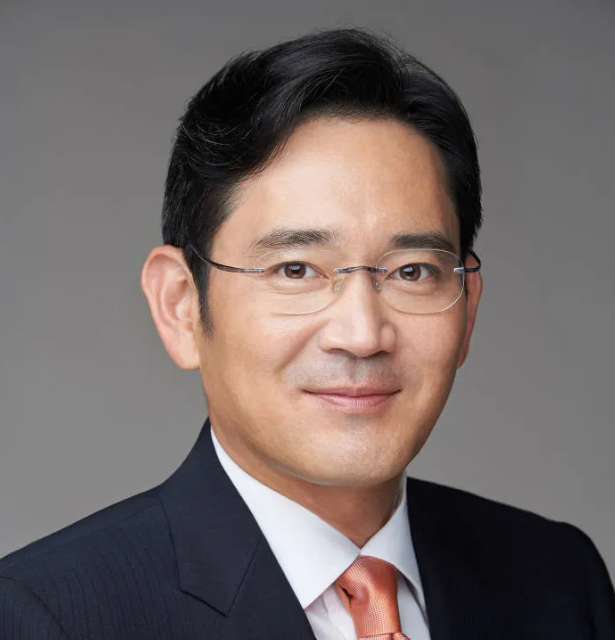
SEOUL, October 13 (AJP) - Samsung Electronics Chairman Lee Jae-yong is set to receive 2.6 trillion won ($1.86 billion) worth of shares in the South Korean tech giant from his mother, Hong Ra-hee, further increasing his direct stake in the company.
Hong, honorary director of the Leeum Museum of Art, agreed on Monday to transfer 11.16 million common shares, equivalent to about 0.17 percent of Samsung Electronics, to her son, according to a regulatory filing Tuesday.
The transfer is scheduled for Nov. 12. Once completed, Lee's stake in Samsung Electronics will rise to 1.75 percent from 1.58 percent, while Hong's holding will decline.
The planned gift follows an off-market transaction on Monday in which Lee purchased about 7.67 million Samsung Electronics shares from his mother for approximately 1.92 trillion won ($1.37 billion).
Together, the two transactions would transfer about 18.83 million shares from Hong to Lee, consolidating more of the family's Samsung Electronics holdings under the chairman's direct ownership.
The transactions will not change the Samsung founding family's combined stake in the company, as the shares are being transferred between family members.

Candice Kim
Candice Kim is a dedicated business and technology reporter specializing in the intersection of high-tech innovation and fast-paced consumer trends. Her core beats span the semiconductor, IT, cosmetics, and retail sectors, where she provides in-depth coverage of industry titans including Samsung Electronics, SK hynix, and LG Electronics, alongside leading consumer brands like Olive Young and Musinsa. Whether analyzing complex silicon supply chains or tracking the latest shifts in beauty and fashion retail, Candice is committed to delivering sharp, accurate reporting that keeps readers informed on the forces shaping today's most dynamic markets.
Copyright ⓒ Aju Press All rights reserved.
Related News
-
 Samsung Electronics extends chip windfall to local suppliers
Courtesy of Samsung Electronics SEOUL, October 13 (AJP) - Samsung Electronics, fresh from projecting a quarterly operating profit milestone of $80 billion for the July–September period, is moving to share its windfall with local suppliers through financial assistance and workplace and welfare support programs. The chipmaker said it is rolling out its “DS Together” initiative for some 58,000 employees at semiconductor partner companies, offering coffee trucks, refreshments and family movie screenings through the end of the year. Courtesy of Samsung Electronics The program comes as Samsung rides surging demand for artificial intelligence memory chips. The company projected a record 107.4 trillion won ($80.2 billion) in preliminary third-quarter operating profit, and its windfall is spreading beyond Samsung’s balance sheet to various stakeholders supporting its growth. The company has rolled out a record shareholder return program and recently finalized an employee reward package, allowing investors and staff to share in its earnings surge. Consumer discount campaigns extend some of the benefits to customers, while financing, incentives and welfare programs reach deeper into its supplier network. Samsung’s semiconductor-focused Device Solutions division began visiting supplier facilities on Oct. 6, including Daeduck Electronics, Saesol Diamond, TLB and PSK. The company plans to operate mobile coffee stations at 67 suppliers’ workplaces, reaching approximately 27,000 employees over two months. Another 30,000 supplier employees and their family members are expected to attend movie screenings scheduled for Dec. 21–23 near Samsung’s Giheung, Hwaseong, Pyeongtaek and Cheonan operations. “Samsung’s unwavering competitiveness in the global semiconductor market is thanks to the dedication of our partner companies’ employees,” said Woo Hyung-dong, an executive at Samsung Electronics’ DS division. The initiative comes as the semiconductor boom brings heavier workloads to suppliers. “Our workload has increased significantly amid the semiconductor boom, but I hope this positive momentum continues,” an employee at semiconductor equipment maker PSK said. Beyond the appreciation events, Samsung has expanded financial assistance and workplace support for suppliers, including low-interest loans, safety incentives and technical training. The company provides about 393.9 billion won in loans to 159 semiconductor suppliers through its Shared Growth Fund, alongside approximately 18.56 billion won in interest-free loans to 15 partner companies for environmental, social and governance initiatives. Samsung also paid 47.8 billion won in safety incentives to eligible suppliers in the first half of this year and distributed about 2.55 billion won in Chuseok holiday support payments to 68 suppliers handling general affairs and security operations. Additional safety incentives and productivity bonuses are planned for February next year. Samsung Electronics Seocho headquarters/ AJP Yoo Na-hyun Samsung operates environmental and safety training centers at three semiconductor sites and provides free technical and sustainability seminars. About 35,000 people from 983 supplier companies have participated in its education programs this year. The company has also expanded rest areas and shower facilities for on-site contractors. In May, it provided leisure benefits, including theme park admission and gifts, to about 6,400 people from 172 partner companies. The support programs are intended to strengthen the supplier network underpinning Samsung’s semiconductor expansion, as record earnings bring both greater rewards and rising production demands.
-
 Samsung stock crash shatter employees' dreams of new homes
Samsung Electronics Seocho headquarters/ AJP Yoo Na-hyun SEOUL, October 13 (AJP) - Samsung Electronics shares fell more than 7 percent Tuesday to 232,000 won ($173) — nearly 40 percent below their June peak of 374,500 won ($279). The continued slide despite a staggering $80 billion in third-quarter operating profit is unsettling not just shareholders but also chip division employees daydreaming of bigger homes, new cars and early retirement as they await bonuses that could rival the nest egg an ordinary Korean salaried worker spends 30 years building in company stock for this year's chip bonanza. But one chip division employee said workers dare not complain out loud, reflecting the awkward atmosphere inside South Korea’s tech giant as this year’s spectacular AI riches fall unevenly across businesses spanning semiconductors, smartphones and household appliances. For some chip workers, the windfall has raised the possibility of early retirement. For colleagues making Samsung’s finished products, it has sharpened demands for a fairer share. One Samsung employee, identifying himself as a memory chip worker in his early 30s, recently wrote on the anonymous workplace platform Blind that he and his wife, who also works in the company’s memory division, could receive a combined 3 billion won ($2 million) or more in performance bonuses. The couple, who met at Samsung, had already bought a home and were preparing to move into a more expensive property. If their calculations prove accurate, the employee wrote, they might be able to leave the company within five years. For employees in Samsung’s Device eXperience division, which makes Galaxy smartphones, televisions and household appliances, such figures have produced a markedly different reaction. “Everyone is completely deflated,” a DX worker said. The worker said frustration had deepened as estimates for semiconductor bonuses continued to rise, with some employees speculating that payouts could climb further if chip profits keep improving. Samsung’s semiconductor-focused Device Solutions division has introduced a special bonus program allocating 10.5 percent of its operating profit to employee rewards, on top of existing incentives. Under estimates circulated by the company’s largest union, a memory business employee earning an annual salary in the low 80 million won range could receive about 750 million won in total performance-related compensation before tax, assuming projected earnings materialize. Corresponding estimates stand at about 530 million won for employees in shared support units and 240 million won for those in the foundry and System LSI businesses, which manufacture chips for outside customers and design non-memory chips, respectively. Image generated by AI The figures highlight substantial disparities even within the semiconductor division. Actual payouts have yet to be finalized. The special bonuses are expected to be delivered in company shares next year, subject to shareholder approval, with restrictions on when recipients can sell portions of their holdings. The prospect of receiving such large awards in stock has made Samsung’s share price a source of anxiety as well as anticipation. Employees may be looking at life-changing sums on paper, but the value they ultimately realize will depend on the award terms and the share price when they are able to sell. The widening gap comes as demand for memory chips used in AI infrastructure drives an unprecedented earnings surge. Samsung projected third-quarter operating profit of 107.4 trillion won, its fourth consecutive quarterly record. Higher component costs, meanwhile, have weighed on the consumer-device businesses on the other side of the company. That imbalance is increasingly becoming a workplace issue. According to a representative of Samsung’s Donghaeng union, the union and management held an initial meeting on Oct. 10, with further discussions scheduled for later this month. The representative said the talks would explore additional measures for DX employees. The precise agenda and any potential compensation proposals have not been independently confirmed. The union is also facing growing pressure from employees seeking a more assertive approach, including renewed collective action, the representative said. Some DX workers have discussed organizing demonstrations independently of the union, although the scale and timing of any such action remain unclear. Behind the disagreement over individual bonuses lies a broader question about how Samsung should distribute gains across businesses that share a name but face sharply different fortunes. The Donghaeng representative argued that Samsung’s consumer electronics operations had helped build the company and should not be left behind during the semiconductor boom. Yet the argument over how to divide the riches could prove fleeting if the AI bubble bursts and the promised windfall dissolves into a midsummer night’s dream — a fear driving some investors out of the Seoul stock market. For now, chip workers are glued to stock quotes, recalculating fortunes they have yet to collect. Among colleagues still waiting for a share of the bonanza, their anxiety may find little sympathy.
-
 KOSPI Plummets Amid Semiconductor Concerns, Experts Predict Range-Bound Market
It was a day of fear in the market. The KOSPI index, which dropped nearly 7% during trading, barely managed to hold above the 6,000 mark, leaving retail investors disheartened as stock prices fell sharply. Two-thirds of KOSPI-listed stocks declined, and the market capitalization fell below 5,000 trillion won. Securities experts have differing views on when and how much the market might rebound. Some analysts suggest that the market is overreacting to concerns about overinvestment in artificial intelligence (AI), while others express skepticism about the KOSPI's recovery, particularly centered around Samsung Electronics and SK Hynix."Excessive Decline" vs "Real Concerns in Semiconductors"In an urgent assessment conducted on the 13th, six market experts provided varied opinions on the current state of the domestic stock market. Some believe the market is overreacting to negative news related to AI and semiconductors, while others are increasingly doubtful about the long-term growth potential of the semiconductor industry.Park Yeon-joo, head of the AI Research Center at Mirae Asset Securities, stated that the KOSPI is overreacting to fears of overinvestment in AI. She noted, "The earnings in the semiconductor sector are solid, and valuations are already low. The decline in stock prices due to deteriorating investor sentiment and concerns over AI overinvestment is excessive."Conversely, Kim Dong-won, head of research at KB Securities, pointed out that skepticism about the semiconductor industry is growing. He remarked, "While profit estimates for memory semiconductors continue to rise, uncertainty about future earnings is causing stock prices to decline. Although the semiconductor cycle has not ended, it is difficult to completely dismiss doubts about it being a cyclical industry."Concerns about increased supply and price competition were also heightened by news of China's Changxin Memory Technologies (CXMT) planning to release server-grade DDR5 chips by the end of the year. Kim Hak-kyun, head of research at Shin Young Securities, explained, "The market reacted to CXMT's announcement of achieving results in advanced processes by the end of the year. Regardless of CXMT's success, the market is showing a tendency to avoid uncertainty."Lee Jin-woo, head of research at Meritz Securities, commented, "The sharp decline was not due to a new negative factor but rather a significant sell-off from accumulated disappointments. The KOSPI is heavily weighted in semiconductors, making it susceptible to large fluctuations." Yang Ji-hwan, head of research at Daishin Securities, also noted, "The rise in government bond yields and disappointment in OpenAI coincided with the CXMT news, contributing to the market's reaction.""Short-Term Correction Followed by Rebound" vs "Range-Bound Until Early Next Year"Forecasts regarding the future direction of stock prices are also divided. Some analysts predict that the market will remain range-bound through the fourth quarter of this year and into the first quarter of next year, while others see potential for a rebound after a short-term correction. Opinions vary on whether market conditions will improve after the second quarter of next year.Lee Jin-woo stated, "There are no new negative factors affecting the fundamentals, so I believe the market will gradually stabilize. There is little evidence to suggest that the semiconductor cycle has turned. In a high-interest-rate environment, doubts about the industry worsening are growing, but ultimately, it must be proven through actual results." He emphasized that whether Samsung Electronics can meet market expectations for next year's outlook will significantly impact future stock prices.Park Yeon-joo also mentioned, "While there are concerns about the sustainability of AI investments due to their scale, AI represents a productivity revolution on the level of an industrial revolution, making investments valid. Domestic semiconductor companies have high potential to strengthen their global competitiveness based on substantial cash flow over the next 3-4 years."On the other hand, Shin Jung-ho, head of research at LS Securities, believes that the phase of stock price increases led by semiconductors is nearing its end. He stated, "The market is already aware that conditions will improve next year and has reflected this in stock prices. There is a prevailing perception that margins and profit momentum are at their peak." He added, "For the KOSPI to escape the range, projections must indicate a level of profit growth that is significantly different from before, which is unlikely to be achieved solely based on Samsung Electronics' outlook for next year."Shin predicts that the KOSPI will likely remain range-bound until the second quarter of next year, stating, "The KOSPI will hover between 6,000 and 7,000, and reaching 7,000 would require about a 20% increase from the current index, which is not an easy situation." Yang Ji-hwan also noted, "In the fourth quarter of this year, I expect the market to show a range-bound trend rather than a significant decline, with the lower end around the mid-5,000s. While there is currently a lack of momentum for a rebound, the overall macroeconomic uncertainties may ease after the first quarter of next year, improving market conditions."* This article has been translated by AI.