
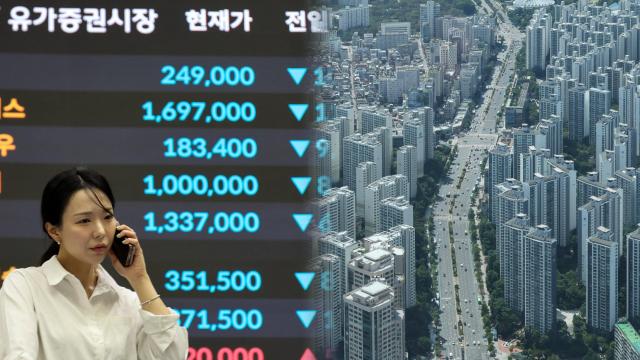
Household credit, which covers household loans and unpaid card purchases, rose 9.8 trillion won ($7.3 billion) from the previous quarter to 2,030.5 trillion won at the end of September, according to preliminary Bank of Korea (BOK) data.
The increase slowed sharply from a revised 26.4 trillion won in the second quarter, which had initially been reported at 25.9 trillion won.
Household loans grew 4.7 trillion won to 1,896.8 trillion won, the smallest increase since the first quarter of 2025.
Other loans, including credit loans and margin lending by brokerages, fell 4.9 trillion won, their first decline in four quarters.
Credit extended by securities firms to households shrank 3.1 trillion won, after rising 4.2 trillion won in the second quarter.
“Other loans increased in the second quarter because the stock market was strong, and much of the decline in the third quarter came from the market correction,” Kim Sung-jun, head of the BOK’s financial statistics team, said at a briefing.
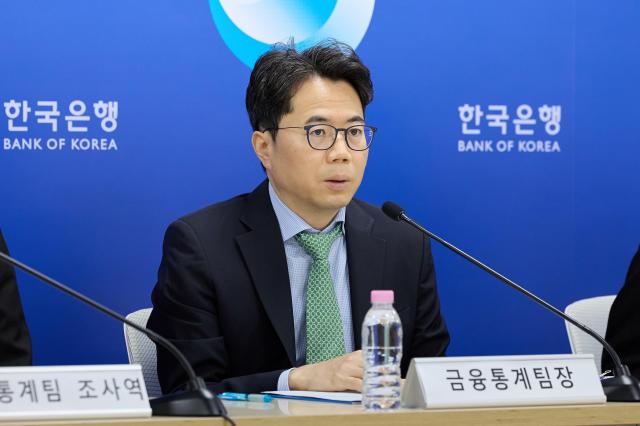
Higher policy and market rates have pushed up mortgage rates, Kim said, but most of the slowdown came from other loans.
Housing-related loans rose 9.6 trillion won to a record 1,202.3 trillion won, slowing from 12.2 trillion won as home transactions declined.
Group loans for new apartment projects drove the slowdown, while individual mortgages barely slowed, Kim said.
Bank housing loans accelerated to 9.0 trillion won from 6.8 trillion won, while those at non-bank deposit-taking lenders slowed to 0.8 trillion won.
Sales credit, mostly unpaid card purchases, jumped 5.0 trillion won to 133.7 trillion won, the second-largest quarterly gain on record.
Kim linked the rise to long-term installment offers, appliance cashback promotions and stronger smartphone sales rather than seasonal factors, noting that private consumption fell in the quarter.
Household credit has grown 51 trillion won so far this year, nearing last year’s full-year increase of 56.9 trillion won.
Government lending curbs and fewer home transactions are likely to restrain borrowing in the fourth quarter, Kim said, though more apartment move-ins, expectations of higher home prices and stock market swings could change that.
Household loans across the financial sector rose 6.4 trillion won in October, according to financial regulators.
Kim said the household debt-to-GDP ratio likely fell in the third quarter as nominal growth outpaced borrowing, bringing it close to slipping below 80 percent.
The slowdown in consumer loan is likely lighten the tightening burden for the Bank of Korea which meets for this year's last rate-setting meeting on Nov. 26.
After holding the base rate at 3.00 percent in October following hikes in July and August, the BOK said it would decide the timing and pace of further increases, and Governor Shin Hyun-song said the current tight stance needed to continue.

Kim Yeon-jae
Kim Yeon-jae is a journalist at AJU Press (AJP's English platform),
covering macroeconomics, international finance, and geopolitics.
He closely tracks central bank monetary policies, global energy supply chains,
and the Korean defense industry.
Copyright ⓒ Aju Press All rights reserved.
Related News
-
 Korea's consumer loan turns higher Oct
Signs for personal and small business loan services are displayed at a Hana Bank branch in Seoul on August 27, 2026. AJP Yoo Na-hyun. SEOUL, November 11 (AJP) — South Korea's bank household lending jumped by 5 trillion won ($3.7 billion) in October as mortgage growth accelerated and stock purchases helped revive other borrowing, central bank data showed Wednesday. The increase widened sharply from a revised 500 billion won in September, bringing outstanding bank household loans to 1,203.9 trillion won, according to the Bank of Korea (BOK). It marked the largest monthly increase since July, reversing three consecutive months of slowing loan growth. The rebound was driven largely by a turnaround in other household loans, including unsecured credit and securities-backed borrowing, which increased by 1.7 trillion won after declining by 2.3 trillion won in September. The BOK attributed the turnaround partly to individuals' net purchases of stocks and seasonal effects that had depressed lending in September, including bad-loan disposals and holiday bonus payments. Mortgage lending also accelerated, increasing by 3.3 trillion won from 2.9 trillion won a month earlier as banks extended more collective loans for construction payments and relocation expenses. The increase came despite continued weakness in jeonse loans, which declined by 800 billion won following a 900 billion won decrease in September. The October rebound preceded a turbulent start to November, when a sharp stock market selloff prompted regulators to temporarily relax margin lending requirements to limit forced selling. From November 9, securities firms were exempted for three months from the requirement to maintain a 140 percent collateral ratio on margin loans, allowing them greater flexibility in managing borrowers' collateral. The measure applies to brokerage margin lending, which is distinct from the bank household loans covered by the BOK's monthly figures. The renewed expansion in household credit comes as the central bank assesses the effects of its two consecutive interest rate increases in July and August. The BOK kept its base rate unchanged at 3.00 percent in October, weighing persistent inflation and financial stability risks against the need to assess the impact of earlier tightening. Corporate borrowing also remained elevated, with bank loans to companies increasing by 10.2 trillion won in October after a 10.7 trillion won rise in September. Loans to small and medium-sized enterprises increased by 6.2 trillion won, nearly doubling the previous month's gain as banks expanded lending and companies sought funds for value-added tax payments. Large-company borrowing increased by 4 trillion won, compared with 7.5 trillion won in September, partly reflecting demand for funds to repay corporate bonds. Corporate bank loans increased by 87.9 trillion won during the first 10 months of the year, compared with 50.9 trillion won over the same period in 2025. Corporate bonds, meanwhile, recorded 22.3 trillion won in net redemptions over the January-October period, reversing from net issuance of 6.4 trillion won a year earlier. The figures point to continued corporate reliance on bank borrowing as companies use loans and other financing channels in place of bond issuance. Funding conditions showed divergent trends across maturities. The three-year government bond yield fell to 3.72 percent at the end of October from 4.01 percent in September, while the 10-year yield dropped to 4.01 percent from 4.41 percent. The BOK attributed the declines to stronger demand for safe-haven assets amid falling stock prices, lower overseas bond yields and expectations of reduced government bond supply. Short-term funding costs moved in the opposite direction, with the 91-day commercial paper rate climbing to 3.84 percent from 3.42 percent, reflecting expectations of further monetary tightening and increased funding demand. Banks also stepped up their own financing, with time deposits increasing by 24.1 trillion won in October, compared with 2.1 trillion won in September. Bank bond funding rose by 15.4 trillion won, up from 5.7 trillion won, as lenders sought to secure funds ahead of corporate deposit maturities and bond repayments. Stock investment funds recorded a 26.5 trillion won decline in their reported balances during October, largely reflecting falling equity valuations. Excluding valuation losses, however, the funds received 8.3 trillion won in fresh inflows, indicating that investors continued allocating money to equities despite the market downturn.
-
 Korea's mortgage bomb ticks as market rates surge
A visitor looks out over apartment complexes from N Seoul Tower in Seoul on Sept. 9, 2026. AJP Yoo Na-hyun. SEOUL, September 29 (AJP) — Rapidly rising mortgage rates as domestic markets track a surge in U.S. Treasury yields are unnerving South Korean borrowers carrying more than $850 billion in housing debt and complicating the central bank’s fight against renewed inflationary pressure. Mortgage loans stood at 1,190.8 trillion won ($852 billion) at the end of June, accounting for about 63 percent of the country’s 1,891.3 trillion won in outstanding household loans, according to Bank of Korea (BOK) data released Aug. 19. Higher market rates were already feeding into borrowing costs in July. New bank mortgages averaged 4.48 percent. Fixed-rate mortgages rose 23 basis points from the previous month to 4.76 percent, while variable-rate loans increased by a smaller 8 basis points to 4.35 percent. As the gap widened, the share of fixed-rate products among new mortgages fell to 31.9 percent. At an Aug. 26 briefing, the BOK attributed the increase in mortgage rates partly to higher benchmark rates, including five-year bank bond yields. Many fixed or mixed-rate mortgages are priced against medium-term financial bond yields, so banks can raise new loan quotations as those benchmarks climb. Variable-rate loans generally respond through funding benchmarks such as COFIX and borrowers’ scheduled rate resets. The pressure therefore reaches borrowers at different speeds. The BOK’s monthly lending-rate averages capture loans actually extended during the month, after banks have begun repricing. “When central banks broadly turn hawkish, market rates price that in first, and the move then feeds through to bank bonds,” said Park Hyung-jung, an economist at Woori Bank. Park said the AAA-rated five-year financial bond yield, a key benchmark for fixed mortgage products, stood at around 4.57 percent Tuesday and was approaching 4.6 percent. Generated with Google Gemini/ChatGPT The upper end of five-year fixed mortgage rates at major banks has already risen above 7 percent for some products, he said. “If the rate-hike cycle continues and bank bond yields rise accordingly, we may need to consider the possibility of the upper end of mortgage rates exceeding 8 percent if the five-year yield approaches 5 percent,” Park said. Pressure on domestic borrowing costs could persist as major central banks maintain tighter policy settings. “The three-year government bond yield moved above 4 percent around Sept. 11 and has not returned to the 3 percent range since,” said Min Hyun-ha, a research fellow at Hana Institute of Finance. “The BOK is one factor, but the Fed and the Bank of Japan are also raising rates, while the Bank of England has left open the possibility of an increase,” Min said. “From here, bond yields broadly point to the upside, and lending rates are likely to rise accordingly.” Tighter bank lending controls have also raised questions about whether borrowers are turning to nonbank lenders. Official figures show an uneven shift. Nonbank household lending fell by 0.8 trillion won in August, although mortgage lending increased by 0.3 trillion won, according to Financial Services Commission (FSC) data released at a Sept. 9 household-debt review meeting. Over the first eight months of the year, however, nonbank household lending rose by 13.5 trillion won, far exceeding the 5.1 trillion-won increase for all of 2025. Mutual-finance institutions accounted for 10.1 trillion won of this year’s increase. The growth has not extended broadly to card and capital companies. Household lending at credit-specialized finance companies fell by 0.3 trillion won in August and rose by just 0.4 trillion won over the first eight months. The FSC said BOK rate increases and higher market rates were adding to repayment burdens, calling for particular care to protect lower-income and vulnerable borrowers. Authorities would also encourage banks to expand long-term fixed-rate mortgages to reduce exposure to future rate swings. For the BOK, household debt cuts both ways. Higher rates can curb housing demand and borrowing, easing financial-stability risks. But they also raise repayment costs for households already carrying large debts. The central bank has maintained its tightening stance, raising its base rate by 25 basis points in both July and August to 3.00 percent. At his Aug. 27 policy press conference, BOK Gov. Shin Hyun-song said a preemptive response was needed because inflation was expected to remain above target. Tighter policy could also help moderate the recent rise in Seoul-area housing prices and household debt, he said. The BOK reiterated that position in its Sept. 10 Monetary Policy Report, saying it would determine the “timing and pace” of additional rate increases while monitoring inflation, growth and financial stability. How quickly higher market rates reach household borrowers will help shape that calculation. The next reading comes Wednesday, when the BOK releases August lending-rate data. By the Monetary Policy Board’s Oct. 22 meeting, policymakers will have to weigh how much further to tighten as households absorb the increases already under way. AJP Takeaways - South Korean households carried 1,190.8 trillion won in mortgage debt at the end of June, about 63 percent of outstanding household loans. - Rising bond yields are pushing up mortgage rates, with the timing of the impact depending on loan benchmarks and borrowers’ rate-reset schedules. - The BOK continues to signal further tightening as it balances inflation and housing-market risks against mounting household repayment burdens.
-
 BOK in dilemma as rate hikes ease imbalances, raise default risks
Visitors look over apartment complexes from the Sky Bridge at Lotte World Tower in Seoul on Aug. 11, 2026. AJP Yoo Na-hyun. SEOUL, September 22 (AJP) – Back-to-back rate hikes are expected to accelerate deleveraging and ease financial imbalances but risk pushing delinquency rates higher, a Bank of Korea financial stability report said Tuesday, underscoring the central bank’s dilemma with two rate-setting meetings left this year. Monetary Policy Board member Jang Yong-sung said further rate increases would be calibrated against inflation, economic conditions and financial stability. The BOK raised its benchmark rate by 25 basis points in both July and August. Home prices in Seoul and surrounding areas have continued to climb, while expectations of further gains remain elevated and household borrowing could accelerate again, the central bank said. The BOK’s Financial Vulnerability Index (FVI) rose to 46.5 in the second quarter, marking a ninth consecutive quarterly increase. Deputy Governor Jang Jeong-su told a press briefing that the bank estimates the upward trend continued into the third quarter. The index combines 64 indicators covering credit, asset prices and financial institutions’ resilience to measure the buildup of medium- to long-term vulnerabilities. The Financial Stress Index (FSI), which tracks more immediate strains, edged up to 19.5 in August from 19.3 in July, remaining within the BOK’s caution range of 12 to 24. The FVI gauges vulnerabilities that could amplify an economic downturn when a shock occurs, while the FSI captures more immediate financial stress, said Lim Kwang-kyu, director general of the BOK’s Financial Stability Department. The simultaneous increase in both indicators warrants continued efforts to contain financial imbalances, he said. Higher interest rates can restrain borrowing and risk-taking and temper expectations of further housing gains. But rising debt-servicing costs can weaken borrowers with limited repayment capacity as existing loans mature or interest rates reset. The latest hikes should help ease financial imbalances while gradually increasing default risks among vulnerable borrowers, the report said. A 25-basis-point rate increase would add about 7 trillion won ($5.1 billion) to households’ and companies’ combined interest burden, Lim said. The BOK’s analysis found that household and corporate bank loan delinquency rates responded most strongly about 15 months after a rate increase. Vulnerable household borrowers and small and medium-sized companies showed their strongest response sooner, after roughly nine months. Officials declined to estimate how high delinquency rates could rise next year, saying economic conditions, lending restrictions and government support would also shape the outcome. Deputy Governor Jang Jeong-su of the Bank of Korea answers reporters' questions at the central bank's press room in Seoul on Sept. 22, 2026. Bank of Korea. The household loan delinquency rate across financial institutions edged down to 0.98 percent at the end of the second quarter from 1.00 percent three months earlier. The share of vulnerable borrowers nevertheless rose to 6.8 percent from 6.7 percent. Among self-employed borrowers, the delinquency rate climbed to 1.99 percent at the end of June from 1.86 percent at the end of 2025, exceeding its long-term average of 1.60 percent. The rate among vulnerable self-employed borrowers reached 12.71 percent. Corporate borrowers also showed signs of growing strain. Marginal firms — companies whose operating earnings failed to cover interest expenses for three consecutive years — accounted for 19.1 percent of externally audited companies in 2025, up 2 percentage points from a year earlier. The share reached 20.0 percent among small and medium-sized companies. By industry, it stood at 43.7 percent in real estate and 28.4 percent in accommodation and food services. Vulnerabilities have increased in domestic-demand industries and could translate into greater default risks if the economy faces an external shock, Lim said. Household debt relative to the size of the economy, meanwhile, has fallen sharply. The debt-to-GDP ratio declined to 85.3 percent at the end of the first quarter from 88.1 percent at the end of 2025 and was estimated at around 81 percent in the second quarter. The improvement largely reflected rapid nominal economic growth driven by surging semiconductor exports, the report said. The ratio could fall into the 70-percent range by year-end, below the 80-to-85 percent range at which household debt can begin to constrain economic growth, Jang Jeong-su said. He cautioned against easing debt controls because rapid nominal GDP growth had not translated into equally broad income gains across households. On currency markets, the BOK said the won’s recent appreciation did not yet appear excessive. The decline in the won-dollar exchange rate largely reflected a correction toward economic fundamentals rather than excessive market movement, said Kim Shin-young, head of the BOK’s Foreign Exchange Analysis Division. Officials said the speed of currency moves matters in either direction and that the central bank was monitoring for excessive one-way flows and would respond firmly if necessary. South Korea’s financial system remains broadly stable, supported by resilient financial institutions and sound external payment capacity, the report said. It assessed the overall burden of higher rates as manageable given improving economic conditions and financial institutions’ capacity to absorb losses. Housing, household debt, vulnerable borrowers and renewed financial and foreign exchange market volatility nevertheless remain key risks. The BOK called for monetary policy and macroprudential measures to work together to contain financial imbalances, alongside targeted fiscal and financial support for vulnerable borrowers. AJP Takeaways - Back-to-back rate hikes could ease housing and debt pressures while increasing default risks among vulnerable borrowers. - A 25-basis-point increase would add about 7 trillion won to household and corporate interest burdens, a BOK official said. - Delinquency rates responded most strongly about 15 months after a rate increase, compared with roughly nine months for vulnerable households and smaller companies.