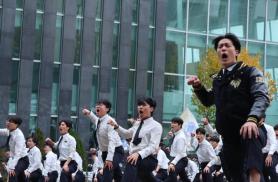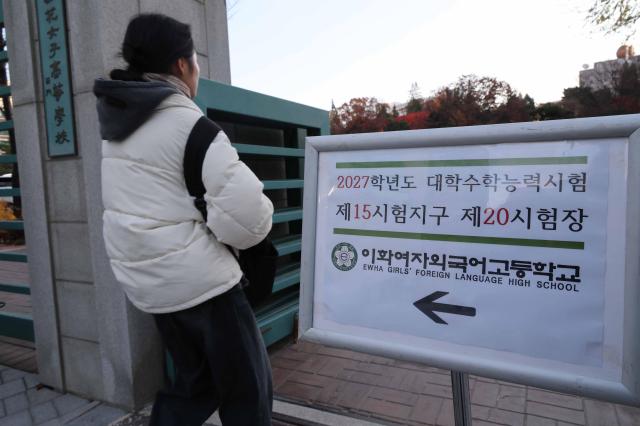
The exam, widely regarded as a life-defining academic event that can shape students' future careers in South Korea's highly competitive, education-conscious society, is being held at some 1,312 test venues nationwide from 8:40 a.m. to 5:45 p.m. A total of 551,864 test-takers applied for this year's exam.
One of the biggest concerns surrounding this year's exam is the heightened effort to prevent cheating involving artificial intelligence (AI) and digital devices. Education authorities have tightened security measures following a recent scandal in which the top scorer in this year's certified tax accountant examination admitted to using AI and digital devices to cheat, sparking public outrage.
Around 75,000 proctors and an additional 8,400 personnel have been deployed nationwide to enforce the anti-cheating measures. They are inspecting all glasses worn by students for hidden cameras, while stickers are being placed over clothing buttons to prevent the use of miniature cameras. Students must also leave their bags outside test rooms and hand over all electronic devices before the test begins.
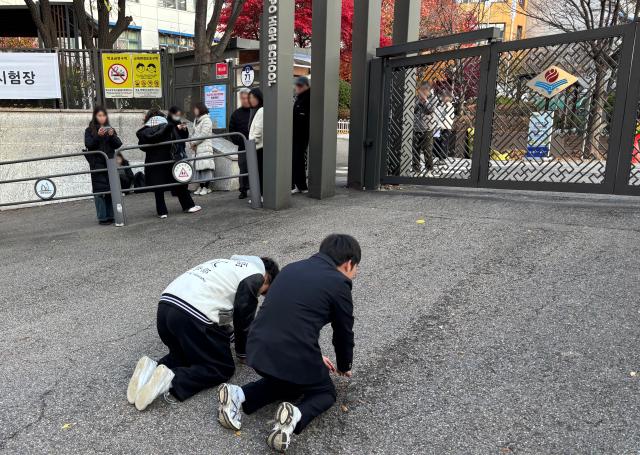
The government is also considering a ban of up to 10 years on those caught cheating and offering rewards of up to 100 million won (US$75,000) for reports of misconduct.
Meanwhile, special arrangements have been made to minimize disruptions on exam day and help students reach their test sites on time. Aircraft takeoffs and landings nationwide will be suspended from 1:05 p.m. to 1:40 p.m. during the English listening test. In Seoul, subway services will be increased by 27 runs, while the country's stock market will open and close an hour later than usual to ease morning rush-hour traffic.
The annual exam is widely regarded as a critical test in South Korean students' lives, as university admission can significantly influence their future career opportunities. This year's exam is also the last to be held under the current testing system, with the number of repeat test-takers reaching its highest level in 23 years amid fierce competition for university places, particularly in medical schools.
Copyright ⓒ Aju Press All rights reserved.