
Remsima, its autoimmune disease treatment, held 95 percent of its market in Singapore, 83 percent in Hong Kong and 75 percent in Malaysia in the second quarter, according to IQVIA data cited by the company.
Celltrion's cancer drugs also kept their lead.
Herzuma, a breast and stomach cancer treatment, held 67 percent in Hong Kong and 59 percent in Thailand, where its share jumped 17 percentage points from the previous quarter. Truxima, a blood cancer drug, took 92 percent of Singapore's market.
Vegzelma, used against metastatic colorectal and breast cancer, climbed quickly in Malaysia. It went from fourth place in the local bevacizumab market in the final quarter of 2025 to first in the first quarter, then kept the lead with a 25 percent share in the second quarter.
Celltrion plans to launch Vegzelma in Hong Kong later this month and osteoporosis drug Stoboclo in Thailand in December. Eye disease treatment Eydenzelt will follow in Singapore in February, along with allergy drug Omlyclo in Thailand.
"We will leverage the direct-sales capabilities of our local subsidiaries and the Celltrion brand to quickly establish our high-margin follow-on products," a Celltrion official said.
Kim Dong-young
Kim Dong-young is a bilingual journalist at AJU Press (AJP), covering Korean tech, energy, and bio/pharma.
He reports from the field at events like CES and APEC, runs AJP's YouTube channels,
and is pursuing a master's at Sogang's MOT program.
Copyright ⓒ Aju Press All rights reserved.
Related News
-
 Hana Securities Raises Jeju Air Target Price Amid Expectations from Korea-China FTA
Hana Securities has raised its target price for Jeju Air from 7,500 won (KRW) to 10,000 won (KRW). This adjustment is based on expectations of increased Chinese tourist demand following the conclusion of the Korea-China Free Trade Agreement (FTA) service and investment follow-up negotiations, strong demand on Japanese routes, and a decline in aviation fuel prices, which are anticipated to improve performance. The investment opinion remains 'buy'.Analyst Ahn Do-hyun of Hana Securities stated in a report on November 19, "During the Korea-China summit on November 18, the two countries declared a substantial agreement on the follow-up negotiations for the Korea-China FTA service and investment."Ahn noted, "Travel agencies in Korea will now be able to arrange outbound tourism for Chinese travelers in 23 regions within China," adding, "This will positively impact domestic low-cost carriers (LCCs)."Furthermore, the expansion of Chinese tourist demand could lead to increased fares for Jeju Air. Ahn predicted, "To operate on Korea-China air routes, air rights are required, and if demand increases in an environment where capacity expansion is limited, it is highly likely that both load factors and fares will rise." Currently, Korean Air and Asiana Airlines hold the most air rights to China, with Jeju Air being the leading LCC.Ahn also mentioned, "Not only in China but also in Japan, positive events have been occurring recently," stating, "With the yen's depreciation continuing and the Ministry of Food and Drug Safety allowing the import of Japanese obesity treatments, demand on Japanese routes is likely to remain strong despite high fares."As a result, the average international fare decline for 2027 is expected to be limited. Ahn projected, "While there will be a reduction in fuel surcharges, the basic fare is expected to rise, and adjustments in route mix will mean that the average international fare adjustment will not be significant compared to 2026," estimating a 6% decline in average international fares next year compared to the previous year.* This article has been translated by AI.
-
 Lotte joins Songdo drug hub as neighbor to bigger Samsung
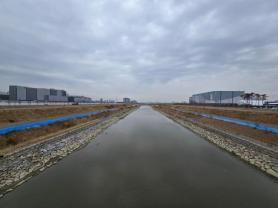
Samsung Biologics' fifth on the second campus compound (left) across a river from Lotte Biologics' first plant (right) in Incheon, Songdo, Nov. 18, 2026. AJP Kim Dong-young SEOUL, November 18 (AJP) - Confectionery-strong Lotte has joined South Korea's biologics foundry heartland of Songdo, west of Seoul and near Incheon International Airport by opening its first domestic factory. The neighborhood is already home to familiar names Samsung Biologics and Celltrion. Just across the street, a new blue-striped Samsung Biologics building under construction – fifth on the second campus compound - stands on one side of an unfinished waterway. Half-built roads and empty lots give little hint that this corner of Songdo is the front line of the country's contract drugmaking race. Group Chairman Shin Dong-bin attended the completion ceremony for Plant 1 at the Lotte Biologics Songdo Bio Campus with his eldest son, Shin Yoo-yeol, the unit's co-CEO. The 120,000-liter antibody plant, begun in March 2024, runs eight 15,000-liter stainless steel bioreactors alongside smaller units. dealsite The plant reached "GMP Ready" status this month, six months ahead of the original target, CEO James Park told reporters, meaning it is prepared to make drugs under global manufacturing and quality standards. A day earlier, Lotte announced the plant's first large-scale commercial order, from a global drugmaker it declined to name, covering everything from clinical drug substance to finished product. Entrance to Lotte Biologics Songdo Bio Campus in Incheon. AJP Kim Dong-young "This contract shows that Lotte Biologics is moving beyond being a mere CDMO newcomer to establishing itself as a core supply chain partner for global clients," Park said in a statement Tuesday. A CDMO, or contract development and manufacturing organization, makes drugs on behalf of pharmaceutical companies. Production has begun with batches needed for regulatory approval, Chief Financial Officer Kang Hyun-shim said. Revenue will start in 2027, with commercial-scale production expected in 2028. At full capacity, Plant 1 can generate about 700 billion won ($525.4 million) a year, Chief Growth Officer Chun Ji-won said. With about 300 billion won from its U.S. plant, that would put Lotte near its target of more than 1 trillion won in revenue by 2030. Lotte Biologics logo on a flag at Lotte Biologics Songdo Bio Campus. AJP Kim Dong-young That plant, in East Syracuse, New York, is the other half of what Lotte calls its "dual site" strategy. Bought from Bristol Myers Squibb for $160 million in 2022, the 40,000-liter site handles early-stage and clinical work, while Songdo takes on large-scale commercial production. Syracuse is running far below capacity. It produced seven of a possible 45 batches in the first half, regulatory filings show, a 16 percent utilization rate, down from 74 percent in 2025 as BMS volumes ended. First-half revenue fell 73 percent from a year earlier to 23.9 billion won. The company said an unannounced U.S. Food and Drug Administration inspection of the site in September found no issues. Lotte Group has put about 1.5 trillion won into the unit through seven capital increases. It plans three 120,000-liter plants in Songdo at a total cost of about 4.6 trillion won, with the timing of Plants 2 and 3 dependent on orders. Across the water, Samsung Biologics has been building since 2011. It runs five Songdo plants with 785,000 liters of capacity, plus a 60,000-liter plant in Rockville, Maryland, bought from GSK this year, for a total of 845,000 liters. Its third-quarter revenue rose 18.5 percent from a year earlier to 1.49 trillion won. Asked why a drugmaker would pick Lotte over its neighbor, Chun said clients often spread work across several CDMOs, matching each project to the right scale. "Once a CDMO grows past a certain level of revenue, it builds an operating framework, and that makes it less flexible for individual clients," she said. "As a latecomer, we can meet customer needs faster." Lotte is targeting biosimilar makers, antibody-drug conjugate developers and Japanese drugmakers, Chun said, adding that Japanese firms prize long-built trust and the group can draw on its long-standing ties with Japan. A stock market listing is not yet on the calendar. Kang said an IPO needs a clear rationale and that its timing will depend on future orders and the product pipeline. "We are heading toward making that dream come true," Chief Business Officer Park Min-soo said in English when asked about investor interest. The waterway between the two campuses is still under construction. The 685,000-liter gap in their total capacity will take longer to close.
-
Lotte Biologics Completes Incheon Plant, Aiming for 1 Trillion Won in Annual Revenue
Lotte Biologics has completed its first plant at the Incheon Songdo Bio Campus and is set to aggressively target the global contract development and manufacturing organization (CDMO) market. By leveraging a 'dual site' strategy that combines its facilities in Syracuse, New York, and Songdo, the company plans to generate annual revenue of 1 trillion won (KRW) when both plants are fully operational. Notably, just before the completion, Lotte secured its first large-scale commercial production volume, which is expected to accelerate its growth despite competition from latecomers. Lotte Biologics held a completion ceremony for its first plant at the Songdo Bio Campus on the morning of November 18. After entering the biotech sector four years ago, the company has established a large-scale production base in South Korea. The ceremony was attended by approximately 300 officials, including Shin Dong-bin, chairman of Lotte Group, Shin Yoo-yeol and Park James, co-CEOs of Lotte Biologics, and Park Chan-dae, the mayor of Incheon. In his congratulatory speech, Chairman Shin stated, "I hope that the completion of the Songdo Bio Campus's first plant will serve as a significant turning point that enhances the competitiveness of the South Korean biotech industry beyond the growth of Lotte Group." Shin Yoo-yeol, who was promoted to president of Lotte Holdings just two days prior, also attended. He remarked, "We have laid the foundation for Lotte Biologics to contribute to enhancing the large-scale production capacity of the South Korean biotech industry, beyond just completing the new production facility. We aim to be a CDMO partner that accompanies our clients in the long term, based on quality, technology, and trust that customers can feel." The Songdo Plant, which began construction in March 2024, features a production facility with a capacity of 120,000 liters, equipped with eight stainless steel bioreactors of 15,000 liters each. The total floor area is approximately 100,000 square meters. It also includes a 3,000-liter bioreactor and small-scale cultivation equipment to meet the demand for high-value products. The facility employs a top-down method to create culture media on the top floor, utilizing gravity to transfer it to the production line below. The logistics warehouse, which has 6,030 storage spaces, uses robots for the inbound and outbound of raw materials and autonomous robots for specimen transport. Jeong Woo-cheong, head of the EPC division at Lotte Biologics, explained that the Songdo Plant is designed to be five stories high, equivalent to a 14- to 15-story apartment building. He added, "By applying a top-down method that utilizes gravity, we have reduced cell damage and increased energy efficiency." He also noted that the plant is located about 30 minutes from Incheon International Airport, providing excellent accessibility for overseas clients. The plant is currently in the final stages of preparation for commercial production, including equipment qualification and process validation. Full-scale production is set to begin next year, with production volumes already secured. On November 17, just one day before the completion, Lotte Biologics signed its first large-scale commercial production contract with a global pharmaceutical company for the Songdo Plant, alleviating initial operational rate burdens before the plant's completion. Lotte Group has identified CDMO as a new growth engine and established Lotte Biologics in June 2022. In December of the same year, it acquired Bristol-Myers Squibb's Syracuse plant in New York for $160 million (approximately 208 billion won). The company aims to absorb the demand for global supply chain restructuring, including the U.S. Biodefense Act, by linking the Syracuse plant, which has strengths in clinical volumes and antibody-drug conjugates (ADCs), with the large-scale commercial production base at the Songdo Plant through its 'dual site' strategy. Jeon Ji-won, head of the strategic planning division at Lotte Biologics, stated, "At maximum capacity, we can generate approximately 300 billion won (KRW) from the Syracuse plant and about 700 billion won (KRW) from the Songdo Plant, totaling 1 trillion won (KRW) in revenue. Our dual site strategy, which combines proven production capabilities in the U.S. with advanced infrastructure in Korea, will provide global clients with a variety of production options." He added, "Since our launch in 2022, we expect the cumulative order volume to reach up to $1.9 billion (approximately 2 trillion won) by the end of this year." Lotte Biologics also plans to further increase its production capacity in Songdo. The company intends to build additional plants 2 and 3 in Songdo, expanding domestic production capacity to 360,000 liters. The timing of construction will be flexibly determined based on order conditions. The company anticipates that once all three plants are completed, it will create 37,000 jobs and generate a production inducement effect of 7.6 trillion won (KRW). With existing production facilities from Samsung Biologics and Celltrion already established in Songdo, the area has become a hub for leading domestic biotech companies. Jeon stated, "Songdo is a bio-specialized complex that surpasses Singapore and Boston in terms of single-city standards."* This article has been translated by AI.