
Foreigners sold a net 25.98 trillion won ($19.5 billion) in October alone, including 25.02 trillion won on the KOSPI and 963 billion won on the KOSDAQ, according to the Financial Supervisory Service (FSS). The second straight month of selling was led by investors from the Americas, who pulled out 15.9 trillion won. Foreign holdings of Korean equities fell to 1,899 trillion won, representing about 34 percent of total market capitalization.
Bonds, however, attracted fresh inflows. Foreign investors poured a net 7.38 trillion won into Korean bonds in October, bringing their holdings to 330.3 trillion won, or 11 percent of total outstanding listed bonds.
Tags: South Korea stock market, Foreign investors, Korean stock selloff, KOSPI, KOSDAQ, Foreign capital outflows, South Korean bond market

Ryu Yuna
Yuna Ryu covers finance, capital markets and Southeast Asian affairs.
She is drawn to the questions that numbers raise and the stories that data alone cannot answer.
Prior to journalism, she worked at Hyundai Motor Company and the Singapore Chamber of Commerce, focusing on business strategy and international affairs. She has also hosted diplomatic receptions and international conferences as an MC.
Ryu holds a master's degree in Media and Communication from Korea University, where her research focused on neuroscience-based studies of media effects.
Copyright ⓒ Aju Press All rights reserved.
Related News
-
 KOSPI Drops Over 5%, Sell Sidecar Activated Amid Investor Anxiety
The domestic stock market is experiencing a freeze in investor sentiment due to the weak performance of the U.S. stock market. The KOSPI dropped more than 5% during trading, falling below the 4900 mark, and a sell sidecar was activated in the KOSDAQ market as well. The decline of major stocks, including semiconductor shares, is increasing market anxiety.According to the Korea Exchange on November 20, as of 1:54 PM, the KOSPI recorded a drop of 265.41 points (5.1%) to 4872.48 compared to the previous trading day. The index started at 4928.51, down 209.38 points (4.08%) from the previous close, and continued to widen its losses, briefly falling below 4900.Amid the ongoing decline, a sell sidecar was activated around 11:54 AM in the securities market. This marks the 31st activation of a sell sidecar this year. A sell sidecar is triggered when the price of the most traded contract in the KOSPI 200 futures falls by more than 5% and remains at that level for one minute. It is automatically lifted after five minutes. This year, sell sidecars have been activated 31 times, while buy sidecars have been activated 28 times.In terms of supply and demand, foreign and institutional investors are net selling 1.59 trillion won (KRW) and 1.04 trillion won (KRW), respectively, in the securities market. In contrast, individual investors are net buying 2.2 trillion won (KRW), absorbing the selling pressure from foreign and institutional investors.Most of the top market capitalization stocks are also in a downward trend. Samsung Electronics (-7.01%) and SK Hynix (-6.51%), along with SK Square (-8.25%), LG Energy Solution (-0.33%), Samsung Biologics (-0.95%), Samsung Electro-Mechanics (-12.09%), Hyundai Motor (-4.86%), and Celltrion (-0.47%) are all declining.The downward trend is intensifying in the KOSDAQ market, where a sell sidecar has also been activated. At the same time, the KOSDAQ index is down 34.35 points (5.0%) to 650.46 compared to the previous trading day. The index started at 660.98, down 23.83 points (3.48%) from the previous close, and continued to widen its losses.Around 1:28 PM, a sell sidecar was activated in the KOSDAQ market. This year, sell sidecars have been activated a total of 39 times in the KOSDAQ market, with 21 being buy sidecars and 18 being sell sidecars.In the KOSDAQ market, foreign and institutional investors are net selling 291.8 billion won (KRW) and 43.3 billion won (KRW), respectively. Individual investors are net buying 346.3 billion won (KRW).Most of the top market capitalization stocks are generally declining. EcoPro (-5.19%), EcoPro BM (-5.19%), Rainbow Robotics (-3.17%), Juseong Engineering (-8.13%), Simtech (-11.17%), HLB (-1.26%), IO Techno (-13.95%), Rino Industrial (-12.27%), and Robotis (-6.30%) are all down. In contrast, Alteogen (2.02%) is showing an upward trend.* This article has been translated by AI.
-
 FSS warns crypto firms of penalties for neglecting security flaws
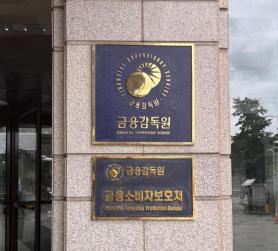
The Financial Supervisory Service building in Yeouido, Seoul, on June 25, 2026. AJP Ryu Yuna SEOUL, November 20 (AJP) - South Korea's Financial Supervisory Service (FSS) warned Friday that cryptocurrency operators could be held responsible for failing to address security vulnerabilities as hackers increasingly exploit vulnerabilities using artificial intelligence (AI). The warning came during a meeting with chief information security officers and security officials from 28 virtual asset service providers, including cryptocurrency exchanges. The regulator urged firms to follow emergency cybersecurity guidelines and thoroughly inspect externally accessible systems, IT assets and application programming interfaces (APIs), which allow software systems to communicate. The move followed a series of hacking incidents across the financial sector that raised concerns over the safety of customer funds and personal information. Lee Jong-oh, an FSS deputy governor in charge of digital and IT supervision, said recent attacks had exploited previously undetected system weaknesses that hackers identified rapidly using AI. He stressed that routine security checks alone were insufficient and urged companies to strengthen safeguards across their operations. The regulator also warned that stolen assets and leaked customer data could undermine confidence in the broader cryptocurrency market. Tags: Financial Supervisory Service, FSS, South Korea Cryptocurrency, Crypto Hacking, AI Cyberattacks, Virtual Asset Service Providers, Cybersecurity, Cryptocurrency Exchanges
-
KOSPI Falls Below 5000 Amid U.S. Market Decline, Opening Down 4%
The domestic stock market opened down 4% as the KOSPI fell below the 5000 mark, influenced by a sharp decline in the U.S. stock market. Concerns over artificial intelligence (AI) investments continue, and a controversy over AMD's technology export restrictions to China has exacerbated selling pressure, particularly in semiconductor stocks. Amid foreign and institutional selling, individual investors are stepping in to buy at lower prices, raising questions about how much of the intraday losses can be recovered.According to the Korea Exchange, as of 9:09 a.m. on November 20, the KOSPI was down 189.93 points (3.70%) at 4947.96. The index opened at 4928.51, down 209.38 points (4.08%) from the previous session, before recovering some losses.In terms of supply and demand, foreign and institutional investors are net sellers in the stock market, offloading 264.8 billion won (KRW) and 253.5 billion won (KRW), respectively. Individual investors are net buyers, purchasing 488 billion won (KRW) to support the lower end of the index.Most of the large-cap stocks are trending downward. Samsung Electronics (-4.27%) and SK Hynix (-5.66%) are among those declining, along with SK Square (-5.14%), LG Energy Solution (-1.49%), Samsung Biologics (-1.67%), Samsung Electro-Mechanics (-8.25%), Hyundai Motor (-2.06%), and Samsung Life Insurance (-3.72%). In contrast, KB Financial is showing an upward trend at 1.11%.The KOSDAQ index is also down over 3%. At the same time, the KOSDAQ index recorded a decline of 26.33 points (3.84%) to 658.48. The index opened at 660.98, down 23.83 points (3.48%) from the previous session.In the KOSDAQ market, foreign and institutional investors are net sellers, offloading 58.2 billion won (KRW) and 13.4 billion won (KRW), respectively. Individual investors are net buyers, purchasing 84.1 billion won (KRW).Most of the large-cap stocks in the KOSDAQ are also experiencing declines. EcoPro (-4.18%), EcoPro BM (-4.15%), Rainbow Robotics (-0.59%), Juseong Engineering (-6.31%), Simtech (-7.09%), EoTechnics (-10.45%), HLB (-0.90%), Roboteers (-2.56%), and Rino Industrial (-11.24%) are all down. Alteogen is showing an increase of 1.74%.Earlier, on November 19 (local time), the Dow Jones Industrial Average and the S&P 500 index fell by 2.19% and 2.02%, respectively, on the New York Stock Exchange (NYSE). The tech-heavy Nasdaq Composite index also dropped by 2.25%.The Dow closed below 50,000 for the first time since June. The S&P 500 index has now recorded six consecutive days of decline, marking its longest losing streak since April 2024.AI company Anthropic debuted on the stock market through an initial public offering (IPO) to raise significant funds, but it did not alleviate market concerns regarding AI investments. Anthropic began trading at $111.50 per share, briefly exceeding $115, but ultimately closed at $97.17, which is 17.07% higher than its offering price of $83.Additionally, allegations of AMD violating technology export regulations related to China have dampened investor sentiment across semiconductor stocks. Hunterbrook Media, a hedge fund-linked outlet, reported that IEIT, a Chinese server manufacturer under U.S. Department of Commerce sanctions, has been applying updates to AMD chip operating software.AMD denied the allegations, but its stock fell by over 7%. Major tech stocks, including Broadcom (-2.09%), Micron (-2.10%), Microsoft (-1.78%), Meta (-3.27%), and SK Hynix ADR (-2.67%), also showed weakness. Nvidia, which rose as much as 4.7% during the session, ultimately closed down 3.30%.However, the perception of overselling due to the recent sharp declines may limit intraday losses. Han Ji-young, a researcher at Kiwoom Securities, forecasted, "The domestic market is expected to show a trend of reducing losses due to technical buying pressure stemming from overselling after opening lower due to the Nasdaq's weakness from the Anthropic IPO and concerns over AMD's regulations on China."* This article has been translated by AI.