

Journalist
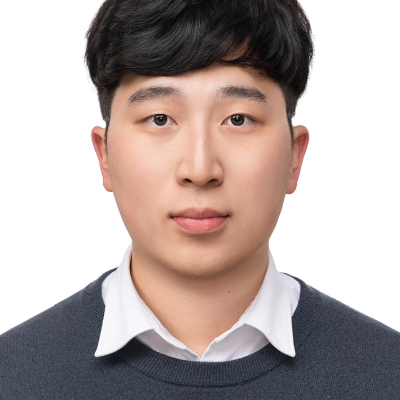
Kim Dong-young김동영
davekim0807@ajupress.com
ReporterSamsung Biologics, CJ CheilJedang, LG Chem, Celltrion, Naver, Krafton, Nexon, Hyundai Mobis etc. & energy, game, food, bio, petrochemical, AI
Kim Dong-young is a bilingual journalist at AJU Press (AJP), covering Korean tech, energy, and bio/pharma.
He reports from the field at events like CES and APEC, runs AJP's YouTube channels,
and is pursuing a master's at Sogang's MOT program. "I try everything in this AI era that can improve yet preserve the facts. Journalism still serves as my core."
He reports from the field at events like CES and APEC, runs AJP's YouTube channels,
and is pursuing a master's at Sogang's MOT program. "I try everything in this AI era that can improve yet preserve the facts. Journalism still serves as my core."
Latest by Kim Dong-young
-
 South Korea to launch CIA-style fund for security startups SEOUL, June 26 (AJP) - South Korea will set up a government-backed venture fund modelled on the U.S. Central Intelligence Agency's In-Q-Tel (IQT) to nurture companies in emerging security technologies, pledging 50 billion won ($32.3 million) by next year. The Ministry of SMEs and Startups unveiled the plan on Friday, dubbed a "Korean IQT," at a strategy meeting on fostering future security innovators held at the presidential office. The vehicle will invest directly in promising firms working in fields such as artificial intelligence and drones. IQT, the independent nonprofit the CIA chartered in 1999 to close the technology gap between Washington and Silicon Valley, has bankrolled now-prominent players including data-analytics giant Palantir. Seoul intends to replicate that template at home. The Korean fund will be established as a subsidiary of Korea Venture Investment Corp., with the Defense Acquisition Program Administration and other agencies co-investing. The ministry and the defense procurement agency will each commit 25 billion won to reach the initial 50 billion won, then secure fresh capital annually over the following four years. Given the sensitivity of the sector, the government will draft legal grounds to keep investor and fund details confidential, impose confidentiality obligations on staff, and restrict the appointment of foreign nationals and dual citizens. Returns on government money will be ploughed entirely back into reinvestment, the ministry said. The emphasis on secrecy lands at an awkward moment for the ministry, which last week disclosed that the personal data and business ideas of about 5,000 first-round winners of its "Startup for All" program had leaked through an unauthorized channel. Police have since opened a preliminary probe, and the data was found to have escaped not through a direct hack of government systems but through a partner firm supporting the program. The episode has dogged Prime Minister-nominee Han Seong-sook, who championed the program as SMEs minister. Han apologized over the leak of personal information and start-up ideas belonging to thousands of participants, telling reporters she felt the weight of her responsibility as the minister in charge. 2026-06-26 15:33:37
-
 Government rolls out record agricultural discounts to tame summer food prices SEOUL, June 26 (AJP) - South Korea will pour 350 billion won ($226 million) into an unprecedented discount campaign covering every eligible agricultural, livestock and fisheries product this summer, in its most aggressive bid yet to ease a stubborn cost-of-living squeeze. The measures, unveiled at a meeting chaired by Deputy Prime Minister and Minister of Finance and Economy Koo Yun-cheol on Friday, form part of a wider 1 trillion won package aimed at keeping second-half inflation below 3 percent. They follow a directive from President Lee Jae Myung for swift, decisive action against mounting price pressures. "We will mobilize every available means and do our utmost to keep second-half consumer inflation within 3 percent," Koo said, pledging fiscal firepower for discounts, essential living-cost relief and support for small businesses hit by high fuel prices. For the first time, the discount drive will span all eligible products rather than the 22 items previously targeted, including rice, onions, eggs, pork and mackerel. Per-person support will rise to a maximum of 30,000 won from 10,000 won, while the rice discount climbs to 6,000 won per 20 kilograms from 5,000 won. To rein in egg prices, the government will expand fresh-egg imports more than sixfold, bringing in an additional 200 million units and supplying bakeries and other small merchants alongside retailers. A special delegation will be dispatched next month to secure extra mackerel, with the UK and the Faroe Islands eyed as new suppliers beyond Norway. Traditional-market discount vouchers, once issued mainly around holidays, will now be released monthly at up to double their previous scale. Relief will also extend beyond the dinner table to fuel, transport and energy bills, with an extra 147,000 won earmarked for 220,000 vulnerable households that rely on kerosene and LPG. 2026-06-26 11:11:35
-
 World-OKTA signs MOU with Guangdong trade bodies ahead of October expo SEOUL, June 26 (AJP) - The World Federation of Overseas Korean Traders Associations (World-OKTA) signed a memorandum of understanding with the China Council for the Promotion of International Trade's Guangdong committee and other global economic groups, laying the groundwork for a Korea-China trade expo set for Shenzhen in October. The agreement was sealed on the sidelines of the 2026 Invest Guangdong Promotion Conference, held Monday in Beijing. Through the pact, World-OKTA plans to weave together Guangdong's industrial infrastructure, the CCPIT committee's economic network and its own worldwide web of Korean business leaders to widen exchanges between the two countries' firms and open doors for Korean companies in the Chinese market. "Shenzhen is an important bridgehead for Korean companies entering the Chinese market and a key gateway to the global market," said Park Jong-bum, chairman of World-OKTA., pledging to build the expo into a private-sector platform that could also spur joint ventures into third-country markets. 2026-06-26 10:34:22
-
 SK Telecom to invest 738 billion won in SK hynix's US AI arm SEOUL, June 26 (AJP) - SK Telecom said it will commit about 738.4 billion won ($77.3 million) to SK hynix's new US-based artificial intelligence investment company, deepening the broader SK Group's push to build a foothold across the AI value chain. In a regulatory filing submitted to South Korea's Financial Supervisory Service on Thursday, the country's largest wireless carrier said its board had approved a subscription agreement to acquire new shares in SK hynix NAND Product Solutions, the Silicon Valley entity widely known as Solidigm. The 738.4 billion won outlay equals 5.70 percent of the company's equity. SK Telecom will pick up 1,198 new shares for a 0.9 percent stake, with the final payment due by June 25, 2030. The funds will be drawn on a capital-call basis, allowing the money to be deployed as the recipient requests over the four-year term. The target is the vehicle SK hynix carved out of Solidigm, its California enterprise solid-state drive subsidiary, in January to anchor a US AI strategy backed by a $10 billion commitment. Operations were spun into a separate firm under the Solidigm name, while the parent pivoted to AI-focused investment. SK Telecom is the latest affiliate to join. SK Inc. and SK Innovation poured in about $250 million and $380 million, respectively, in March, as Chairman Chey Tae-won steers the conglomerate toward becoming what he calls a comprehensive AI solutions provider. The bet rides on memory demand that shows few signs of cooling. SK hynix is the primary supplier of high-bandwidth memory for Nvidia's AI accelerators, and the two firms sealed a multi-year co-development pact during Jensen Huang's Korea visit this month to lock in supply through the end of the decade. 2026-06-26 09:09:52
-
 Naver launches AI-powered conversational search for all users SEOUL, June 26 (AJP) - Naver said it had rolled out its generative AI-driven conversational search service "AI Tab" to all users, replacing the familiar green dot icon that has long anchored the search homepage of South Korea's dominant web portal. The launch announced Friday puts the agentic search tool within reach of the roughly 50 million daily visitors to Naver's main page, who can now tap the AI Tab button on both mobile and PC search bars. The firm explained that the service goes beyond answering queries to connect users directly to actions such as shopping, finding places and making reservations. AI Tab, which began as a beta for Naver Plus membership subscribers in April, surged past 4 million cumulative users in about two months. During the trial, click-through rates for product and place cards each topped 20 percent, and frequent users proved markedly more likely to act on results. Users who visited AI Tab 11 times or more clicked on products 2.7 times as often and on places twice as often as one-time visitors, the company said, evidence it is evolving into an "action-oriented AI agent" rather than a mere information tool. The full version also weaves Naver Map and real-time booking windows into its answers, letting users move seamlessly from searching for a restaurant to reserving a table. The company plans to add real-estate and health agents in the second half, recommending listings by budget and location and offering tailored wellness advice from uploaded medical checkup results. "AI Tab is a flagship example of where Naver's unrivaled service ecosystem, data infrastructure and AI capabilities converge," said Kim Kwang-hyun, Naver's chief data and contents officer, adding the company would keep expanding an agent experience that links discovery to action. 2026-06-26 08:39:58
-
 Korea's Arirang 6 satellite delayed again SEOUL, June 25 (AJP) - South Korea has pushed back the launch of its Arirang 6 Earth observation satellite to at least the second quarter of 2027, a fresh delay that leaves the 370 billion won ($239.8 million) spacecraft grounded for a fifth straight year. The satellite, an all-weather imaging-radar craft capable of distinguishing objects as small as 50 centimeters day or night, was due to fly this year aboard Europe's Vega-C rocket. Development delays in a co-passenger satellite slated for the same launch have forced repeated postponements. "We looked at various scenarios, and given the risks involved, shifting to the second quarter of 2027 is the next-best option," Korea AeroSpace Administration administrator Oh Tae-seok told reporters at the agency's Sacheon headquarters on Wednesday. He said the agency was searching for ways to launch as soon as possible. Completed in 2022, the satellite has languished in storage despite world-class specifications, its delays mounting as launch slots remain scarce. Oh said alternative rockets were effectively unavailable, with the global market booked solid through 2029. The episode has sharpened calls for Seoul to secure independent access to space. Oh said the agency was feeling anew how vital it was to build a sovereign launch capability rather than wait in line for foreign vehicles. To that end, the administration is budgeting for repeated flights of the homegrown Nuri space rocket at least once a year from 2028 through 2031, and plans to build a second spaceport to handle rising launch demand and the reusable rockets it targets for 2035. The agency is also deepening cooperation with NASA on lunar communications, power and mobility infrastructure, and will host an Artemis workshop in Korea on July 29 to 31 to advance plans for a Moon base. Separately, Oh said the next-generation mid-size satellite No. 4, a 500-kilogram Earth-observation craft, is set to launch July 9 aboard a SpaceX rocket, while the fifth Nuri flight remains on track for September. 2026-06-25 15:12:55
-
 Hormuz or not, Korea's petrochemicals glut is far from over SEOUL, June 25 (AJP) - South Korea's petrochemical makers, forgotten and forgiven under the silicon windfall, are biding time with their promised capacity cuts still unfinished while the Middle East drags on and the country's single largest petrochemical project prepares to flood the market with fresh supply. Chinese overcapacity has been swamping Asia with cheap basic chemicals, with or without disruption from the Middle East and stranded shipments at the Strait of Hormuz chokepoint. S&P Global expects new capacity in Asia and the Middle East to add about 6 million tons of ethylene in 2026 alone, enough to overshadow Korea's rationalization drive. It sees global supply outpacing demand through 2027, when capacity additions are expected to peak. That imbalance had already pushed margins to the floor before any geopolitical shock. The ethylene spread — the gap between ethylene and naphtha prices that gauges industry profitability — collapsed to about $55 a ton in February, before the Gulf crisis, far below the $250 to $300 break-even range producers say they need to avoid losses, according to government commodity-price data. Then came the war premium, masking the rot. As the conflict choked off feedstock supply, the spread swung from negative territory and briefly breached $500, Hana Securities analyst Yoon Jae-sung said, flipping LG Chem's and Hanwha Solutions' chemical units back into the black on cheaply stocked naphtha. The reprieve proved fleeting. By early July, the spread had slid back to about $96 a ton as ethylene prices cooled and the lagging effect that had cushioned first-quarter earnings gave way to what Yoon called a reverse-lagging phase. "In June and July, petrochemical firms will enter a reverse-lagging phase and slip into an earnings downturn," Yoon said, noting that companies had stopped scrambling to stock up as ceasefire prospects emerged, leaving product prices and spreads on a clear downward path. Against that backdrop, the industry's own remedy remains only half-administered. Under an August 2025 voluntary pact, ten naphtha-cracker operators agreed to trim 2.7 million to 3.7 million tons of capacity, or about 18 to 25 percent of the nation's 14.7 million-ton base, in exchange for state financial and regulatory support. Progress has been halting. The Lotte Chemical-HD Hyundai Chemical merger at Daesan won approval and will retire a 1.1 million-ton cracker, but talks elsewhere have dragged amid disputes over asset valuations and how the pain should be shared, leaving the full reduction target unmet. Looming over the unfinished cuts is S-Oil's Shaheen Project, a 9.26 trillion won ($5.98 billion) complex in Ulsan and the largest petrochemical project in the country's history. Once running, it will churn out about 1.8 million tons of ethylene a year, alongside propylene, butadiene and benzene. The project is advancing on schedule. As of late April, its engineering, procurement and construction progress stood at 96.9 percent, with mechanical completion targeted for the end of June, S-Oil said in materials accompanying its first-quarter results. "Major facilities including the steam cracker and the TC2C heating furnace have been installed, and feeder piping to customers is set to be completed in the first half," the company said, adding that trial runs and commercial-operation preparations would be completed by year-end. For an industry still struggling to take supply off the table, the timing is fraught. Analysts warn that if geopolitical premiums evaporate and China presses ahead with expansion, Korean producers could be pulled straight back into the oversupply and margin squeeze they have spent two years trying to escape — just as Shaheen's volumes arrive. 2026-06-25 14:23:34
-
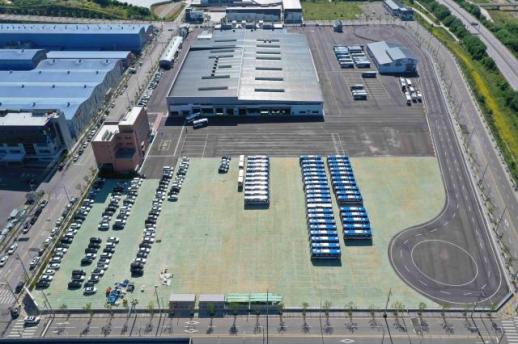 Woojin Industrial Systems launches development of 420 km low-floor electric coach SEOUL, June 25 (AJP) - Woojin Industrial Systems, a South Korean maker of rail vehicles and electric buses, said it had begun work on a 10.1 billion won ($6.54 million) state-funded project to develop an eco-friendly low-floor electric coach designed for passengers with reduced mobility. The project, announced Thursday by Woojin, draws support from a national research and development scheme run by the Ministry of Trade, Industry and Resources, the Korea Institute for Advancement of Technology and the Gyeongbuk Regional Institute of Industrial Advancement, aimed at nurturing regional innovation clusters. Formally titled the development of a 420 km-class low-floor electric bus applying high-safety core components for the transport-vulnerable, the effort runs through 2030 and centers on three pillars: an AI-based battery pack, an 800-volt silicon-carbide power module and a wide-area low-floor platform. Woojin said it would adopt a homegrown universal design with sharply improved wheelchair access, paired with a high-safety system fitted with cybersecurity technology, to close gaps in transport welfare. Localizing core parts is another central goal. South Korea's green public transport has long leaned heavily on imports from China and elsewhere, and the company aims to achieve technological self-reliance across the future-vehicle supply chain by bringing batteries and power modules in-house. "This national R&D project carries the significance of guaranteeing mobility rights for the transport-vulnerable and building a model of regional shared growth," a company official said, adding that Woojin would seek to lead technological innovation in the eco-friendly commercial vehicle field and present a successful regional standard. 2026-06-25 09:07:54
-
 Renewables ride the AI power boom, but the grid can't keep up SEOUL, June 24 (AJP) - Renewables are being fully employed to feed the world's hungry AI data centers as farming Mother Nature is cheap and quick to build. Yet a widening gap between green ambition and grid reality — from Beijing to Naju — is exposing the limits of an energy transition running at full tilt. Global electricity demand from data centers is set to roughly double to about 945 terawatt-hours by 2030 and reach around 1,200 TWh by 2035, the International Energy Agency said in its Energy and AI report. Half of that growth is expected to come from renewables. The appeal of solar and wind is easy to prove through numbers. Onshore wind and solar are now the cheapest sources of new electricity on the planet, costing about $34 and $43 per megawatt-hour, respectively, compared with more than $100 for new gas generation. A solar farm can be switched on within months, while a nuclear reactor can take a decade to build. But the traits that make renewables fast also make them fickle. Solar output vanishes at night, wind dies when the air goes still, and for a data center that must run flat out around the clock, that intermittency is a structural mismatch. And it is beginning to bite. Nowhere is the strain clearer than in China. Power demand from Chinese data centers is projected to surge by 300 billion to 500 billion kilowatt-hours between 2026 and 2030, accounting for about 18 percent of the country's total electricity demand growth, according to Pei Shanpeng, a director at State Power Investment. Beijing wants renewables to cover 80 percent of that load by 2030, up from just 11 percent in 2023. The catch is that AI facilities are a poor match for green supply because their power needs are nearly impossible to forecast. "From what we understand, they cannot really adjust power consumption load much. GPUs are very expensive, so once they are purchased, operators want to use them as quickly and as intensively as possible," Pei said at an industry conference in Beijing, according to Reuters. The United States, by contrast, is reaching for firmer power, leaning on nuclear energy to backstop the surge. On Wednesday, the Energy Department unveiled $17.5 billion in loans to bulk-buy long-lead reactor components and shave up to three years off construction timelines. Elsewhere in Asia, the strain is landing hardest where demand is rising fastest. In Japan, data centers are expected to account for more than half of all electricity demand growth through 2030, and with renewables projected to supply only about 17 percent of power, Tokyo is accelerating the restart of idled nuclear reactors. Singapore and Malaysia's Johor have lured hyperscalers with cheap land and electricity, but the tropics exact a penalty: cooling alone can consume up to a third of a facility's energy use, while coal still underpins much of the power supply. India faces a similar dilemma. South Korea sits in the same bind, but from the opposite direction. Here, the renewables exist; the market does not let them flow. On Tuesday, four solar and wind industry groups rallied outside the Korea Power Exchange in Naju to demand a sweeping overhaul of market rules they say continue to favor coal and gas. In the renewables-rich southwestern Jeolla and Jeju regions, the grid is so frequently oversupplied on sunny afternoons that the exchange orders generators to shut down, leaving operators with electricity they cannot sell. Under its 11th Basic Plan, Seoul aims to quadruple renewable capacity to about 122 gigawatts by 2038 from 30 GW in 2023. Yet the market rules meant to carry that power have not kept pace. "As long as renewables have no seat at the table where the rules are written, we cannot build a power system centered on renewables," the groups said in a joint statement. That is the paradox of the AI energy boom. The world is no longer constrained by how quickly it can build renewable power. It is constrained by how slowly it can move it. The cheapest and fastest electricity on Earth is arriving faster than grids can absorb it. Unless transmission networks, storage systems and market rules are rebuilt alongside AI infrastructure, a growing share of clean energy will continue to be generated only to be switched off. The race, in other words, is no longer about adding more solar panels or wind turbines. It is about building grids smart enough to carry them. In the AI era, electricity is becoming digital infrastructure — and the bottleneck is no longer generation, but the wire itself. 2026-06-24 11:25:54
-
 GenAI phones to take 45% of global market in 2026 SEOUL, June 24 (AJP) - Smartphones equipped with generative artificial intelligence (GenAI) will account for nearly half of global shipments next year, even as a deepening memory shortage drives the broader market to its sharpest annual contraction in more than a decade. According to market researcher Counterpoint Research, GenAI-capable handsets are forecast to make up 45 percent of global smartphone shipments in 2026, up from 36 percent from a year earlier. The share is expected to climb to 52 percent in 2027, cementing the technology as a standard fixture across the market. The momentum, however, is unfolding against a bleak backdrop. Counterpoint expects total shipments to tumble 13.9 percent from a year earlier to 1.08 billion units in 2026, the lowest annual volume since 2013, as surging memory prices squeeze the supply of budget devices and stunt growth across the board. Mounting component costs are hollowing out the entry-level tier, the firm said, while premium GenAI models — better able to absorb the increases — tighten their grip. For the first time in years, buyers are likely to pay more for less. "GenAI capability has become standard in high-end smartphones priced above $400 wholesale, but it has yet to give consumers a compelling reason to upgrade," said Tarun Pathak, research director at Counterpoint. A persistent gap remains between phones that can run GenAI and users who actively tap those features, Pathak added, arguing that closing it will require practical, everyday use cases that deliver lasting value. 2026-06-24 11:11:46