

SEOUL, September 28 (AJP) - A South Korean title has returned to the top of the box-office rankings after a lengthy run by “Odyssey” and could become a social hot potato.
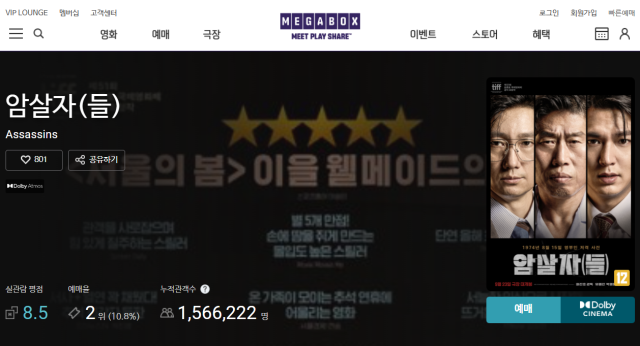
“The Assassin(s),” directed by Hur Jin-ho, drew about 1.41 million moviegoers during the four-day holiday from Sept. 24 to 27. Its cumulative audience reached 1.57 million by Sunday.
The reviews told a more complicated story.
Early Monday, the film held a 92 percent CGV Egg Index and an 8.6-out-of-10 rating among verified Naver moviegoers. Its separate Naver netizen score, which does not require ticket verification, stood at just 2.4.
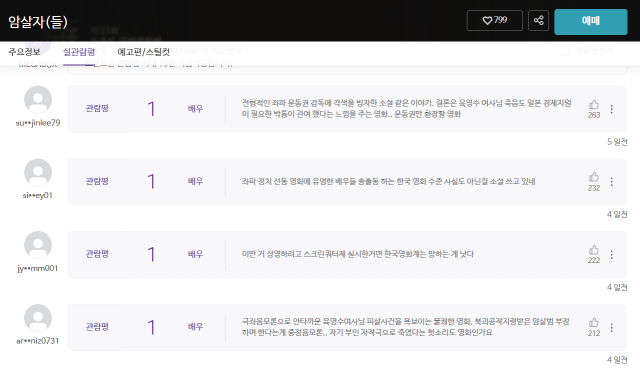
On Megabox, four consecutive one-star audience reviews viewed by AJP focused largely on the film’s politics and treatment of history.
One called it a “left-wing political propaganda film.” Another said Korean cinema would be better off collapsing than screening “fiction like this.” Each had received more than 200 likes.
By Monday, the argument had reached politicians.
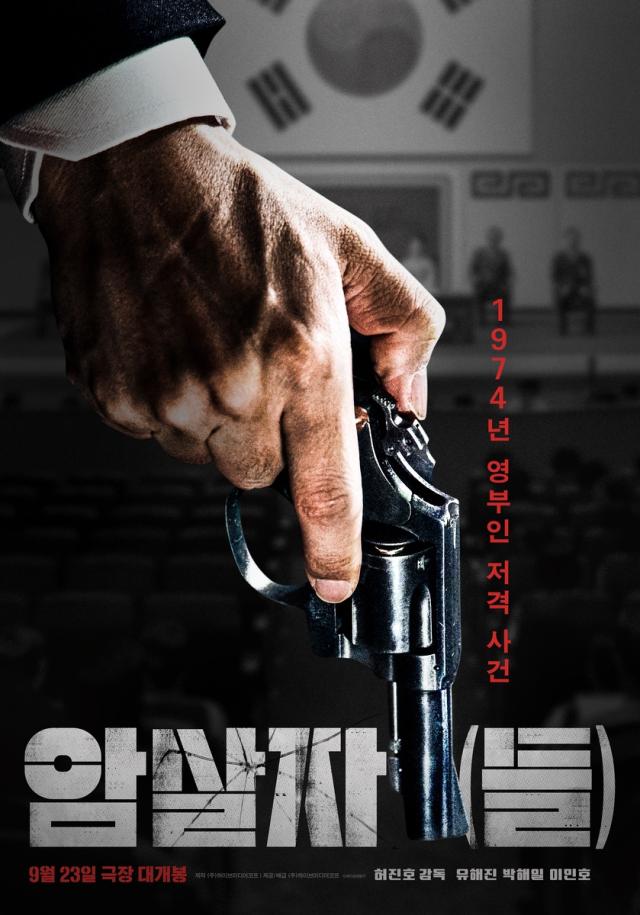
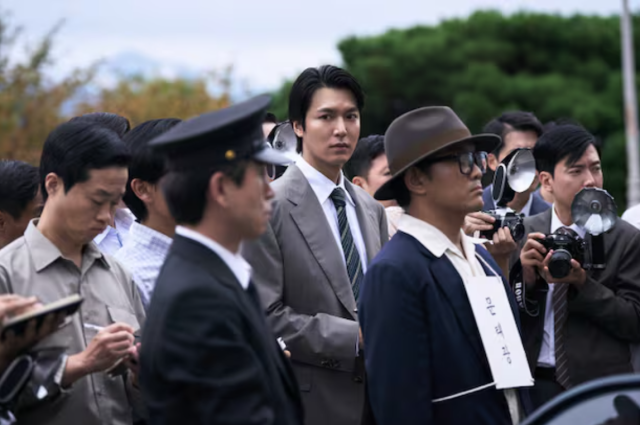
“The Assassin(s)” follows police officers and journalists pursuing questions surrounding the Aug. 15, 1974, assassination attempt on then-President Park Chung-hee, in which first lady Yuk Young-soo was fatally shot.
The official record identifies Moon Se-gwang, a Korean resident of Japan, as the gunman who attempted to assassinate Park. Park survived, while Yuk was killed in the shooting. The case also strained relations between Seoul and Tokyo after it emerged that Moon had obtained a handgun in Japan.
The film does not explicitly identify Park as having orchestrated the attack. Characters, however, raise the possibility that figures around Park or the Korean Central Intelligence Agency could have been involved, a premise that has drawn accusations of historical distortion.
People Power Party lawmakers were among the most vocal critics.
Party leader Jang Dong-hyuk argued on Facebook that the film suggested an “absurd” possibility that Park was behind his wife’s killing and accused supporters of the film of applying freedom of expression selectively.
Rep. Yoo Yeong-ha, a longtime associate of former President Park Geun-hye, called the film “political propaganda” and accused it of distorting history and damaging Park Chung-hee’s reputation.
Rep. Yoon Sang-hyun took a somewhat different line, saying cinematic imagination should be protected while arguing that creative freedom should be distinguished from altering historical facts.
For Ahn Hae-in, the argument arrived before the movie did.
The 25-year-old job seeker had not initially planned to see “The Assassin(s).” What drew her in was the controversy surrounding it.
“What made me watch the film was actually all the completely opposing reactions to it,” Ahn said. “It quickly became a political issue, and there was so much discussion about it in the news and on social media.”
Before buying a ticket, she searched for the assassination attempt and read about the case.
“A movie naturally involves dramatization, and I don’t think it can ever match reality 100 percent,” she said. “But if a film departs too far from what actually happened, I think that can create accusations that it is trying to manipulate people.”
The controversy prompted Ahn to do her homework, but she was not sure everyone would.
“If I had watched it without knowing anything beforehand, I probably would have assumed that most of what the movie showed was true.”
That possibility worried Lee Min-ju, 53.
“Even at my age, with little interest in or knowledge of history, what the movie presents seems very real,” Lee said. “Young people could believe it, too. It’s horrific to think we lived through such a turbulent, violent era.”
Her sister, Lee Seon-ju, 49, who follows politics and history more closely, was more skeptical.
“I think it is dangerous to present things that have not been fully verified,” she said. “Younger viewers may not recognize the fictional elements in a movie based on real events.”
Hur has said reaching a definitive conclusion about the case was never the film’s purpose.
In a pre-release interview, he said he had reviewed broadcasts, documentaries, Japanese materials, books and academic papers while developing the project, but did not believe the available material allowed him to declare a single answer.
“This was not a story where I could reach a conclusion from the beginning,” Hur said.
He said parts of the film were drawn from documentaries, books and research, while others involved cinematic imagination. Comparing those elements with the historical record, he said, was ultimately up to the audience.
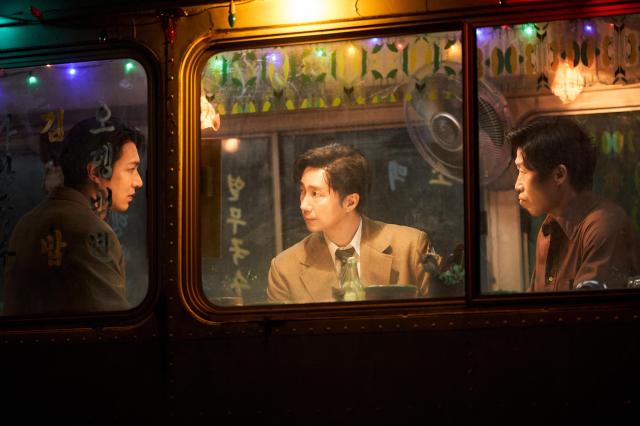
For Hur, however, the incident was also a childhood memory. He was in the fifth grade when Yuk was killed.
Hur recalled his parents, and much of the country, being consumed by grief. He said the strange sadness of that period stayed with him for decades and eventually became one reason he wanted to turn the story into a film.
That personal memory places the director between the generations now arguing over his movie: old enough to remember the event, but approaching it decades later through documents, research and cinema.
How Koreans remember Park already differs sharply by age.
A 2025 survey by the Progressive Policy Research Institute, Korea People Research Institute and Hankook Research found that 32 percent of respondents in their 20s or younger viewed Park favorably. The figure was 36 percent among those in their 30s and 35 percent among those in their 40s.
It rose to 52 percent among people in their 50s, 67 percent among those in their 60s and 75 percent among respondents aged 70 or older.
The May 2–4 survey measured views of Park, not reactions to the film.
The viewers interviewed by AJP did not fall neatly along those age lines.
Choi Jun-hwan, 34, said the words “based on a true story” carry little authority on their own — a lesson he learned from social media.
“I’ve believed things I saw online before and later found out they weren’t true, which was embarrassing,” Choi said. “After going through that a few times, I started trying not to believe something unless I look it up myself and find solid evidence.”
For Choi, skepticism extended beyond this particular film. Years of moving between Instagram posts, short videos and other online claims had made verification a habit.
He watched “The Assassin(s)” primarily for entertainment.
“If I had known nothing about the assassination of first lady Yuk Young-soo and had only seen the claim that the movie was based on real events, I probably would have believed it,” he said.
“But I want to see a movie as a movie. I don’t want to approach every detail politically.”
The Lee sisters’ 81-year-old mother approached the film from somewhere else entirely. She had lived through the years that younger viewers encountered through a movie, a search engine or social media.
The scenes of violence and torture made her recoil. She could not understand why people would want to return to such an ugly past and relive its horrors when so much had changed.
AJP TAKEAWAYS
- “The Assassin(s)” drew 1.41 million moviegoers over the Chuseok holiday, returning a Korean film to the top of the box office.
- Audience reaction is sharply divided, with strong verified-user ratings contrasting with much lower scores and politically charged reviews on open platforms.
- The film’s suggestion that figures around Park Chung-hee or the KCIA may have been involved in the 1974 assassination attempt has triggered criticism from People Power Party lawmakers over alleged historical distortion.

Copyright ⓒ Aju Press All rights reserved.
