
Kim Hak-jo, the ministry's director general for international policy, summoned Russian defense attaché Nikolay Marchenko and urged Moscow to prevent similar incidents. The ministry said repeated KADIZ entries and flights near South Korean airspace were unacceptable, warning that such actions could heighten tensions on the Korean Peninsula and across the region. South Korea's military also took measures to respond to the aircraft in accordance with international law.
Tags: South Korea, Russia, KADIZ, Ulleung Island, Defense Ministry, Russian Military Aircraft, Air Defense, Airspace, Military Tensions, Korean Peninsula, Russian Defense Attaché, National Security, Military Aviation, East Sea

Kim Hee-su
Kim Hee-su is a bilingual reporter at AJU Press, covering defense and foreign affairs. Before joining AJP in 2025, she worked at The Korea Times, where she wrote interview stories, including a profile of North Korean defector Kim Gum-hyok, and produced digital content. She also previously worked as a researcher for KBS News 9’s International News Department, supporting correspondents in 10 countries around the world. She graduated from the University of Toronto in Canada with a double major in Book and Media Studies and East Asian Studies.
Copyright ⓒ Aju Press All rights reserved.
Related News
-
 S. Korea to summon Russian defense attaché over KADIZ entry
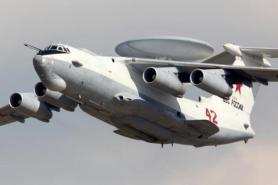
A Russian A-50 airborne early warning and control aircraft is seen in this file photo. Courtesy of 123RF SEOUL, November 24 (AJP) - South Korea's Defense Ministry said Tuesday it would summon Russia's defense attaché later in the day to lodge a strong protest after Russian military aircraft entered its air defense identification zone near Ulleung Island. "The Defense Ministry plans to summon the Russian defense attaché this afternoon to lodge a strong protest," a ministry spokesperson said during a regular briefing. The spokesperson declined to disclose details of communications between the two militaries during the incident, saying it would be inappropriate to make such operational exchanges public. The Joint Chiefs of Staff (JCS) said several Russian military aircraft entered the Korea Air Defense Identification Zone (KADIZ) over the East Sea early Tuesday and flew dangerously close to South Korean airspace near Ulleung Island. The military detected the aircraft before they entered KADIZ and scrambled Air Force fighter jets to respond to potential incidents. The Russian aircraft departed eastward during South Korea's military response without violating its sovereign airspace, according to the JCS. South Korean airspace extends roughly 22 kilometers (12 nautical miles) from Ulleung Island's territorial sea baseline, although the military did not disclose how close the Russian aircraft came to that boundary. The official explained that the military had taken preventive measures because the aircraft were flying close to South Korean airspace and could cross the boundary within a short period. "We took preventive measures to issue a warning to protect the public and ensure their safety," the official said. The Ministry of the Interior and Safety issued an emergency warning for Ulleung Island at around 7:52 a.m., instructing residents to seek shelter in underground facilities or buildings. The warning was lifted within minutes after the Russian aircraft departed the area. The incident caused confusion after the Interior Ministry mistakenly reported an airspace violation, while North Gyeongsang Province referred to suspected North Korean aircraft in a separate emergency message.g. The JCS later clarified that the aircraft were Russian military planes and that no airspace violation had occurred. A Defense Ministry spokesperson said the North Gyeongsang Province had reportedly sent an incorrect reference to North Korean aircraft due to an error involving a message template used for emergency drills. The military acknowledged that it had coordinated with relevant authorities to issue the warning but said it was still examining how the conflicting information had been communicated. An air defense identification zone extends beyond a country's sovereign airspace and is designed to identify approaching aircraft before they enter its airspace. Foreign military aircraft are expected to provide advance notice before entering the zone to prevent potential conflicts. Russia does not recognize South Korea's authority over KADIZ, arguing that the zone lacks a basis in international law.
-
 South Korea scrambles fighters as Russian military aircraft enter KADIZ
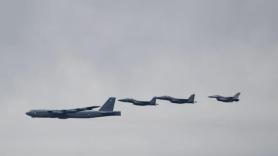
South Korean, U.S. and Japanese aircraft conduct a trilateral air drill southeast of Jeju Island on April 2, 2024. Courtesy of South Korea’s Ministry of National Defense SEOUL, August 26 (AJP) - South Korea scrambled fighter jets after several Russian military aircraft entered its air defense identification zone over the East Sea without prior notice, the military said Wednesday, marking the latest such flight by Russian aircraft near the Korean Peninsula. Several Russian military aircraft entered the Korea Air Defense Identification Zone (KADIZ) on Tuesday before exiting the area, according to South Korea’s Joint Chiefs of Staff. The aircraft were flying northwest over the East Sea when they entered the KADIZ near Ulleung Island and Dokdo, South Korea’s easternmost islets, according to military officials. No violation of South Korean airspace was reported. “Our military detected the Russian military aircraft before they entered the KADIZ and deployed Air Force fighter jets to take tactical measures in preparation for any contingencies,” the JCS said. An air defense identification zone is an area established beyond a country’s territorial airspace to allow military authorities to identify and monitor aircraft approaching its territory. Unlike sovereign airspace, entering an ADIZ does not in itself constitute a violation of a country’s territory. South Korea requires aircraft entering the KADIZ to file flight plans, maintain communications with relevant authorities and report their positions. Russia, however, has long rejected South Korea’s authority over the KADIZ, arguing that such zones have no explicit basis in international law. The Russian Defense Ministry made its position explicit in 2019, saying that air defense identification zones are “not envisioned by international rules” and therefore are not recognized by Russia. Moscow said at the time that it had repeatedly conveyed that position to Seoul through various channels. Russia has consequently maintained that its military aircraft are entitled to fly through portions of the KADIZ that lie over international waters without seeking South Korean authorization, as long as they do not enter South Korea’s sovereign airspace. That position has repeatedly put Moscow at odds with Seoul, which treats unannounced entries by foreign military aircraft as a potential security risk and routinely scrambles fighters to identify and monitor them. The latest incident follows a similar entry on June 27, when nearly 10 Chinese and Russian military aircraft entered the KADIZ over the East and South seas during joint air drills between the two countries. AJP Takeaways · South Korea scrambled fighter jets after Russian military aircraft entered the KADIZ over the East Sea. · Russia does not recognize South Korea’s authority over the KADIZ, citing international law. · The incident follows a June entry by Chinese and Russian military aircraft during joint air drills.
-
 Chinese and Russian Military Aircraft Enter KADIZ, South Korean Fighters Respond
Chinese and Russian military aircraft enter South Korea's Air Defense Identification Zone (KADIZ) According to the Joint Chiefs of Staff, more than ten Chinese and Russian military aircraft entered the KADIZ over the East and South Seas on the morning of June 27 before exiting the area. There were no violations of South Korean airspace during this incident. The military tracked the aircraft's flight paths before their entry into KADIZ and deployed fighter jets as a precautionary measure against any unexpected situations. The aircraft involved were bombers and fighters reportedly participating in ongoing joint air drills between China and Russia. This marks the first entry of Chinese and Russian military aircraft into KADIZ since December of last year, when nine military aircraft also entered and exited the area without breaching South Korean airspace. The Air Defense Identification Zone (KADIZ) is established to identify and respond to aircraft approaching a nation's airspace early, and it is distinct from the concept of sovereign airspace. However, according to international practice, military aircraft entering another country's air defense identification zone are required to submit a flight plan in advance and notify the respective country of their location and flight information upon entry.* This article has been translated by AI.